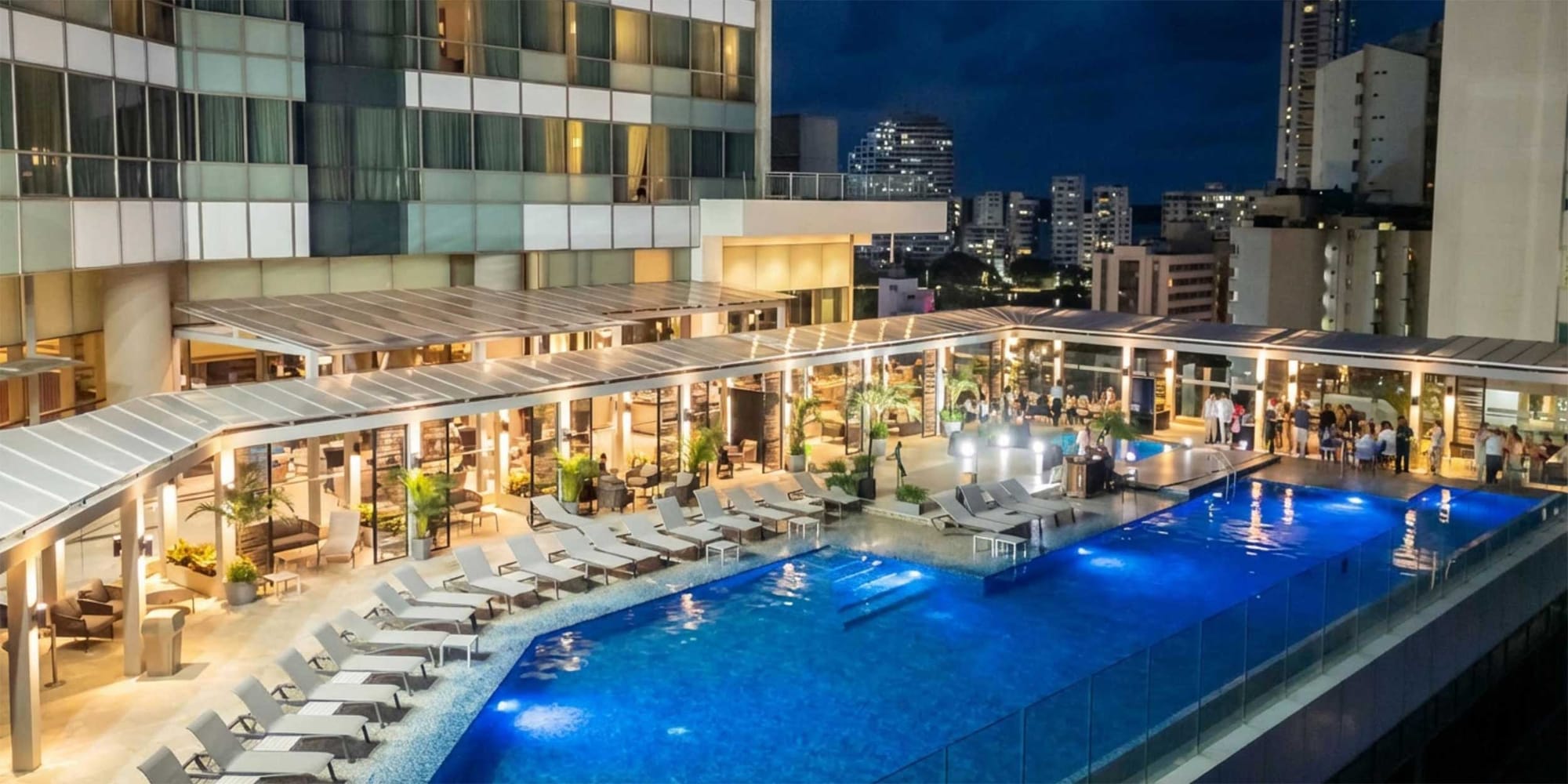
When planning luxury travel to Colombia’s vibrant Caribbean coast, finding accommodations that successfully marry upscale comfort with genuine, thoughtful accessibility remains a primary concern for wheelchair users. The InterContinental Cartagena de Indias, a prominent 285-room property managed under the IHG Hotels portfolio, offers a prime beachfront location in Bocagrande—Cartagena’s bustling modern tourism and business center. Situated approximately three miles from the city’s historic Walled City, a designated UNESCO World Heritage Site, and roughly a 25-minute drive from Rafael Núñez International Airport (CTG), the hotel serves as a major hub for travelers exploring the region.
However, a recent stay at the property—undertaken during a familiarization trip sponsored by the Colombian government—reveals a mixed experience for travelers with mobility disabilities. While the hotel features a striking modern aesthetic, ample space, and several commendable accessibility highlights, it also suffers from significant architectural oversights in critical areas like the bathroom, demonstrating the ongoing challenges of universal design in international hospitality.
Room Rates & Reservations
For travelers considering a stay at the InterContinental Cartagena, standard nightly room rates typically hover around $175 USD, though pricing fluctuates substantially depending on peak travel seasons, holidays, and local events. Accessible accommodations at the property are exclusively designated within the ocean view room category, ensuring that guests requiring mobility features do not have to compromise on scenic vistas. Importantly, these accessible rooms are priced identically to standard guest rooms of the same category, avoiding the premium surcharges sometimes levied by luxury properties for modified spaces.
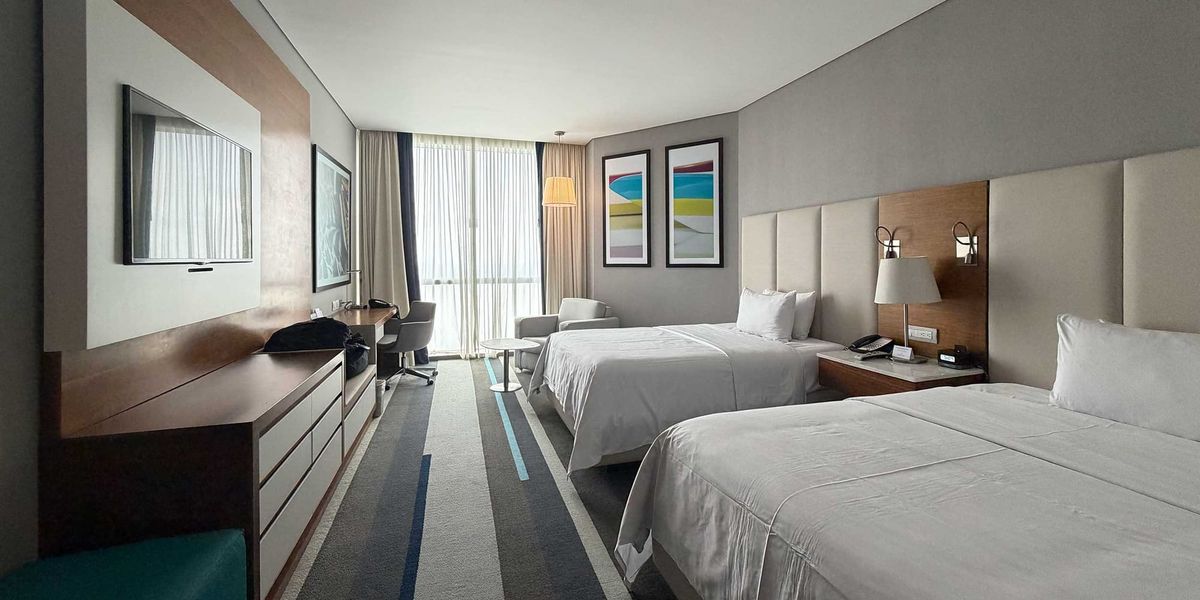
Reservations for these specific rooms can be coordinated directly through the official InterContinental Cartagena website or via the brand’s central booking channels. Prospective guests should note that the property maintains a limited inventory, featuring just three dedicated wheelchair-accessible hotel rooms. Each of these limited accommodations is outfitted with two queen-sized beds to accommodate families or travel companions.
Wheelchair Accessible Hotel Room Design and Features
Assigned to room 911 on the ninth floor, the evaluation of the guest room began at the entryway. The exterior door measured an accommodating 35 inches (89 cm) in width, providing ample clearance for virtually any mobility device, and operated smoothly without requiring excessive force. The door was equipped with a dual-peephole system, featuring a standard upper option at 59.5 inches (151 cm) and a lower secondary peephole positioned at 40 inches (102 cm). While the inclusion of a lower peephole is a thoughtful nod to accessibility, its placement at 40 inches proved slightly too low to be comfortably utilized from the elevated seating position of a power wheelchair.
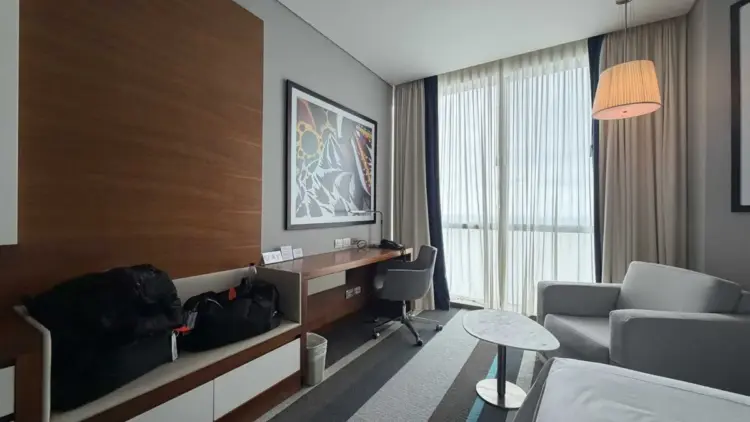
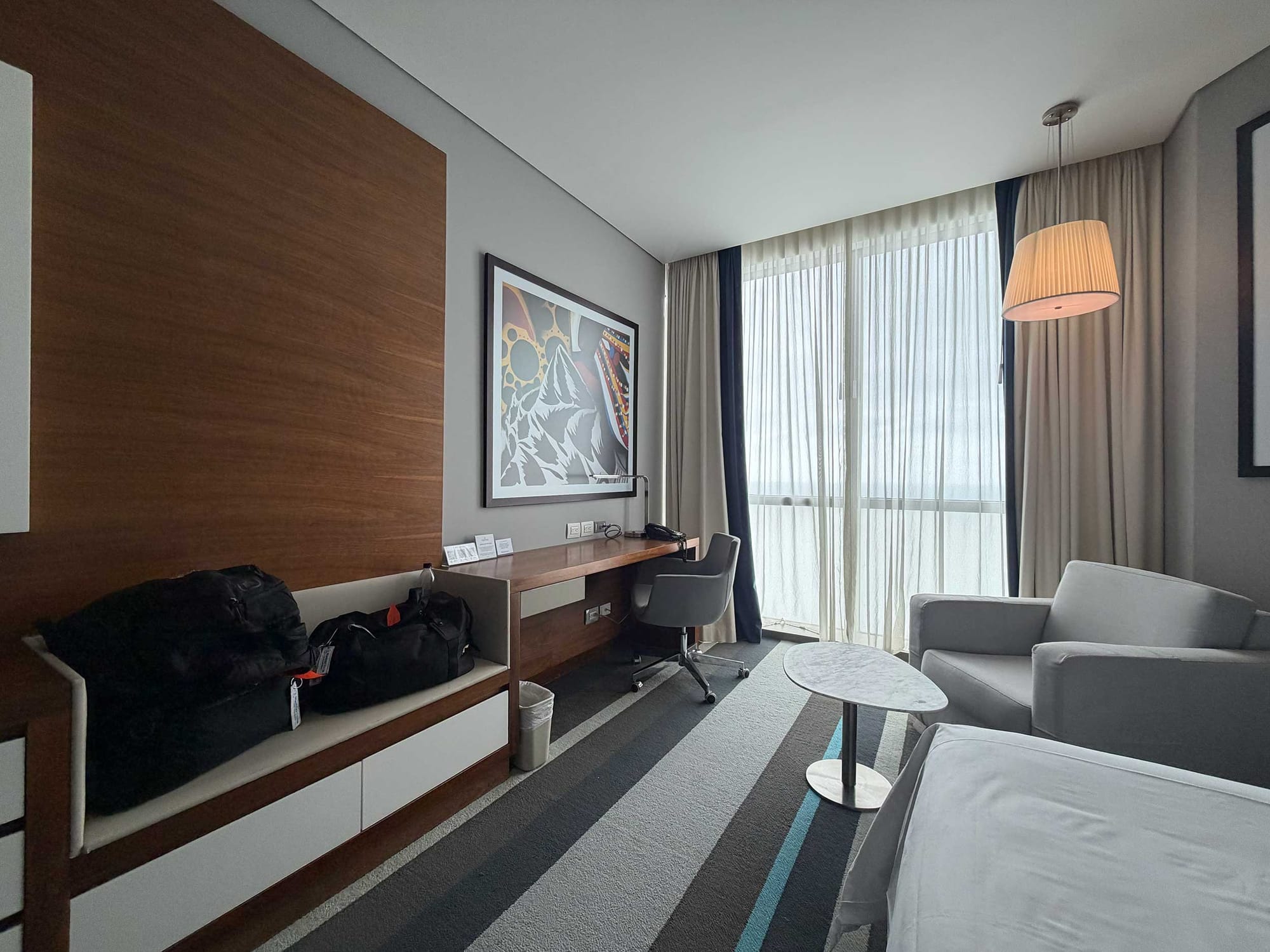
Upon entering, the room immediately presented a spacious, contemporary environment. Decorated with vibrant regional artwork, striking striped carpeting, and expansive floor-to-ceiling windows, the space was flooded with natural light and offered sweeping, unobstructed views of the Caribbean Sea. The interior layout provided generous circulation routes, allowing for effortless maneuverability of a large power wheelchair, including sufficient clearance to park comfortably between the two queen beds.
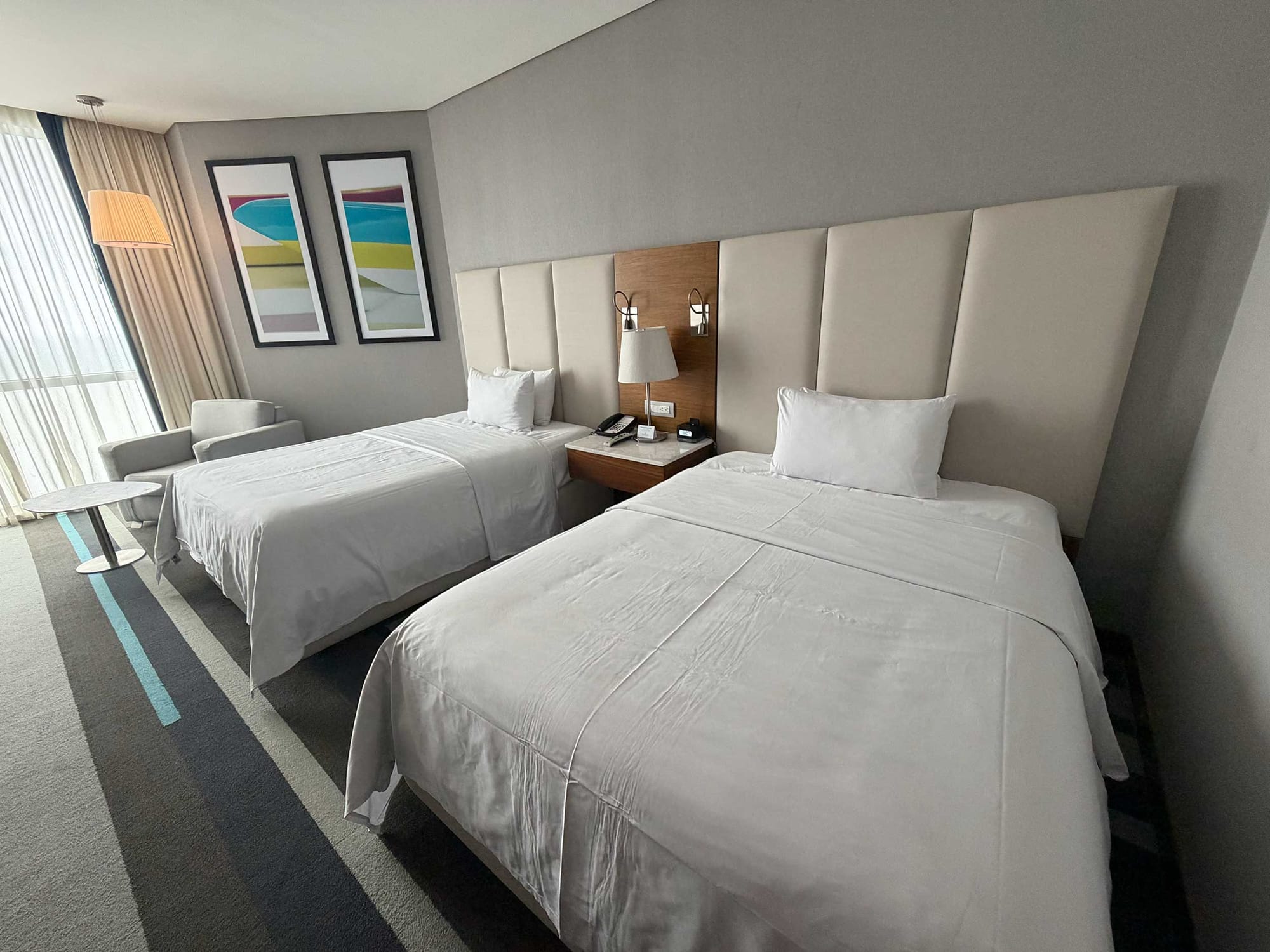
The beds themselves were positioned at a height of 25 inches (64 cm) from the floor to the top of the mattress, offering a standard profile for modern hotel furnishings. However, a significant constraint was discovered at the base of the beds: they rested upon solid platform structures with zero clearance underneath. This design completely eliminates the possibility of utilizing a mechanical patient transfer hoist, an essential piece of equipment for travelers with more intensive support needs.
Additional furnishings within the room included a wood-paneled desk positioned along the wall opposite the beds. The desk stood at a height of 29.5 inches (75 cm) with a knee clearance height of 27.5 inches (70 cm) underneath, allowing for a comfortable roll-under approach. An office chair and an additional upholstered chair paired with a small round side table provided extra seating near the window, contributing to a functional and comfortable living space.
Wheelchair Accessible Bathroom Challenges
The bathroom facilities within room 911 presented the most notable dichotomy of the stay, featuring a blend of well-executed ADA-compliant elements alongside baffling design failures in the shower area.
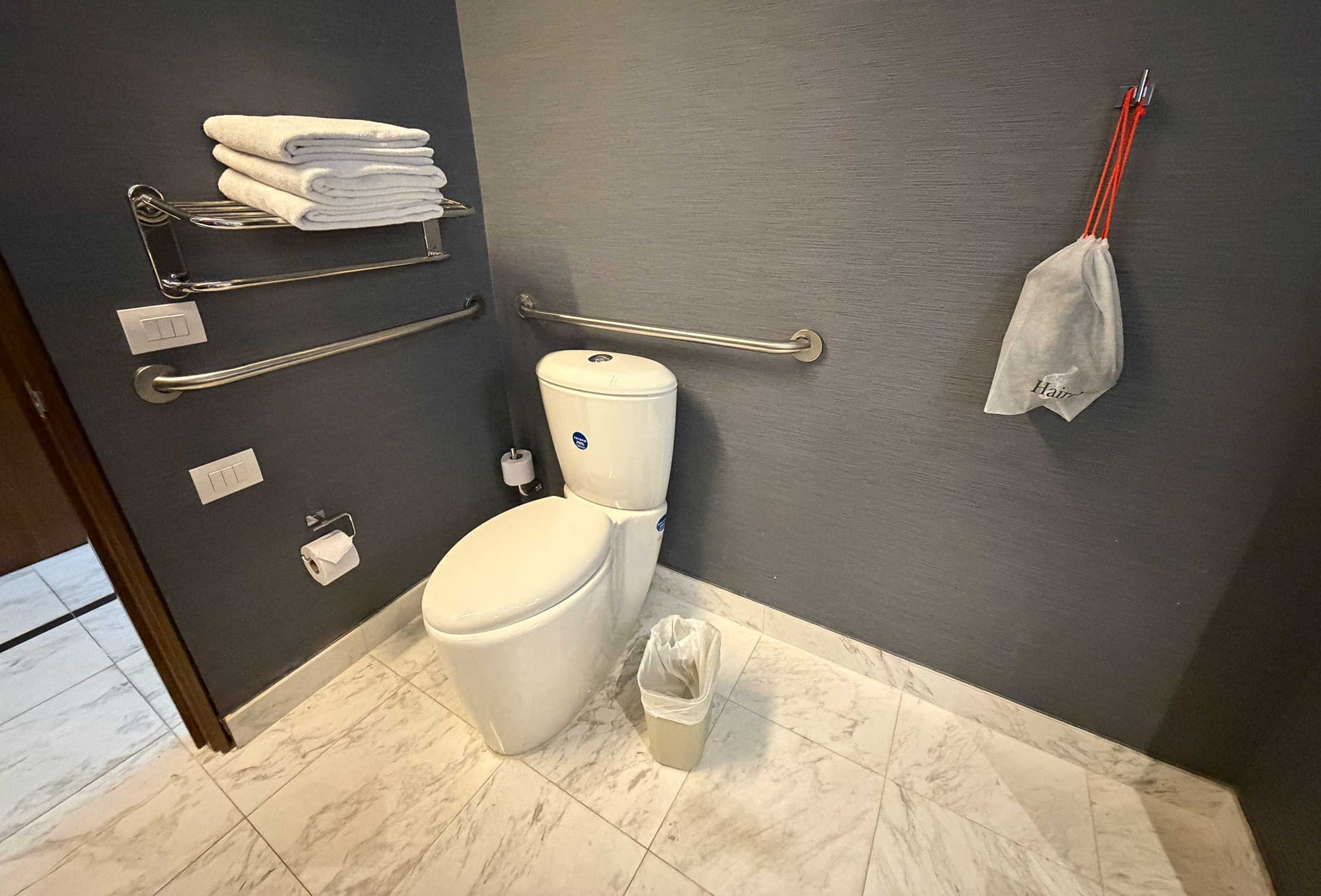
On the positive side, the toilet and vanity installations met several key accessibility standards. The toilet was measured at a comfortable height of 18.5 inches (47 cm) from the floor to the seat top, falling directly within the standard range for accessibility compliance. It was positioned securely in a corner, outfitted with sturdy horizontal grab bars mounted on both the rear wall and the adjacent side wall at a height of 37.5 inches (95 cm).
The vanity area was similarly well-conceived, featuring an extended white marble countertop designed in an open, barrier-free style. With a counter height of 30.5 inches (77 cm) and a knee clearance of 27 inches (69 cm) underneath, the open wooden base successfully accommodated a roll-under approach for a wheelchair user. Though an additional inch or two of vertical clearance would have enhanced ergonomic comfort, the configuration proved functional for daily grooming tasks.
Conversely, the roll-in shower represented where the property’s adherence to accessibility best practices dissolved. While the shower space included all the individual components required for an accessible setup—a fold-down seat, grab bars, and a handheld showerhead—their placement and spatial relationships were fundamentally flawed.
The folding shower seat was exceptionally compact, measuring just 18 inches (46 cm) wide by 14.5 inches (37 cm) deep, and sat at a low height of 16.5 inches (42 cm) above the floor. More problematic was its positioning squarely in the center of the back wall. In this location, the seat was isolated far away from the horizontal grab bar on the adjacent side wall and separated by an awkward distance from the handheld shower fixture and water controls.
Navigating the shower required sitting sideways on the undersized seat and gripping desperately onto the rear grab bar just to maintain stability. The layout strongly suggested a design conceptualized by architects with little to no practical understanding of how individuals with mobility impairments safely utilize a shower from a seated position. For future stays at the property, requesting or renting a portable shower chair—which can be flexibly positioned to ensure reachability of the water controls and support elements—would be an absolute necessity.
Location and Surrounding Transportation
Beyond the hotel doors, the InterContinental occupies a prime position in Bocagrande, a neighborhood well-known for its dense concentration of high-rise hotels, retail shopping centers, and dining establishments. Navigating the immediate district on foot or via wheelchair, however, presents typical urban challenges found throughout the region. Sidewalk infrastructure is somewhat inconsistent, varying in surface quality and repair, while curb ramps are present only intermittently across intersections. Despite these infrastructure hurdles, Bocagrande remains one of the more easily navigable commercial districts in Cartagena, with numerous amenities clustered within a reasonable distance.
For visitors looking to venture further afield—such as exploring the historic, cobblestoned streets of the walled colonial center or accessing specialized beachfront areas equipped for adaptive tourism—relying solely on pedestrian pathways is impractical. Wheelchair travelers will almost certainly need to arrange private accessible transportation or utilize rental vehicles to navigate the city safely. To accommodate vehicle arrivals, the hotel provides comprehensive valet parking services directly at the main entrance.
Final Thoughts
The InterContinental Cartagena de Indias delivers a sophisticated, comfortable hospitality experience highlighted by modern aesthetics, scenic ocean views, and a spacious guest room environment. While the bathroom successfully accommodates guests at the vanity and toilet, the poorly engineered roll-in shower underscores the necessity for travelers to carefully evaluate their individual mobility requirements before booking. For visitors comfortable utilizing auxiliary equipment such as portable shower seating, the property remains a viable and luxurious option for experiencing Cartagena’s scenic Caribbean coastline.