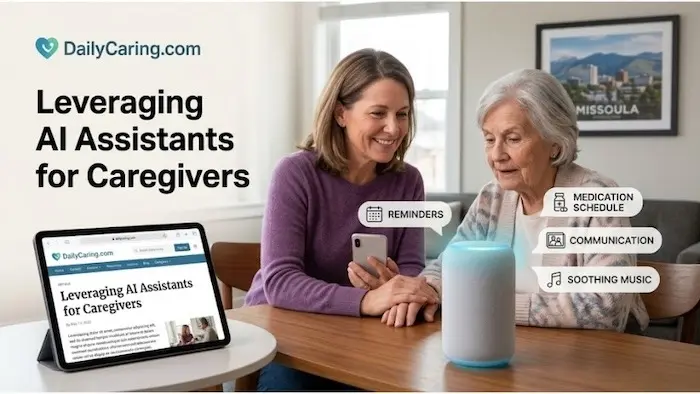
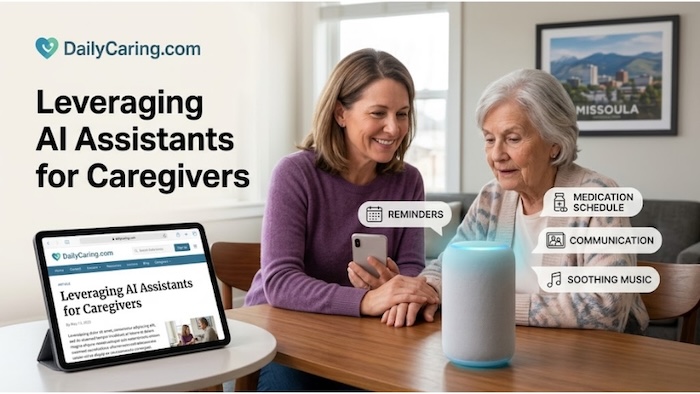
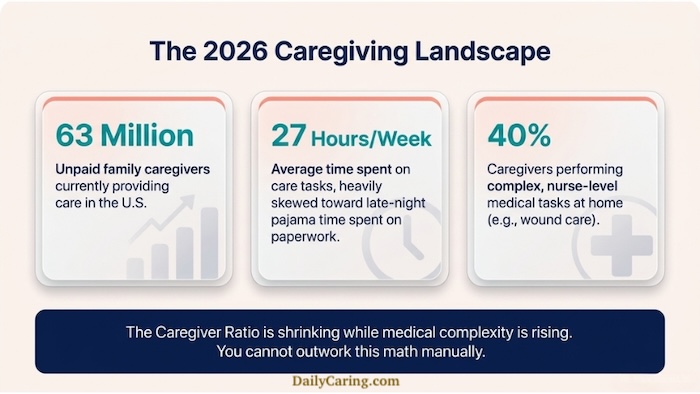
Being a family caregiver is widely recognized as an act of profound love and dedication, yet it is equally defined by an overwhelming accumulation of responsibility. Across the country, millions of family members juggle complex medical appointments, strict medication schedules, household maintenance, continuous emotional support, and countless other daily duties. In the process, they frequently sacrifice their own physical health and emotional well-being. Beneath the visible surface of these physical tasks lies an invisible, often crushing weight: the relentless cognitive and mental load of caregiving.
To address this growing crisis, healthcare advocates and technology experts are pointing toward emerging artificial intelligence tools as a practical pathway forward. Rather than replacing the essential human touch of a caregiver, modern AI assistants are designed to automate mundane tasks, organize overwhelming amounts of information, and carve out precious moments for caregivers to simply be present with their loved ones and themselves. Understanding how these tools function offers a vital look into the shifting landscape of modern family caregiving.
Understanding the Caregiver’s Mental Load
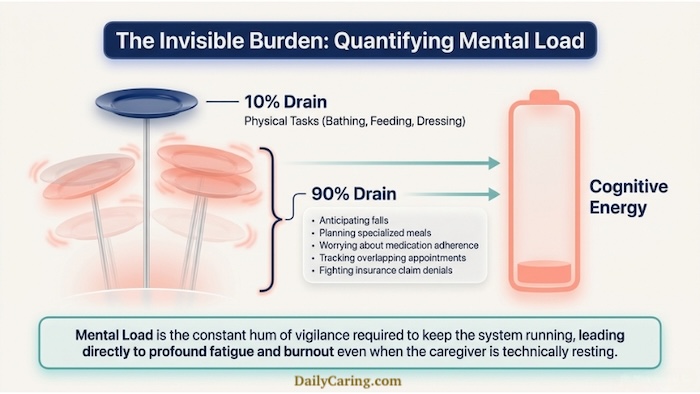
To appreciate the potential solutions, it is necessary to examine the challenge itself. The mental load of caregiving can be visualized as a set of spinning plates, where each plate represents a critical question or task. Caregivers constantly ask themselves whether their loved one took their medication, when the next physical therapy session is scheduled, what groceries need to be purchased, or whether they remembered to call the insurance company. They must balance these concerns with their own professional and family obligations while monitoring the immediate comfort of the person in their care.
This mental load extends far beyond the physical execution of tasks. It encompasses the constant remembering, planning, anticipating, and worrying that persists even when the caregiver is resting. It is a silent, relentless cognitive effort required to keep daily life functioning, usually carried out with little to no recognition or structural support.

Over time, this invisible burden takes a heavy toll. The continuous cognitive strain erodes physical health, emotional resilience, and overall quality of life. Caregivers frequently report chronic fatigue, irritability, difficulty focusing, anxiety, and severe sleep disturbances. When this weight becomes too heavy, it culminates in caregiver burnout—a state of complete emotional, physical, and mental exhaustion. Recognizing these warning signs is the crucial first step toward seeking out supportive solutions and reclaiming personal well-being.
The Evolution of AI in Family Caregiving
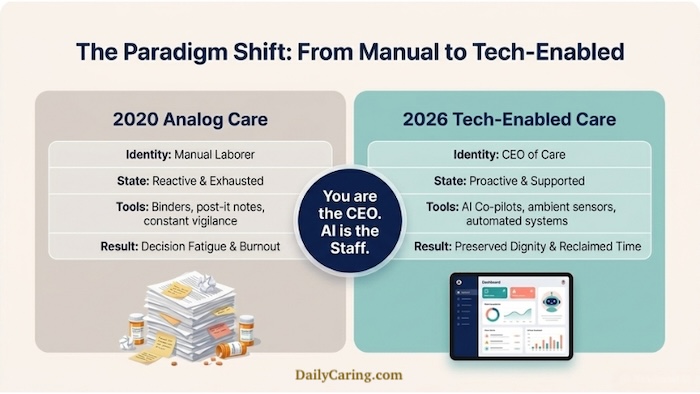
While the concept of artificial intelligence often evokes images of complex or impersonal technology, its application in caregiving has evolved into something much more accessible and practical. For years, technology offered little more than basic digital reminders or rudimentary calendar alerts. Today, artificial intelligence designed for family caregiving has advanced significantly, capable of learning routines, understanding complex commands, integrating seamlessly with household devices, and offering proactive suggestions.

These modern systems function far beyond simple digital notepads. They serve as sophisticated co-pilots designed to anticipate daily needs and streamline administrative processes. The fundamental promise of integrating AI into caregiving is to restore time and mental space to the individual, utilizing automation and organization to alleviate the daily pressure.
In practice, these tools touch several key areas of daily life, ranging from schedule management to wellness support. For daily tasks, AI tools assist with calendar synchronization, dynamic reminder systems, and automated grocery lists, which collectively reduce decision fatigue. In terms of coordination, they centralize family updates and healthcare notes, ensuring vital information remains accessible to everyone involved. For wellness and monitoring, conversational tools provide accessible emotional outlets, while specialized smart home technology enhances safety and reduces anxiety through fall detection and environmental monitoring. Additionally, these technologies serve as immediate resources for health information, significantly cutting down research time.
Real-World AI Tools Transforming Caregiving
Several specific applications currently illustrate how artificial intelligence functions in real-world caregiving scenarios. For families concerned about nighttime wandering or physical falls who wish to avoid invasive video monitoring, audio-based systems offer a distinct alternative. Technologies such as Sensi.ai utilize small, privacy-focused audio listening devices placed around the home to monitor for specific anomalies, including sudden thuds, repeated coughing, or unusual nighttime movements. By alerting caregivers instantly on their mobile devices, these tools provide peace of mind while preserving the privacy and dignity of the care recipient.
Another notable development is the introduction of proactive AI-driven companion robots designed specifically for older adults, such as ElliQ. Unlike standard smart speakers that remain dormant until spoken to, these robotic companions actively initiate conversations, guide individuals through light physical exercises, play trivia games, facilitate video calls with family members, and gently remind users to stay hydrated or take medications. Simultaneously, companion apps provide family caregivers with periodic updates regarding their loved one’s daily activity and mood, helping to alleviate the persistent guilt of not being physically present every hour of the day.
Coordination apps like ianacare address the challenge of organizing informal support networks, including friends, neighbors, and extended family members who offer assistance without specific direction. By utilizing smart algorithms, these platforms allow caregivers to centralize communication and delegate specific tasks—such as grocery drop-offs, transportation to medical appointments, or designated respite hours—eliminating the exhaustion of managing endless group text threads.
General-purpose artificial intelligence models, such as ChatGPT and Google Gemini, are also being utilized to cut down on administrative burdens like drafting medical insurance appeals, organizing complex medication schedules, or planning specialized meal structures. However, healthcare advocates emphasize a crucial privacy standard when employing public AI models: users must always anonymize data by omitting sensitive personal details such as full names, birthdates, Social Security numbers, or specific insurance identifiers, substituting them instead with generic descriptions to protect sensitive health information.
Integrating Technology into Daily Routines
Bringing new technology into an already demanding household schedule requires a deliberate approach to avoid adding to the initial stress. Experts recommend starting small by identifying a single, specific pain point—such as schedule organization or medication tracking—rather than attempting to overhaul an entire routine at once. Testing tools gradually allows both the caregiver and the care recipient to adapt comfortably.
As the caregiving landscape continues to evolve, the integration of artificial intelligence and robotics represents a significant shift toward a symbiotic relationship between human dedication and technological support. By handling repetitive cognitive and administrative tasks, technology allows family caregivers to redirect their energy toward the emotional connection at the heart of caregiving. Embracing these innovative resources offers a strategic way to manage immense responsibilities while safeguarding long-term health and well-being.