The Medicare Advantage market, the private plan alternative to traditional Medicare, is once again demonstrating its dynamic nature, with significant shifts in plan availability, firm participation, and geographic footprints heading into the 2027 plan year. While the average Medicare beneficiary will still be able to choose from a robust selection of 28 Medicare Advantage prescription drug plans, a comprehensive analysis of landscape data from the Centers for Medicare & Medicaid Services reveals notable contractions across the board.
Compared to the previous year, the 2027 data shows a modest reduction in the share of enrollees who have access to an overwhelming number of options. Major industry insurers are pulling out of a significantly larger number of counties than they are entering, and a greater number of firms are exiting the market entirely than those establishing a new presence. These shifts highlight a changing landscape driven by local market pressures, cost dynamics, and strategic reassessments by private insurers.
Findings
One in Five Medicare Beneficiaries Can Choose From More Than 40 MA-PDs in 2027
For the 2027 plan year, approximately 20 percent of Medicare beneficiaries have access to more than 40 Medicare Advantage prescription drug plans where they live. These consumers are heavily concentrated in just four percent of counties nationwide. This represents a noticeable decrease from 2026, when 27 percent of beneficiaries residing in six percent of counties had access to more than 40 options.

Mirroring trends from previous years, the counties offering the highest volume of plan choices are predominantly located in Pennsylvania, Ohio, and Michigan, alongside Los Angeles County in California. Beneficiaries residing in Lancaster, Pennsylvania, lead the nation with a staggering choice of 66 different Medicare Advantage prescription drug plans, the most offerings of any county in the United States.
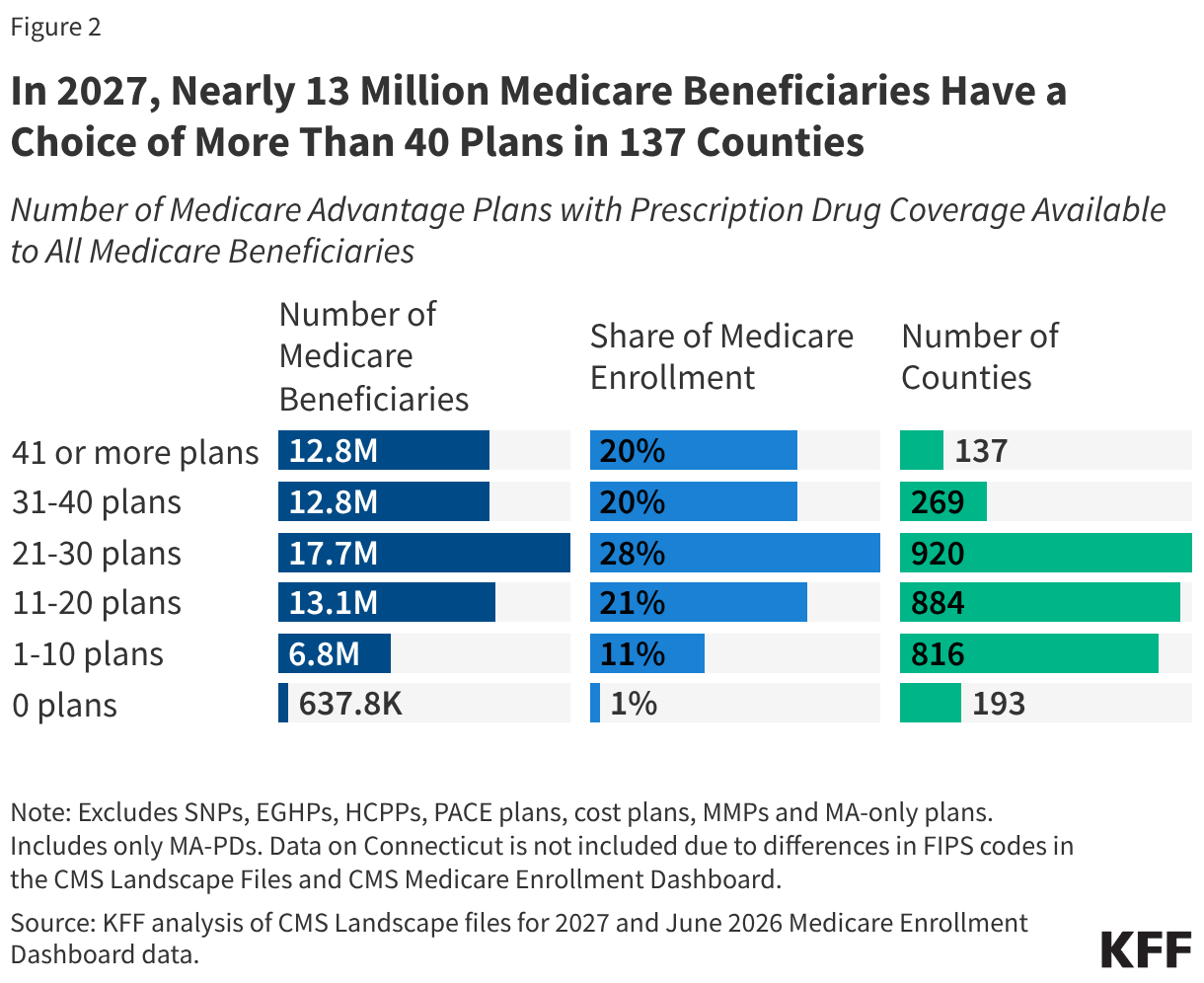
In total, nearly 13 million people have a choice of more than 40 plans for 2027, marking a sharp decline from the 16.6 million beneficiaries who enjoyed that level of choice for the 2026 plan year. Another 12.8 million beneficiaries can choose from 31 to 40 plans, down slightly from 13.2 million the prior year. Conversely, the number of people with more limited choices has grown. Nearly 7 million individuals have access to just one to 10 Medicare Advantage plans with drug coverage for 2027, an increase from 4.8 million people in 2026.
Beneficiaries in 193 Counties Will Have No MA-PD Options Available for General Enrollment
While the vast majority of Americans have multiple options, plan availability varies widely by geography. For 2027, Medicare beneficiaries residing in 193 counties will have zero Medicare Advantage prescription drug plans available for general enrollment. This represents an increase from 123 counties in 2026.
People living in these 193 counties comprise approximately one percent of all Medicare beneficiaries, translating to roughly 638,000 individuals. This marks an increase of 239,000 beneficiaries compared to 2026, when 399,000 people lacked access to a general enrollment MA-PD option.
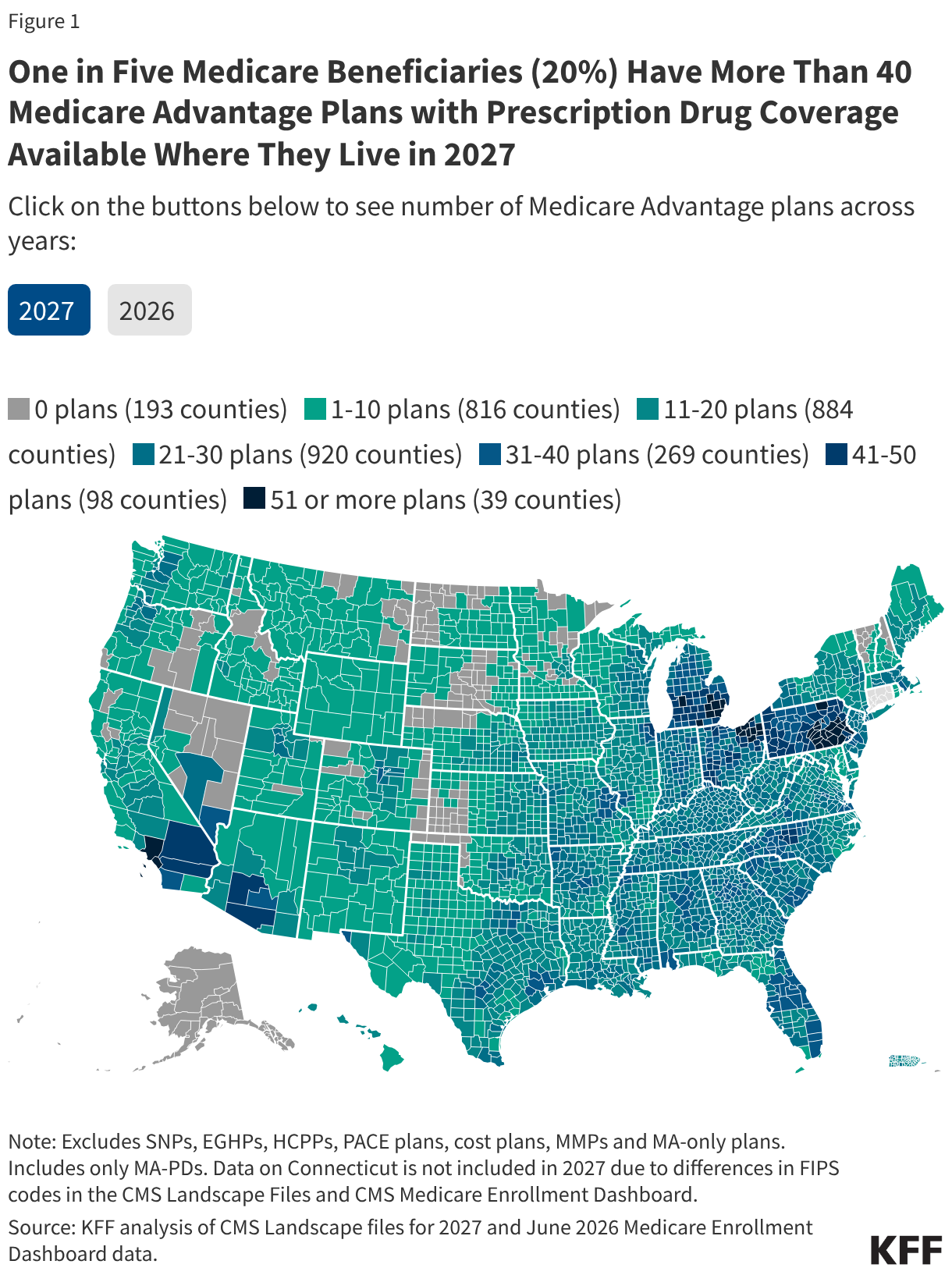
These counties without options span 16 states—including Alaska, California, Colorado, Idaho, Kansas, Minnesota, Montana, Nebraska, Nevada, New Hampshire, North Dakota, Oklahoma, Oregon, South Dakota, Utah, and Vermont—as well as U.S. territories other than Puerto Rico. This list includes the same states as the previous year, with the addition of New Hampshire, North Dakota, and Oklahoma. Similar to 2026, every county in Alaska lacks general enrollment MA-PD options for 2027, affecting about 110,000 beneficiaries.
In six of these counties—located in Nebraska and South Dakota—there is a Medicare Advantage plan option available that does not include prescription drug coverage. In the remaining 187 counties, however, no Medicare Advantage plans of any kind are available for general enrollment. In some of these regions, alternative private coverage options exist, such as cost plans and special needs plans, though the latter restrict enrollment to beneficiaries who meet specific qualifying criteria.
The Average Beneficiary Can Choose From Plans Offered by Seven Firms
The average Medicare beneficiary can choose from Medicare Advantage prescription drug plans offered by seven distinct firms for 2027, representing a decline of one firm compared to the 2026 plan year. Despite most consumers having access to plans operated by multiple companies, overall enrollment remains heavily concentrated. Plans operated by UnitedHealthcare and Humana continue to dominate the market, together accounting for nearly half of all Medicare Advantage enrollment.
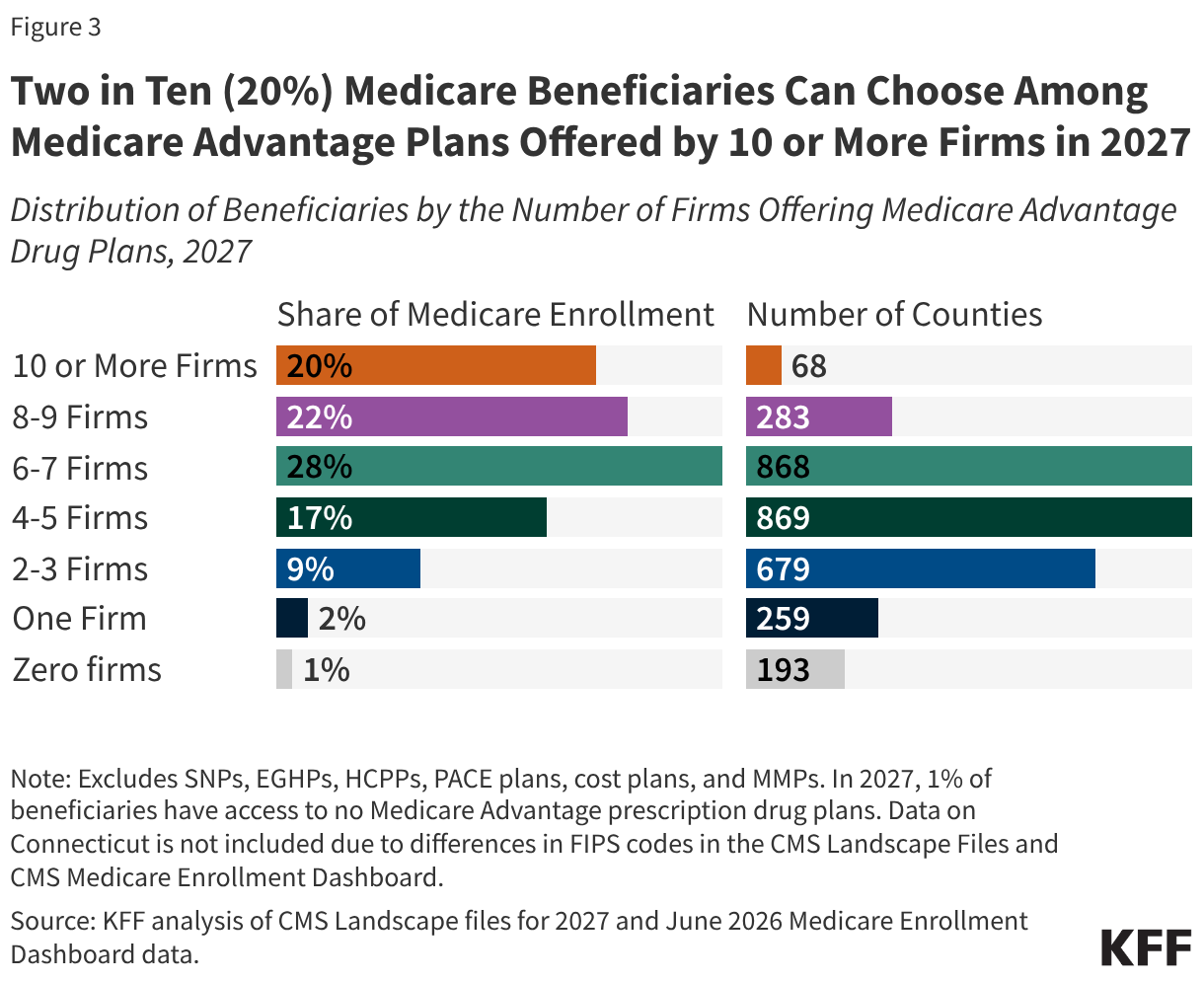
For 2027, two in ten beneficiaries, living across 68 counties, are able to choose from plans offered by 10 or more firms. This is a drop from the 29 percent of beneficiaries across 131 counties who had that level of firm competition in 2026.
On the other end of the spectrum, about nine percent of beneficiaries, residing in 679 counties, can choose from plans offered by just two or three firms, up from seven percent of beneficiaries across 572 counties in 2026. Furthermore, in 259 counties, only a single firm will offer an MA-PD for 2027, an increase from 180 counties the prior year. These are predominantly rural areas with relatively small populations, accounting for about two percent of the total Medicare population.
Major Insurers Exit More Counties Than They Enter in 2027
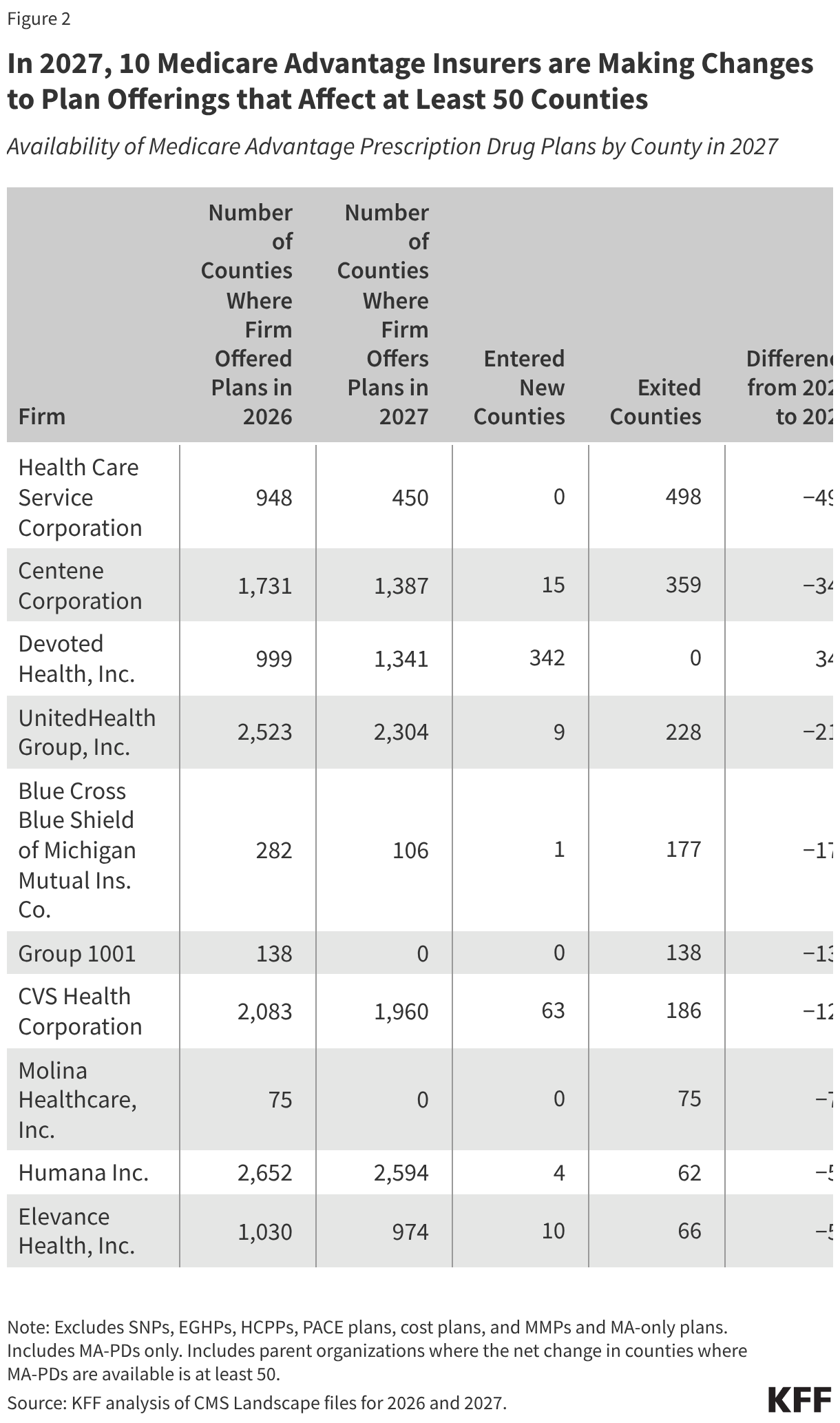
The two largest players in the Medicare Advantage market—UnitedHealth Group and Humana—are scaling back their geographic footprints by exiting significantly more counties than they are entering for the 2027 plan year.
UnitedHealth Group is exiting 228 counties while entering nine new ones. Humana is exiting 62 counties and entering four new ones. Despite these reductions, Humana maintains its position as the insurer offering plans in the largest number of counties, reaching approximately 80 percent of all U.S. counties, a footprint similar to 2026. UnitedHealth Group is offering plans in about 70 percent of counties for 2027, down from nearly 80 percent the previous year.
Other major insurers are also making steep reductions. Health Care Service Corporation is implementing the largest footprint reduction, pulling out of 498 counties while entering none. Centene follows with the second-largest reduction, exiting 359 counties while adding 15 new ones. Blue Cross Blue Shield of Michigan Mutual Insurance Company is exiting 177 counties and entering one, restricting its MA-PD offerings to Michigan and Wyoming for 2027. Elevance Health is exiting 66 counties and entering 10.
Meanwhile, a few companies are moving in the opposite direction. Devoted Health is expanding its reach by entering 342 counties without exiting any. CVS Health is also entering 63 new counties, though it is simultaneously exiting 186. Kaiser Foundation Health Plans is largely maintaining its existing footprint, exiting three counties and entering three new ones.
The decisions by insurers to pull out of certain regions reflect a complex mix of factors, including local market characteristics, escalating cost pressures, shifting corporate strategies, and assessments of long-term profitability. Exits range from rural areas where multiple carriers have dropped coverage—such as four counties in Minnesota where three insurers withdrew simultaneously—to urban centers with high Medicare Advantage penetration, such as Miami-Dade County and Monroe County in New York.
More Firms Are Exiting the Medicare Advantage Market Than Entering It
The broader industry roster is also shrinking for 2027, with more firms exiting the Medicare Advantage market entirely than entering it. Four new firms are entering the market for the first time, while ten firms are completely discontinuing their plan offerings. An additional four firms have had their contracts taken over by other insurers, typically through mergers or corporate affiliations.
Among the new market entrants, three are offering exclusively HMO plans, while one is offering a combination of HMOs and coordinated care special needs plans. Industry partnerships and co-branded offerings continue to evolve. Alignment Health is continuing its co-branded grocery-benefit plans with Instacart and its partnerships with Walgreens, while Humana maintains its collaboration with USAA. New for 2027, SCAN Group is introducing co-branded plans with Costco in California and Nevada, alongside Walmart-partnered plans in Arizona and Texas.
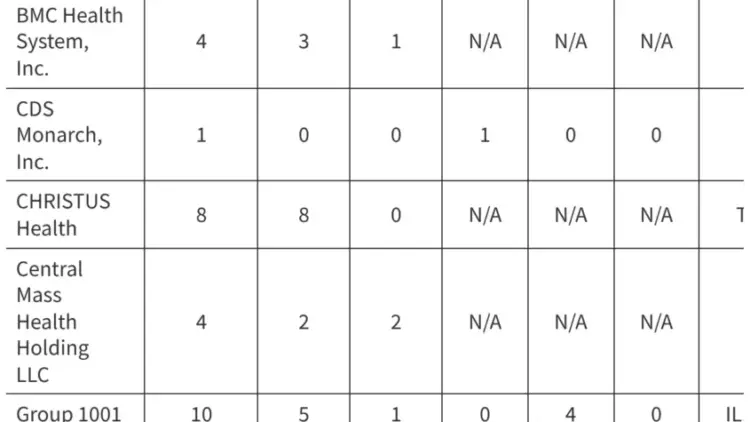
Ten firms that participated in the market in 2026 have chosen not to offer plans for 2027. Organizations such as Memorial Hermann Health Plan and Central Mass Health cited changing market conditions, escalating cost pressures, and regulatory uncertainties as reasons for their departure, while other departing firms did not publicly specify their rationale.
Four additional companies left the market after their contracts were acquired or absorbed by other parent organizations already operating within the space, including Community Care, Inc., Marshfield Clinic Health System, Renown Health, and Summa Health, the latter of which became part of General Catalyst Group Management Holdings LP. Furthermore, four established firms that previously offered general enrollment MA-PDs have opted to pivot exclusively toward offering special needs plans in 2027, narrowing their overall general market footprint.