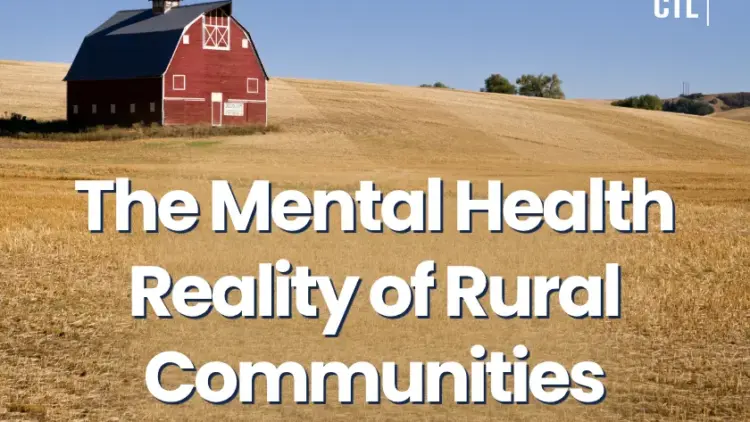
Across rural communities throughout the United States, geographic isolation combined with a chronic scarcity of mental health professionals frequently converts everyday distress into full-blown crises. For thousands of individuals living miles away from the nearest clinic or hospital, text-based support services have evolved into an indispensable, low-barrier resource bridging the gap when traditional in-person care remains entirely out of reach.
Shedding new light on this pressing systemic challenge
, Crisis Text Line has officially released a comprehensive new report titled Understanding Rural America. The publication offers a deep and rigorous examination of the unique experiences, distinct stressors, and daily coping strategies of individuals who reach out for psychological support from rural settings.
According to the organization, an estimated 12% of its total conversation volume originates directly from rural regions. For many of these texters, connecting via mobile phone is not merely a preference for modern communication; it is initiated simply because they possess no other localized resources to rely upon. Between 2019 and 2024, Crisis Text Line supported more than 425,000 distinct conversations with people undergoing acute emotional distress in rural communities. By analyzing these de-identified conversations, researchers have been able to construct a clearer picture of the specific hardships rural populations endure and the exact nature of the support they desperately require.
The report breaks down its findings into three major takeaways that outline the contours of the rural mental health landscape. The first central theme emphasizes that rural texters frequently have no one else to turn to. Data compiled by the organization reveals that 63% of rural texters initiated contact because they lacked anyone else in their immediate social circle to talk to about their struggles. Furthermore, nearly 4 in 10 respondents reported having zero access to a professional therapist within their geographic area. For these isolated populations, text-based crisis intervention does not function as a mere supplement to traditional therapy; rather, it serves as the sole avenue of care available to them in moments of acute vulnerability.
The second key takeaway details the primary psychological burdens reported by individuals reaching out from the countryside. The most commonly cited issues across the analyzed conversations were depression or sadness, accounting for 37% of discussions, closely followed by relationship troubles at 36%, and anxiety or stress at 34%. Additionally, explicit mentions of suicide appeared in 26% of the interactions, while isolation or loneliness factored into 20% of the cases. This consistent pattern points to a broader mental health ecosystem shaped just as profoundly by profound geographic and social isolation as it is by any single clinical diagnosis.
The third major finding highlights how boys and men in rural areas face this isolation with acute intensity. Male texters in rural regions mentioned experiencing depression or sadness 41% of the time during their conversations. Moreover, nearly 1 in 4 of these male respondents explicitly noted feelings of isolation or loneliness. Analysts suggest this trend serves as a stark indicator that traditional rural masculinity norms, which often discourage emotional vulnerability, compound dangerously with the physical realities of geographic isolation.
These findings carry profound implications for public health advocates and policymakers alike. The figures compiled in the report transcend mere data points, acting instead as a detailed map charting where the national mental health safety net is worn thinnest. Rural communities across the nation have long grappled with a well-documented shortage of licensed healthcare providers, and this latest analysis vividly demonstrates the real-world consequences of that professional vacuum. When local clinical infrastructure fails to materialize, residents inevitably turn to digital text platforms simply because there is nowhere else left to go.
Translating these sobering insights into tangible action remains a central priority for the organization behind the report. The publication itself stands as a prime example of the kind of actionable intelligence that specialized research teams can extract through near-real-time analysis of crisis communication transcripts. Crisis Text Line routinely collaborates with grassroots community organizations, philanthropic funders, and legislative policymakers to connect these qualitative data insights with broader public health metrics. Through these partnerships, stakeholders can better understand emerging regional needs, identify precisely where public and private resources can yield the greatest impact, and inform targeted advocacy initiatives. Professionals working across the fields of mental health, public education, or government policy who wish to explore what these data insights might reveal about their own local communities are encouraged to contact the organization’s research division directly.