Artificial intelligence is fundamentally reshaping the modern pharmaceutical landscape, dramatically accelerating how scientists search for new therapeutics. But as algorithms increasingly pore through petabytes of biological data to flag promising drug candidates, a critical question remains at the forefront of medical research: Can artificial intelligence actually make the discoveries themselves, or will the foundational spark of true scientific breakthrough always require human ingenuity?
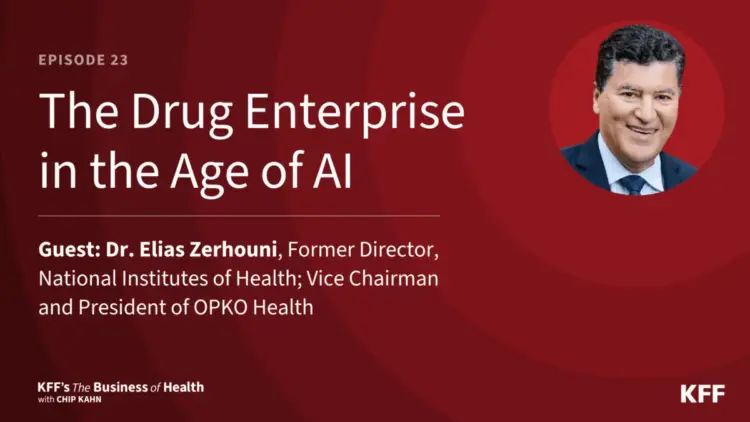
Few individuals are better positioned to evaluate this technological transformation than Dr. Elias Zerhouni. Having previously directed the National Institutes of Health (NIH) and later led global research and development for pharmaceutical giant Sanofi, Dr. Zerhouni brings a rare, comprehensive perspective to the intersection of computing and medicine. Today, as the vice chairman and president of OPKO Health’s parent company and co-founder of ModeX Therapeutics—a firm utilizing machine learning to design synthetic antibodies that do not exist in nature—he operates on the absolute cutting edge of computational biology.
In a compelling episode of The Business of Health with Chip Kahn, hosted by healthcare policy expert Charles N. Kahn III, Dr. Zerhouni joined the podcast’s specialized series focusing on artificial intelligence in healthcare. The discussion peeled back the layers of hype surrounding machine learning in drug development to examine its actual capabilities, its limitations, and the broader policy and regulatory challenges facing the next generation of medical cures.
About This Episode: Weighing the Limits of Machine Learning
The twenty-third episode of the AI series tackles a central dilemma facing modern researchers: while AI is undeniably speeding up the search for novel medicines, where are the hard boundaries of its utility?
To illustrate the irreplaceable nature of human intuition, Dr. Zerhouni posed a thought experiment during the discussion. His ultimate test for artificial intelligence is straightforward yet profound: if you were to feed an advanced machine learning model every single piece of scientific data available in the early 1950s, would it have successfully discovered the double helix structure of DNA? His answer is a definitive no. The algorithmic synthesis of existing data can map patterns and optimize variables, but the conceptual spark required to fundamentally alter our understanding of biology remains uniquely human.
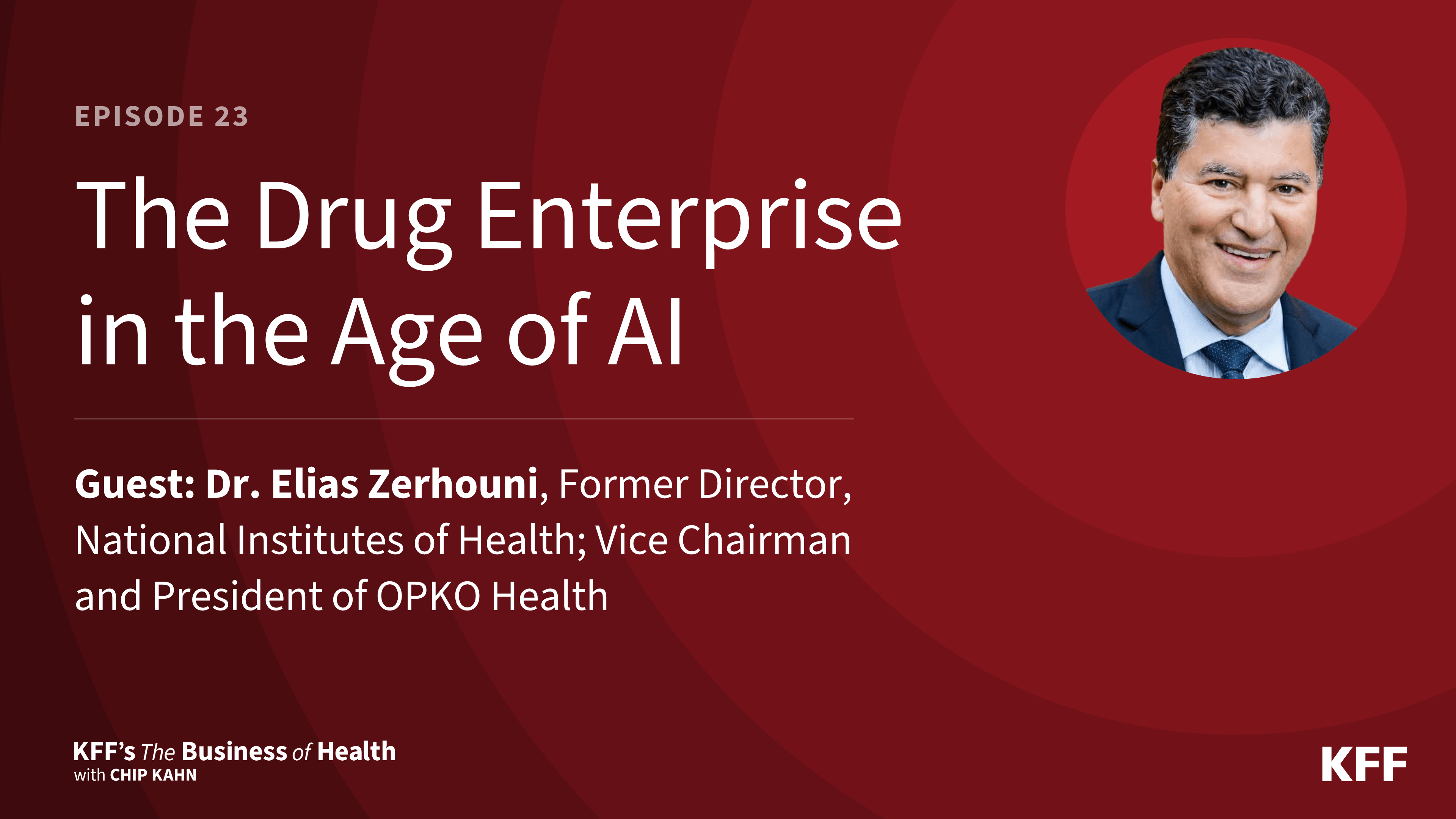
Host Chip Kahn and Dr. Zerhouni also dove deeply into the operational realities of how AI is currently altering drug discovery pipelines. Beyond the laboratory benches, the conversation expanded into the regulatory landscape, contrasting the United States Food and Drug Administration (FDA) with international regulatory bodies. Furthermore, the two experts explored the broader systemic risks facing the biomedical ecosystem—specifically, what a potential slowdown in artificial intelligence adoption, coupled with a worrying erosion of American research dominance, could mean for the future availability of life-saving medical cures.
The Host: Bridging Health Business, Policy, and Patient Care
Guiding these complex discussions is Charles N. Kahn III, widely known as Chip Kahn, a prominent voice in health policy and economics. Kahn serves as a senior visiting fellow at KFF, bringing decades of institutional knowledge and analytical rigor to the intersection of healthcare business and government regulation.
In addition to his role at KFF, Kahn maintains influential academic and research positions across the United States. He is a visiting senior fellow at the American Enterprise Institute and a nonresident senior scholar at the University of Southern California’s Schaeffer Center for Health Policy and Economics. His leadership extends internationally as well, serving as the co-chair of the Future of Health collaborative, an international initiative dedicated to addressing long-term structural challenges in global healthcare delivery.
Through The Business of Health, Kahn connects the dots between high-level corporate strategies, legislative and regulatory policies, and the ultimate impact these factors have on everyday patients. The podcast’s ongoing series on artificial intelligence serves as a critical forum for illuminating how machine learning is actively transforming the healthcare sector, featuring industry leaders who are deploying these technologies, managing their unforeseen consequences, and designing the policies that govern them.
Guest Profile: A Distinguished Career in Biomedical Leadership
Dr. Elias Zerhouni’s career spans academic medicine, federal governance, international pharmaceutical development, and entrepreneurial biotechnology. His journey through the highest echelons of science provides the contextual weight behind his insights on modern artificial intelligence.
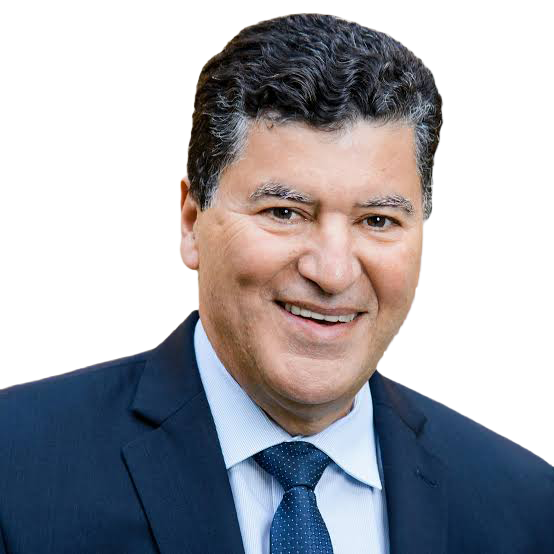
Dr. Zerhouni currently serves as the Vice Chairman and President of OPKO Health. Prior to this executive role, he served as the President of Global Research and Development and as a member of the Executive Committee for Sanofi from January 2011 to July 2018, overseeing extensive international drug pipelines and scientific teams.
Before his tenure in the private pharmaceutical sector, Dr. Zerhouni spent decades shaping academic medicine at Johns Hopkins University and Hospital. At Johns Hopkins, he held the titles of professor of radiology and biomedical engineering and senior adviser for Johns Hopkins Medicine. From 1996 to 2002, he served in prominent leadership roles, including chair of the Russell H. Morgan Department of Radiology and Radiological Sciences, vice dean for research, and executive vice dean of the School of Medicine.
His contributions to public service culminated when President George W. Bush appointed him as the Director of the National Institutes of Health, a position he held from 2002 to 2008. In that role, Dr. Zerhouni managed the agency’s 27 specialized institutes and centers, overseeing a workforce of more than 18,000 employees and a massive federal budget that reached $29.5 billion by 2008.
Recognized for his diplomatic contributions to science, President Barack Obama appointed Dr. Zerhouni in November 2009 as one of the nation’s first presidential U.S. science envoys. He has also lent his expertise as a senior fellow to the Bill and Melinda Gates Foundation and as a senior advisor to the CEO of Sanofi.
An accomplished inventor and author, Dr. Zerhouni has co-founded five start-up companies, authored more than 200 scientific publications, and holds numerous patents. His leadership and scholarly achievements have earned him membership in both the U.S. National Academy of Medicine and the U.S. National Academy of Engineering, alongside international honors including the prestigious Legion of Honor medal from the French National Order, membership in the French Academy of Medicine, and an appointment as Chair of Innovation at the Collège de France.