Navigating daily life for aging relatives, individuals with disabilities, or those managing chronic health conditions is a persistent challenge across the United States. While formal, paid caregiving services such as nursing homes and professional home care provide essential support, they are frequently cost-prohibitive, rarely covered adequately by standard health insurance, and financially out of reach for a significant portion of the population. Consequently, millions of Americans rely on informal caregivers—typically unpaid family members and friends—to bridge this widening gap.
New findings from the KFF Survey of Health Access and Caregiving illuminate the sweeping scope of this invisible workforce. The data details the lived experiences of unpaid caregivers across the United States, shedding light on the heavy physical, mental, and economic tolls they shoulder while attempting to balance employment, personal health, and family responsibilities.
Unpaid Caregiving in the U.S.
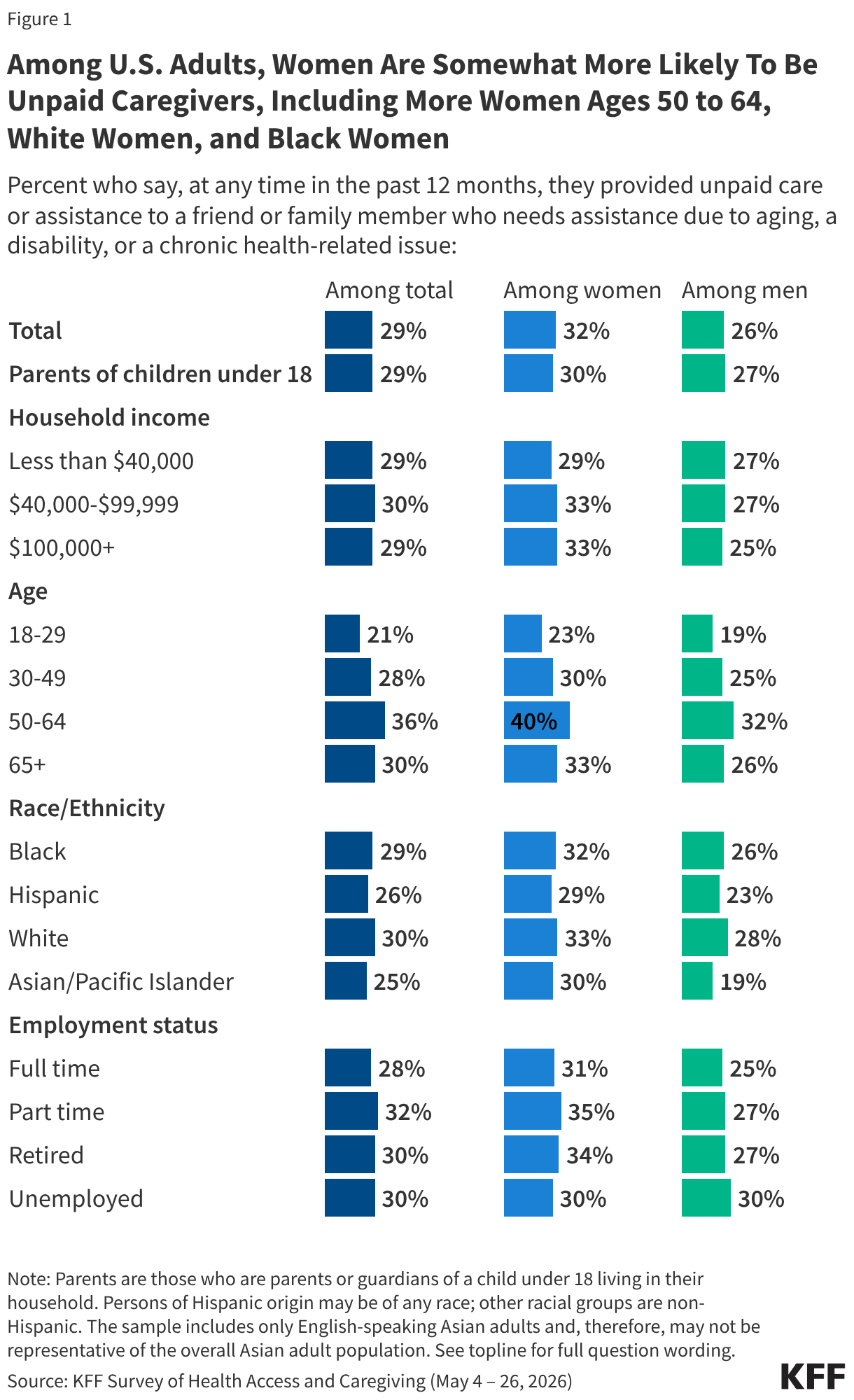
According to the comprehensive survey, roughly three in ten adults in the United States—translating to 29% of the adult population—have provided unpaid care or assistance to a friend or family member over the past 12 months. This vital assistance is typically prompted by the recipient’s advanced age, a physical or cognitive disability, or ongoing chronic health challenges.
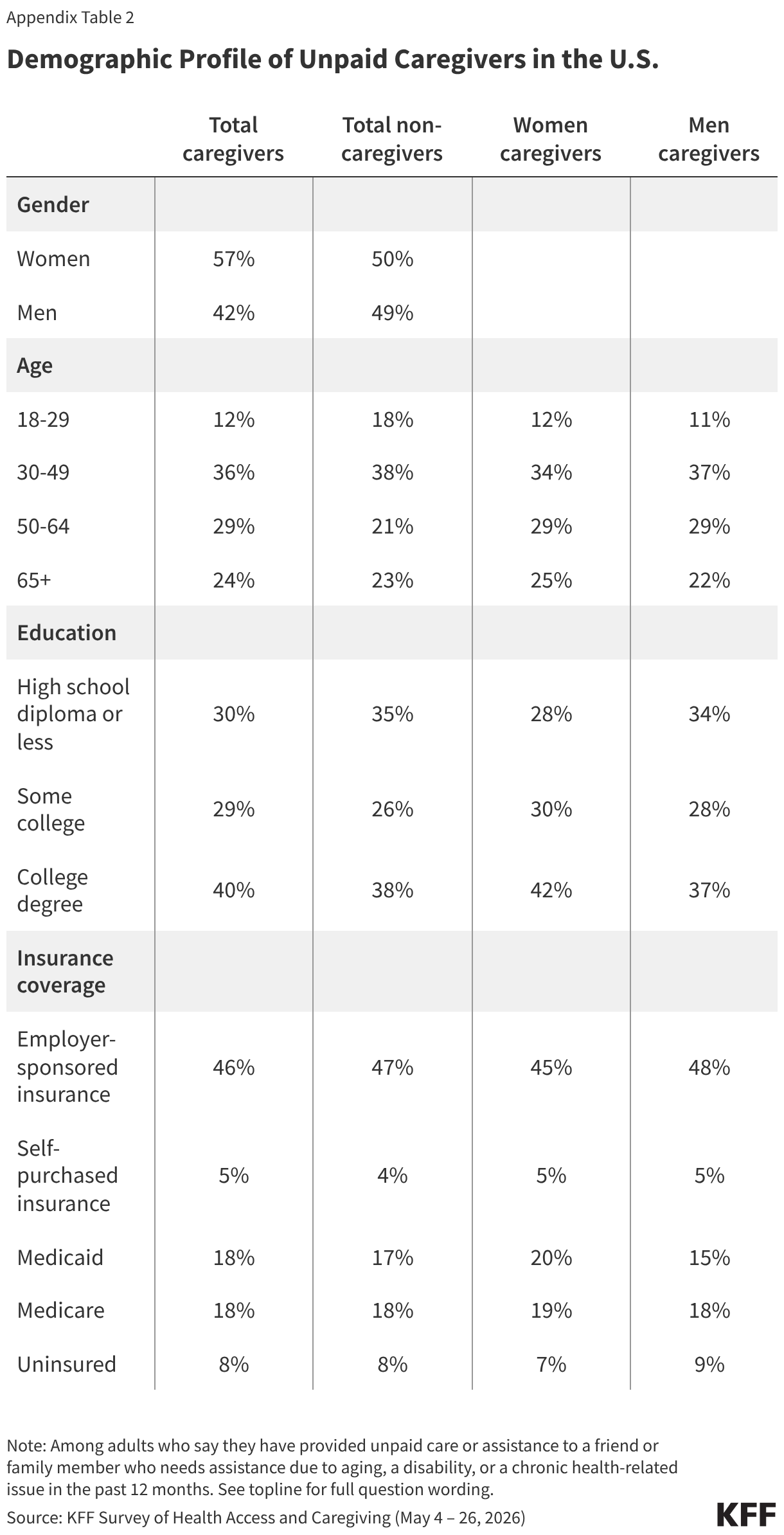
The profile of the average unpaid caregiver reveals a demographic that leans heavily female and skews older than the non-caregiving adult population. Women account for 57% of unpaid caregivers, while men comprise 42%. Furthermore, more than half of all caregivers (53%) are aged 50 or older, compared to 44% of non-caregivers. In terms of racial and ethnic breakdown, the caregiving population largely reflects the broader diversity of the country: 63% of unpaid caregivers identify as White, 15% as Hispanic, 12% as Black, and 5% as Asian or Pacific Islander.
Balancing caregiving duties with the demands of daily life presents a complex logistical hurdle for many participants. Nearly half of all unpaid caregivers (44%) report being employed full-time, while roughly four in ten are out of the workforce entirely, a group that includes 21% who are retired. Additionally, more than a quarter of caregivers (26%) are parents or legal guardians raising children under the age of 18 in their households.
Among caregivers under the age of 50, that figure jumps dramatically: nearly half are also raising minor children. Strikingly, one in six unpaid caregivers—about 16%—are simultaneously employed full-time while raising minor children and providing unpaid support to an aging or ailing relative. This dynamic forces them to navigate what many sociologists and health advocates describe as the ultimate balancing act between generations.
Beyond external demands, unpaid caregivers frequently contend with their own complex medical needs. Three in ten caregivers report that they have personally received medical treatment or taken prescription medication for three or more chronic health conditions over the past year, underscoring the reality that many caregivers are managing fragile health profiles of their own while tending to others.
How Many Adults in the U.S. Are Unpaid Caregivers?
A closer examination of the survey data reveals distinct demographic trends regarding who assumes these caregiving roles. While 29% of all U.S. adults provide unpaid care, the prevalence is somewhat higher among women (32%) compared to men (26%). Age is also a primary factor, with individuals between the ages of 50 and 64 reporting the highest participation rates at 36%, surpassing both younger cohorts and adults over 65.
Racial patterns show subtle variations as well. Approximately three in ten White adults (30%) and Black adults (29%) report engaging in unpaid caregiving over the previous year, slightly outstripping the rates reported by Hispanic adults (26%) and Asian or Pacific Islander adults (25%).
Gender influences caregiving across nearly all major demographic divisions. For instance, four out of ten women between the ages of 50 and 64 report providing unpaid assistance to a friend or family member, compared to 32% of men in the same age bracket. Similar margins appear along racial lines, where roughly one-third of White women (33%) and Black women (32%) act as caregivers, compared to smaller shares among their male peers. Mothers of children under 18 are also slightly more likely to take on unpaid caregiving responsibilities than fathers, at 30% versus 27%.
When evaluating employment status and household income, women maintain a higher likelihood of serving as caregivers across most categories, including full-time workers, part-time workers, and retirees. However, among unemployed individuals and those living in households with annual incomes below $40,000, the gender gap narrows, with men and women participating at nearly identical rates.
How Much Time Adults Spend Providing Unpaid Care
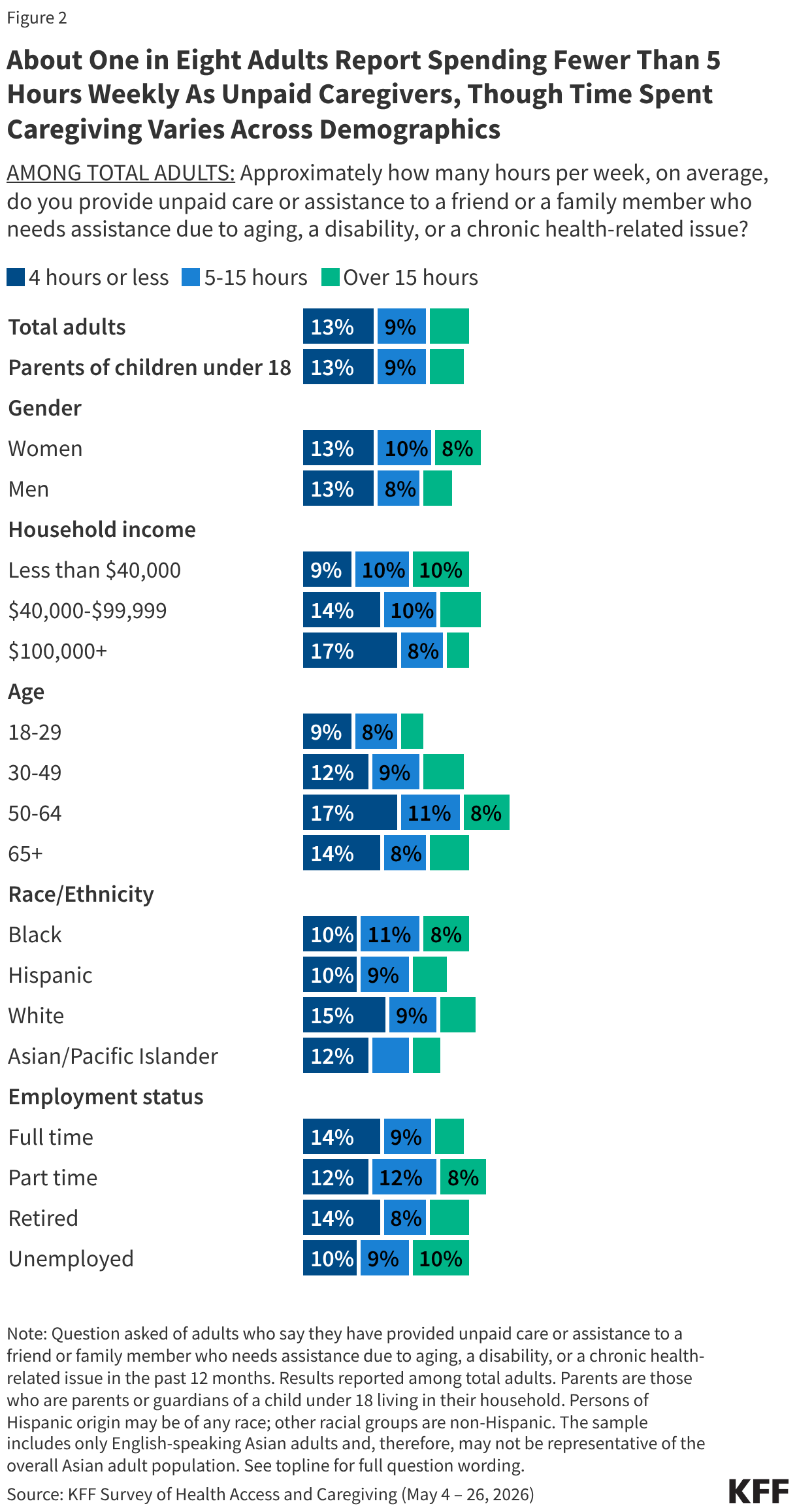
The daily and weekly time commitments required for unpaid caregiving vary widely, though five hours per week stands as the median time investment reported by respondents. Nearly half of all unpaid caregivers—representing 45% of caregivers or roughly 13% of all U.S. adults—spend four hours or less per week on caregiving tasks. At the other end of the spectrum, about a quarter of caregivers, or 23%, dedicate more than 15 hours every week to supporting their loved ones.
Women are slightly more likely than men to log intensive hours exceeding 15 hours per week, representing 8% of all women compared to 5% of all men. This disparity is particularly pronounced among women aged 50 to 64 and Black women, where approximately one in ten devotes more than 15 hours weekly to caregiving tasks.
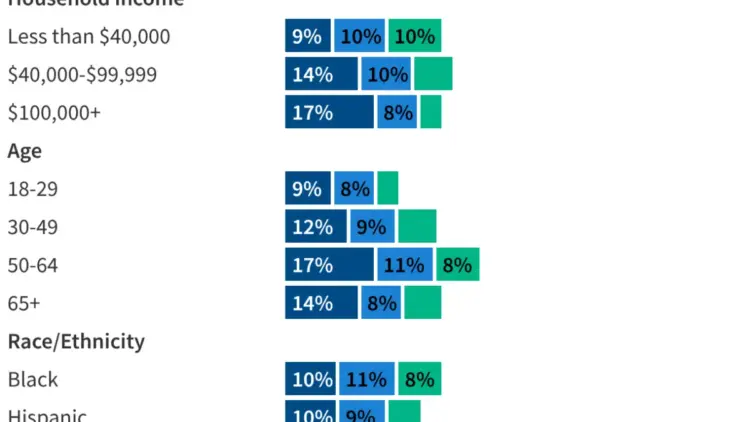
Socioeconomic factors heavily influence the time commitment required of caregivers. Lower-income adults consistently report spending more hours per week providing care than higher-income peers. Approximately one in ten adults with household incomes below $40,000 provide care for more than 15 hours a week, contrasted with just 4% of individuals from households earning over $100,000. This disparity likely reflects both the high costs associated with hiring professional care and the reality that lower-income workers may have fewer workplace flexibilities or financial resources to outsource support. While full-time workers generally report fewer caregiving hours than part-time or unemployed individuals, 5% of full-time employees still manage to dedicate upwards of 15 hours weekly to unpaid care.
The Toll of Unpaid Caregiving
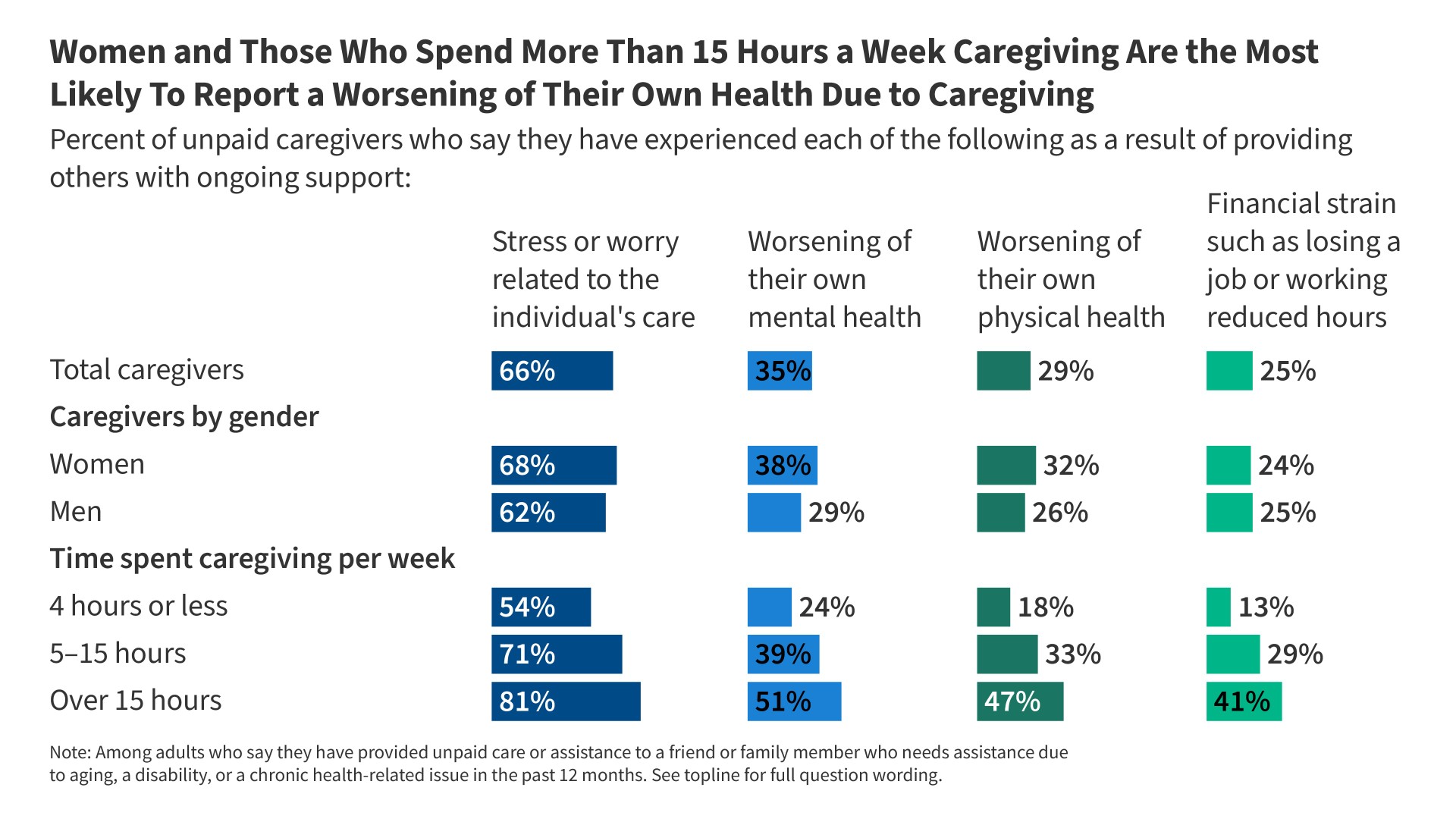
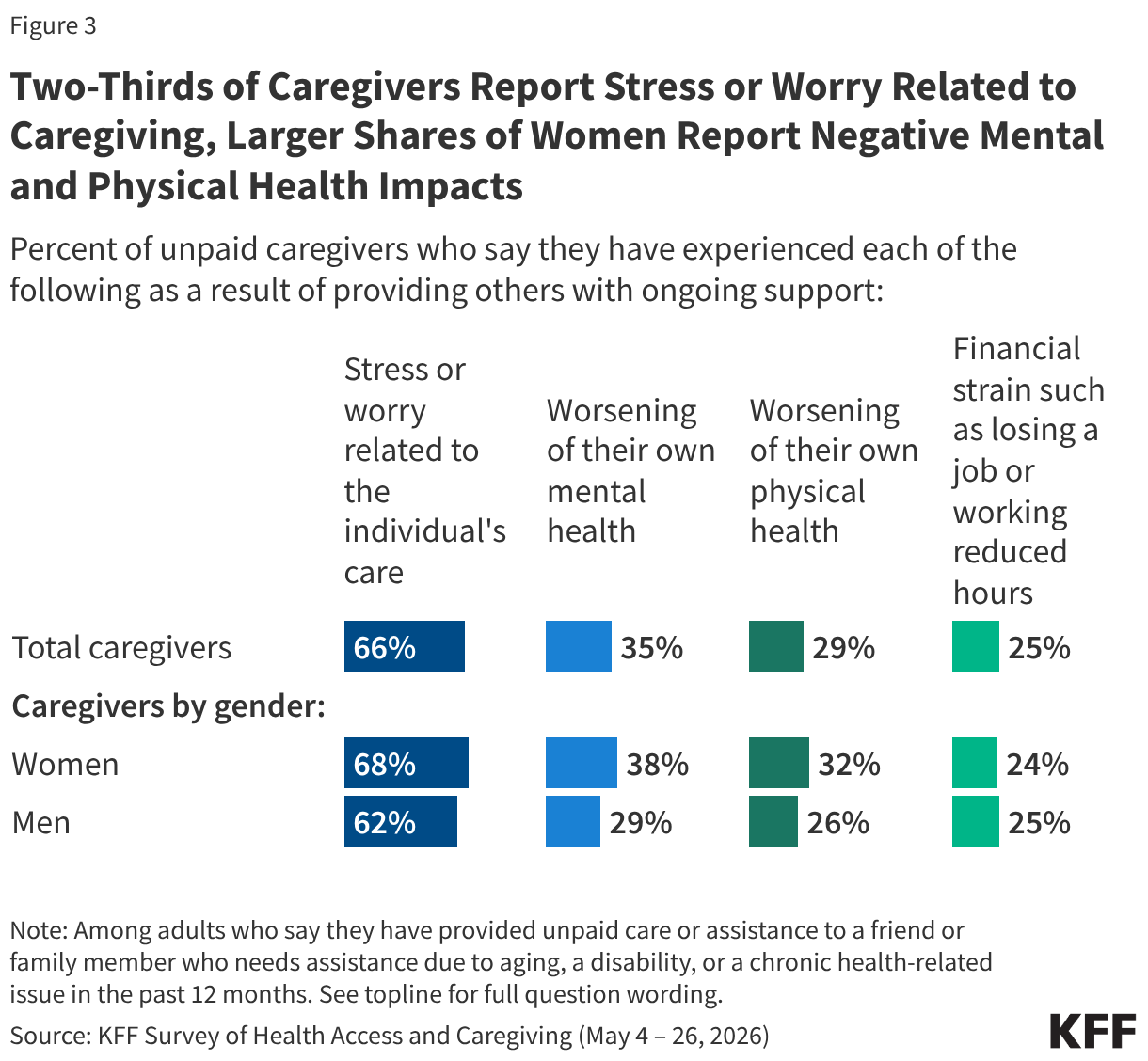
The KFF survey underscores the profound physical, emotional, and financial toll that informal caregiving extracts from individuals. Two-thirds of unpaid caregivers—66%—report experiencing significant stress or worry directly tied to their responsibilities. Furthermore, at least a quarter report tangible declines in their personal well-being, with 35% noting a worsening of their mental health and 29% citing a deterioration in their physical health. Financial strain is also prevalent, with one-quarter of caregivers reporting negative economic impacts, such as losing a job, missing career opportunities, or being forced to reduce their working hours.
Female caregivers report heightened vulnerability to these negative outcomes, with 68% experiencing caregiving-related stress or worry compared to 62% of men. Women also report higher rates of declining mental health (38% versus 29% for men) and physical health (32% versus 26% for men).
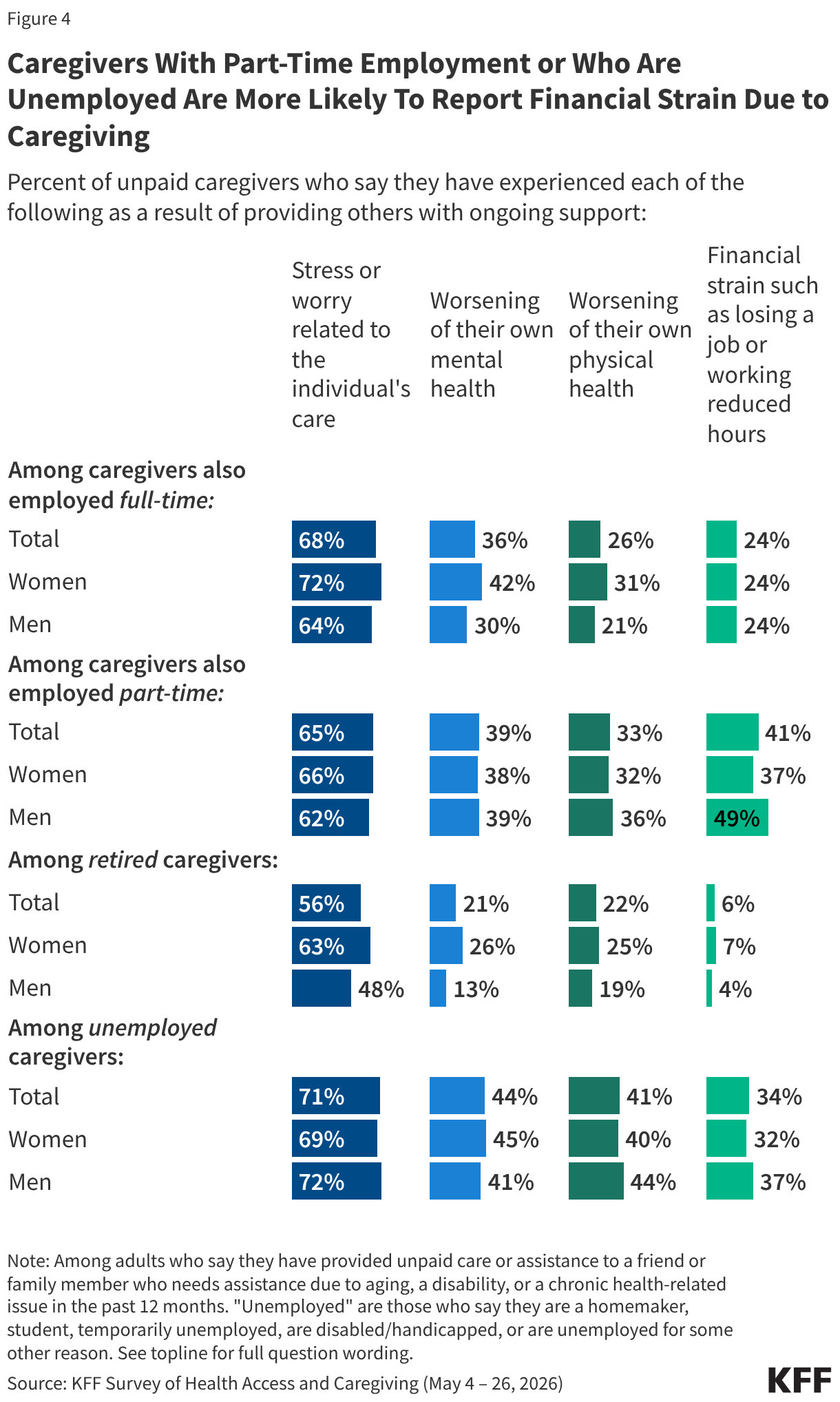
Employment status interacts significantly with these financial and health outcomes. The share of caregivers reporting negative economic impacts is highest among part-time workers (41%) and unemployed individuals (34%), suggesting that many in these groups were forced to cut back their hours or exit the workforce entirely due to the demands of caring for a relative. Interestingly, among part-time workers, men are more likely than women to report financial strain at 49% to 37%, while unemployed caregivers experience similar financial pressures regardless of gender. Among full-time workers and retirees, however, women remain more likely than men to report declines in their mental and physical health resulting from their caregiving duties.
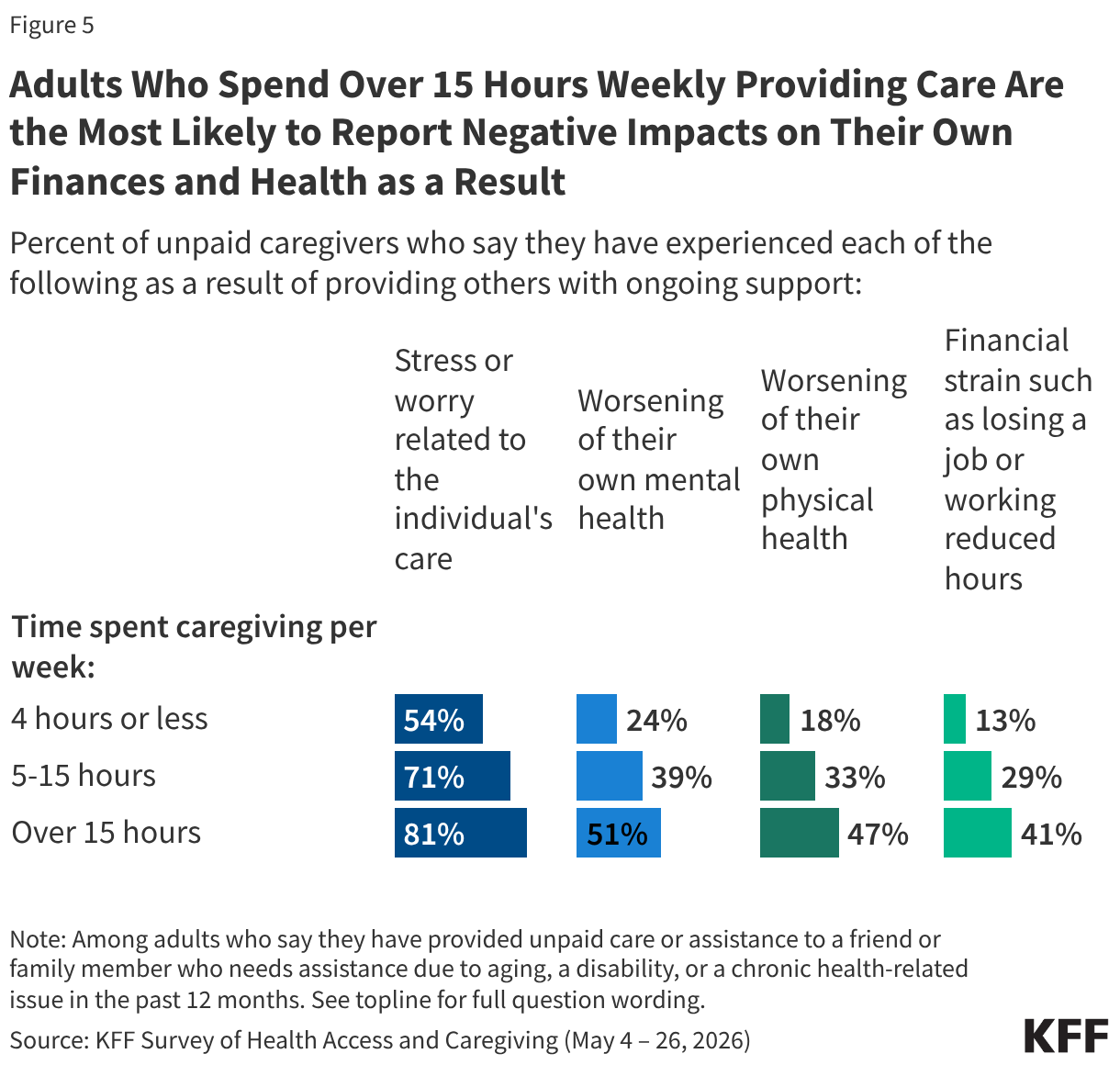
The intensity of the time commitment directly correlates with the severity of the toll. Among caregivers who dedicate more than 15 hours a week to supporting someone, roughly eight in ten report experiencing stress or worry. About half of this high-intensity group report declines in their mental health (51%) or physical health (47%), and 41% report notable financial strain. These figures dramatically outpace the rates reported by caregivers who spend fewer hours each week on assistance.
Experiences of Unpaid Caregivers Managing Their Own Health Conditions
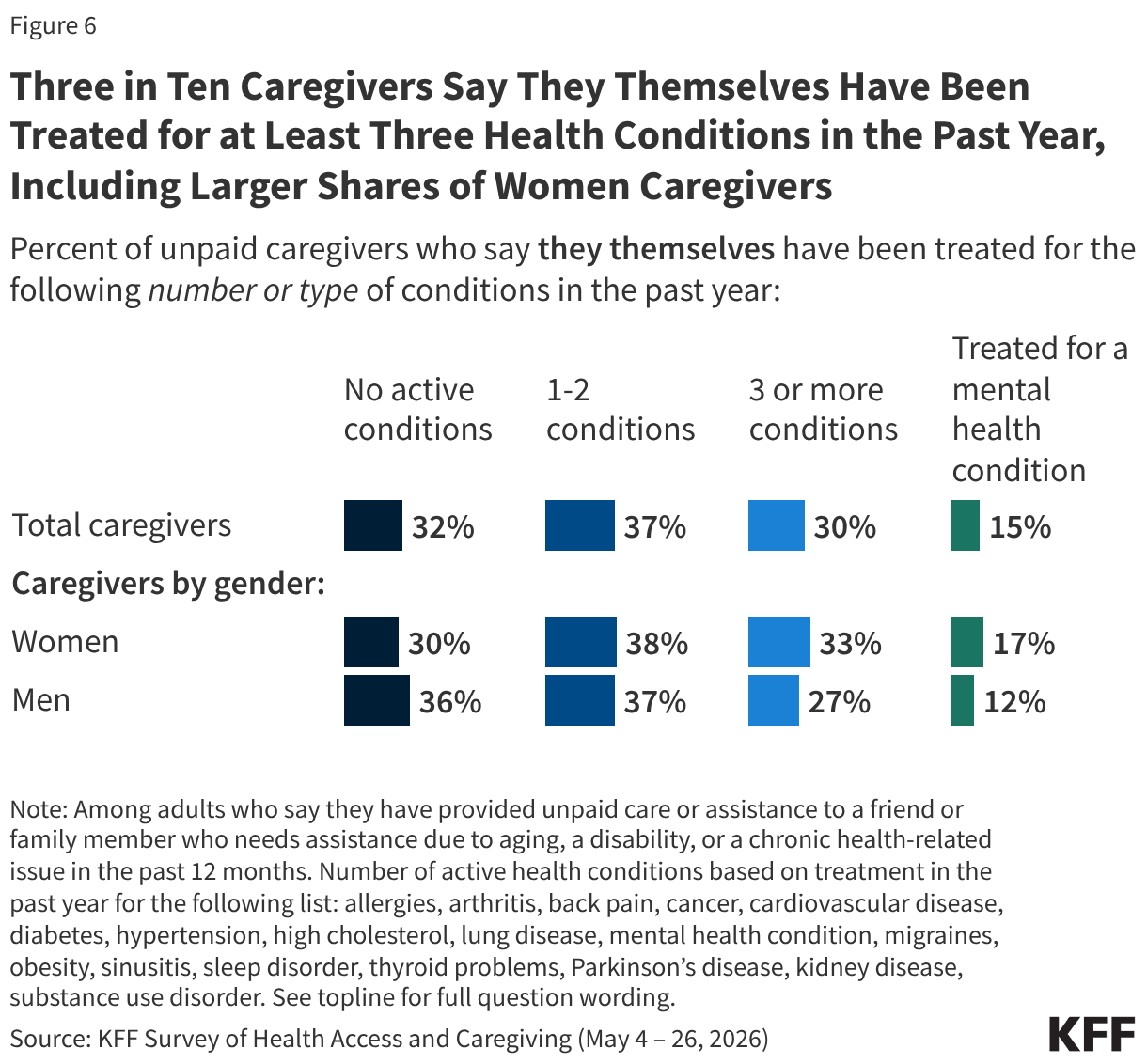
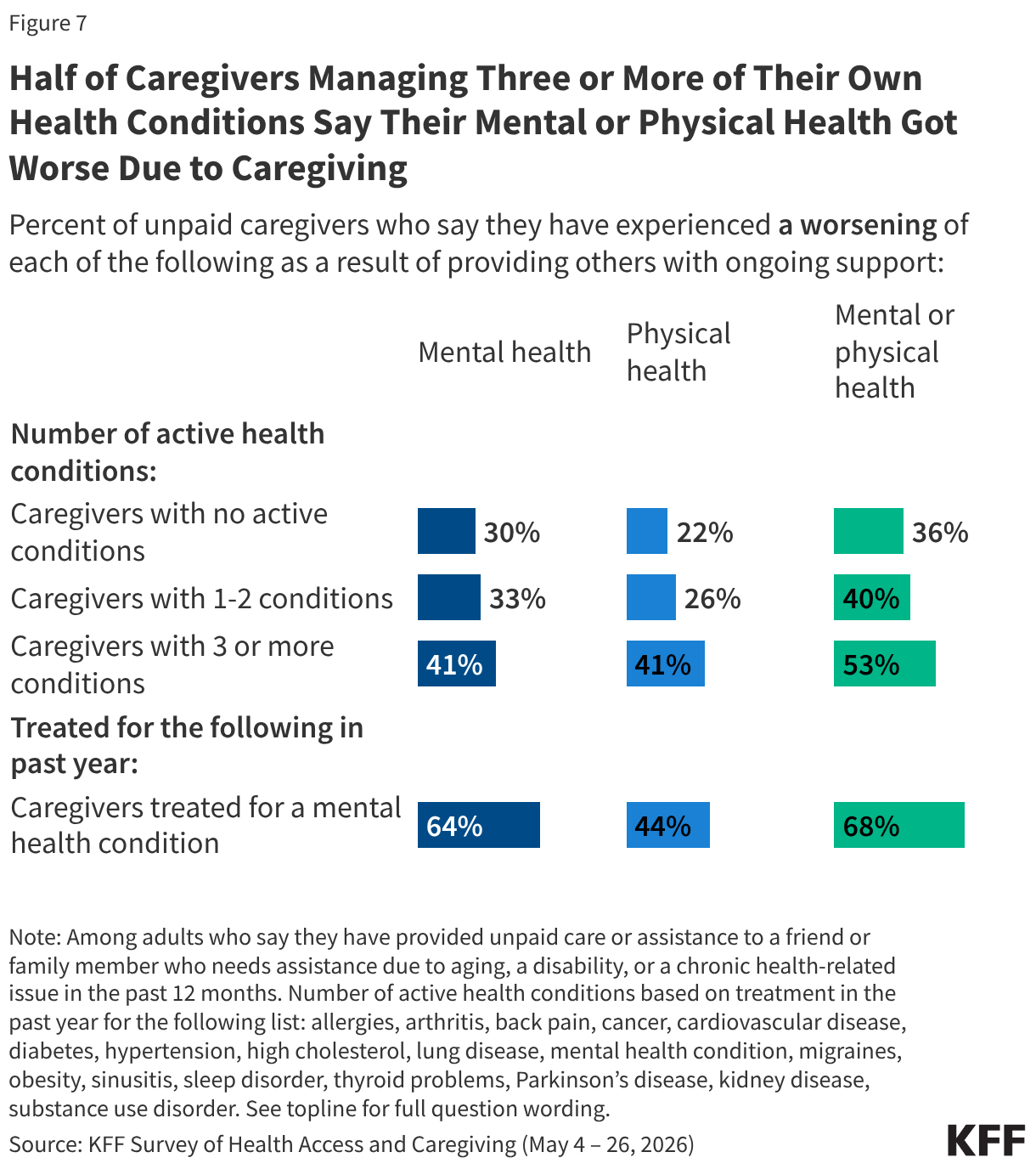
The intersection of caregiving and personal illness presents compounding challenges. With three in ten caregivers managing three or more chronic health conditions, the physical and emotional burden of providing health assistance to others while tending to one’s own medical needs becomes formidable. Additionally, 15% of caregivers report receiving professional treatment for a mental health condition over the past year.
Female caregivers are disproportionately affected by these concurrent health challenges. One-third of women caregivers manage three or more active health conditions, compared to 27% of men. Similarly, 17% of female caregivers receive mental health treatment, compared to 12% of male caregivers.
For caregivers already managing chronic health issues, the act of providing care frequently exacerbates their conditions. Half of caregivers dealing with three or more health conditions report that their overall health has worsened due to caregiving responsibilities, with 41% noting a decline in mental health and an equal percentage noting a decline in physical health. Among caregivers actively receiving treatment for a mental health condition, nearly two-thirds report that their mental health has deteriorated further as a result of their caregiving duties.
Types of Assistance Unpaid Caregivers Provide
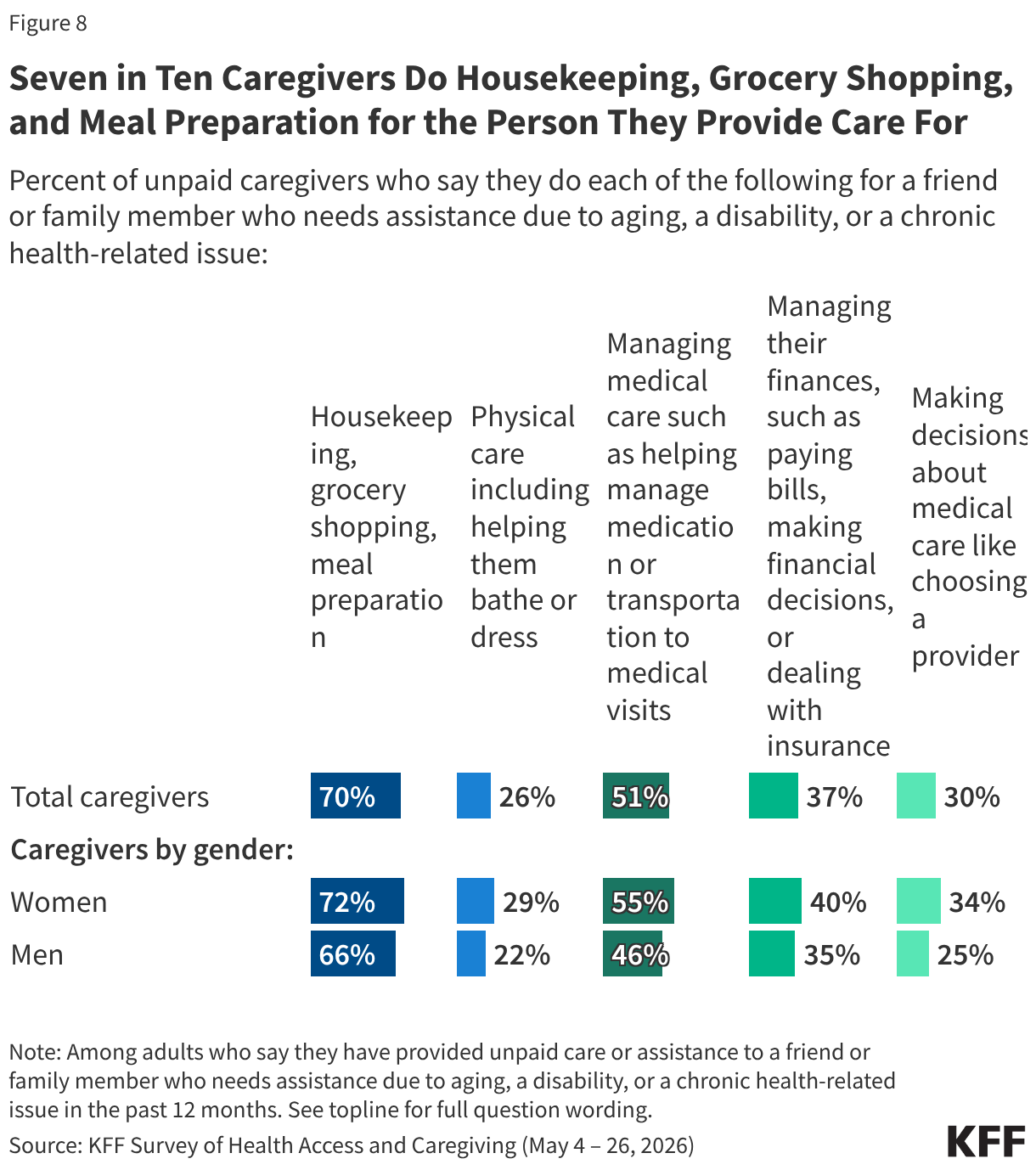
Unpaid caregivers perform a wide array of essential, often demanding tasks to maintain the daily lives of their care recipients. The most common form of assistance is housekeeping, grocery shopping, or meal preparation, which is undertaken by 70% of all caregivers, including 72% of women and 66% of men. About half of all caregivers manage an individual’s medical care, such as organizing medications or providing transportation to doctor appointments. Smaller yet substantial shares manage household finances (37%), make critical medical decisions (30%), and provide intimate physical care like bathing or dressing (26%).
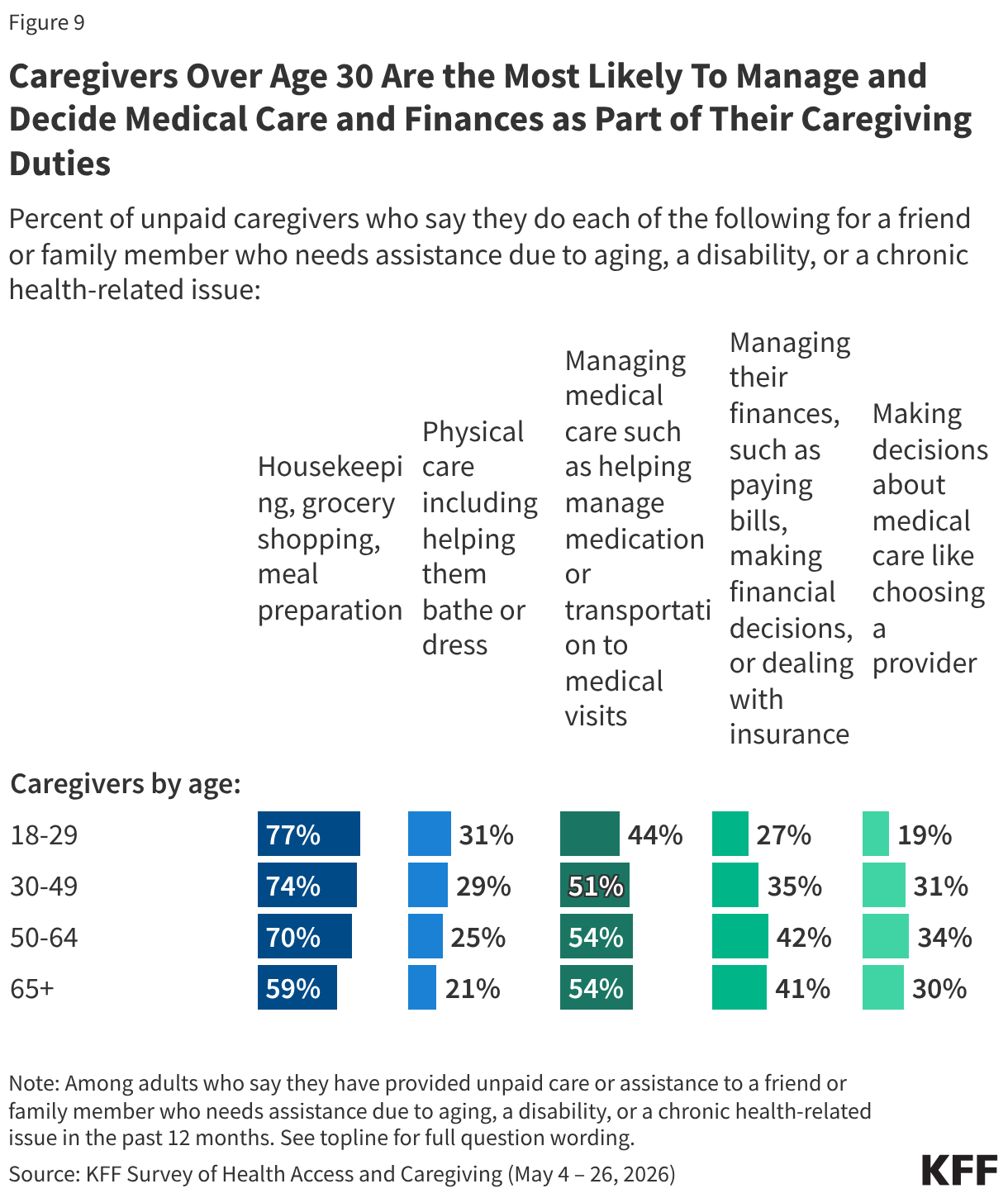
Age influences the specific types of care provided. Younger caregivers between the ages of 18 and 29 are less likely than older adults to handle complex financial and medical decision-making. Only about two in ten younger caregivers make medical choices or handle finances, compared to at least three in ten among older cohorts. Instead, younger caregivers report higher rates of providing hands-on daily tasks, such as housekeeping, grocery shopping, and meal preparation (77%), or physical care (31%).
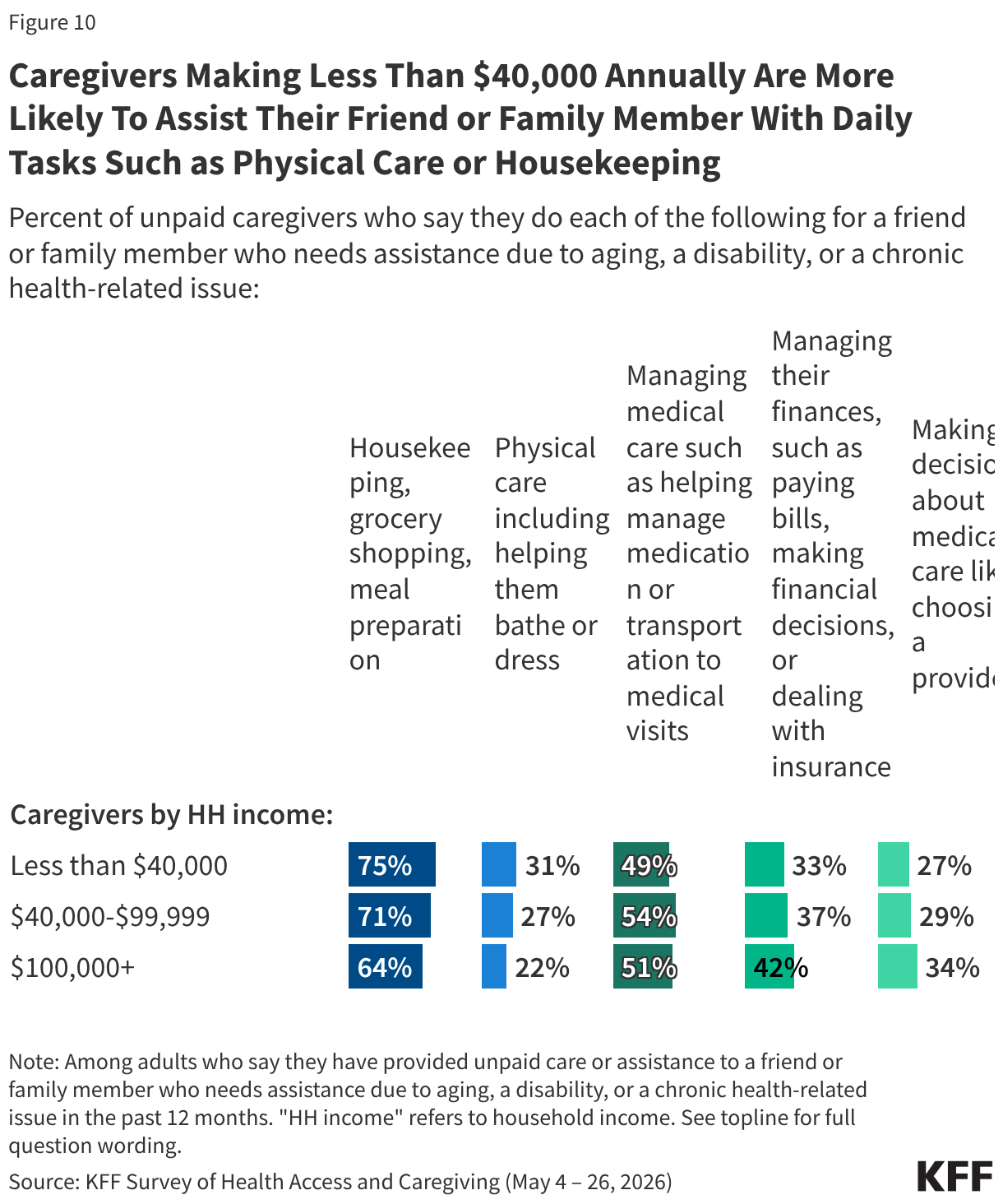
Conversely, the oldest demographic of caregivers—those aged 65 and older—are less involved in physically demanding tasks like housekeeping or bathing, yet older female caregivers remain more active in these areas than their male peers. Household income also shapes the nature of care provided; lower-income caregivers are more likely to perform physically demanding tasks like grocery shopping and physical care, whereas higher-income caregivers report higher involvement in managing medical care, finances, and provider selection.
Many caregivers do not operate within a single domain of assistance. Nearly four in ten report providing at least three distinct types of care measured by the survey. Women are notably more likely than men to juggle three or more types of care, a figure that surges to 76% among women who dedicate more than 15 hours a week to caregiving tasks.