
In an increasingly fast-paced world saturated with constant digital interruptions and endless distractions, educators, parents, and developmental specialists are increasingly seeking practical solutions to help children and teenagers cultivate deep concentration. Attention is widely recognized by behavioral scientists and educators as a foundational cognitive skill—the critical mechanism that allows young learners to listen actively, absorb new information, pursue ambitious goals, and wrestle with challenging academic problems.

Recent educational research emphasizes that attention is not merely an innate trait that a student either possesses or lacks; rather, it is a malleable executive functioning skill that can be systematically strengthened over time. By incorporating evidence-based strategies into daily routines and school environments, children and teens can fundamentally improve their capacity to tune in, concentrate, and achieve their unique personal and academic milestones.
To understand what makes these interventions reliable, researchers often look to "evidence-based approaches"—methods backed by rigorous, peer-reviewed scientific studies. The gold standard for identifying these dependable practices involves reviewing meta-analyses, which are comprehensive scientific reports that synthesize the results of numerous individual studies to determine overarching trends and absolute effectiveness. From physical movement and mindfulness to structured breaks and proper rest, a growing body of scientific literature now outlines the specific tools that can transform how young minds manage focus.

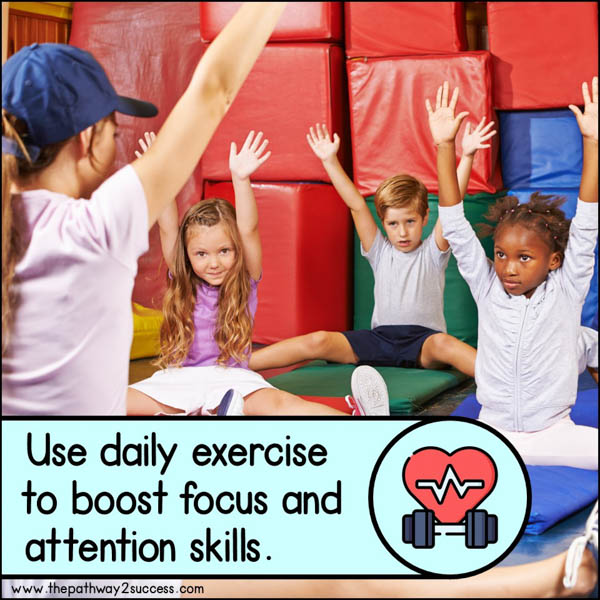
Regular physical exercise has emerged as a cornerstone for enhancing cognitive function and academic engagement among youth. According to a prominent meta-analysis examining the relationship between physical activity and academic performance, regular exercise yields a consistently positive effect on attention spans and overall classroom achievement. Crucially, the research demonstrates that the most pronounced cognitive benefits are reaped when physical activity is sustained consistently over many weeks rather than treated as an isolated event. Additional reports from educational and health authorities specifically highlight that embedding short bursts of movement directly into classroom lessons can significantly increase a student’s attention and time-on-task metrics.
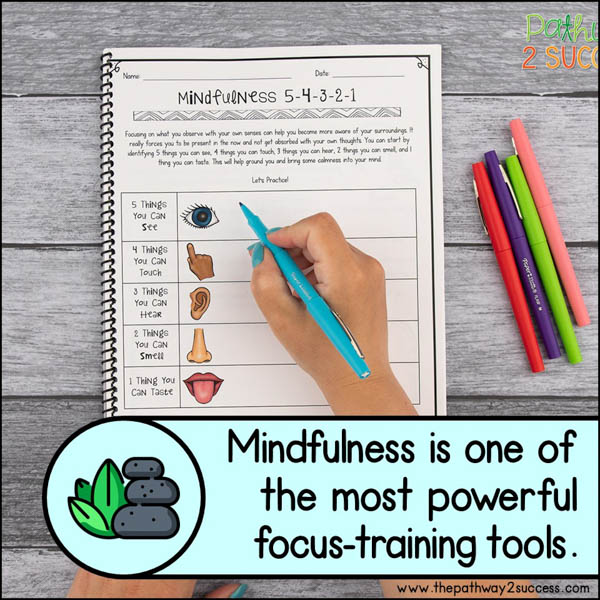
Closely related to physical activity is the practice of mindfulness and meditation, which centers on anchoring awareness squarely in the present moment. Mindfulness can be cultivated through various techniques, including focused breathing exercises, guided relaxation, and sensory observation. Substantial psychological research details the wide-ranging benefits of these practices, noting significant improvements in behavioral self-regulation, a reduction in emotional reactivity, and an overall boost in psychological well-being. When evaluating attention specifically, comprehensive meta-analyses reveal that structured mindfulness interventions produce significant positive effects on both focused and sustained attention, positioning it as one of the most robust cognitive training tools available.
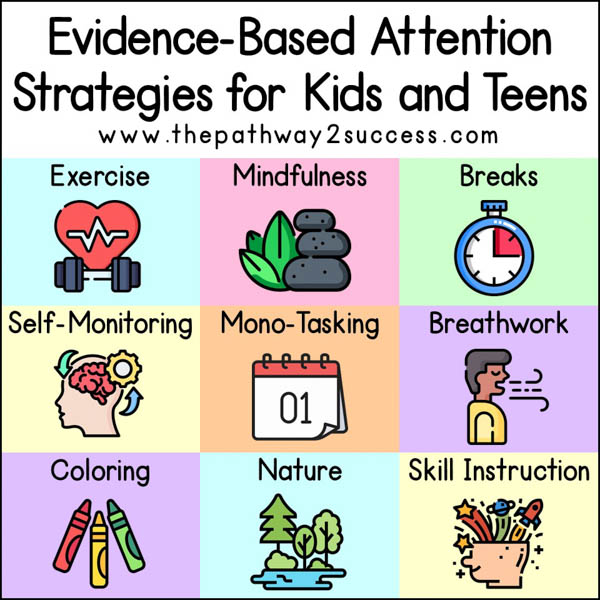
In tandem with mindfulness, the strategic implementation of breaks throughout the day plays an indispensable role in cognitive functioning. Breaks provide essential, short-duration windows for the brain to regroup and refresh, which paradoxically enhances overall productivity and focus rather than detracting from it. Scientific experiments investigating both passive breaks—such as listening to a story—and active breaks involving physical movement have demonstrated that any structured pause from rigorous academic demands yields measurable improvements in attention. Broader educational research reinforces these findings, indicating that routine academic pauses lead to sustained on-task behavior and superior long-term academic outcomes.
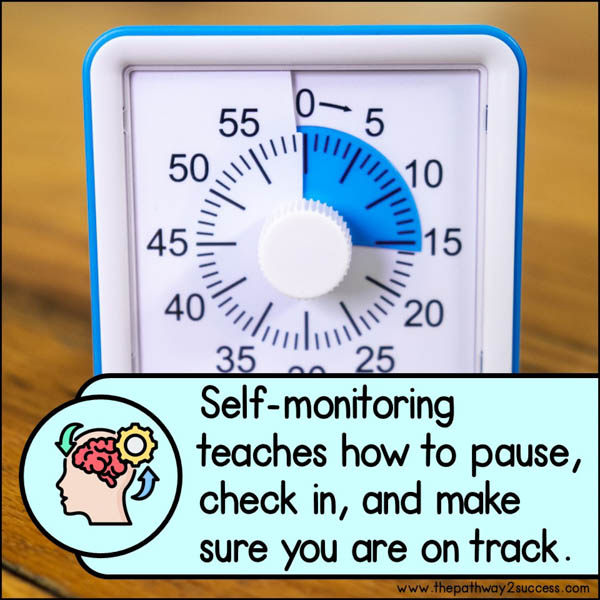
Self-monitoring represents another powerful cognitive strategy, encouraging learners to continuously evaluate, assess, and adjust their own behaviors to ensure alignment with their immediate goals. When utilizing self-monitoring techniques, a student might periodically pause during a complex assignment to evaluate their current level of engagement, recognizing independently if they have drifted off-task. By identifying this shift early, the learner can deploy self-correction strategies to re-engage and resume their work. Extensive reviews and meta-analyses confirm that self-monitoring is a particularly effective intervention for students who experience specific challenges related to attention and executive function.
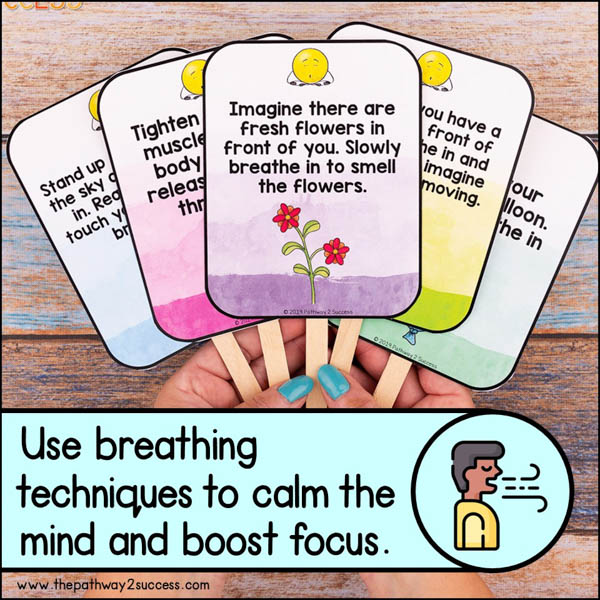
Controlled breathing techniques offer an immediate physiological pathway to enhanced focus and stress reduction. Purposeful diaphragmatic breathing is strongly backed by scientific literature for its ability to improve sustained attention while simultaneously lowering cortisol levels and mitigating negative emotional affect. Neuroscientific research explains the underlying mechanics: by engaging in slow, deep breathing, individuals can soothe the amygdala—the brain’s emotional processing center—thereby reducing anxiety and unlocking a state of calm concentration that facilitates better learning.
The concept of mono-tasking has also gained renewed attention among cognitive researchers addressing the modern pitfalls of digital multitasking. Scientific literature consistently shows that true multitasking is largely a myth; instead of processing multiple streams of information simultaneously, the human brain rapidly switches back and forth between tasks. This constant cognitive shifting degrades attention, lowers overall productivity, increases the frequency of errors, and accelerates mental fatigue. Mono-tasking offers a direct remedy by encouraging learners to consciously direct all of their cognitive resources toward a single goal at a time.
Environmental factors, particularly exposure to natural settings, play a surprisingly vital role in cognitive restoration. According to attention restoration theory, spending time in nature helps alleviate mental fatigue and refreshes depleted attention reserves. Meta-analytic research demonstrates that working memory, cognitive flexibility, and attentional control all show measurable improvements following exposure to natural environments. Interestingly, studies indicate that even when physical access to the outdoors is unavailable, incorporating natural views into indoor learning spaces can yield similar restorative cognitive benefits.
Direct skill instruction serves as a foundational pedagogical approach for imparting these complex cognitive competencies. By explicitly teaching, modeling, and providing structured practice for skills that students find difficult—ranging from reading comprehension and task initiation to advanced study methods—educators help learners build a personalized toolbox of strategies. This structured approach is especially beneficial for developing executive functioning skills, operating on the foundational principle that if society expects young people to master complex attentional and organizational skills, those skills must be deliberately taught and practiced over time.

Creative outlets such as coloring have likewise been validated as effective tools for reducing anxiety while simultaneously boosting selective attention. Controlled experiments involving students and young adults demonstrate that engaging in structured coloring activities leads to stronger selective attention and an enhanced ability to manage environmental distractions, such as background noise, during complex cognitive tasks. Importantly, researchers note that these benefits extend across various age groups, making coloring a universally accessible strategy for both younger children and older teens.
Similarly, yoga combines physical postures and mental discipline to foster deep concentration. A comprehensive review of multiple studies focusing specifically on yoga and attention skills indicates that regular yoga practice produces significant improvements in attentional control among children, alongside secondary benefits such as enhanced memory and reduced stress levels.
Brainteasers and logic puzzles offer another engaging avenue for reinforcing cognitive control. Recent studies examining children who regularly engage with puzzle-based curricula demonstrate notable gains in attention span and self-regulation compared to control groups, proving that cognitive training can successfully be integrated into playful, engaging formats.
Finally, while not a classroom-based strategy, adequate sleep remains an indispensable biological prerequisite for daytime attention and cognitive performance. Extensive scientific literature underscores that during high-quality sleep, the brain performs essential housekeeping and memory consolidation operations required for optimal focus the following day. Sleep deprivation directly compromises attention spans, degrades concentration, and slows reaction times, highlighting rest as a non-negotiable element of cognitive health.
As experts note, because every child and teenager is a unique individual, the efficacy of these evidence-based attention strategies will vary from person to person and across different developmental stages. By experimenting with a diverse array of scientifically supported techniques and consciously evaluating what works best for their individual needs, young learners can develop the self-awareness necessary to optimize their focus, well-being, and academic success.