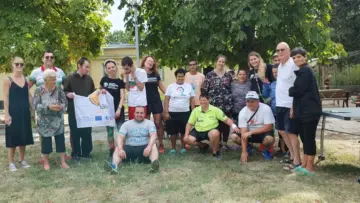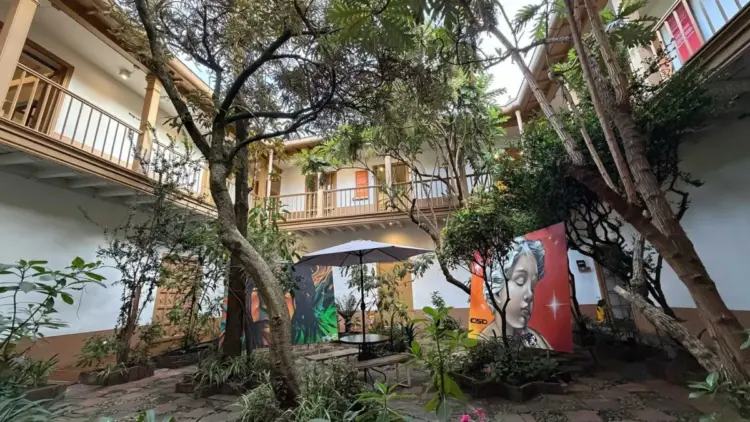
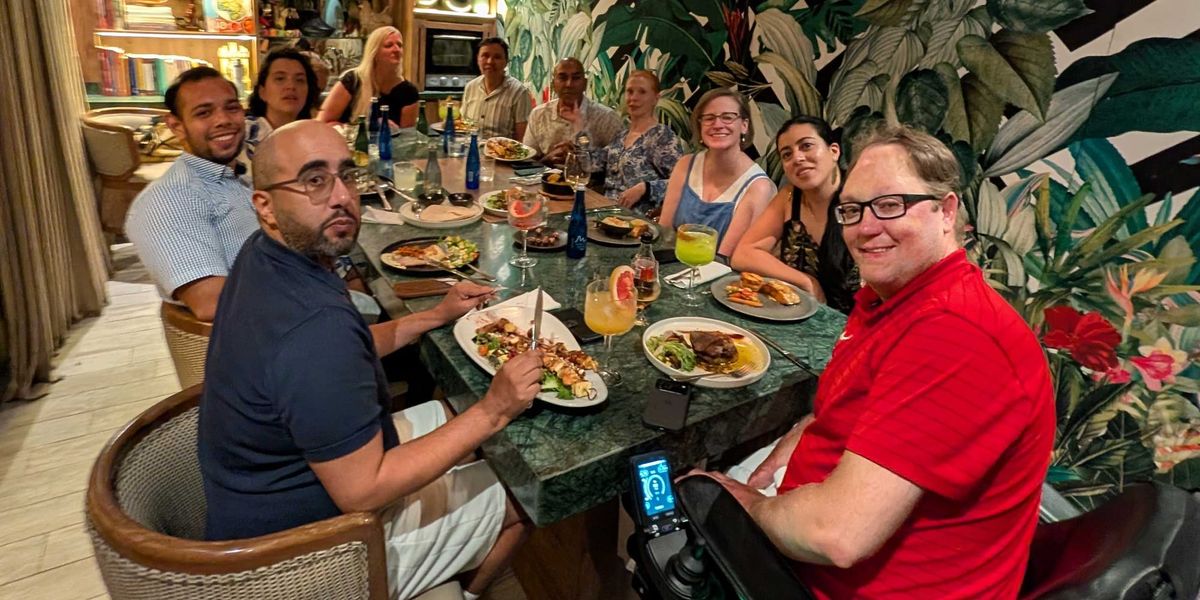
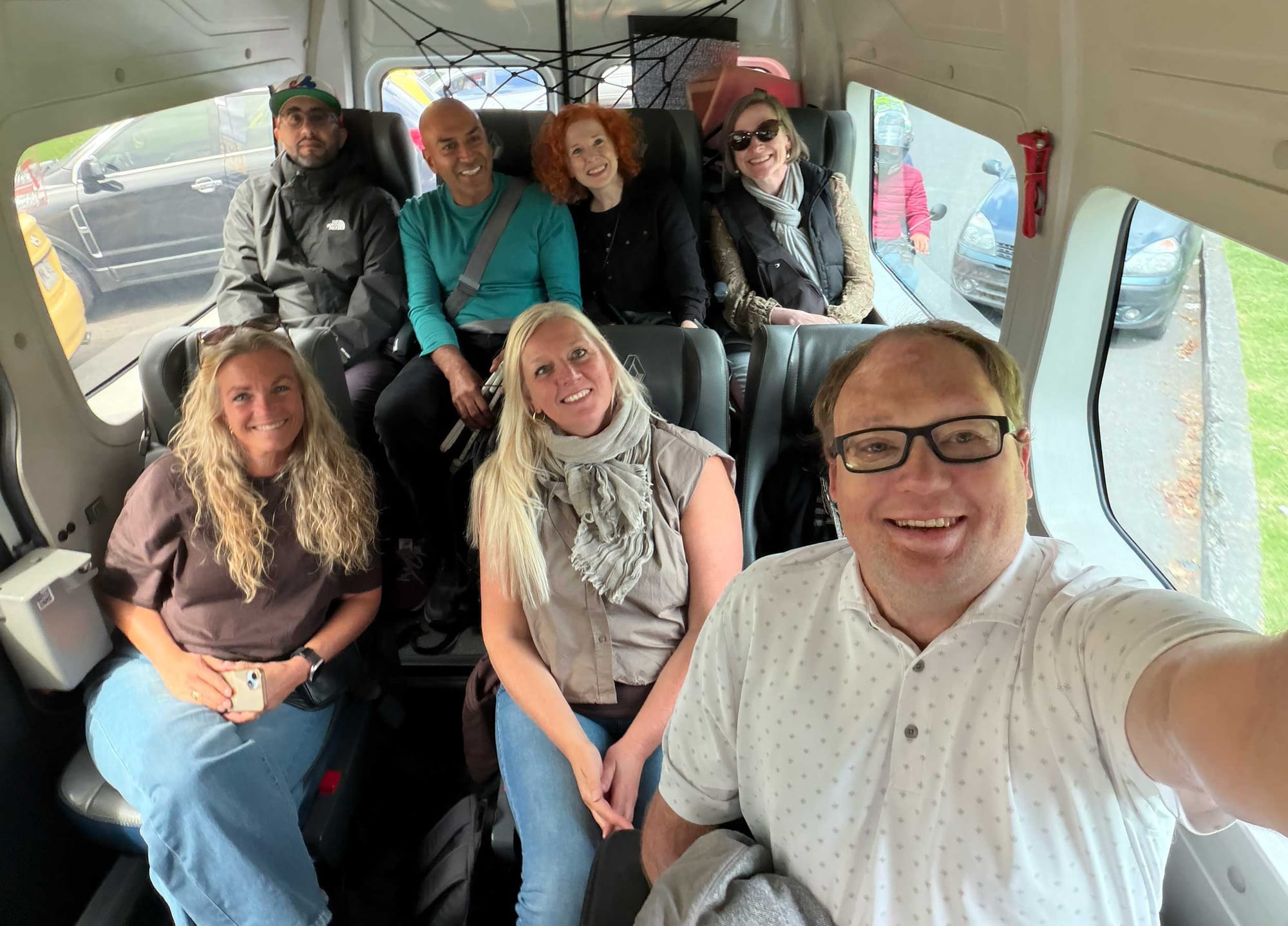
Happy Friday, friends. I recently returned from a wonderful, action-packed tour of Colombia, where I spent time exploring the vibrant cities of Bogotá, Barranquilla, and Cartagena. I had the absolute pleasure of experiencing the country’s unique sights, sounds, and tastes alongside a select group of travel professionals who were invited, much like myself, to evaluate Colombia as an emerging touristic destination.
My primary professional objective during the journey was to research whether Colombia would be a suitable and accommodating location to host a future Wheelchair Travel Group Trip. While the country’s ground transportation providers do not yet possess specialized vehicles equipped to serve a larger group of wheelchair users simultaneously, I found that there is certainly the existing infrastructure and capacity to support individual travelers and families. I will be publishing a comprehensive deep dive into the overall state of accessibility and tourism in Colombia in a future article, but for now, I am eager to share a few standout highlights from my time in South America.
Before diving into the details of the journey, it is worth noting the overwhelming response to our recent announcements. The 2027 Wheelchair Travel Group Trip to Morocco, which was officially revealed in our last newsletter, completely sold out within just 24 hours. For those who missed out on that particular excursion, there is no need to fret; we have exciting news regarding another upcoming group tour to one of my absolute favorite global destinations slated for the spring.
Tasting Strange Fruits in Colombia
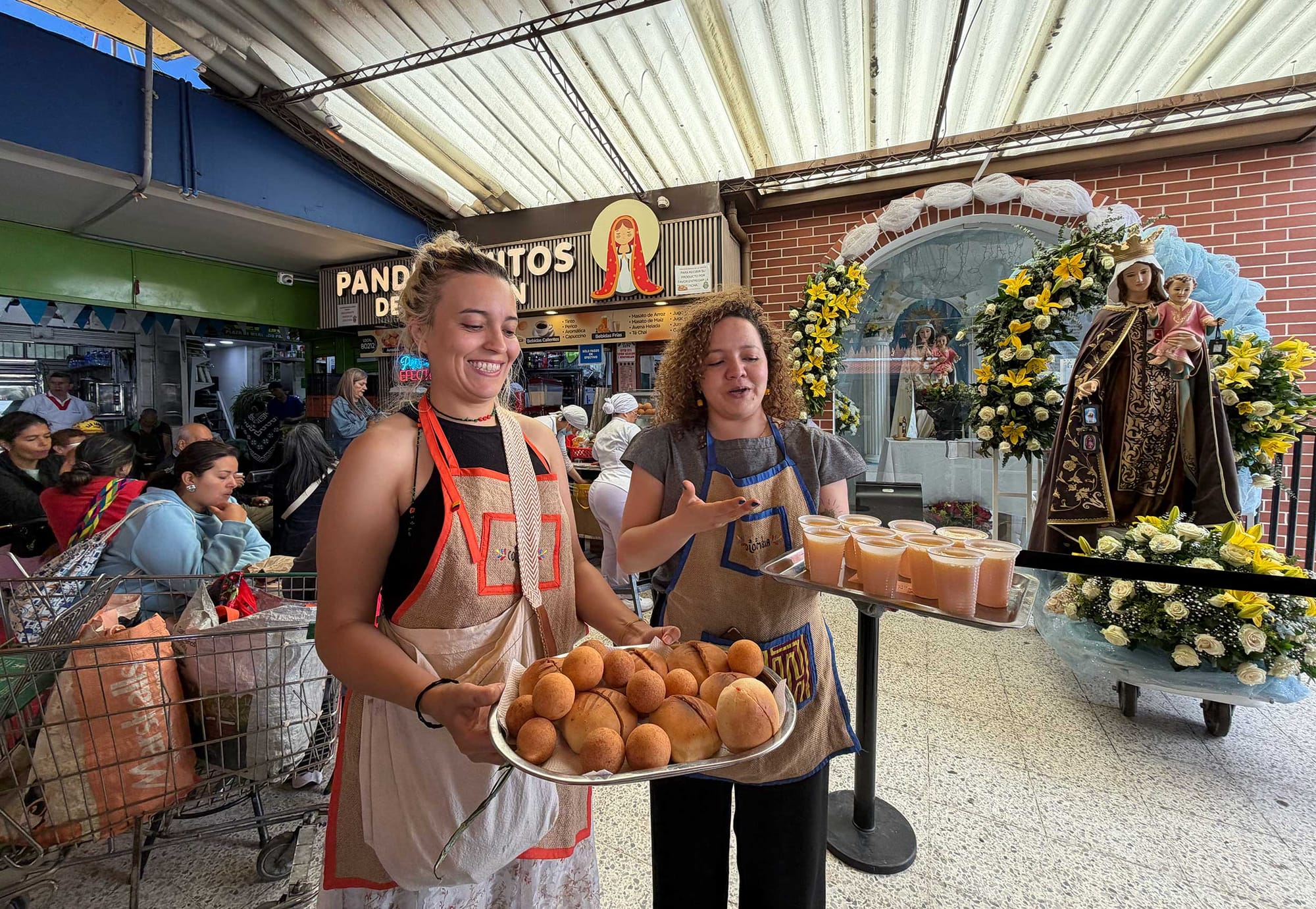
One of the most popular and culturally vibrant attractions in Bogotá is the bustling Paloquemao Market, recognized widely as the city’s largest traditional food and flower market. Upon entering the sprawling facility, I was met with nearly a thousand individual stalls supplying a dizzying array of fresh tropical fruits, locally grown vegetables, prime cuts of meat, fresh seafood, and an explosion of colorful flowers.
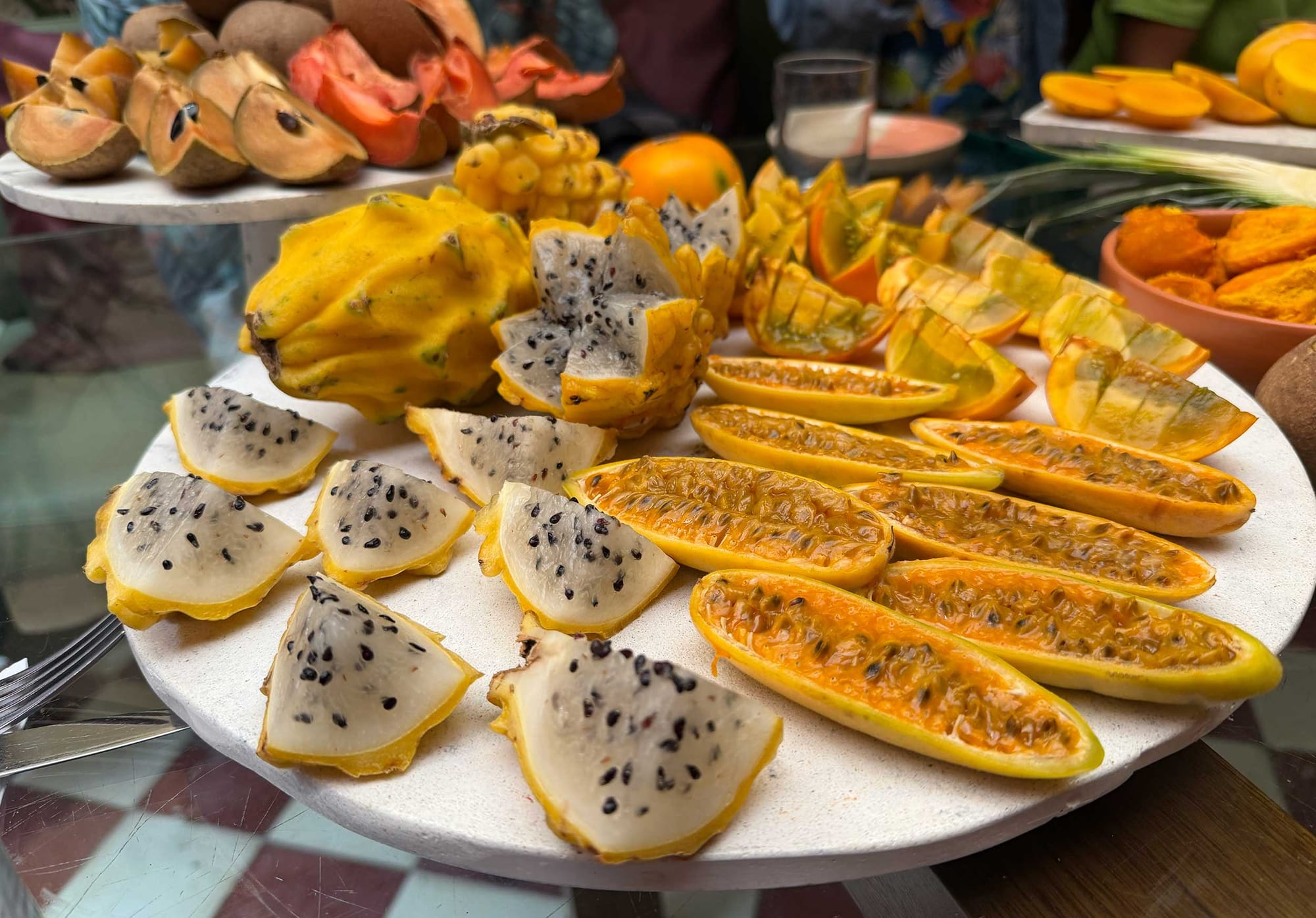
When I originally saw a fruit tasting session listed on our daily itinerary, I instinctively assumed we would be sampling familiar, traditional fruits such as standard melons, common berries, and everyday bananas. Instead, I was introduced to a captivating lineup of exotic, indigenous fruits that thoroughly excited the senses and expanded my perspective on South American agriculture.
Most memorable among the tasting was the yellow pitaya, an exceptionally sweet variety of dragon fruit, alongside the surprisingly and delightfully sour lulo, which instantly transformed my facial expression into a living emoji. Our immersive fruit tasting experience was brilliantly organized by Maria and her team at 321 Colombia.
La Candelaria, Plaza Bolívar, and a Bronze Statue
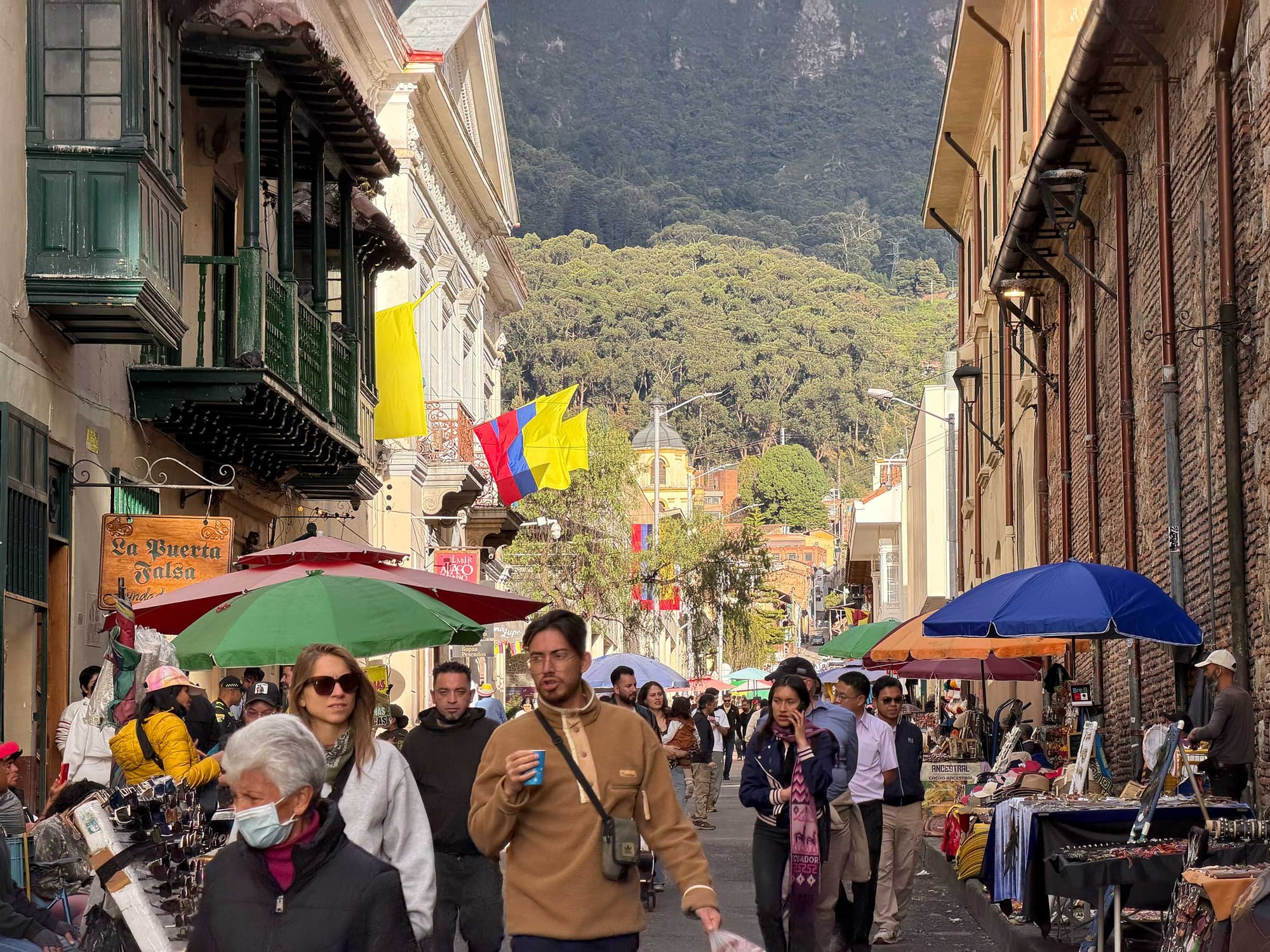
As busy travelers constantly navigating tight schedules, I too often find myself rushing from one meeting to the next, hurrying to dinner reservations, or sprinting to catch the next scheduled attraction, failing entirely to pause, smell the roses, and truly absorb the environment surrounding me. However, when visiting Bogotá—and particularly when wandering through historic neighborhoods like La Candelaria—even the most focused and schedule-driven travelers are forced to open their eyes to the irrepressible vibrancy of daily life.
Nowhere is that cultural and civic vibrancy more apparent than in the Plaza de Bolívar, the city’s historic central square. Here, the foundational institutions of Colombian life converge seamlessly: the imposing halls of government, the solemn Roman Catholic Cathedral, independent street vendors loudly hawking their daily wares, and the thousands of fluttering pigeons drawn persistently to the tourists who feed them.
Spanning outward from the plaza, Calle 11 runs directly alongside the cathedral toward major cultural institutions like the renowned Botero Museum. The entire thoroughfare is densely lined with local vendors peddling handmade souvenirs, freshly chopped fruit, artisanal ice cream, and ice-cold drinks. The rich auditory tapestry of the street—from the vendors calling out to passersby and the melodic notes of street buskers to the hundreds of overlapping voices engaged in lively conversation—makes it practically impossible to walk or roll through the area with your head down.
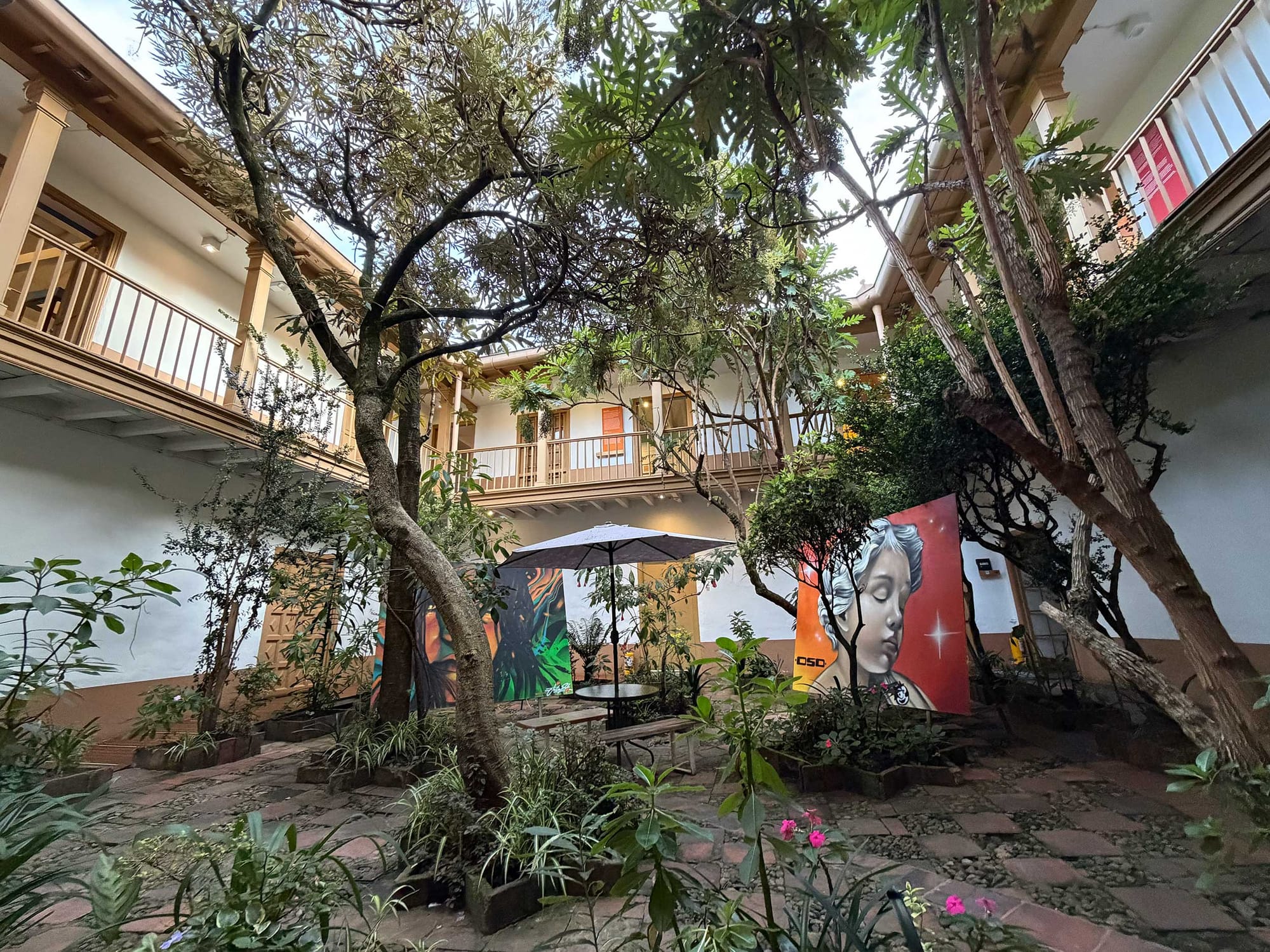
Seeking a brief respite from the relentless urban buzz of the city, I stepped inside the thoughtfully designed Bogotá Museum, known locally as the MdB. The institution focuses intently on documenting Bogotá’s complex history, its urban development, and the everyday lives and struggles of its diverse populace. The museum itself is housed across multiple historic colonial buildings dating back to the 17th and 18th centuries, all of which have been thoughtfully modernized and made fully wheelchair accessible through the installation of ramps and an elevator.
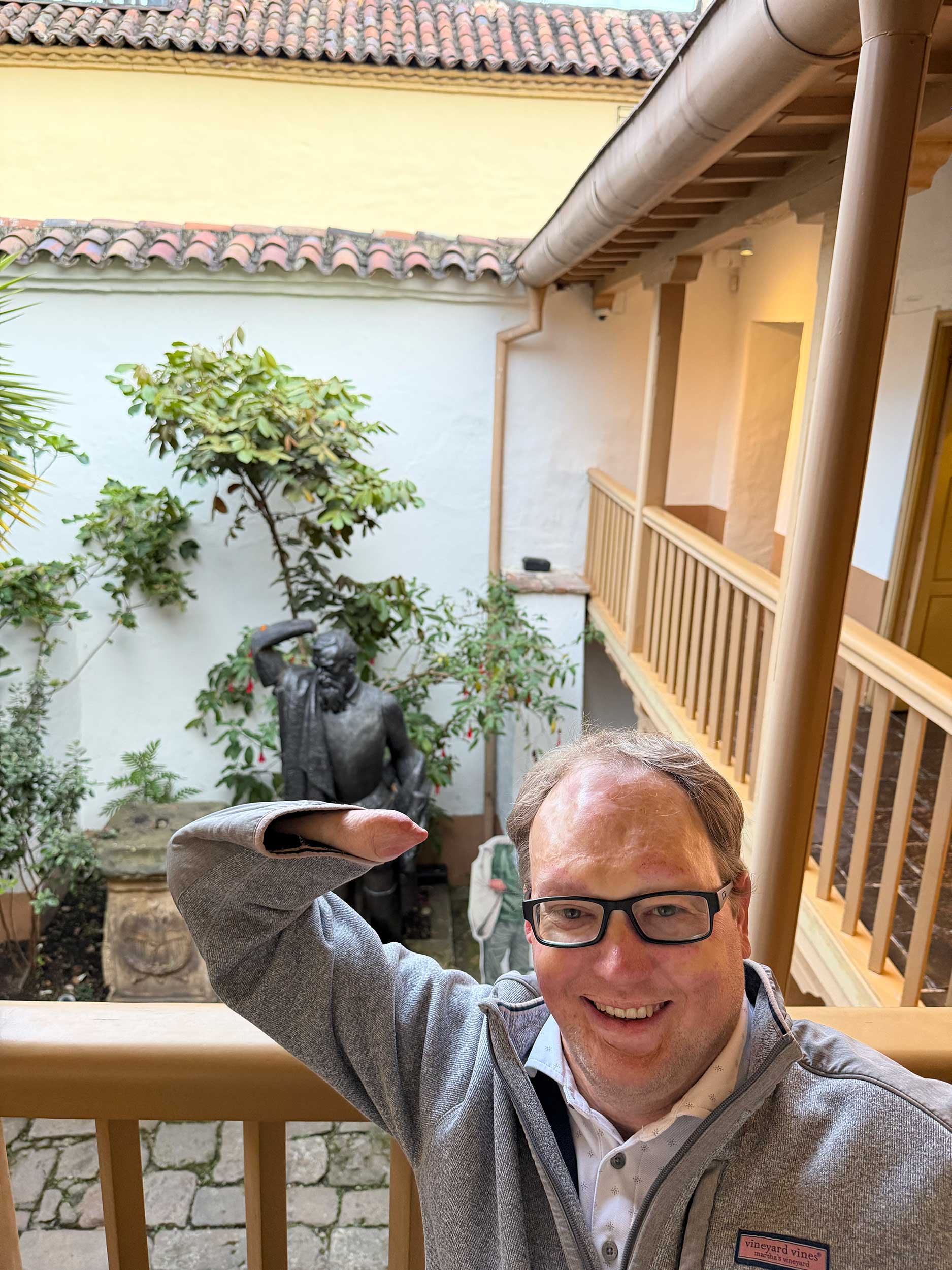
While exploring the museum, a bronze statue situated within one of the quiet inner courtyards immediately caught my attention. The subject of the artwork featured a right hand that appeared to be amputated, bearing a striking physical resemblance to my own arm. Naturally, I could not resist posing alongside the piece to capture a light-hearted, memorable photo.
I soon learned that the statue carried a deeply controversial contemporary past. It depicts the Spanish conquistador Gonzalo Jiménez de Quesada, the European explorer historically credited with the founding of modern-day Bogotá. In 2021, amid widespread nationwide anti-government demonstrations across Colombia, indigenous Misak protesters famously toppled the statue, resulting in the dramatic structural "amputation" that had initially drawn my curious eye. As an avid student of history, the encounter inspired me to deepen my knowledge, prompting me to immediately order a copy of Invading Colombia: Spanish Accounts of the Gonzalo Jiménez de Quesada Expedition of Conquest, which I plan to read on my upcoming flight home.
Boarding Stairs, Boarding Ramps, and Jet Bridges
My departure from Colombia took place out of the coastal city of Cartagena, allowing me to proudly add the Rafael Núñez International Airport to my personal milestone tracker as the 157th airport I have utilized as a wheelchair user. The facility feels intimate and compact, featuring just a single operational runway and a terminal building completely devoid of traditional jet bridges. Despite its modest size, the airport is actively served by more than 20 commercial airlines, including major international carriers like KLM Royal Dutch Airlines operating wide-body aircraft such as the Boeing 787.
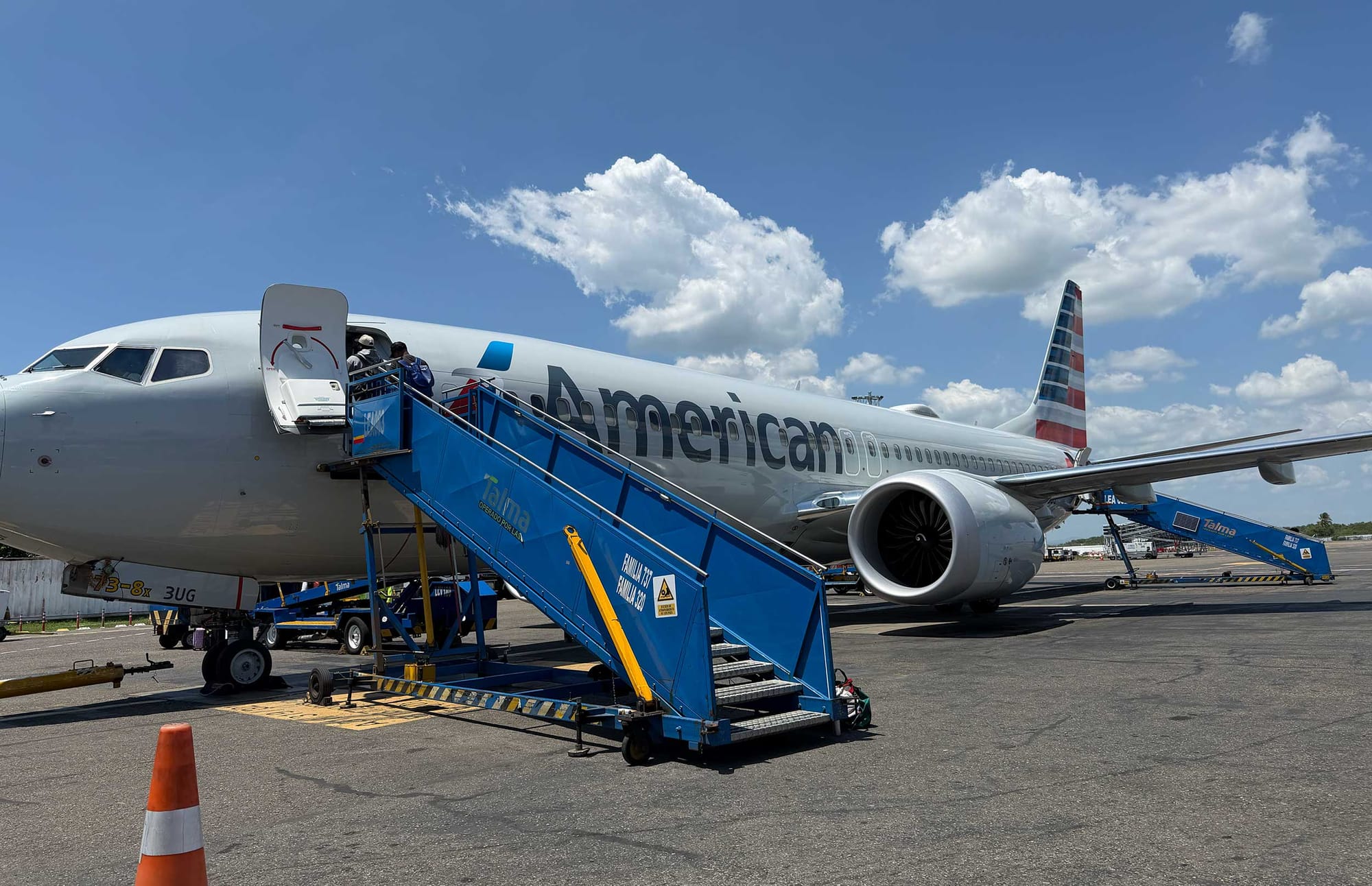
I had booked a standard American Airlines flight traveling from Cartagena directly to Miami. While the initial check-in process proceeded smoothly and the ground staff were generally polite, the situation deteriorated rapidly when it came time to board the aircraft. Upon reaching the gate, I was met not by a jet bridge or an accessible boarding ramp, but rather by a steep set of outdoor airstairs. The American Airlines ground team casually insisted that I be physically lifted up the stairs while seated tightly in a narrow aisle chair.
"No, not a chance," I immediately replied. There is simply no circumstance under which any disabled passenger should be subjected to being carried up the exterior stairs to board a commercial jetliner, and certainly not one operated by a major U.S. carrier. I am fundamentally unwilling to jeopardize my physical safety and my one remaining limb simply to board a scheduled flight.
I promptly requested to speak with a designated Complaint Resolution Official. While I waited patiently for the official to arrive at the gate, airline personnel proceeded to open general boarding to all other passengers, thereby outright denying my federally protected right to preboard the aircraft as a passenger with a disability. When the CRO finally arrived, identifying herself as the station manager for American Airlines, she defended the practice by stating dismissively, "this is how we do it here." I firmly maintained my position and repeatedly refused to consent to the hazardous proposition of being physically carried up the stairs.
The practice of carrying vulnerable disabled passengers up flights of outdoor stairs is not only fundamentally unsafe, but it was also entirely unnecessary under the operational circumstances. I pointed out to the staff that multiple structural aircraft boarding ramps were physically present and stationed just yards away at adjacent parking stands. In response, I was told by local management that those specific ramps belonged to rival airlines and that American Airlines allegedly possessed only stairs.
My unwavering refusal to board under those unsafe conditions ultimately forced management into action. Following a series of phone calls and administrative scrambling, the American Airlines team finally received authorization to borrow and utilize a mobile boarding ramp owned by Delta Air Lines. Once every other passenger had safely boarded the aircraft, the hazardous stairs were finally pulled away and the proper ramp was maneuvered into position. Delta, consistently recognized as one of the top U.S. airlines for accommodating wheelchair users, effectively saved the day.
While I was ultimately able to board my flight via a safe, accessible ramp, that positive outcome occurred solely because I stood my ground and demanded an acceptable alternative rather than backing down. The deeply troubling incident raises vital questions for the aviation industry: Why does American Airlines continue to deem it acceptable to physically haul human beings up flights of stairs? Why has the carrier failed to invest in basic ramps or mechanical lifts to safely board disabled passengers at all international destinations it serves? Why are wheelchair users routinely expected to risk their personal safety and physical well-being merely to exercise their right to travel?
While I am admittedly late in confronting the broader systemic scope of this specific issue, it now has my undivided attention. All commercial airlines, and particularly U.S. carriers operating internationally, must maintain access to and consistently utilize safe boarding ramps at every airport across their networks. Physically lifting disabled passengers up a set of airstairs is an archaic, unacceptable practice that must come to an immediate end. Readers can expect to hear much more reporting and commentary from me on this critical subject in the near future.
Coming Soon: Spring 2027 Wheelchair Travel Group Trip to Greece!
Amidst the travel challenges, I am thrilled to look forward to our upcoming group excursions. Having successfully led four distinct groups of travelers to Greece over the past two years, the destination has firmly established itself as my absolute favorite international tour. From rolling directly up to the historic Acropolis and the majestic Temple of Poseidon to sharing an intimate cooking class and exclusive wine tastings situated right beneath the shadow of Mount Olympus, this meticulously planned tour seamlessly blends ancient wonders with unforgettable collective experiences. Best of all, every single logistical detail is purposefully designed to be completely barrier-free.
The upcoming 2027 tour is officially scheduled to take place from April 30 to May 10, 2027. I warmly invite you to join me for this immersive, barrier-free journey exploring the rich history, enduring art, stunning architecture, vibrant culture, and world-class gastronomy of Greece.
The complete, detailed tour itinerary will be officially released on Monday, August 10, at 10:00 a.m. Eastern Time, exclusively to paid members of this community. Paid subscribers will receive an exclusive private booking window lasting three days. Should any remaining spaces be available following that initial window, bookings will then be opened up to our free subscribers on Thursday, August 13. If you would like to ensure you are among the first to receive this trip opportunity along with future announcements regarding accessible group tours, I encourage you to upgrade your subscription in advance of the official release.
Final Thoughts
After spending more than an eventful week traveling across South America, there is an immense amount of material to catch up on and a rich trove of new stories yet to be shared. Be sure to keep a close lookout for upcoming articles covering the coastal beaches and accessible trails I discovered along the Colombian coastline, as well as practical tips designed to make ambitious solo travel entirely possible.
I hope you all have a fantastic weekend, and I look forward to connecting with you through a brand-new series of articles next week.
Take care,
— John