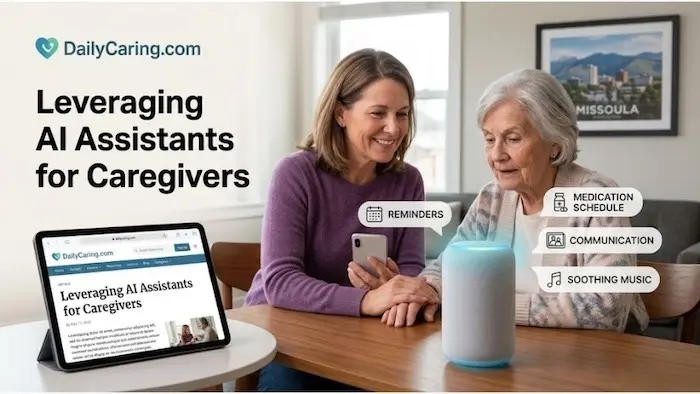
Being a family caregiver is widely recognized as an act of profound dedication, love, and immense responsibility. Juggling medical appointments, managing complex medication schedules, handling daily household tasks, providing constant emotional support, and attending to countless other duties often leads caregivers to sacrifice their own well-being in the process. Beneath the surface of these daily tasks lies an invisible yet crushing weight known as the caregiver’s mental load. In response to this growing public health concern, a new wave of practical artificial intelligence assistants is emerging to help family caregivers manage their responsibilities and prevent severe burnout.
Experts note that introducing AI assistants to caregiving is not about replacing the essential human touch. Instead, these digital tools aim to empower caregivers by automating mundane tasks, organizing logistical chaos, and creating more moments for individuals to simply be present with their loved ones and themselves. As modern caregiving becomes increasingly complex, understanding this invisible burden is the first step toward finding sustainable relief.
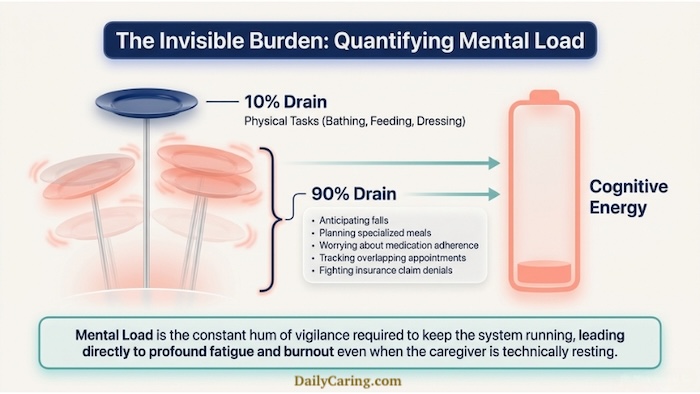
The mental load in caregiving can be envisioned as a constantly spinning set of plates. Each plate represents a persistent thought or obligation, ranging from whether a loved one took their pills on time and when the next physical therapy appointment is scheduled, to managing household grocery needs, communicating with insurance companies, coordinating family schedules, and ensuring the comfort of the person receiving care. This mental load encompasses far more than the physical execution of these tasks; it is the constant remembering, planning, anticipating, and worrying that persists even when the caregiver is not actively working. It is a silent and relentless cognitive effort required to keep daily life functioning, usually carried out with little to no recognition.

Over time, this invisible burden is far from harmless. The relentless mental load steadily erodes physical health, emotional resilience, and overall quality of life. Caregivers frequently find themselves perpetually exhausted, irritable, and struggling to maintain focus. The constant hum of worry can quickly escalate into chronic anxiety, severe sleep disturbances, and a pervasive feeling of being overwhelmed. When this pressure reaches a breaking point, it manifests as full caregiver burnout—a state of complete emotional, physical, and mental exhaustion. Recognizing these warning signs is critical for caregivers seeking to reclaim their well-being through modern technological solutions.
While artificial intelligence was once viewed primarily through the lens of complex, industrial technology, it has rapidly evolved into an accessible and practical ally for households. Early iterations of caregiving technology were largely restricted to basic reminders and alarms. Today, modern AI assistants are capable of learning daily routines, understanding complex natural commands, integrating seamlessly with various smart home devices, and offering proactive suggestions. Rather than serving as mere digital notepads, these sophisticated tools are designed to anticipate needs and streamline complicated processes, offering impactful digital solutions for families navigating long-term care.

The fundamental promise of artificial intelligence in this sector is returning valuable time and mental space to the caregiver. By automating repetitive tasks, organizing vital information, and providing instant access to resources, these systems directly address the daily administrative grind.
In practice, AI assistants tackle daily tasks by syncing calendars, managing grocery lists, and issuing smart medication reminders, thereby cutting down on decision fatigue and frantic errands. For coordination, they centralize family updates and healthcare notes, ensuring that vital medical information remains accessible in a single location. Regarding personal wellness, conversational AI tools provide accessible emotional outlets and guided meditation resources to help manage stress. In the realm of home monitoring, features like fall detection and smart home controls reduce anxiety and enhance safety without requiring constant visual surveillance. Furthermore, AI applications instantly retrieve health-related answers and local community resources, saving hours of tedious online research.
Several real-world AI tools are already being utilized by families navigating these challenges. Sensi.ai offers non-invasive safety monitoring for households concerned about nighttime wandering or falls without the need for invasive video cameras. By placing small, audio-only care pods around the home, the AI listens for specific anomalies such as heavy thuds, repeated coughing, distress sounds, or unusual nighttime bathroom trips, immediately alerting the caregiver via smartphone. This approach maintains safety while preserving the privacy and dignity of the care recipient.
Another notable tool is ElliQ, a proactive, AI-driven companion robot designed specifically for older adults. Unlike standard smart speakers that remain idle until spoken to, ElliQ actively initiates conversation, guides users through light chair yoga, plays trivia games, facilitates video calls, and gently prompts individuals to take medication or stay hydrated. For family members, the companion app delivers regular updates on the older adult’s mood, sleep patterns, and daily activity levels, helping alleviate the guilt often associated with not being physically present around the clock.
Additionally, applications like ianacare are designed to help families mobilize and organize informal support networks consisting of friends, neighbors, and extended relatives who often offer generalized help. The platform utilizes smart algorithms to assist caregivers in delegating specific tasks, such as grocery drop-offs, rides to medical appointments, or designated respite hours, centralizing communication to eliminate the exhaustion of managing endless group text threads. General-purpose AI models, including ChatGPT and Google Gemini, are also being leveraged by caregivers to draft medical appeals, summarize lengthy discharge instructions, and organize complex care plans. Experts emphasize, however, that when utilizing public AI models for healthcare planning, users must always anonymize data by omitting sensitive personal details such as full names, birthdates, and insurance identification numbers.
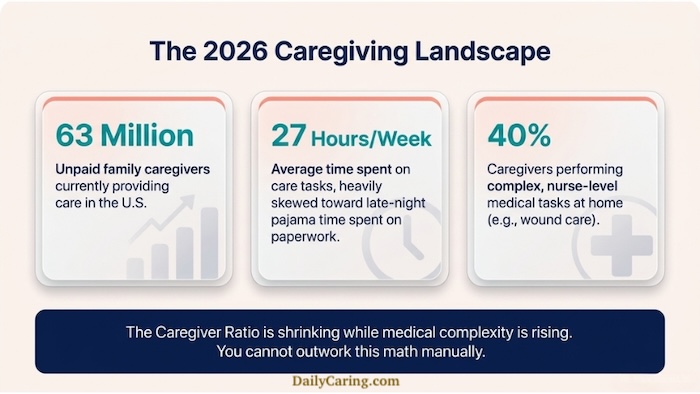
As the broader caregiving sector continues to grapple with systemic workforce shortages and rising demands, industry experts predict that tools incorporating automation and artificial intelligence will become fixtures of the daily caregiving routine. By strategically adopting these technologies, family caregivers are not outsourcing their responsibilities or reducing their dedication; rather, they are equipping themselves with practical resources to manage the immense weight of modern caregiving while safeguarding their own long-term health.