Lois Curtis and Elaine Wilson fundamentally changed the course of American history, not just for themselves, but for tens of millions of individuals living with disabilities across the United States. Curtis and Wilson, who navigated psychiatric, intellectual, and developmental disabilities, were confined to a Georgia psychiatric institution known as Georgia Regional Hospital. Even though medical professionals repeatedly confirmed that both women could successfully and safely live within their local communities, the state forced them to remain institutionalized. Rather than accepting empty promises of freedom postponed to some indefinite future, they took direct legal action, suing both the institution and the state of Georgia.
On June 22, 1999, the United States Supreme Court ruled decisively in favor of the two women in the landmark decision Olmstead v. L.C. The court found that unjustified institutionalization constitutes a direct violation of the Americans with Disabilities Act (ADA). For generations of younger Americans, Olmstead established a vital baseline of expectation. Because of that ruling, many grew up believing that requiring significant disability support services would never dictate where they lived, whether they could pursue higher education, build a career, or construct an ordinary adult life within their chosen communities.
The movement that made this historic ruling possible was built by pioneering advocates over decades of relentless labor. Among them was Bob Kafka, a foundational leader whose activism helped lay the groundwork for Olmstead and who later founded the American Association of People with Disabilities’ (AAPD) nonpartisan voting program, known as REV UP.
In the decades following the Olmstead decision, hundreds of thousands of Americans with disabilities transitioned out of restrictive institutions and into independent community life. To protect and maintain these gains, Offices for Civil Rights (OCR) were established across federal government agencies, alongside equivalent bodies in numerous state governments, dedicated entirely to enforcing and upholding the mandates of Olmstead. However, the landscape of civil rights enforcement has faced profound recent shifts. When federal agencies recently began closing OCR offices across the board and dismissing pending complaints, one of the most critical civil rights enforcement mechanisms for community integration effectively disappeared.
The regulatory threats to community integration deepened significantly just four days before the twenty-seventh anniversary of the Supreme Court ruling. The U.S. Department of Justice’s Office of Legal Counsel released an opinion memo declaring that neither the Rehabilitation Act nor the Americans with Disabilities Act actually requires states to support individuals with disabilities or mental illnesses in the most integrated setting available.
While the historic victories of 1999 cannot be re-litigated, simple nostalgia for the original mandates of the 1990s will not be enough to protect Olmstead. The recent Department of Justice memo should not merely force advocates to constantly defend rights that Olmstead already advanced decades ago. Instead, it must serve as a catalyst pointing toward a clearer North Star: exploring what true community integration must mean for the next generation of Americans with disabilities. Pursuing this vision requires confronting a glaring systemic problem that the original Olmstead ruling never anticipated—a barrier experienced firsthand by many young professionals today.
During the summer of 2026, a journey from California to Washington, D.C., for a highly competitive ten-week national disability policy internship highlighted these exact vulnerabilities. The planning process for out-of-state daily living support began months in advance, working closely through the state system responsible for overseeing personal care services. Yet, less than fourteen hours before the scheduled flight, an official denial notice arrived via email with a subject line that entirely failed to convey its pressing urgency.
Neither the traveler nor their support network saw the email before boarding the plane. Within three days of arriving in the nation’s capital, the agency providing essential care was abruptly instructed to halt all services. This occurred while the individual was more than two thousand miles away from home, solely because their personal care services had not received official authorization to operate outside of California.

In response to the administrative failure, a family member booked a next-day cross-country flight and spent the following weeks providing round-the-clock care. At twenty-nine years old, the individual relied on their father to assist with showering, getting dressed, transferring in and out of bed, and navigating daily logistics so they could successfully complete their internship and launch the next phase of their professional life.
This situation forced a precarious balancing act between pursuing high-level professional opportunities in disability policy and simultaneously fighting care coverage appeals, drafting legal filings, and managing endless phone calls regarding basic disability support services. Traveling to Washington, D.C., to work in disability policy for the summer meant running directly into a wall where disability policy utterly failed.
Nothing about the individual’s disability or daily support needs had changed; the only variable was geographic location. While Olmstead successfully guaranteed the fundamental right to live within the community, it remained entirely silent on what happens when the physical location of that community changes.
Disability support service portability represents the crucial next frontier of disability civil rights. Any individual pursuing employment, higher education, or professional opportunities in another state should be guaranteed access to clear, reliable, and standardized processes for maintaining essential disability supports across state lines.
Current geographic restrictions on disability support services impose severe, unnecessary administrative and financial burdens on people with disabilities who are simply trying to advance their careers and education. Overcoming this hurdle demands immediate, coordinated action at the state level to dramatically improve eligibility verification and ensure service continuity during geographic transitions. Furthermore, state-level partnerships can serve as building blocks, with the ultimate long-term goal of establishing robust federal standards for disability support service portability.
Congress and the Centers for Medicare & Medicaid Services must begin treating the portability of disability support services as unfinished business stemming directly from the Olmstead mandate. Civil rights advocates must demand portability with the exact same fierce urgency that Bob Kafka once used to demand deinstitutionalization. Society must stop accepting arbitrary geographic boundaries as a legitimate justification for restricting the educational, professional, and personal freedoms available to people with disabilities.
Bob Kafka, who passed away in December 2025, dedicated his entire life to ensuring that the disability community retained access to genuine choices. The emerging generation of advocates deserves a definition of community integration that is robust and expansive enough to support the reality of their daily lives.
For those looking to take action in support of Olmstead and community integration, advocacy resources such as the AAPD action alert system provide a direct way to contact governors and state attorneys general. These actions demand that state leaders commit to upholding the integration mandate and signing the Commitment to Community Integration for People with Disabilities.
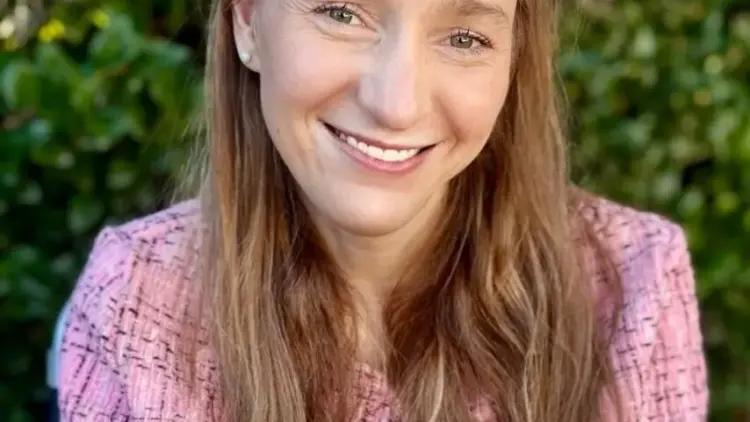
Lilly Grossman is the Founder and CEO of Beyond The Box Advocacy, a nonpartisan disability policy and systems organization dedicated to advancing freedom, civil rights, and opportunity for individuals with disabilities. Her professional work centers heavily on dismantling structural disability and policy barriers, with a particular focus on achieving disability support service portability and seamless service continuity.