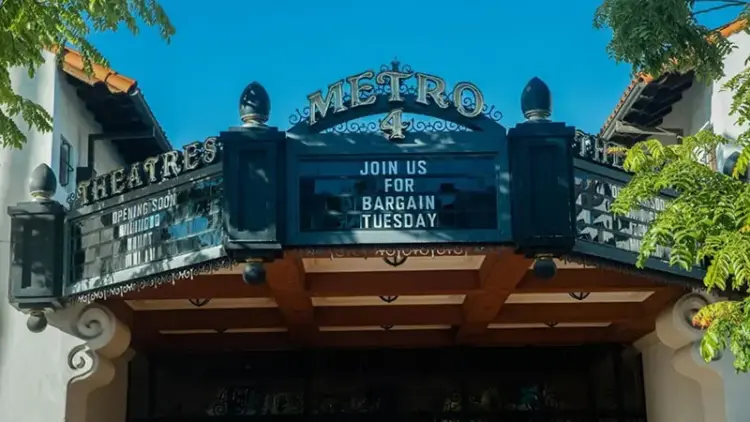
For millions of people, deciding to catch the latest Hollywood release is a simple impulse. A quick text to a friend, a short drive to the neighborhood cinema, and a couple of tickets purchased at the box office make for an easy afternoon or evening out. But for individuals with hearing loss, that same routine has historically been fraught with frustration and uncertainty.
Going to the movies should be an inclusive, universally enjoyable experience, yet for too many patrons, a trip to the theater comes with a persistent nagging question: Will the assistive listening or captioning devices actually be available, charged, and functioning properly? Far too often, the answer has been a discouraging no, leaving audience members straining to catch dialogue, missing crucial plot points, and feeling alienated from a cultural pastime meant to be shared.
That persistent barrier is precisely what spurred accessibility advocates across Virginia into action. Driven by members of the Hearing Loss Association of America (HLAA), local communities pushed for a definitive, structural solution rather than relying on unreliable individual equipment. Their tireless efforts culminated in the introduction and passage of House
Bill 602 (HB 602), a legislative measure establishing mandatory open-captioned movie screening requirements across the Commonwealth.
Since taking effect on July 1, 2026, the law requires major movie theaters—specifically those operating five or more locations within Virginia—to provide open-captioned showings for widely released films. By embedding dialogue and vital sound cues directly onto the main movie screen where everyone can see them, the legislation has fundamentally altered the cinematic landscape, helping more people share the magic of the moviegoing experience with their families and friends.
A Personal Struggle Turned Into Public Policy
The impact of this legislative victory is felt deeply by families across the state, transforming outings that were once a test of patience into moments of shared joy.
"My husband Ken has hearing loss," says Claire Fornsel, co-vice president of the HLAA Virginia Beach Chapter. "In the past, he would go along to movies he couldn’t hear, just because he loves me. Now, with the passage of the Virginia movie theater open captioning legislation, we can enjoy the entertainment together."
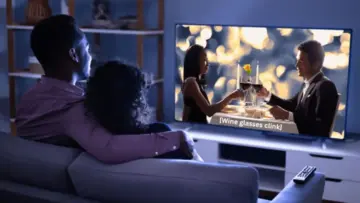
Unlike closed-captioning devices provided to individual viewers—which often involve awkward plastic adapters, blocked views, dead batteries, or technical glitches that can ruin a viewing experience—open captions display text directly on the screen for the entire audience. This universal approach removes both the social stigma and the logistical headaches associated with assistive technology.
Furthermore, HB 602 addresses the issue of public awareness. Under the new rules, theaters are required to clearly label these designated viewings with an "OC" marker in their schedules and promotional materials. They must also provide clear information on how patrons can request open captioning later in a film’s theatrical run, ensuring that accessibility is not an afterthought but an integrated part of theater operations.
These comprehensive changes empower people with hearing loss—along with anyone else who simply prefers or benefits from open captioning—to make plans with the same confidence and spontaneity as any other moviegoer. In effect, the law replaces uncertainty with inclusion, dignity, and true equal access.
From Grassroots Advocacy to Legislative Victory
The journey of HB 602 from an advocacy dream to signed statute is a testament to the power of grassroots civic engagement. The legislative effort was championed by Delegate Phil Hernandez of the 94th District. In August 2025, Hernandez was approached by an accessibility advocate who had been inspired by successful open-caption policies enacted in other states and jurisdictions.
As a lawmaker whose own sister is deaf, Hernandez immediately embraced the initiative, viewing it as a natural extension of his broader commitment to making Virginia more accessible and welcoming for all residents. To draft a robust and effective bill, Hernandez sought guidance and strategic support from Neil Snyder, the director of public policy for the HLAA, as well as specialized advocacy organizations such as Access Virginia and the Virginia Department for the Deaf and Hard of Hearing (VDDHH).
Introduced at the start of the legislative session in January 2026, the bill moved swiftly through both chambers of the Virginia General Assembly, reflecting broad bipartisan recognition of the need for improved accessibility. On April 6, 2026, Governor Abigail Spanberger officially signed HB 602 into law, cementing Virginia’s commitment to entertainment equity.
The legislative momentum was heavily fueled by the dedication of HLAA members representing the Virginia Beach, Virginia Peninsula, and Greater Richmond Chapters. Kenneth Reichert, president of the HLAA Virginia Beach Chapter and a 30-year U.S. Navy veteran with service-connected hearing loss, became a prominent voice in the campaign. Reichert spoke publicly about the desperate need for accessible cinematic experiences during a town hall event hosted by Delegate Hernandez.
Other key HLAA chapter leaders across the state—including Angela Hill, Kathy Richter, Keith McAllister, Claire Fornsel, Richard Wiltse, Bobby Graves, and Larry Herbert—mobilized their communities, reaching out directly to state lawmakers to urge swift and decisive support. Their coordinated efforts proved that when local advocates collaborate effectively with elected officials and community organizations, meaningful, long-lasting systemic change is entirely possible.
Benefits Beyond the Hearing Community
While the primary beneficiaries of HB 602 are individuals with hearing loss, the positive ripples of the law extend far beyond the deaf and hard-of-hearing community. As Claire Fornsel’s experience demonstrates, partners, family members, and friends who do not experience hearing loss themselves can now share a seamless, synchronized viewing experience without awkward adjustments.
"Imagine grandparents taking their grandchildren to see the latest Disney or Pixar film," says Ken Reichert. "In the past, hearing loss might have made the outing frustrating or even impossible. With open-captioned screenings, the whole family can enjoy the film together without the need for specialized equipment."
Beyond family bonding, educators and literacy advocates point out that watching movies and videos with captions reinforces reading and literacy skills in school-age children, regardless of hearing ability, by connecting spoken dialogue with written text in real time. Similarly, English-language learners frequently rely on captions to strengthen vocabulary and comprehension. Industry observers also note that a growing demographic of younger viewers simply prefer having captions turned on as a standard viewing preference.
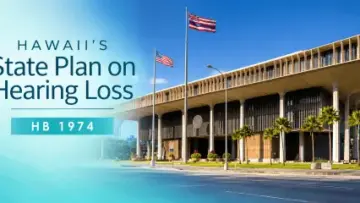
By enacting this legislation, Virginia joins an expanding national movement dedicated to media accessibility. The Commonwealth now stands alongside pioneering states and regions including Hawaii, Maryland, Washington, D.C., New York City, and Washington State, all of which have previously implemented open-captioning regulations. Each regional victory helps pave the way for broader national adoption, serving as an encouraging reminder that a more inclusive society begins when everyday citizens raise their voices and work together toward a common goal.