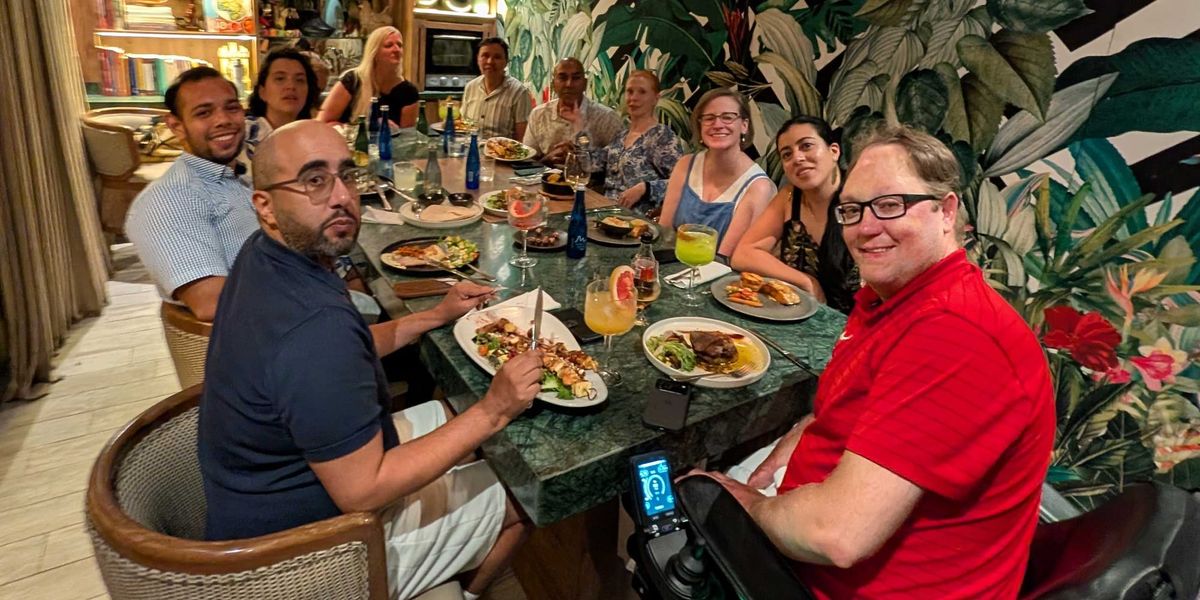
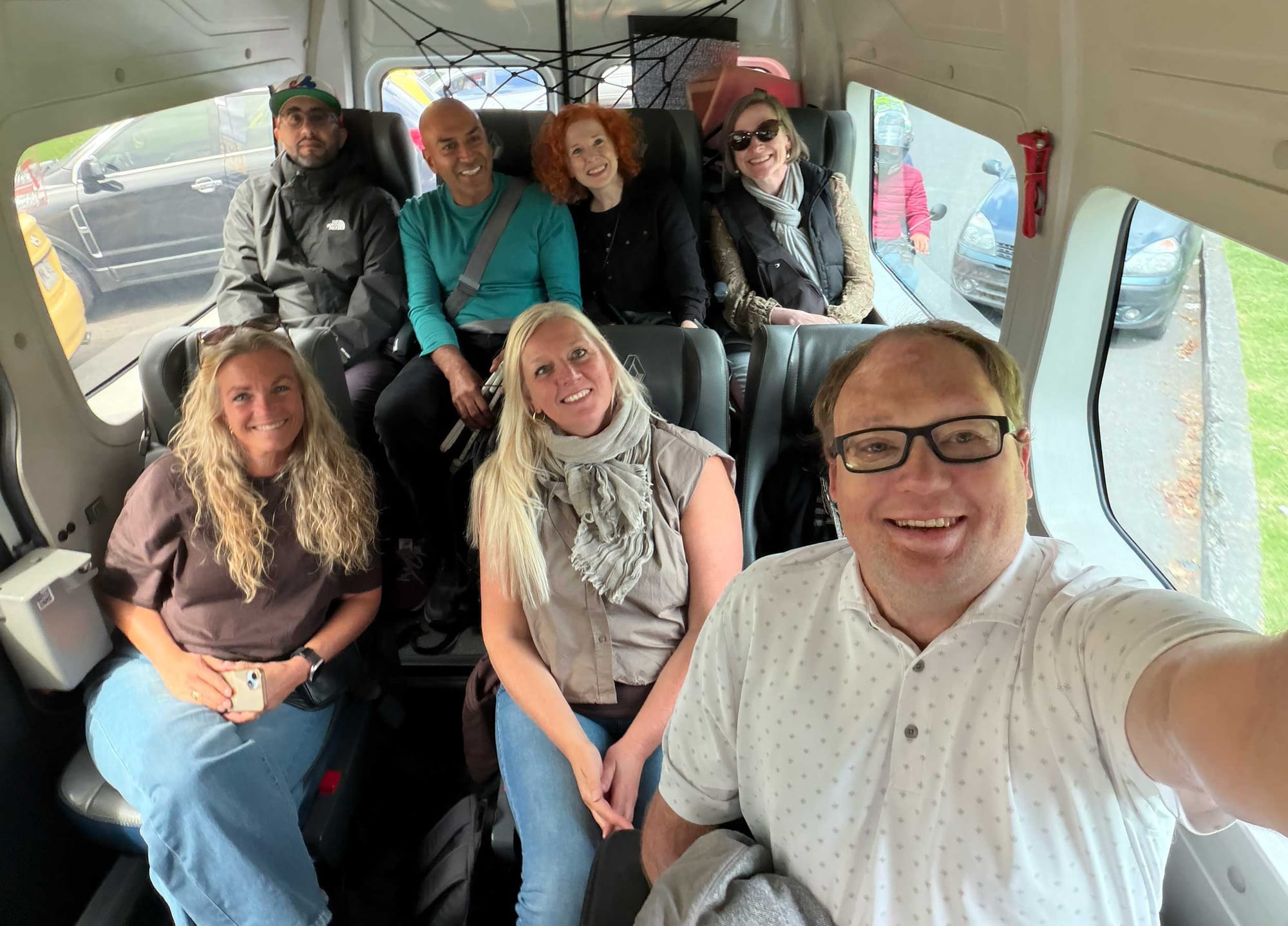
Happy Friday, friends. Returning from a wonderful and immersive tour of Colombia, where I spent time exploring the vibrant cities of Bogota, Barranquilla, and Cartagena, brings a wealth of reflections on the current landscape of international travel. Traveling alongside a group of invited travel professionals to evaluate Colombia as a premier tourist destination offered a comprehensive look at what the country has to offer visitors from all walks of life.
The primary objective of the journey was to research whether Colombia would serve as a suitable and accommodating location to host a future Wheelchair Travel Group Trip. While the destination holds immense promise, current infrastructure presents distinct challenges; notably, local transportation providers do not yet operate specialized vehicles capable of accommodating groups of wheelchair users simultaneously. However, the capacity to fully support individual travelers and families is already in place. A comprehensive, deep-dive analysis examining the broader state of accessibility and tourism across Colombia will be published in a future report, but for now, the focus remains on sharing a few of the most memorable highlights from the journey.
Meanwhile, the appetite for accessible group travel continues to grow rapidly. The 2027 Wheelchair Travel Group Trip to Morocco, which was announced in the previous newsletter, sold out within an astonishing 24 hours. For travelers who missed out on securing a spot for that adventure, alternative opportunities to join upcoming group tours to beloved international destinations are on the horizon.
Tasting Strange Fruits in Colombia
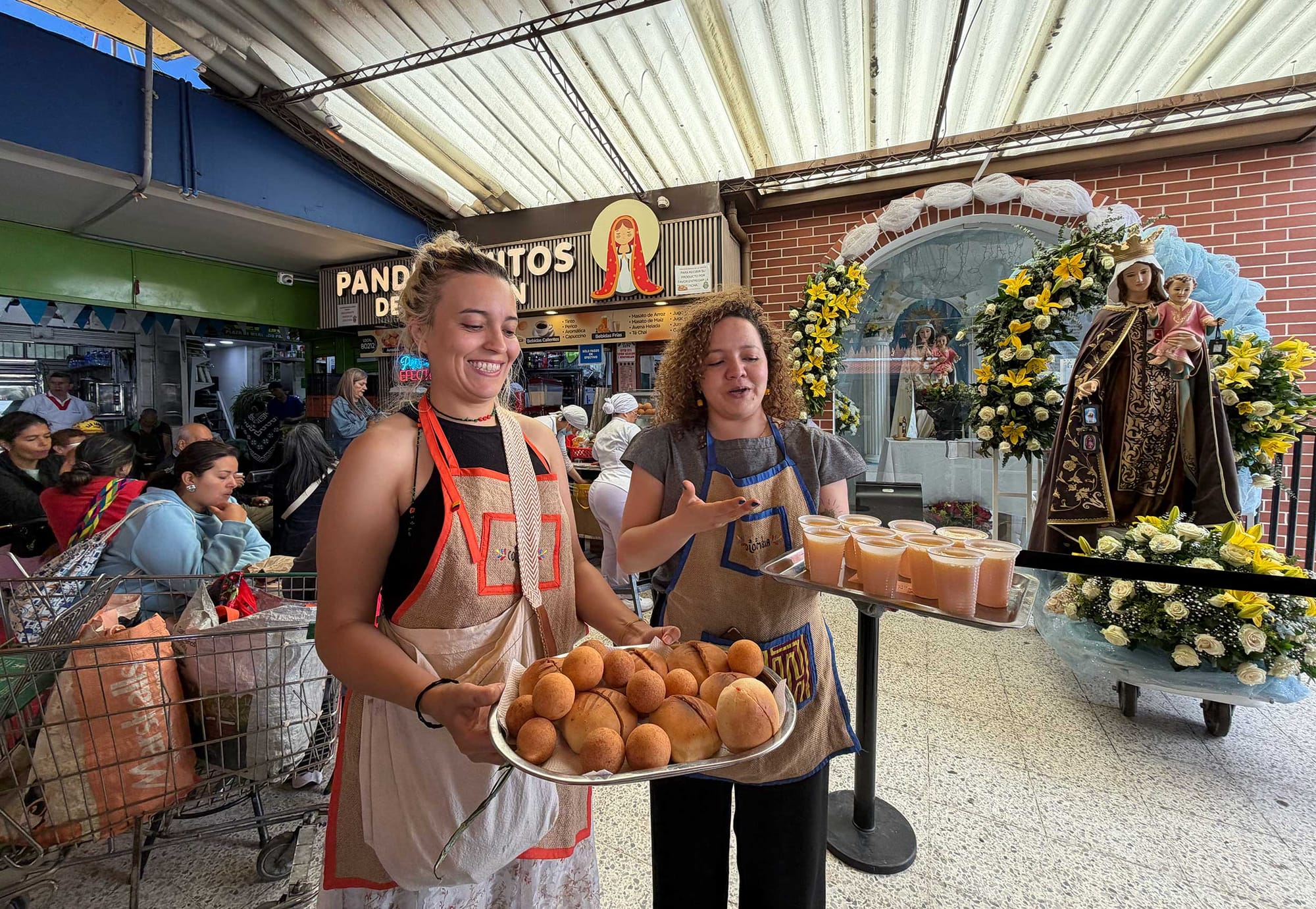
One of the most popular and culturally rich attractions in Bogota is the bustling Paloquemao Market, recognized widely as the city’s largest traditional market for food and flowers. Stepping inside reveals nearly a thousand distinct stalls supplying an overwhelming abundance of fresh fruits, vibrant vegetables, prime meats, fresh seafood, and breathtaking arrangements of flowers.
When a guided fruit tasting appeared on the daily itinerary, expectations naturally leaned toward familiar staples such as standard melons, common berries, and everyday bananas. Instead, the experience introduced a remarkable lineup of exotic Andean fruits designed to challenge the palate, stimulate the senses, and fundamentally expand one’s perspective on tropical agriculture.
Among the most memorable discoveries were the yellow pitaya, an exceptionally sweet and refreshing variety of dragon fruit, alongside the surprisingly and delightfully sour Lulo, a citrus-like fruit guaranteed to produce an involuntary facial expression. This eye-opening tasting experience was expertly organized and hosted by Maria and her team at 321 Colombia.
La Candelaria, Plaza Bolívar, and a Bronze Statue
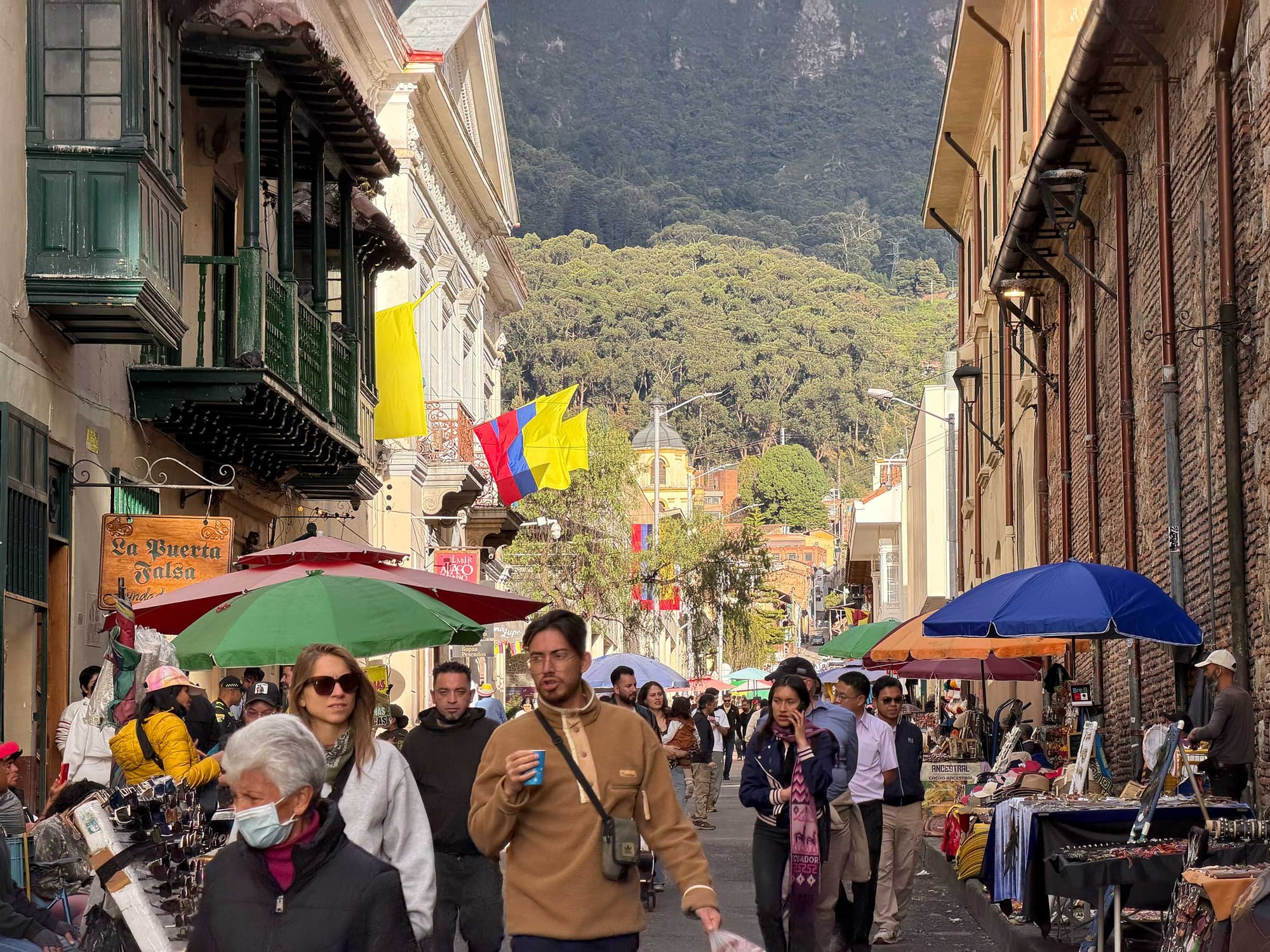
Travelers often find themselves rushing urgently toward a scheduled meeting, a tight dinner reservation, or the next major sightseeing landmark, frequently failing to pause and absorb the sensory tapestry of the environment. In Bogota, particularly within historic neighborhoods like La Candelaria, even the most focused visitors are inevitably compelled to open their eyes, ears, and minds to the extraordinary vibrancy of daily life.
This vivid energy reaches its peak in the Plaza de Bolívar, the city’s expansive central square, where the foundational institutions of Colombian society converge seamlessly. Majestic halls of government stand alongside the historic Roman Catholic Cathedral, while local street vendors hawk their wares and thousands of pigeons gather eagerly around tourists offering breadcrumbs.
Extending outward from the plaza, Calle 11 runs directly alongside the cathedral toward cultural treasures such as the renowned Botero Museum. The entire pedestrian route is lined continuously with vendors peddling local handicrafts, fresh fruit, handmade ice cream, and chilled beverages. The ambient sounds of the street—from the calls of merchants and the melodic notes of street buskers to the conversational hum of hundreds of residents—make it impossible to walk or roll through the district with one’s attention turned downward.
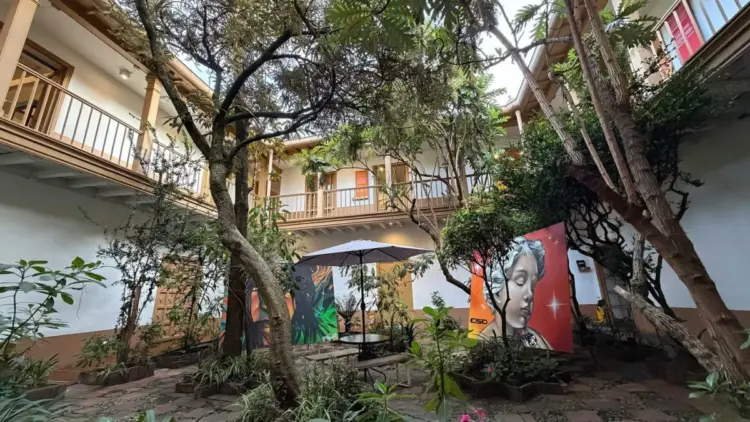
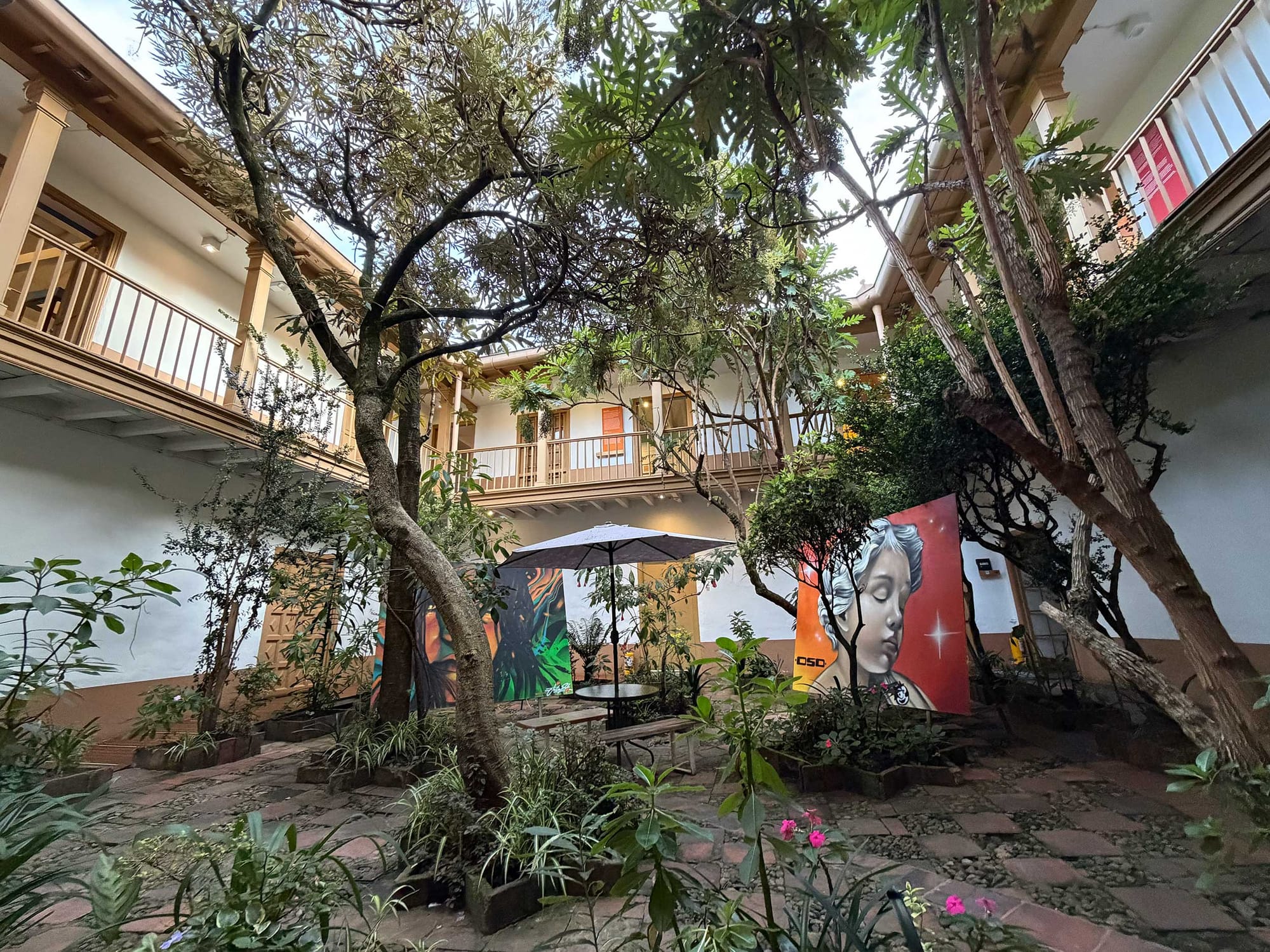
Seeking a brief respite from the city’s relentless energy, a visit to the thoughtfully designed Bogota Museum provided a fascinating look into the documentation of the city’s history, urban development, and the everyday lives of its inhabitants. Housed within a collection of restored colonial buildings dating back to the 17th and 18th centuries, the museum has been retrofitted with ramps and an elevator to ensure full wheelchair accessibility.
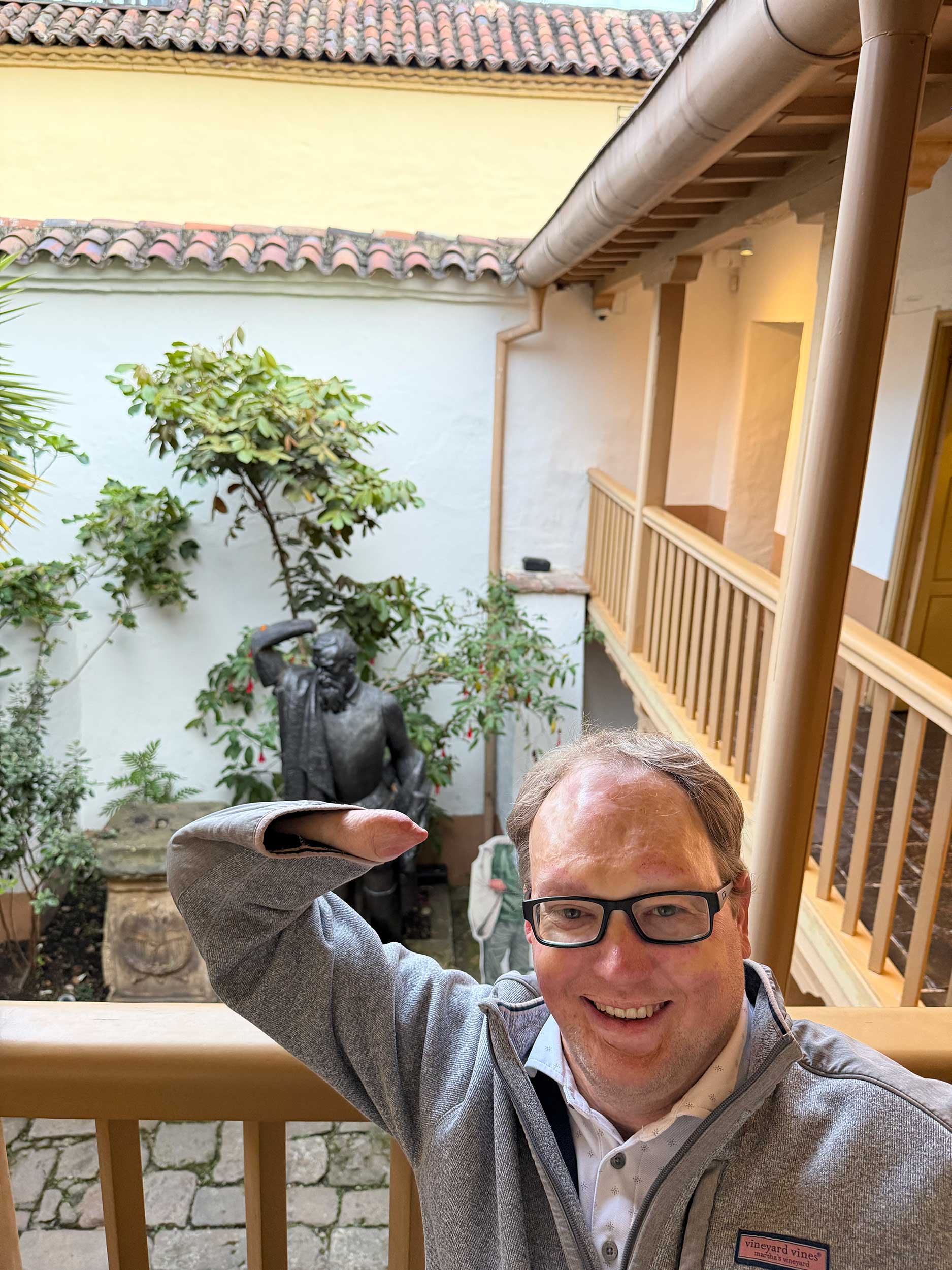
Inside one of the inner courtyards, a bronze statue immediately caught the eye. The subject’s right hand appeared to be missing, bearing a striking resemblance to an amputation on my own arm, prompting a light-hearted photograph commemorating the coincidence.
Research quickly revealed that the artwork carried a controversial history. The statue depicts the Spanish conquistador Gonzalo Jiménez de Quesada, the historical figure traditionally credited with leading the expedition that established modern-day Colombia. During nationwide anti-government demonstrations in 2021, indigenous Misak protesters toppled the monument, resulting in the simulated "amputation" that first drew attention during the museum visit. Inspired to dive deeper into this chapter of history, a copy of the historical text Invading Colombia: Spanish Accounts of the Gonzalo Jiménez de Quesada Expedition of Conquest was ordered for reading during an upcoming flight.

Boarding Stairs, Boarding Ramps, and Jet Bridges
Leaving Colombia via the coastal city of Cartagena added Rafael Núñez International Airport to the personal registry as the 157th airport utilized as a wheelchair user. The compact facility operates with a single runway and a terminal devoid of traditional jet bridges, yet it successfully accommodates more than 20 commercial airlines, including major international carriers like KLM Royal Dutch Airlines operating widebody aircraft such as the Boeing 787.
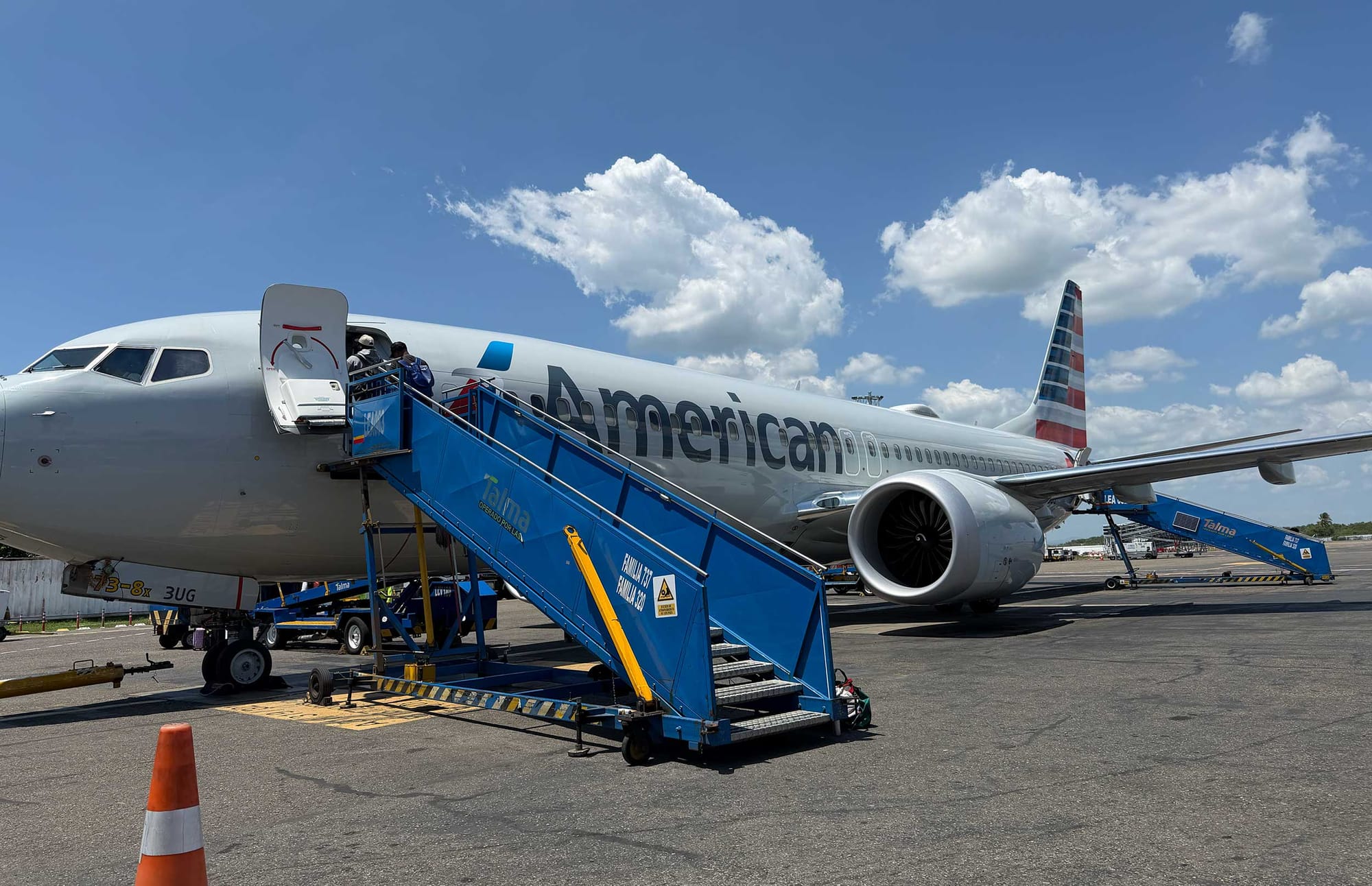
Booking an American Airlines flight from Cartagena to Miami began with a routine check-in process and courteous terminal staff. However, complications arose immediately upon reaching the aircraft doors, where passengers were greeted by a traditional set of airstairs. Ground personnel representing American Airlines insisted that boarding require physical lifting up the stairs while seated in a narrow aisle chair.
Refusing the procedure instantly, the response was clear: under no circumstances should a disabled passenger be manually carried up a flight of stairs to board a commercial jetliner, particularly on an aircraft operated by a major U.S. carrier. The practice compromises basic physical safety and dignity.
A request was made to speak with a trained Complaint Resolution Official (CRO). While awaiting her arrival, airline staff proceeded to open general boarding to all other passengers, thereby violating the established right of preboarding for travelers with disabilities. Upon her arrival, the CRO—who identified herself as the station manager for American Airlines—defended the practice, asserting that "this is what we do here." The refusal to consent to being physically carried remained firm.
While manual lifting of disabled passengers up exterior stairs is fundamentally unsafe, it was entirely unnecessary given the infrastructure available on the tarmac. Pointing directly to an operational aircraft boarding ramp positioned at an adjacent parking stand brought the response that the equipment belonged to another airline and was unavailable.
Standing firm against boarding under unsafe conditions ultimately forced a resolution. After a series of phone calls and consultations, the American Airlines ground team secured permission to utilize an accessible boarding ramp owned by Delta Air Lines. Once all other passengers had successfully boarded, the airstairs were removed and the Delta ramp was moved into place. Delta Air Lines, frequently recognized as an industry leader in accessible operations, effectively saved the day.
While the situation ended with a safe boarding experience, the outcome relied entirely on a passenger’s willingness to challenge airline staff and demand an accessible alternative. The incident raises profound questions regarding international carrier standards: Why do major airlines continue to view manual lifting as acceptable? Why have necessary investments in ramps or mechanical lifts not been prioritized at every serviced station? And why are passengers with mobility disabilities continually forced to advocate for basic safety just to exercise their right to travel?
Advocating for systemic improvements across the travel industry—spanning planes, trains, and automobiles—remains a core mission, and support from the community is vital. Upgrading membership subscriptions directly sustains these ongoing advocacy efforts and ensures continued pressure on carriers to modernize their accessibility practices.
The experience highlights a systemic failure that demands immediate attention. All commercial airlines operating internationally, particularly U.S. carriers, must ensure access to and utilization of mechanical boarding ramps or lifts at every airport in their network. Physically hauling passengers up a staircase is an outdated and hazardous practice that must be eradicated. Further updates on this critical issue will be shared soon.
Coming Soon: Spring 2027 Wheelchair Travel Group Trip to Greece!
Looking ahead to future group adventures, organizing accessible tours to Greece over the past two years has established the destination as a firm favorite. From rolling seamlessly up to the historic Acropolis and the Temple of Poseidon to enjoying collaborative cooking classes and regional wine tastings beneath the shadow of Mount Olympus, these itineraries blend ancient wonders with exceptional group camaraderie, all while maintaining a strictly barrier-free design.
The upcoming 2027 tour is officially scheduled to take place from April 30 to May 10, 2027, offering an immersive journey through the history, art, architecture, culture, and gastronomy of Greece.
The complete tour itinerary will be released on Monday, August 10, at 10:00 a.m. Eastern Time, exclusively to paid subscribers of the newsletter. Paid members will receive a private, three-day booking window. Should any spaces remain available following this preview period, reservations will open to free subscribers on Thursday, August 13. Travelers interested in securing priority access to this tour and future accessible group departures are encouraged to upgrade their subscriptions in advance.
Final Thoughts
Following more than an eventful week exploring South America, a substantial collection of new stories, travel tips, and destination insights remains to be shared. Future articles will cover the accessible beaches and coastal trails discovered along the Colombian Caribbean, along with practical advice for planning successful solo adventures.
Wishing everyone a fantastic weekend ahead, and looking forward to sharing a new series of travel features next week. Take care.