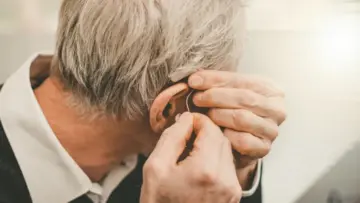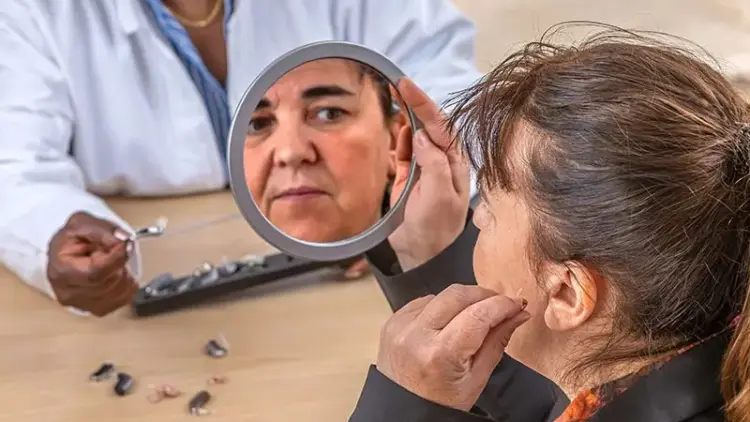
One of the most frequently asked questions audiologists hear in clinical practice is deceptively simple: “Do I really need two hearing aids, or is one sufficient?” It is a practical dilemma that touches on multiple facets of daily life. Purchasing a second device roughly doubles the financial cost, some patients find that wearing a single aid offers greater physical comfort, and many simply want to know what actually works to improve their communication. Yet, despite the ubiquity of the question, there has historically been surprisingly little solid clinical evidence to provide a definitive answer—until now.
A new randomized clinical trial, published in JAMA Otolaryngology–Head & Neck Surgery, has finally set out to fill that critical research gap. Conducted by researchers aiming to understand how single versus dual hearing aid use impacts real-world communication, the study offers fresh insights into what people living with mild-to-moderate hearing loss can actually expect from their devices. (Note: The author of the original commentary served as an adviser for this study.)
Age-related hearing loss typically affects both ears relatively equally, which is why fitting two hearing aids—a practice known professionally as a bilateral fitting—has long been the standard recommendation from medical and audiological professionals. However, across various historical studies and clinical observations, a sizable share of patients—ranging from roughly one in five to more than half—ultimately end up preferring or exclusively using a single device in one ear.
Patients cite a variety of reasons for sticking with just one hearing aid. These include physical comfort, everyday convenience, the subjective feeling that a single device already meets their communicative needs, and, significantly, financial considerations. Purchasing a second hearing aid practically doubles the overall price tag. Furthermore, for individuals dealing with milder forms of hearing loss, it has never been entirely clear how much extra clinical benefit that second device genuinely delivers in day-to-day settings.
Moreover, most earlier studies suffered from notable limitations. They were typically based on relatively small cohorts of participants, combined individuals experiencing a wide array of different hearing loss severities, relied on older generations of hearing aid technology, and frequently handed out devices to participants for free. Providing free equipment effectively erased the real-world financial trade-offs that actual patients must navigate when making healthcare decisions every single day.
To address these shortcomings, the new study was meticulously designed as a randomized clinical trial, widely considered the gold standard for comparing two different medical interventions. Carried out at Duke University and Vanderbilt University between 2021 and 2024, the trial successfully enrolled 275 adults aged 50 and older. All participants were completely new to hearing aids and presented with mild-to-moderate hearing loss in both ears.
Researchers randomly assigned the participants into one of two distinct groups: one cohort received a single hearing aid, while the other received two. Every participant was outfitted with similar, modern receiver-in-the-canal devices, ensuring technological consistency across the board. Crucially, and in stark contrast to much of the preceding research, participants paid for their own hearing aids and associated professional services—though they did receive a small manufacturer discount and utilized insurance coverage where applicable. By incorporating out-of-pocket expenses, the study successfully mirrored the financial trade-off that is so frequently missing from traditional laboratory-based hearing aid research.
After three months of daily wear, researchers evaluated the degree of benefit each participant experienced. This assessment was primarily conducted using a well-established, validated questionnaire designed to measure how much easier everyday communication had become, supplemented by several secondary evaluative metrics.
When the results were analyzed, the data revealed that wearing two hearing aids did provide a greater average benefit than wearing just one. However, it is equally important to note that the additional benefit conferred by the second hearing aid turned out to be smaller than the researchers had originally anticipated. The trial was originally designed to detect a performance difference of about 10 percentage points between the single-aid and dual-aid groups, but the actual observed difference was roughly half of that projection.
The study’s authors have been careful to emphasize that it remains unclear whether this narrower performance gap is large enough to be noticeably meaningful in the unpredictable, dynamic environments of everyday life. Rather than serving as a reason to dismiss the findings entirely, this nuance highlights the complex nature of human auditory perception and individual lifestyle needs.
Every clinical trial has inherent limitations, and the researchers behind this study were entirely transparent about theirs. The trial focused specifically on older adults with mild-to-moderate hearing loss who were first-time users, meaning the results may not directly translate to younger populations, individuals with severe-to-profound hearing loss, or experienced hearing aid users who are accustomed to bilateral wear. Additionally, the three-month follow-up period, while standard for initial adaptation studies, captures only the early phase of the hearing rehabilitation journey.
Despite these methodological boundaries, this randomized trial presents exceptionally valuable evidence for a question that patients ask their audiologists on a daily basis. The data demonstrates that while two hearing aids provided more benefit on average, the communicative benefits delivered by a single hearing aid were also deeply meaningful to those who wore them.
Ultimately, the conclusion of the research is not that one hearing aid is universally just as good as two, nor is it that every single person experiencing bilateral hearing loss must wear a pair of devices. Instead, the findings suggest that the decision deserves significantly more nuance than a rigid, one-size-fits-all clinical rule. Patients are encouraged to carefully weigh their individual hearing needs, listening environments, physical comfort, personal budget, and lifestyle preferences, and then collaborate closely with their hearing care provider to find the specific configuration that delivers meaningful benefit alongside consistent, daily use.
Whatever option an individual ultimately chooses, the most vital takeaway remains addressing hearing loss proactively and seeking out the professional support and technological tools necessary to communicate effectively and stay connected to the world.