Every year on February 25, advocates for hearing health observe International Cochlear Implant Day to celebrate the medical advances and sophisticated technology that make cochlear implants life-changing for individuals living with severe or profound hearing loss. For many recipients, the milestone serves as a moment of reflection on the long, often complex journeys they navigated before finally embracing the technology.
Teri’s Story
For Teri Breier, receiving a cochlear implant in March 2025 came four decades after she acquired her first pair of traditional hearing aids. Although she medically qualified for a cochlear implant years prior, it took her eight full years to take that monumental leap at age 60. Now, having experienced nearly a year of dramatically improved hearing, effortless communication, and renewed human connection facilitated by the technology, she often reflects on a single question: why didn’t she do it sooner?
The simple answer, she notes, is that she simply wasn’t ready until she was. Having spent a lifetime depending on increasingly powerful hearing aids to manage the slow, progressive creep of sensorineural hearing loss, she had long operated under the assumption that there would always be a more advanced traditional option waiting just around the corner.
Hearing Loss in School
Breier’s relationship with hearing loss began early. She was diagnosed with mild sensorineural hearing loss during a routine school screening in first grade. The year was 1971, a time well before universal newborn hearing exams and prior to the passage of the Education for All Handicapped Children Act of 1975, which eventually evolved into the Individuals with Disabilities Education Act in 1990. Aside from basic medical monitoring, no formal interventions were prescribed by her physicians, and classroom accommodations for students with hearing difficulties were virtually nonexistent.
Throughout her elementary, junior high, and high school years, Breier instinctively adapted by securing seats near the front of the classroom to ensure she wouldn’t miss vital instruction. While she maintained strong academic performance, she found herself increasingly struggling to understand her teachers and follow spontaneous conversations with classmates. By the time she reached age 16, her hearing loss had progressed from mild to moderate. At that vulnerable age, however, she harbored a fierce resistance to being labeled as "the girl with the hearing aids."
College and Career with Hearing Aids
As a college freshman, Breier managed to navigate the challenging acoustics of large lecture halls well enough to keep her grades high. However, upon returning to Los Angeles that summer, her grandmother firmly insisted that she finally obtain hearing aids. Looking back, Breier credits that intervention as a pivotal turning point that fundamentally transformed her capacity to learn, understand, communicate, and connect meaningfully with her peers.
Nevertheless, the heavy burden of social stigma and perceived shame meant she continued to conceal her invisible disability from the outside world. She spent the first 30 years of her professional career spanning journalism, advertising, and marketing desperately trying to blend into corporate environments. Eventually, she stepped away from the corporate sphere to establish her own independent path as a freelance copywriting consultant.
As her hearing deteriorated further with time, masking the condition grew increasingly difficult across her professional life, her daily routines, and her beloved personal hobby as a choral singer. Frequent misunderstandings left her deeply embarrassed, occasionally causing her to sing out of tune. To cope with the mounting anxiety, she eventually stepped away from the choir, withdrew from social interactions, and sank deeper into isolation.
The Support and Influence of HLAA
The trajectory of her relationship with hearing loss shifted dramatically when she discovered the Hearing Loss Association of America in 2015. By that point, she had engaged in extensive personal healing, built up her self-confidence, and reached a mental space where she was finally ready to openly own her hearing loss. She quickly stepped into leadership roles within two consecutive HLAA chapters, building close friendships with other cochlear implant recipients who offered enthusiastic encouragement. Almost universally, they described their own implants as the single best decision they had ever made.
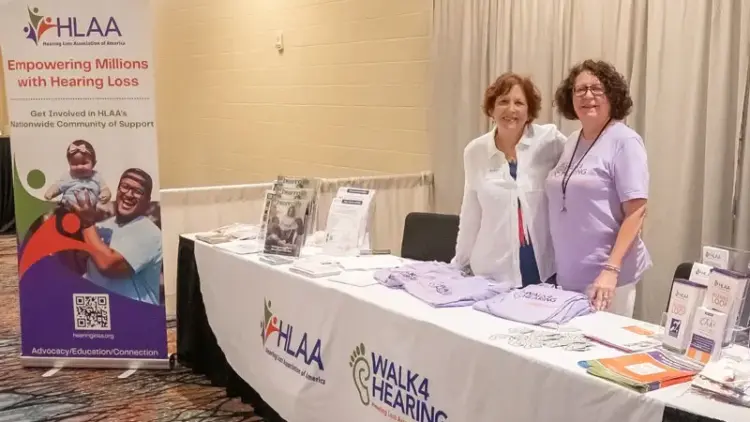
Breier initiated the medical qualification process for a cochlear implant in 2017, but ultimately chose not to proceed at that moment. She was still managing to get by, yet she felt paralyzed by the fear of losing her remaining residual hearing, forfeiting her enjoyment of music, and weathering the unknown downtime required for surgical recovery and aural rehabilitation while maintaining her freelance business. Even so, her commitment to the HLAA community remained steadfast as she volunteered for the Long Beach Walk4Hearing and attended annual national conventions.
In 2023, her dedication to the cause deepened when she joined the official staff of the HLAA, a role that allowed her to make a tangible, nationwide impact on the lives of others with hearing loss. Working side-by-side on a daily basis with colleagues who relied on cochlear implants provided the ultimate catalyst she needed to take action and stop letting life pass her by.
My First Year with a Cochlear Implant
The results exceeded her expectations. Breier was able to understand speech from the very first moment of her cochlear implant activation day in April 2025. Although every sound and syllable was initially overlaid by frustrating robotic whistles and echoes as her brain struggled to interpret the incoming digital signals, consistent aural rehabilitation practices cleared away the extraneous noise within three months.
Since that time, she has recovered access to high-frequency sounds she had not experienced since her twenties. She finds herself once again enjoying—and occasionally being mildly amused by—the everyday sounds of birds singing outside. She can comfortably follow songs and commercials playing on her car radio and conduct phone conversations without relying on captions. Her active engagement recently culminated in her election as president of the HLAA Los Angeles Chapter, marking the next meaningful chapter in her advocacy journey.
Today, Breier remains bimodal, wearing a traditional hearing aid in one ear and her cochlear implant in the other, though she is already contemplating the timeline for a second implant. Reflecting on her transformation, she expresses profound gratitude for the technology that restored her connection to the world and, above all, for the HLAA role models who demonstrated what was truly possible.