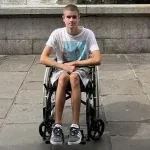
For Illinois native Carlos Murillo, living with a physical disability has never meant settling for a quiet or limited life. Born with spina bifida—a congenital condition in which the spinal column fails to close completely during fetal development—Murillo received his first wheelchair at just three years old. Now 32, he is devoting his 30s to proving that mobility challenges do not have to dictate a person’s potential, purpose, or capacity for high-octane adventure.
Across a rapidly expanding roster of extreme sports and outdoor activities, Murillo has systematically tackled challenges that many might assume are out of reach for a wheelchair user. His growing list of accomplishments includes zip-lining, waterskiing, kayaking, snow skiing, scuba diving, go-kart racing, sled hockey, wheelchair rugby, archery, horseback riding, paramotoring, handcycling, and rock climbing. Yet, despite this extensive catalog of achievements, Murillo remains relentless in his pursuit of the next adrenaline rush, using adaptive sports and accessible travel as vehicles to challenge societal expectations.
Origin Story and Mindset
Murillo’s engagement with adaptive athletics began nearly two decades ago. In 2007, while attending a holiday Christmas party organized by the Great Lakes Adaptive Sports Association (GLASA), he was introduced to wheelchair basketball. That initial experience on the court introduced him to the broader world of adapted recreation, planting a seed that would eventually evolve into an ambitious, life-defining pursuit.
However, the shift from participating in occasional sports to actively constructing a thrill-seeking lifestyle took shape more recently. About two years ago, Murillo recognized that he held a vast collection of personal goals and experiences he wanted to pursue, but lacked a formal plan to achieve them. To bridge that gap, he established a dedicated bucket list, turning abstract desires into an actionable mission.
This deliberate approach brought a renewed sense of fulfillment to his 30s. Reflecting on his personal evolution, Murillo notes that his current decade has yielded far greater self-discovery, growth, and adventure than his 20s ever did. When confronted with the physical and logistical hurdles inherent to adaptive outdoor sports, Murillo maintains a steadfast, resilient mindset. Rather than viewing setbacks as failures, he views every challenge as an opportunity to learn and refine his approach, operating under a simple personal philosophy: "I don’t have doubts or regrets. I have lessons!"
Breaking Physical Barriers in Adaptive Sports
The wide variety of disciplines Murillo has tried illustrates both his physical versatility and the growing sophistication of adaptive sports equipment. Navigating different activities requires adjusting to unique physical demands and equipment setups. Yet, Murillo approaches each new sport with a practical, trial-and-error mindset, emphasizing that mastering a new discipline rarely requires complex secret techniques—just a willingness to attempt the activity multiple times until the mechanics feel natural.
Certain sports presented unexpected revelations, while others demanded intense physical effort. Zip-lining proved to be one of the most surprising breakthroughs early in his journey, primarily because Murillo had long assumed that adaptive programs for high-canopy ziplines simply did not exist. Conversely, handcycling and road cycling presented some of the most grueling physical trials he has faced. Negotiating steep inclines proved particularly tough, as propelling a handcycle uphill requires tremendous upper-body strength, stamina, and continuous physical drive.
Despite the physical toll, several activities instantly resonated with him. After trying them for the first time, Murillo immediately knew that zip-lining, paramotoring, and waterskiing would become lifelong passions.
Much of Murillo’s success has been supported by a strong network of specialized adaptive organizations. Foundations and programs such as GLASA, H2O Adaptive Sports, Diveheart, the Shirley Ryan AbilityLab, and Wisconsin Adaptive Ski provide the essential infrastructure, customized gear, and certified instruction required for athletes with disabilities to participate safely in complex outdoor activities. For newcomers walking into one of these organizations for the very first time, Murillo describes the environment as welcoming and uplifting—an empowering space where athletes connect, share experiences, and challenge their perceived boundaries together.
Chasing the Next Thrill: The Evolving Bucket List
Far from being content with his current accomplishments, Murillo continues to expand his bucket list. His future ambitions lean heavily toward high-speed motorsports and aerial adventures. Among his target experiences are NASCAR ride-alongs, supercar drives, adaptive paragliding, helicopter flights, parasailing, adaptive surfing, whitewater rafting, adaptive mountain biking, and skydiving.
When discussing his motivation for pursuing high-risk activities like NASCAR and paragliding, Murillo points to a single core element: the pure adrenaline rush. Balancing thrill-seeking with practical reality requires thoughtful evaluation. When deciding which activities earn a spot on his bucket list, Murillo carefully weighs the pros and cons while assessing which experiences offer the most compelling personal challenge.
His bucket list remains dynamic. While he feels immense excitement about upcoming experiences like supercar rides and parasailing, he candidly acknowledges feeling a healthy degree of nervous anticipation for disciplines like adaptive surfing and whitewater rafting, where unpredictable natural water conditions come into play. Once an item is completed, he turns to web research and brainstorming to identify his next objective, ensuring his vision remains focused forward.
The Stadium Collector: Exploring Sports Across North America
Beyond his personal athletic pursuits, Murillo is a passionate sports fan who has built an extensive stadium-collecting routine. He has made it a goal to visit as many athletic venues as possible, attending games across Major League Baseball (MLB), the National Hockey League (NHL), the National Basketball Association (NBA), the National Collegiate Athletic Association (NCAA), the National Women’s Soccer League (NWSL), professional rugby, and minor league baseball.
His motivation for collecting venues comes down to an enduring love for live sports. Minor league ballparks hold a particularly prominent position on his travel itineraries, with trips taking him to stadiums in Kenosha, Wisconsin; Schaumburg, Illinois; South Bend, Indiana; Midland, Michigan; and San Antonio, Texas. The appeal of minor league venues lies largely in their affordability and intimate stadium atmospheres. To keep his stadium tour budget-friendly, Murillo routinely reaches out directly to front offices via email to request complimentary tickets—a simple, proactive strategy that has allowed him to visit dozens of facilities.
Navigating sports venues has also given Murillo a keen eye for venue accessibility. Among the numerous stadiums he has visited, the Schaumburg Boomers’ stadium in Illinois stood out as an exemplary facility for accessibility, offering seamless navigation and clear sightlines for wheelchair users.
Navigating Accessible Travel Across Borders
Murillo’s stadium visits are part of a broader commitment to independent travel. His journeys have taken him across numerous U.S. states—including California, Texas, Florida, Michigan, Indiana, Minnesota, and Wisconsin—as well as international destinations in Canada and Mexico.
Traveling as a wheelchair user requires meticulous advance planning. Unlike spontaneous travel, Murillo must scrutinize every element of an itinerary beforehand, from verifying accessible hotel accommodations and reliable transportation options to identifying fully accessible attractions and venues.
Accessibility infrastructure varies significantly depending on the location. States such as Texas and California earned high marks from Murillo for their developed accessibility resources and ease of mobility. Conversely, international destinations like Mexico presented notable physical obstacles, where historic infrastructure and uneven cobblestone streets frequently created difficult terrain for wheelchair travel.
Despite these environmental challenges, Murillo remains committed to global exploration. Looking ahead, his next major travel chapter involves an international cruise that will take him to ports across Honduras, the Bahamas, and Mexico.
Advocacy through Action: Inspiring the Next Generation
Through his athletic feats and travel endeavors, Murillo has naturally stepped into the role of an advocate for the adaptive community. He frequently works to dismantle common misconceptions surrounding disability, accessibility, and extreme sports. His core message to the general public is straightforward: adaptive sports opportunities exist, but individuals must actively seek them out.
For individuals who have recently acquired a disability or started using a wheelchair—and who may feel that their adventurous days are behind them—Murillo offers direct, uncompromising encouragement. His advice is to push past apprehension and embrace new challenges: "Don’t be afraid to try new things. Just send it," he says, encouraging others to embrace risk and possibility.
He advises newcomers to utilize internet search engines and local community networks to uncover adaptive resources in their area. By sharing his personal experiences, Murillo aims to shift public perceptions and demonstrate to both able-bodied audiences and wheelchair users that physical limitations do not define what a person can accomplish.
Personal Reflections and the Road Ahead
Sustaining the momentum required to continuously tackle new sports and travel destinations demands mental toughness and a strong support network. When intimidation or physical fatigue sets in, Murillo draws strength from his coaches and his own internal determination, holding fast to a foundational belief: giving up is simply not an option.
Reflecting on his journey, certain milestones carry deep emotional significance. Successfully completing his first zip-line tour remains one of his most cherished accomplishments—an experience he once feared he would never get to enjoy due to a lack of visible adaptive options. Looking back across everything he has accomplished, Murillo takes pride in every single discipline he has tried, recognizing that each milestone required hard work and perseverance.
If he could offer advice to his younger self at the start of this journey, his message would be grounded in practical optimism: a vast range of possibilities exists in the world, but achieving them requires effort, persistence, and dedication. With skydiving at the top of his immediate wishlist and an upcoming cruise on his itinerary, Carlos Murillo continues to push his boundaries, demonstrating that a life lived in a wheelchair can be defined by endless adventure.