Originally published in July 2025 and updated in November 2026, this policy review reflects shifting epidemiological trends and a landmark decision by the Pan American Health Organization (PAHO): the United States has officially lost its measles elimination status.
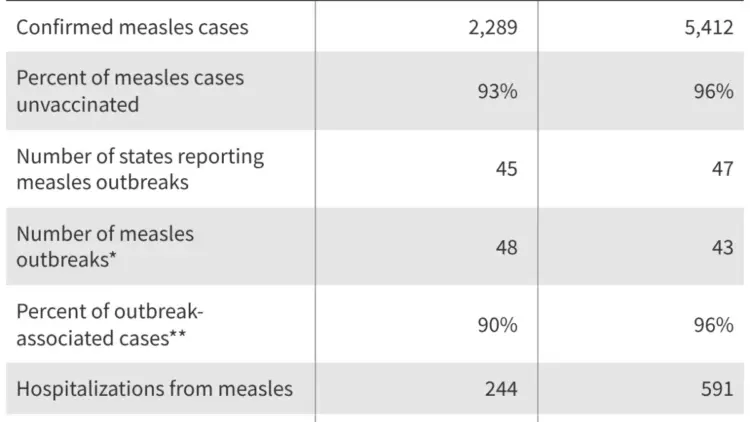
For more than a quarter-century, from 2000 until 2026, the U.S. held an official designation of measles elimination. This status signified that the nation had successfully suppressed large-scale outbreaks and avoided twelve or more consecutive months of uncontrolled domestic transmission. However, a relentless wave of measles outbreaks that began in early 2025 has fundamentally altered that reality. Between January 2025 and November 13, 2026, public health departments across multiple states reported an alarming total of 5,412 measles cases.
This sustained, uninterrupted chain of domestic transmission prompted PAHO to determine that the U.S. no longer meets the criteria for elimination. A confluence of systemic vulnerabilities has fueled this resurgence. Public health agencies at federal, state, and local levels have faced severe staffing and funding cuts that directly impair prevention, surveillance, and outbreak response capabilities. At the same time, federal health leadership—including Department of Health and Human Services (HHS) Secretary Robert F. Kennedy, Jr.—has faced widespread criticism for downplaying the severity of the virus and issuing mixed messaging regarding immunization efforts. Compounding these administrative challenges is a broader erosion of public trust in health authorities and rising skepticism surrounding vaccine safety and efficacy. These shifts have driven down measles vaccination coverage, complicating vital public health outreach and communication campaigns.
To understand the gravity of this development, public health experts emphasize the fundamental definition of elimination status, how it is monitored and declared, and what a return to endemic transmission means for the future of public health in the United States.
Understanding the Threat of Measles
Measles remains one of the most contagious human pathogens known to medicine. In a population lacking prior immunity, a single case can spark an average of 12 to 18 secondary infections, reflecting an exceptionally high basic reproduction number. While many cases resolve without permanent injury, approximately 30 percent of infections result in severe health complications. Furthermore, roughly 1 in every 1,000 cases proves fatal, with the highest risk of severe outcomes concentrated among young children and immunocompromised individuals.
During the heavy caseloads of 2025, which saw 2,288 confirmed cases, approximately 11 percent—or 243 patients—required hospitalization, and three deaths were officially recorded. Beyond the immediate acute illness, medical research demonstrates that measles can inflict long-lasting damage on the human immune system, particularly in young children, leaving survivors vulnerable to secondary infections from entirely different pathogens. Individuals who successfully recover from the acute virus typically develop lifelong immunity against future measles infections.
Vaccination has long offered a reliable shield against the virus. Measles vaccines have been safely and effectively deployed in the United States since 1963, providing robust protection against both symptomatic illness and onward transmission. Epidemiological data indicates that receiving the recommended two doses of a measles-containing vaccine—most commonly the measles, mumps, and rubella (MMR) shot—is approximately 97 percent effective at preventing infection.
The Centers for Disease Control and Prevention (CDC) recommends that children receive their initial MMR dose between 12 and 15 months of age, followed by a second booster dose between ages 4 and 6 before entering kindergarten. Epidemiologists calculate that herd immunity is achieved when more than 95 percent of a given population possesses immunity through vaccination or prior infection, effectively halting viral transmission and preventing large outbreaks. Consequently, achieving at least 95 percent two-dose coverage is a standard benchmark for public health immunization campaigns and serves as the baseline target under the federal Healthy People 2030 initiative.
However, national coverage levels have slipped below this threshold. Federal estimates indicate that national two-dose MMR coverage among kindergarten entrants fell to 92.4 percent for the 2025-2026 school year, continuing a downward drift from 94.7 percent in 2011. This national average masks stark geographic disparities. Coverage rates vary widely across states, ranging from a low of 75.2 percent in Idaho to a high of 98.9 percent in West Virginia, with only 10 states maintaining coverage at or above the crucial 95 percent target during the 2025-2026 period.
National, Regional, and Global Measles Elimination Goals
The pursuit of domestic measles elimination has a long history in the United States. The federal government announced its first national goal to interrupt indigenous transmission in 1966, shortly after the vaccine was licensed, followed by renewed strategic targets in 1978 and 1993. On a broader scale, member states of the Pan American Health Organization—serving as the Americas regional office of the World Health Organization (WHO)—voted in 1994 to interrupt endemic measles transmission across the Western Hemisphere by the year 2000. In 2012, WHO member states further endorsed a Global Vaccine Action Plan aiming for measles elimination across all six global WHO regions by 2020.
Despite setting early domestic goals, the U.S. did not officially achieve verified elimination status until 2000. This certification followed rigorous evaluations by internal CDC teams and external expert panels, which reviewed epidemiological data, vaccination registries, and public health infrastructure against strict benchmarks. In March 2000, an independent panel convened by the CDC’s National Immunization Program concluded that all criteria had been successfully met.
A decade later, the CDC initiated a formal re-verification process. In 2011, the National Center for Immunization and Respiratory Diseases assembled another external expert committee to evaluate epidemiological evidence compiled since 2000. That panel confirmed that the U.S. had successfully sustained elimination, issuing its final affirming report in March 2012. Oversight continued over the years through advisory bodies such as the U.S. National Sustainability Committee for the Elimination of Measles, Rubella, and Congenital Rubella Syndrome.
Parallel to domestic reviews, PAHO established its own rigorous verification architecture. In 2007, PAHO member states created an international committee to monitor regional transmission, requiring countries to establish national commissions to compile and submit comprehensive documentation. PAHO’s Measles and Rubella Elimination Regional Monitoring and Re-Verification Commission (MRE-RVC) has met annually to assess member state progress. While the U.S. was consistently designated as having sustained elimination for many years, the shifting epidemiological landscape prompted the MRE-RVC to place the U.S. in the warning category of "sustained with major concerns" during its November 2025 meeting, culminating in the 2026 decision to revoke elimination status.
What Does it Mean to Eliminate Measles?
Under established guidelines developed by the U.S. and regional PAHO partners, measles elimination is formally defined as the interruption of endemic measles virus transmission for a continuous period of 12 months or longer, operating in the presence of high-quality disease surveillance. Conversely, a disease is classified as endemic if continuous transmission persists across a rolling 12-month window.
During historical re-verification cycles, public health experts relied on a broad spectrum of epidemiological indicators to confirm the absence of endemic spread. These included detailed transmission patterns, the proportion of imported versus locally acquired cases, prompt outbreak response capabilities, and granular vaccination coverage metrics.
Prior to the 2025 crisis, the largest post-elimination resurgence occurred during the 2018-2019 winter and spring. Sparked by international importations late in 2018, that outbreak concentrated heavily within close-knit, under-vaccinated communities in New York City and surrounding suburban counties. State and local leaders responded aggressively by declaring public health emergencies, mandating vaccinations, issuing civil fines for non-compliance, and temporarily closing schools where active transmission occurred. These measures spurred the administration of approximately 60,000 vaccine doses in affected areas within a matter of months.
At that time, federal agencies provided robust technical and financial backing. High-ranking federal officials issued unambiguous statements emphasizing the safety and necessity of immunization while condemning the spread of vaccine misinformation. This coordinated, multi-layered response successfully contained the New York crisis, interrupting transmission chains and restoring stability by August 2019.
How the Current Outbreak Ended U.S. Elimination Status
The public health landscape shifted dramatically in 2025. That year witnessed more reported measles cases, active outbreaks, affected states, and associated deaths than any single year since 1992, with transmission carrying directly into 2026. While the monthly pace of reported cases fluctuated between January 2025 and November 2026, outbreaks remained continuous and geographically dispersed. A distinguishing feature of this recent wave has been the high proportion of domestic transmission compared to international importations, indicating that indigenous spread has driven the epidemic curve.
Key metrics from the 2025 and 2026 outbreaks highlight a severe departure from historical elimination standards. During the entire ten-year period from 2001 to 2011, the U.S. recorded a total of 64 discrete outbreaks. By contrast, 2025 alone saw 48 separate outbreaks, followed by another 43 new outbreaks through November 13, 2026. Furthermore, while imported cases accounted for roughly 40 percent of infections during the 2001-2011 verification window, importations dropped to just 10 percent of cases in 2025 and 4 percent in 2026, underscoring a heavy reliance on domestic transmission networks.
Mortality rates also climbed. While the decade-long elimination period recorded a single measles-related death, 2025 saw three deaths, and state health departments reported eight deaths through mid-November 2026, though federal reporting figures adjusted following modifications to how state mortality data is processed. The scale of the current crisis far surpasses the 2019 mobilization; by October 2019, when regional outbreaks were successfully suppressed, cumulative cases stood at 1,249 across 17 states—numbers that have been heavily eclipsed by the 2025 and 2026 figures.
State and local health departments bear primary operational responsibility for outbreak containment. However, local health agencies faced funding reductions and support cuts from the federal government compared to prior years, constraining their epidemiological tracking capacity. Historically, federal grants have constituted over half of local public health operating budgets. Furthermore, several states experiencing heavy caseloads—such as Texas, New Mexico, and South Carolina—did not implement the aggressive containment measures utilized in New York in 2019, such as strict school exclusions, vaccine mandates, and public penalties.
Federal messaging has also evolved unevenly. While agencies like the CDC continued to provide technical assistance and emergency funding—including a $100 million allocation announced by the agency in October 2026 to bolster local outbreak responses—top administration figures offered divergent perspectives. HHS Secretary Robert F. Kennedy, Jr. drew criticism for downplaying infection risks and promoting alternative treatments over vaccination. Earlier in the outbreak cycle, former CDC Deputy Director Ralph Abraham characterized the resurgence as "just the cost of doing business" stemming from personal freedom choices in unvaccinated communities. More recently, CDC Director Dr. Erica Schwartz reaffirmed that immunization remains the premier defense against the virus, describing the MMR vaccine as entirely safe.
These operational and communicative challenges unfolded against a backdrop of declining childhood immunization rates. National kindergarten MMR coverage slid to 92.4 percent by the 2025-2026 school year, with more than 75 percent of states failing to meet the 95 percent herd immunity benchmark. County-level analyses revealed widespread coverage drops, falling from an average of 93.9 percent in 2019 to 91.3 percent in 2024. Consequently, surveillance data from 2026 indicates that 96 percent of measles patients were either entirely unvaccinated or possessed unknown vaccination histories, while only 4 percent had a documented history of receiving the MMR vaccine.
Public polling by organizations such as KFF indicates that these trends coincide with broader declines in trust toward public health authorities and routine immunizations. Survey data revealed that nearly 20 percent of American adults believed the false claim that receiving the measles vaccine is more dangerous than contracting the natural infection, leaving parents vulnerable to persistent misperceptions.
U.S. Outbreaks in a Regional and Global Context
The United States has not stood alone in experiencing elevated measles activity. Neighboring countries throughout the Western Hemisphere recorded substantial case numbers in 2025, including 6,213 reported cases in Mexico and 5,463 cases in Canada. In November 2025, PAHO formally declared that Canada had also lost its measles elimination status after enduring more than 12 consecutive months of sustained transmission. Across the entire Americas region, PAHO logged 14,975 measles cases across 13 countries in 2025, with the vast majority concentrated in North America.
Globally, the scale of circulation remains immense. WHO data tracking through November 13, 2026, identified 344,136 measles cases worldwide, driven by large outbreaks across the European and Eastern Mediterranean regions alongside the Americas. Outside of North America, nations reporting the highest case counts over a six-month period included Bangladesh, Guatemala, and Yemen. This high level of global virus circulation prompted the CDC to maintain standing travel health notices, warning that international travelers face increased risks of exposure and subsequent importation of the virus into domestic communities.
Looking Ahead
A central question for epidemiologists has been whether ongoing domestic transmission chains stem directly from the outbreak originating in West Texas in January 2025 or represent separate, repeated importation events. By employing advanced genomic sequencing to analyze viral isolates from patients, scientists can map precise transmission pathways. The CDC collaborated with laboratory partners to sequence these samples, providing critical evidence for the external PAHO expert commission during its scheduled annual review meeting.
The elimination of measles in the United States long stood as a monumental public health triumph, achieved through decades of sustained financial investment, political commitment to prevention, and widespread community support for vaccination. The loss of this status signals that the foundational infrastructure and public consensus supporting disease control have eroded. Without renewed commitments to closing immunity gaps, health experts warn of a future where measles re-establishes itself as an endemic disease, driving preventable hospitalizations, long-term health complications, and tragic loss of life among vulnerable children, while placing an unsustainable burden on local public health systems.