A major study published in JAMA Neurology has delivered a stark projection regarding global health, warning that the number of new dementia cases is expected to double worldwide over the coming decades. The findings have brought renewed urgency to discussions surrounding long-term cognitive health, healthcare infrastructure, and the immense responsibilities facing family caregivers who support aging loved ones every day.
For the millions of family caregivers navigating the daily complexities of dementia, alongside individuals looking ahead at their own cognitive wellness, projections of this scale can feel overwhelming. However, public health experts emphasize that understanding the underlying driving forces behind these numbers represents a critical first step toward effective prevention and better care planning. Getting this looming public health challenge under control will ultimately require coordinated global leadership, enhanced medical advocacy, and proactive health management.
The Numbers: Why Are Dementia Cases Expected to Double?

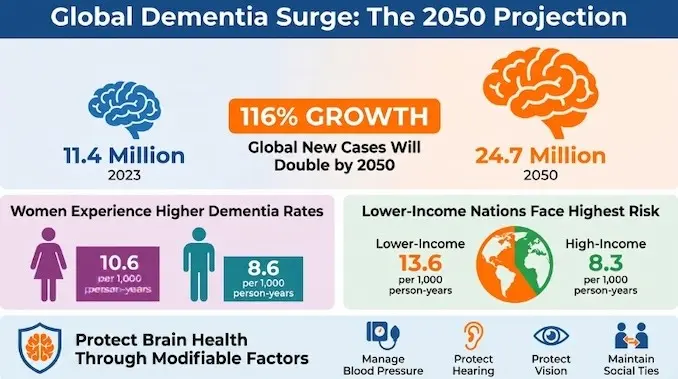
According to the data, an estimated 11.4 million new dementia cases were recorded globally in 2023. By the year 2050, that annual figure is projected to surge to 24.7 million new cases, representing a striking 116% increase.
Public health analysts point out that this dramatic spike is not driven by the disease itself becoming biologically more aggressive. Instead, the primary catalyst is the rapid aging of the global population. Age remains the single most significant risk factor for the development of dementia, and as modern medicine and living standards improve, people are living longer than ever before.
Dr. Emer MacSweeney, a consultant neuroradiologist, noted that this anticipated increase should be viewed as a vital wake-up call to accelerate prevention, early diagnosis, and treatment pathways, rather than accepting cognitive decline as an inevitable consequence of getting older.
The Gender Gap: Why Are Women at Higher Risk of Dementia?

The research also revealed a significant and concerning discrepancy in who develops dementia, highlighting a distinct gender gap. According to the study, the incidence rate for women stood at 10.6 new cases per 1,000 person-years, compared to just 8.6 new cases for men.
While women generally enjoy longer lifespans than men, researchers emphasize that longevity alone does not entirely explain the disparity. Sex-specific biological factors, including hormonal shifts during menopause and the lifelong cumulative exposure to estrogen, likely play a substantial role in shaping long-term brain health. This underscores an urgent need for healthcare systems to prioritize women’s cognitive and cardiovascular health well before individuals reach their senior years.
The Geography of Dementia: The Heart-Brain Connection
Geographical analysis within the study pointed to striking disparities across the globe, revealing that low- and middle-income countries face a notably higher incidence of dementia, registering 13.6 cases per 1,000 person-years. In contrast, high-income countries report a significantly lower incidence rate of 8.3 cases per 1,000 person-years.

This geographical divide points directly to the well-established heart-brain connection. Over recent decades, high-income nations have experienced steady declines in smoking rates, alongside more effective management of untreated high blood pressure and high cholesterol. Conversely, low- and middle-income regions are seeing rising rates of obesity, stroke, and cardiovascular disease. The overarching takeaway for medical professionals and caregivers alike is that protecting cardiovascular health is fundamentally intertwined with preserving brain health.
While individuals cannot stop the natural aging clock, a significant portion of long-term cognitive trajectory is influenced by modifiable risk factors. Medical experts continue to stress the importance of focusing on foundational health habits, such as managing blood pressure, protecting sensory health, and maintaining active social connections, to support cognitive longevity.
Addressing the broader societal impact of these projections will require a concerted effort from international policymakers and healthcare leaders. Without robust public health campaigns and equitable access to preventative care, the rising tide of cognitive decline will place unprecedented pressure on healthcare systems and families worldwide.
Medical Disclaimer: The information provided is for educational and informational purposes only and does not substitute for professional medical advice, diagnosis, or treatment. Cognitive decline and dementia risk involve complex medical variables, and individuals should always consult with a primary care physician or neurologist to discuss specific risk factors and preventative care plans.