Families and caregivers navigating Tuberous Sclerosis Complex (TSC) frequently encounter complex behavioural hurdles that require immense patience, insight, and strategic support. Among the diverse clinical manifestations of the condition, behaviours that are deemed challenging—ranging from severe tantrums and property destruction to physical aggression and self-harm—represent a significant facet of daily caregiving. Gaining a deeper, evidence-based understanding of the underlying causes, environmental triggers, and predictive frameworks associated with these actions is becoming an increasingly vital component of comprehensive TSC management.
What are behaviours that can be challenging?
In clinical and caregiving contexts, a behaviour is classified as challenging when it places the individual experiencing it, or those around them, at direct risk of physical or emotional harm. These complex actions frequently manifest as outward aggression directed toward others, acts of self-harm, or destructive physical behaviors such as breaking, throwing, or smashing objects within the immediate environment.
While individuals with pre-existing learning difficulties or developmental disabilities tend to display these challenging behaviours with a higher frequency, healthcare professionals emphasize that anyone can exhibit them under the right set of circumstances. Within the specific medical landscape of Tuberous Sclerosis Complex, these challenging actions are recognized as an intrinsic component of Tuberous Sclerosis-Associated Neuropsychiatric Disorders, commonly referred to as TAND. TAND encompasses a wide spectrum of psychological, psychiatric, behavioral, and intellectual challenges that can affect individuals with TSC across their lifespan, making a structured and empathetic approach to behavioral health essential for both patients and their support networks.
Why do people exhibit behaviours that can be challenging?
The roots of challenging behaviours are rarely arbitrary; rather, they are typically driven by a constellation of triggers that are profoundly unique to each individual. A remarkably common catalyst for these episodes is an overwhelming or stressful environment, such as a room filled with excessive noise, bright lights, or sensory overstimulation that the individual’s nervous system struggles to process.
In many instances, these challenging actions serve as an unintended or alternative mechanism for communication—a desperate attempt by the individual to express a fundamental physiological need, such as hunger, thirst, or physical discomfort. Furthermore, when verbal communication is limited or entirely absent, these behaviors can act as a crucial, albeit distressing, outlet for pent-up frustrations, anxiety, or intense emotions that the person has no other way of releasing.
Consider the profound daily frustrations faced by someone who possesses a rich inner world and clear desires but lacks the neurological or physical capacity to verbally express their needs. When viewed through this lens of communication barriers and sensory overload, behaviours that can be challenging become significantly easier to comprehend, shifting the caregiving paradigm from one of frustration to one of empathy and detective work.
How can I predict behaviours that can be challenging?
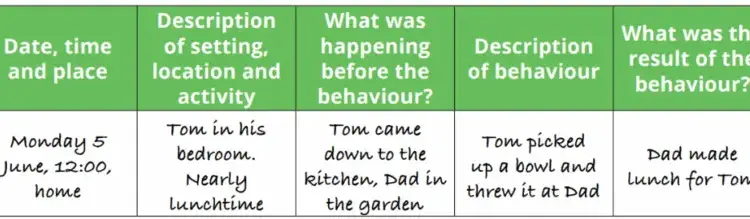
Anticipating and preparing for these behavioral episodes requires a systematic approach to observation and record-keeping. To effectively predict when a challenging behavior might occur, caregivers and support workers are encouraged to maintain a meticulous log detailing every single occurrence. Essential details that must be recorded include the exact physical location of the incident, the environmental events and social interactions leading up to the behavior, the subsequent reactions of everyone involved, and a clear, objective description of the behavior itself.

To streamline this observational process, professionals frequently advocate for the use of the Antecedent, Behaviour, and Consequences chart, commonly known as an ABC chart. In this framework, the antecedent refers strictly to what happened immediately before the behavior occurred, the behavior outlines the specific action observed, and the consequences detail what happened immediately afterward. By systematically analyzing these three components over time, caregivers can begin to spot recurring patterns, identify hidden environmental stressors, and anticipate future episodes before they fully materialize.
How can I reduce behaviours that can be challenging?
Most individuals who exhibit challenging behaviours possess an internal or physiological early warning system that signals the very onset of an impending behavioral escalation. In the early stages of an episode, these warning signs can be remarkably subtle, fleeting, and exceptionally difficult for even the most attentive caregivers to recognize. However, utilizing structured observational frameworks like the ABC chart over time trains the eye to detect these microscopic shifts in demeanor.
These early indicators can take many forms, including repetitive physical actions, the utterance of specific vocalizations or noises, sudden changes in breathing patterns, or visible muscle tensing. Recognizing these early indicators is of paramount importance because it provides a critical window of opportunity. Spotting the signs early allows caregivers to pre-emptively manage the environment, alter their approach, and potentially defuse a challenging behavior long before it reaches a crisis point.
How can I support someone during the behaviour?
When a challenging behavior actively unfolds, the demeanor, posture, and emotional state of the caregiver play a decisive, make-or-break role in how the situation resolves. Even when the behavior is deeply stressful, frightening, or personally triggering, caregivers must strive to remain as composed, calm, and grounded as possible. Displaying a gentle, reassuring facial expression, such as a soft smile, alongside a calm, clear, and steady voice can actively encourage the individual to subconsciously mirror that regulated state of being.
During an intense episode, it is vital to refrain from overwhelming the individual with a barrage of questions, demands, or frantic commands, as this often exacerbates sensory overload and escalates the tension. Instead, caregivers should be fully prepared to offer the individual physical space if stepping back appears to be beneficial for their emotional regulation. However, if the situation rapidly deteriorates to a point where safety is severely compromised and physical danger is imminent, caregivers should never hesitate to contact emergency services for professional intervention. Above all, managing these complex behaviors day in and day out is an exhausting feat, making self-compassion and mental resilience essential for the well-being of the caregiver.
How can I support the person after the behaviour?
The moments immediately following a behavioral incident are frequently characterized by an atmosphere that remains tense, fragile, and emotionally charged for every single person involved in the environment. Transitioning away from the immediate scene by moving to a different physical room or engaging in a distinct, calming activity—such as taking a quiet walk outdoors—can prove profoundly therapeutic and help reset the emotional tone of the environment.
Once absolute calmness has been successfully restored across all parties, it can be immensely valuable to reflect on the incident collaboratively or independently. This post-incident reflection allows caregivers to analyze what went right, what went wrong, and how to better prepare for future occurrences, often by updating their ongoing observations using tools like the ABC chart.
Navigating the realities of TAND and managing behaviours that can be challenging can feel isolating and overwhelmingly difficult for everyone involved in the care network. For individuals, families, and professionals seeking further information, guidance on behavioral management, or simply a compassionate, listening ear during difficult times, support is readily available through the TSA Support Line, which can be reached by telephone at 0808 801 0700, via email at [email protected], or through their dedicated webchat service.