
In an era defined by constant connectivity and relentless digital stimulation, parents, educators, and mental health professionals are increasingly grappling with a fundamental challenge: helping children and adolescents develop and sustain healthy attention spans. Attention is widely recognized as a cornerstone of cognitive development, serving as the foundational skill that enables young learners to listen actively, absorb new information, pursue ambitious goals, and tackle complex problem-solving tasks.

Recent educational and psychological research emphasizes that attention is not a fixed trait; rather, it is a malleable skill that can be systematically strengthened. Children and teens can successfully learn and adopt evidence-based strategies designed to enhance focus, improve concentration, and guide them toward their unique developmental goals.

When researchers refer to evidence-based strategies, they mean approaches that are firmly rooted in scientific inquiry and empirical research. A gold standard for identifying these dependable methods is the meta-analysis, a comprehensive research report that synthesizes the findings of numerous individual studies to determine overarching trends and effectiveness. By examining both standalone research and expansive meta-analyses, experts have identified a robust suite of tools that educators and caregivers can integrate into daily routines to support youthful minds.
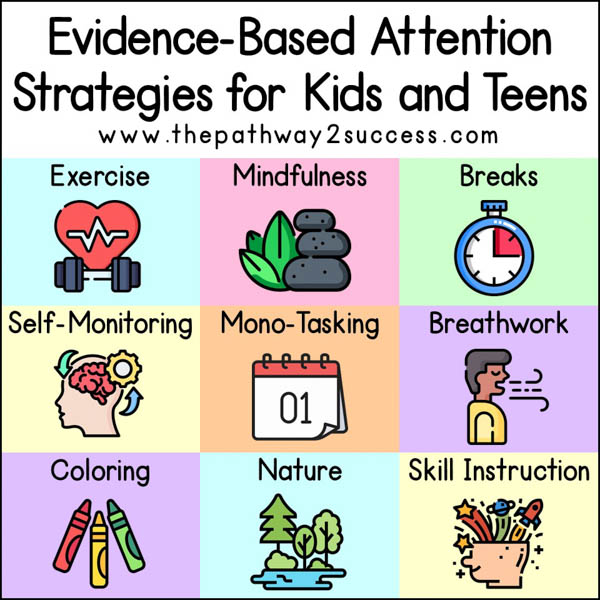
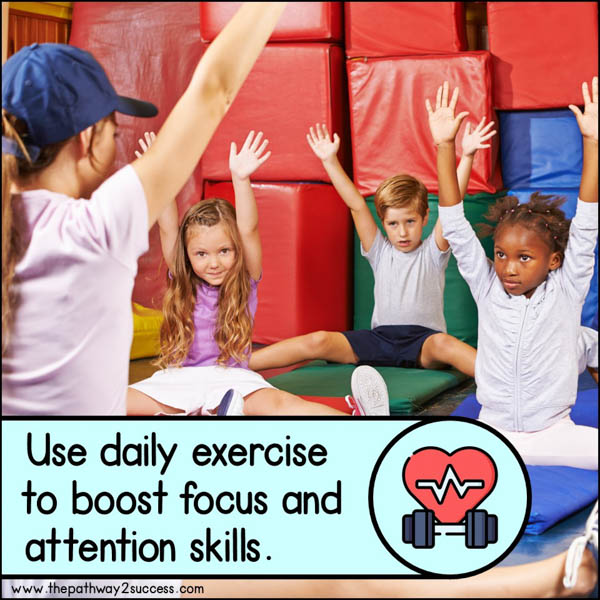
Physical activity has emerged as a primary driver of cognitive enhancement. Regular exercise consistently demonstrates a positive impact on both attention spans and overall academic performance. According to a prominent meta-analysis conducted by de Greeff and colleagues in 2018, the most pronounced cognitive benefits emerge from consistent physical exercise maintained over the course of many weeks. Furthermore, specialized research highlighted by the Committee on Physical Activity and Physical Education in the School Environment notes that embedding physical movement directly into classroom lessons significantly increases student attention and time-on-task metrics.
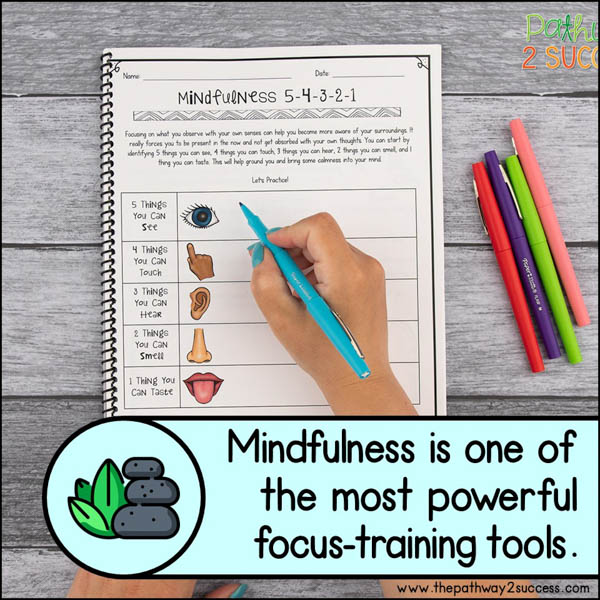
Complementing physical exertion are practices centered around mindfulness and meditation, which train the brain to anchor itself firmly in the present moment. Mindfulness can be cultivated through diverse techniques, including guided relaxation, mindful breathing exercises, and sensory observation. Substantial psychological literature, such as the findings compiled by Keng and associates, underscores the broad benefits of mindfulness, ranging from improved behavioral regulation to reduced emotional reactivity and heightened psychological well-being. Specifically concerning cognitive focus, a comprehensive meta-analysis conducted by Verhaeghen reveals that mindfulness practices yield significant, measurable improvements in both focused and sustained attention, cementing its status as a premier mental conditioning tool.
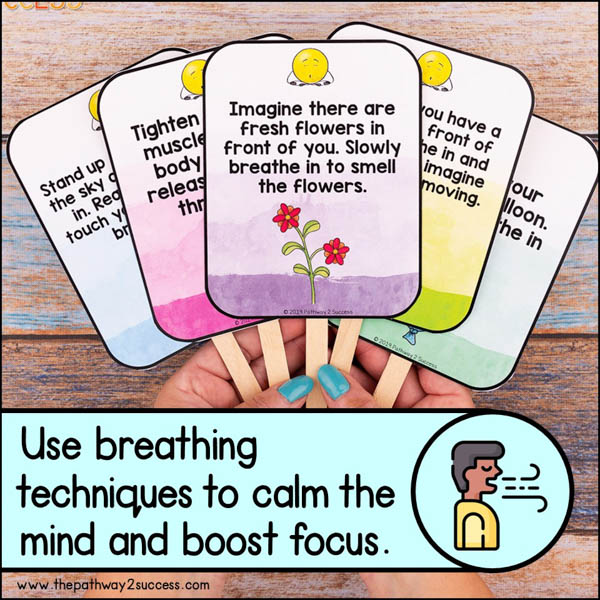
Closely related to mindfulness are deliberate breathing techniques, which leverage physiological mechanisms to foster calm and sharpen focus. Controlled diaphragmatic breathing has been shown to improve sustained attention while simultaneously lowering cortisol levels and mitigating negative emotional affect, as demonstrated in research by Ma and colleagues. Scientists explain that feeling calm and maintaining focus are deeply interconnected neurological states. By utilizing deep breathing exercises to soothe the amygdala—the brain’s emotional processing center—young individuals can regulate stress responses and optimize their capacity for concentration.

Strategic breaks also play an indispensable role in maintaining high-level cognitive performance, providing necessary intervals for the brain to regroup and refresh. Whether these interruptions involve passive engagement, such as listening to a story, or active physical movement, empirical investigations show that they produce measurable improvements in attention. Broader academic reviews further confirm that scheduled pauses from rigorous mental tasks lead directly to enhanced on-task behavior and superior academic outcomes.

In tandem with breaks, self-monitoring serves as a vital internal regulatory mechanism. This process involves learners periodically evaluating, assessing, and adjusting their own behaviors to ensure alignment with their immediate objectives. For instance, a student might pause mid-assignment to assess their focus level, recognize a distraction, and intentionally deploy re-engagement strategies to get back on track. A meta-analysis led by Reid and colleagues confirms that self-monitoring is a highly effective intervention, particularly for students experiencing attention-related challenges.
Educators and researchers also advocate for mono-tasking as an antidote to the modern culture of continuous digital partial attention. Scientific studies, including work by Gopher and associates, demonstrate that attempting to multitask is fundamentally an illusion; the human brain does not process multiple cognitively demanding streams simultaneously. Instead, multitasking involves rapid task-switching, which degrades productivity, increases error rates, and accelerates mental fatigue. Mono-tasking resolves this by concentrating cognitive resources entirely on a single goal.

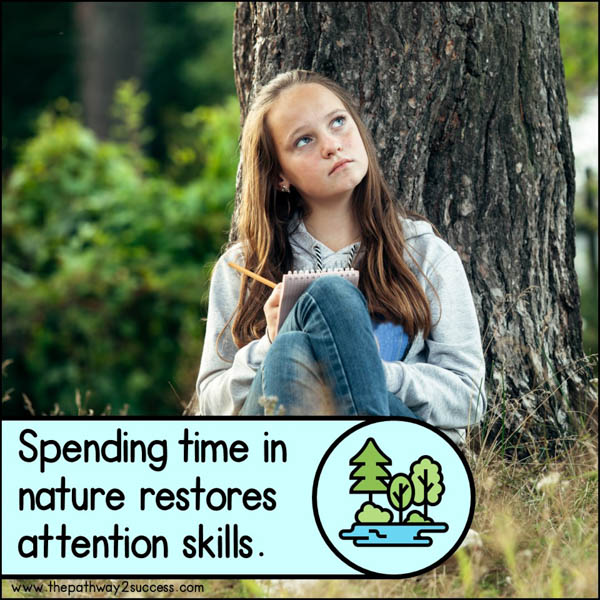
Environmental factors, particularly exposure to nature, offer profound restorative benefits for the overburdened mind. Under the framework of attention restoration theory, a substantial body of research shows that interacting with natural settings mitigates attention fatigue. A meta-analysis published by Stevenson and colleagues indicates that natural environments enhance working memory, cognitive flexibility, and attention control. Even when physical access to the outdoors is limited, visual exposure to nature has been proven to yield comparable cognitive benefits.
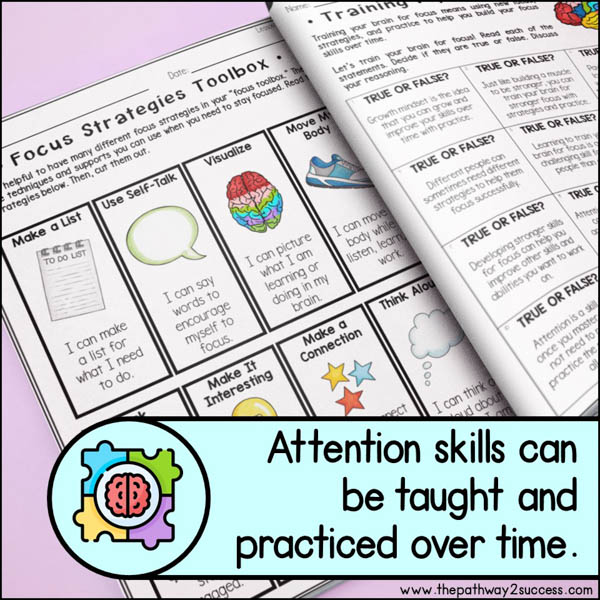
To build these capacities systematically, experts emphasize the necessity of direct skill instruction. As outlined by educational researcher John Hattie, explicitly teaching and practicing foundational competencies allows learners to construct an internal toolbox of strategies tailored to their specific needs, encompassing areas such as reading, writing, mathematics, and executive functioning. When young people struggle with task initiation or study skills, structured instruction provides the explicit guidance required for mastery.
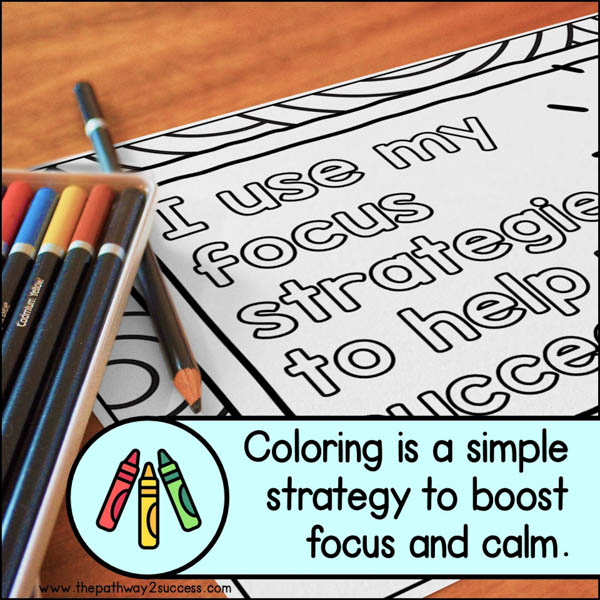
Creative outlets such as coloring have likewise gained empirical support as dual-purpose tools that foster relaxation while sharpening concentration. Research involving college-aged and younger cohorts demonstrates that intentional coloring activities reduce anxiety levels while strengthening selective attention, making it easier for students to manage environmental distractions and maintain focus in noisy settings. Similarly, structured yoga practices—which combine physical postures with mental discipline—have been shown in reviews of multiple studies to significantly enhance attention spans, reduce stress, and improve memory in children.
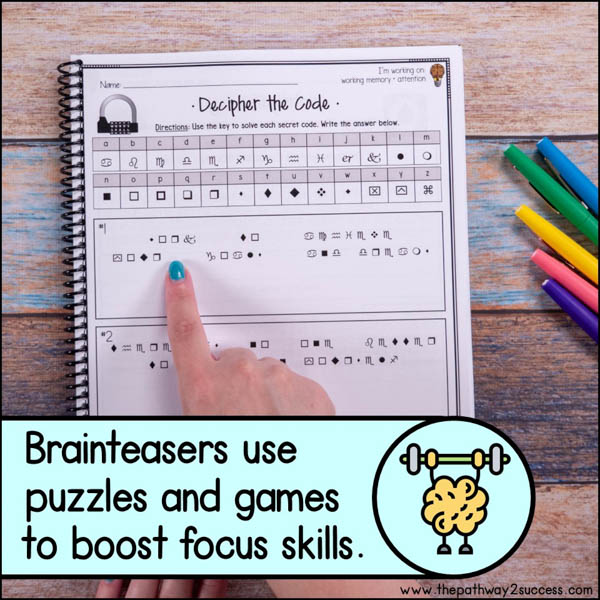
Cognitive engagement through brainteasers and puzzles offers another scientifically validated pathway to improved self-regulation and attention. Recent studies indicate that children who regularly participate in collaborative puzzle-solving and specialized brainteaser curricula exhibit noticeable gains in attention span and sustained focus compared to control groups.

Finally, while not a classroom-based intervention, adequate sleep remains an indispensable biological pillar of attention and cognitive function. As detailed in extensive scientific literature compiled by sleep expert Dr. Matthew Walker, high-quality sleep allows the brain to perform critical restorative operations essential for next-day focus. Sleep deprivation directly degrades attention spans, diminishes concentration, and slows neural reaction times, making proper rest a non-negotiable element of cognitive health.
As researchers and educators continue to map the complex landscape of youthful attention, experts emphasize that no single strategy serves every individual equally. By exploring and experimenting with these diverse, evidence-based approaches, children and teens can discover the techniques that best support their unique cognitive profiles, ultimately empowering them to navigate an increasingly distracted world with confidence and clarity.