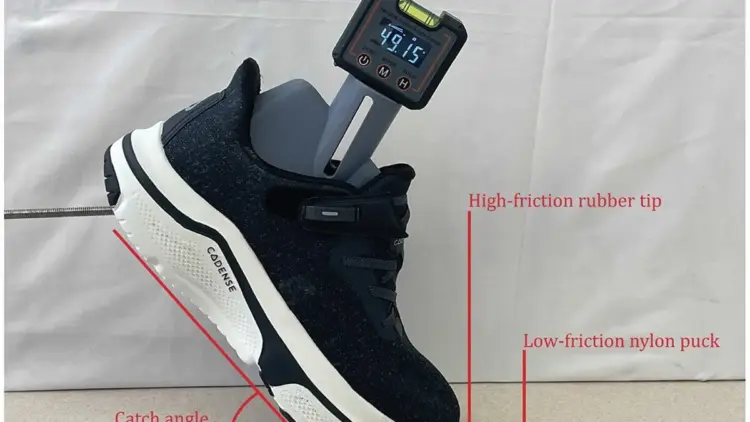
Recent scientific research is shedding light on an innovative approach to mobility challenges, demonstrating how adaptive footwear equipped with patented technology can dramatically reduce trip hazards and improve walking performance for individuals living with foot drop, including stroke survivors.
The findings, published by Taylor & Francis in the academic journal Assistive Technology under the title “Characterization of a Variable Friction Shoe for Foot Drop and Pilot Test with Stroke Patients,” offer an in-depth look into the biomechanical advantages of Cadense’s specialized footwear. The study evaluates how the company’s proprietary Variable Friction Technology responds dynamically to unintended toe contact during the walking gait cycle, presenting a fresh perspective on rehabilitation and assistive device design.
This latest publication builds upon a broader foundation of research from Cadense, including a prior study published in JMIR Rehabilitation and Assistive Technologies that investigated real-world, self-reported fall outcomes among a cohort of 705 footwear users. While that previous work centered on subjective, everyday user experiences, the newly released research drills down into the core physics and biomechanics of walking, analyzing precisely how altering friction at the exact millisecond of an unintended toe scuff can fundamentally alter a walker’s trajectory and safety.
Rethinking Traction in Mobility Design
For decades, the footwear industry has operated under a single, overarching design philosophy: maximize traction at all costs. Traditional shoes are engineered to grip the ground firmly to prevent slips. However, according to Dr. Tyler Susko, co-founder and chief technology officer of Cadense, more grip is not always beneficial for populations dealing with neurological or muscular impairments that affect foot clearance.
"Most conventional shoes are designed to maximize traction, but for people who have difficulty consistently clearing their feet, more grip isn’t always better," Dr. Susko explained. "When the toe catches the ground during the swing phase of walking, excessive friction can abruptly stop the foot while the rest of the body continues moving forward."
This abrupt deceleration is a primary catalyst for trips and falls among vulnerable populations. When a standard high-friction shoe’s toe snags on a rug edge, a crack in the concrete, or a transition between flooring types, the sudden arrest of momentum frequently leads to a loss of balance.
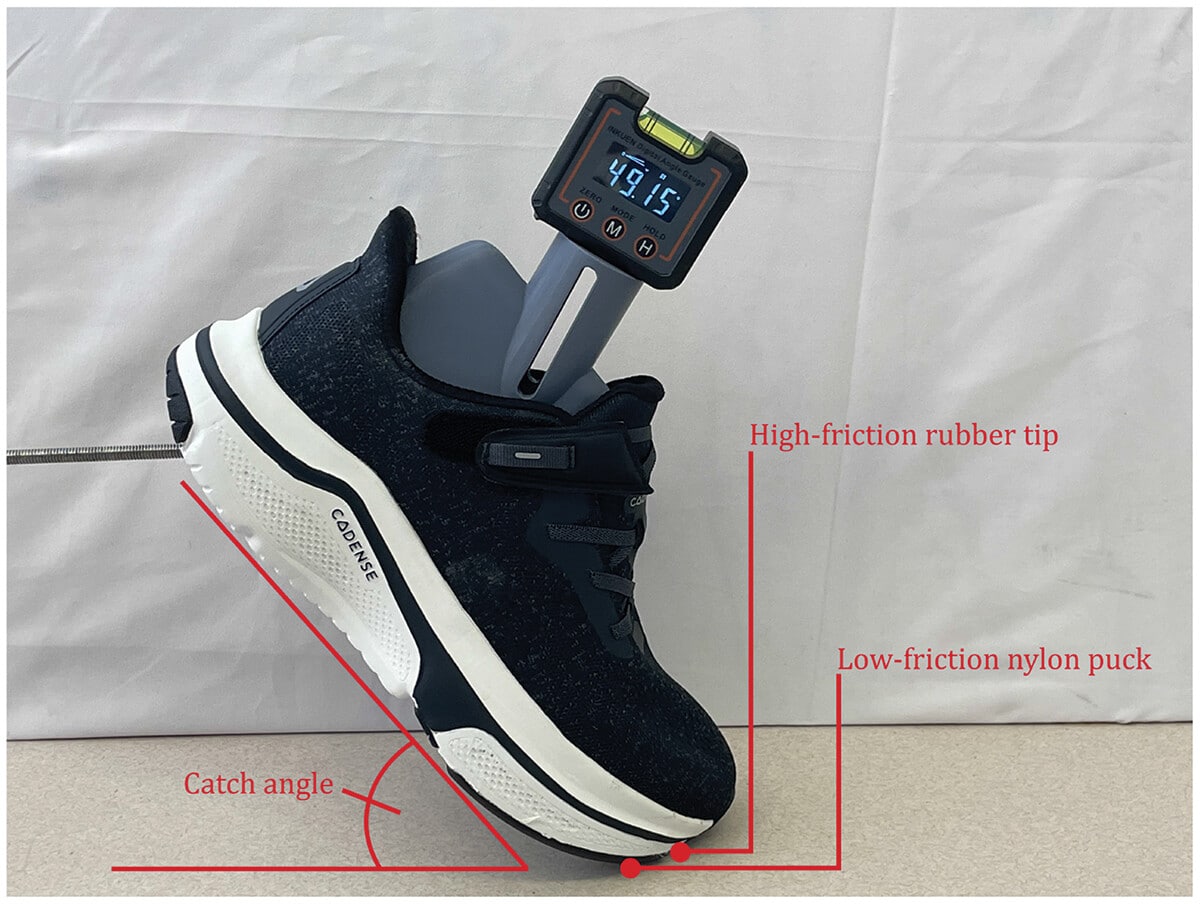
Cadense’s Variable Friction Technology approaches the problem from an entirely different angle. Instead of forcing the shoe to grip uniformly, the technology is engineered to allow the foot to glide smoothly forward during an accidental scuff, mitigating the sudden jolt. Once the walker’s body weight shifts downward onto the shoe, the sole seamlessly transitions to providing stable traction.
Contrasting with Traditional Orthoses
This dynamic response sets the technology apart from conventional clinical interventions, such as ankle-foot orthoses (AFOs). Traditional AFOs are rigid or semi-rigid braces designed to mechanically support, stabilize, or constrain the ankle joint, forcing it into a position that aids foot clearance. While effective for many patients, AFOs can sometimes restrict natural joint motion and user comfort.
In contrast, Cadense’s Variable Friction Technology does not attempt to mechanically dorsiflex, reposition, or constrain the ankle joint. By leaving the ankle free to move naturally, the footwear preserves voluntary muscle movement while working independently at the sole interface to minimize the dangerous physical consequences of an unintended toe scuff.
Laboratory Findings and Performance Metrics
To evaluate the efficacy of this approach, researchers subjected the adaptive footwear to rigorous laboratory-simulated scuff testing across a diverse array of common indoor and outdoor walking surfaces. The testing environments included hardwood, linoleum, concrete, low-pile carpet, and high-pile carpet, providing a comprehensive assessment of how the variable friction soles perform under varied frictional coefficients.
The quantitative results of the biomechanical trials revealed a stark contrast between conventional footwear and the adaptive design. During the simulated-scuff testing, conventional footwear produced a total of 77 observed toe-catch or trip events. In comparison, the variable-friction shoe recorded zero observed catch or trip events across the identical trials. Furthermore, the specialized shoe consistently registered lower peak scuff forces across all five tested surfaces, confirming that the sole effectively diffuses the kinetic resistance that typically triggers a fall.
Clinical Pilot Insights
In addition to mechanical and laboratory testing, the research team conducted a preliminary clinical pilot test involving stroke patients to observe how the technology translates to human movement. While the clinical pilot cohort was intentionally small—involving three participants—the qualitative and quantitative data gathered from these trials provided an encouraging early signal for the rehabilitation community.
Researchers noted that the preliminary feedback and movement metrics point toward exciting possibilities for how adaptive footwear can be integrated into broader physical therapy and mobility rehabilitation programs. Although larger-scale clinical trials will be necessary to fully map out the long-term therapeutic benefits across diverse patient demographics, these initial findings establish a robust scientific baseline for the technology.
Advancing the Future of Mobility and Independence
For millions of individuals navigating life with mobility impairments, the constant threat of an unexpected trip alters how they interact with their environment. By targeting the microscopic mechanics of an unintended scuff rather than relying exclusively on high-traction rubber soles, Cadense is pioneering a shift in how assistive apparel is conceptualized and engineered.
Johannes Sauer, co-founder and chief executive officer of Cadense, emphasized that the company’s overarching mission is to bridge the gap between advanced gait science and everyday consumer design.
"For too long, footwear has been designed around the assumption that more traction is always better," said Sauer. "At Cadense, we’re rethinking that approach by combining gait science, rehabilitation research, and adaptive technology to create footwear that responds to how people actually move. Our goal is to bring research-driven innovation into everyday footwear and help more people experiencing walking challenges move more natural, confidently, and independently."
The publication of this study adds a significant peer-reviewed milestone to Cadense’s ongoing research initiatives. As the organization continues to investigate the intersection of biomechanics, rehabilitation, and footwear design, its focus remains firmly rooted in translating complex data into practical, real-world solutions. Whether individuals are recovering from a stroke, managing chronic foot drop, or simply seeking safer navigation through daily environments, the integration of adaptive technology into standard footwear formats represents an evolving frontier in assistive health products.