For decades, the phrase "I’ve fallen and I can’t get up" defined an entire generation of reactive safety technology. The classic medical alert pendant—a bulky wearable button tethered to a localized base unit dependent on a traditional landline—was a simple yet severely limited lifeline. It functioned only if an older adult remembered to wear it, stayed within a few hundred feet of the base station, and remained conscious enough to physically press the button after an incident.
Today, that landscape has shifted dramatically. Driven by an overwhelming demographic preference for aging in place, the technology supporting senior independence has matured into comprehensive, proactive health hubs. According to data from AARP, nearly 90 percent of people aged 65 and older want to remain in their homes rather than transition to a care facility. Because independent living remains the preferred standard, the global market for medical alert systems has expanded rapidly, projected to reach $11.8 billion.
This massive economic and social shift is fueled by a transition from basic alarm triggers to sophisticated, real-time safety monitoring. Modern advancements in wearable artificial intelligence and cellular connectivity are redefining what it means to keep older adults safe at home while preserving their dignity and autonomy.
The Evolution of Connectivity and Range
The most immediate limitation of legacy medical alert systems was their physical tether to the home. Traditional formats restricted users to a radius of roughly 800 feet from a base station, rendering the device useless the moment an individual stepped outside to check the mail, garden, or visit neighbors.
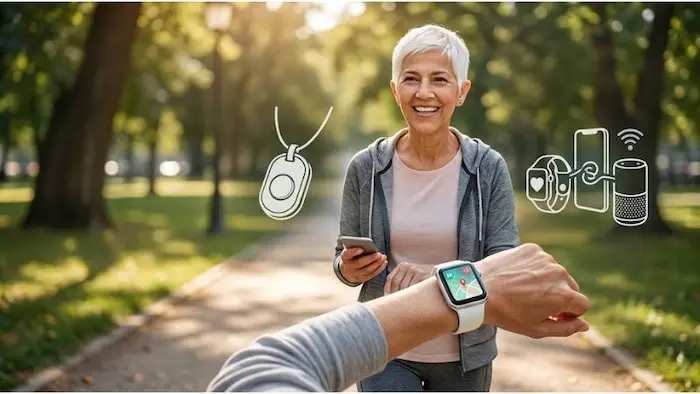
Modern smartwatches and cellular-enabled pendants have completely erased these boundaries. Utilizing nationwide cellular coverage integrated with global positioning system (GPS) technology, contemporary devices protect users wherever they go. Whether an active senior is walking through a local park or traveling across the country, their safety hub remains connected to monitoring centers without requiring a landline or a nearby base station.
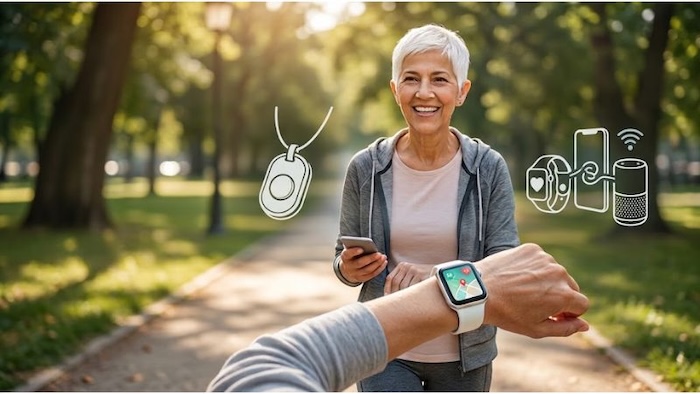
This untethered freedom addresses a critical psychological barrier for older adults. Rather than feeling monitored or restricted by a clumsy piece of emergency equipment, seniors are more likely to embrace sleek, everyday designs that resemble modern consumer wearables.
The Rise of Artificial Intelligence in Fall Detection
Fall detection technology has similarly undergone a quiet revolution. Older iterations relied on basic impact triggers that frequently resulted in high rates of false alarms, often causing unnecessary distress or leading users to disable the feature altogether.
Contemporary devices employ wearable artificial intelligence driven by advanced accelerometers and gyroscopes. These tools analyze complex patterns of motion, speed, and orientation to accurately differentiate between a hard fall and normal everyday movements like sitting down quickly or dropping a device. When a genuine fall is identified, the system automatically contacts a monitoring center, ensuring that help is dispatched even if the user is unconscious or unable to press a button.
For caregivers and families, this innovation provides vital reassurance. Integrated mobile applications allow loved ones to monitor real-time location data, battery status, and call logs directly from their smartphones, bridging the gap between independence and oversight.
For seniors experiencing cognitive decline or those who stubbornly refuse to wear traditional devices, ambient sensors represent another frontier in safety monitoring. Utilizing wall-mounted radar and Wi-Fi technology, whole-home ambient systems track routine activities and detect falls passively, without requiring the user to wear anything on their body. These systems can issue alerts when deviations from daily routines occur, offering a layer of protection that respects the preferences of individuals who reject wearable technology.

Balancing Technology with Practical Caregiving
Despite these remarkable technological strides, experts emphasize that no medical alert system serves as a substitute for direct supervision or structured in-home care. Industry professionals consistently remind families that these devices are fundamentally risk-mitigation tools designed to buy precious minutes during an emergency.
Choosing the right system requires a careful evaluation of a loved one’s actual needs, lifestyle, and cognitive abilities. An advanced smartwatch featuring a complex touchscreen, for example, may prove entirely ineffective for an individual struggling with severe dementia or advanced macular degeneration. Conversely, a minimalist pendant or passive ambient radar might offer the ideal balance for someone who resists more intrusive interventions.
Before relying exclusively on wearable or smart home technology, caregivers are encouraged to review foundational safety standards, such as fall prevention guidelines published by the National Institute on Aging. Evaluating kitchen safety, bathroom accessibility, and medication management strategies remains an essential part of a comprehensive home safety plan.
Ultimately, modern medical alert systems have successfully dismantled the stigma associated with older emergency panic buttons. By fusing discreet design with proactive artificial intelligence and limitless cellular connectivity, today’s safety hubs help families strike a delicate balance between maintaining a senior’s independence and securing essential peace of mind. While technology cannot replace the warmth and watchful eye of human caregiving, these advanced tools ensure that help remains quietly and reliably available when it matters most.