Cartagena, Colombia is globally celebrated for its enchanting, UNESCO World Heritage-listed Old Town, where centuries-old stone walls, colonial balconies, and vibrant plazas define the city’s tourism identity. While the historic district has long been the primary draw for international travelers, the city’s tropical Caribbean coastline has traditionally offered fewer formalized options for visitors seeking a sun-and-sand experience. That dynamic is now shifting following a series of infrastructure improvements along the city’s modern shoreline.
Recent accessibility upgrades implemented in the bustling Bocagrande district have transformed a key stretch of coastline, creating Cartagena’s very first fully wheelchair-accessible public beach. The milestone development marks a significant step forward for inclusive tourism in South America, where barrier-free coastal access has historically been difficult to find. By integrating accessible infrastructure, specialized equipment, and dedicated facilities, city planners have opened up the Caribbean Sea to residents and international travelers with reduced mobility who previously faced physical barriers at the shoreline.
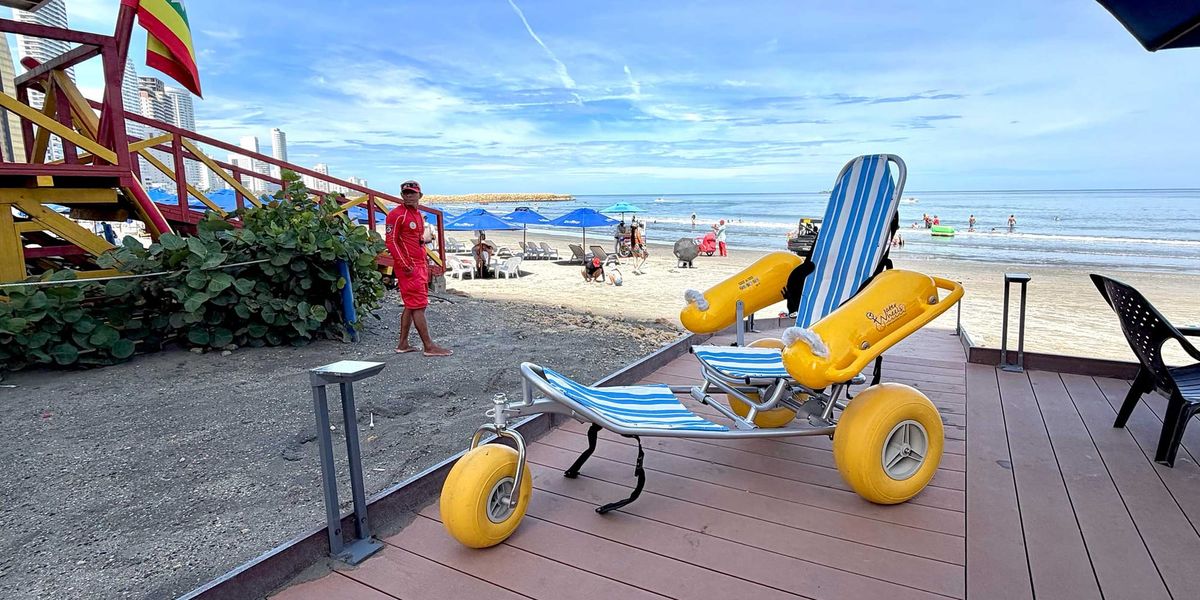
A Wheelchair-Accessible Beach in Bocagrande
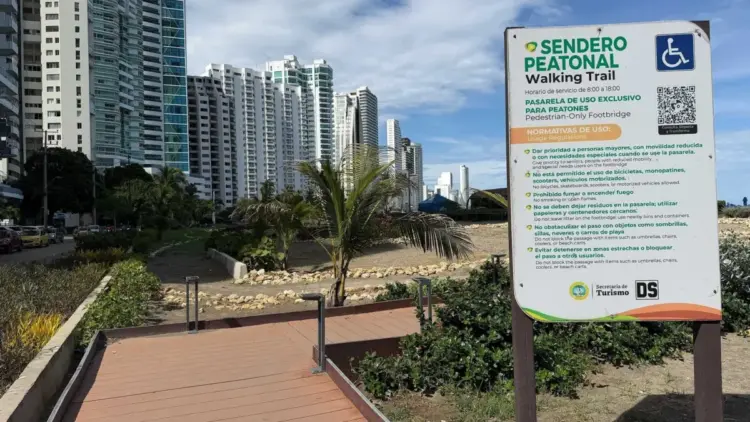
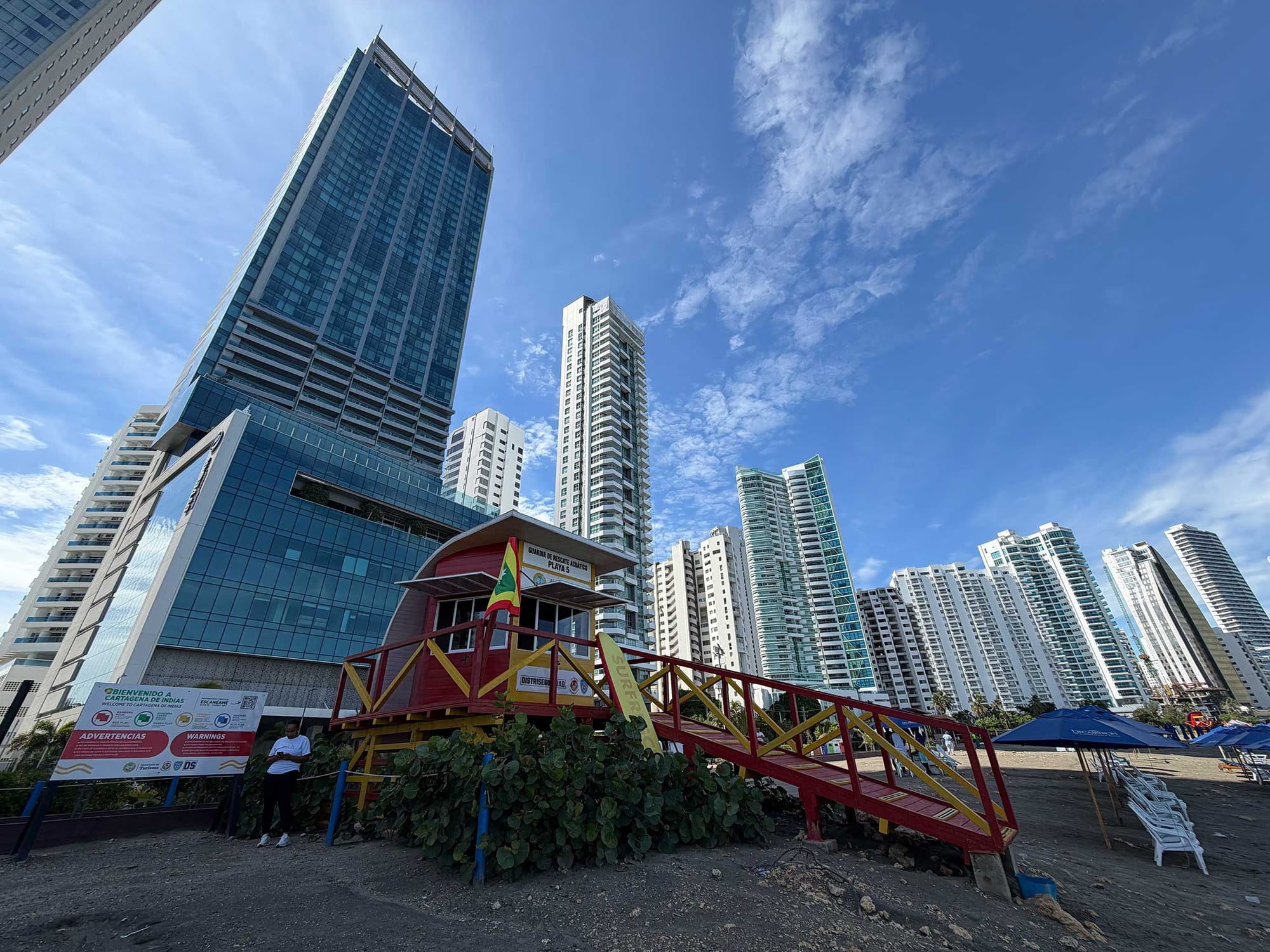
The historic initiative is centered at Playa 5 in the Bocagrande neighborhood, a high-rise district known for its sweeping ocean views and hospitality sector. The newly adapted access point is situated directly across the street from prominent high-end properties, specifically the Hyatt Regency Cartagena and the ESTELAR Cartagena de Indias Hotel. Positioned precisely at the intersection of Carrera 1 and Calle 12, the location provides a seamless transition from the urban streetscape onto the coastal zone.
Upon arriving at the intersection, visitors encounter a smooth, wide boardwalk that leads outward from the pavement toward the ocean. Designated locally as the "Sendero Peatonal," or Walking Trail, the wooden pathway is reserved exclusively for pedestrians. Official signage posted along the route outlines usage regulations in both Spanish and English, while explicitly reminding the public to prioritize seniors and individuals
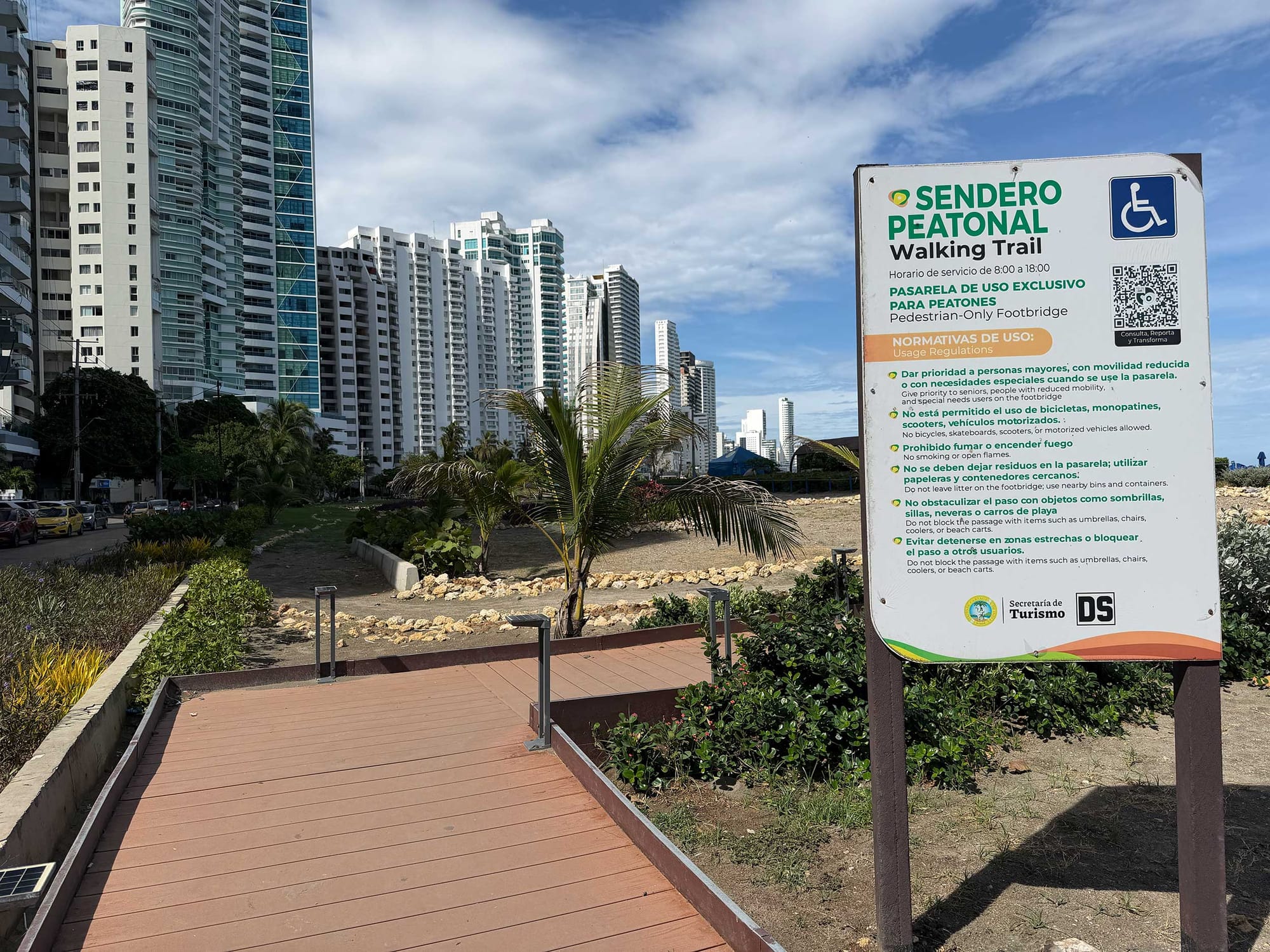
with reduced mobility.
From the main boardwalk, a transition ramp descends toward the sand, bringing visitors closer to the shoreline. However, because the wooden structure does not extend all the way to the crashing surf, planners and accessibility advocates note that an ongoing continuous pathway—such as a roll-out beach mat running directly to the water’s edge—would be a welcome future addition. For the time being, travelers utilizing wheelchairs rely on specialized adaptive equipment provided on-site to navigate the loose sand and reach the Caribbean waters.
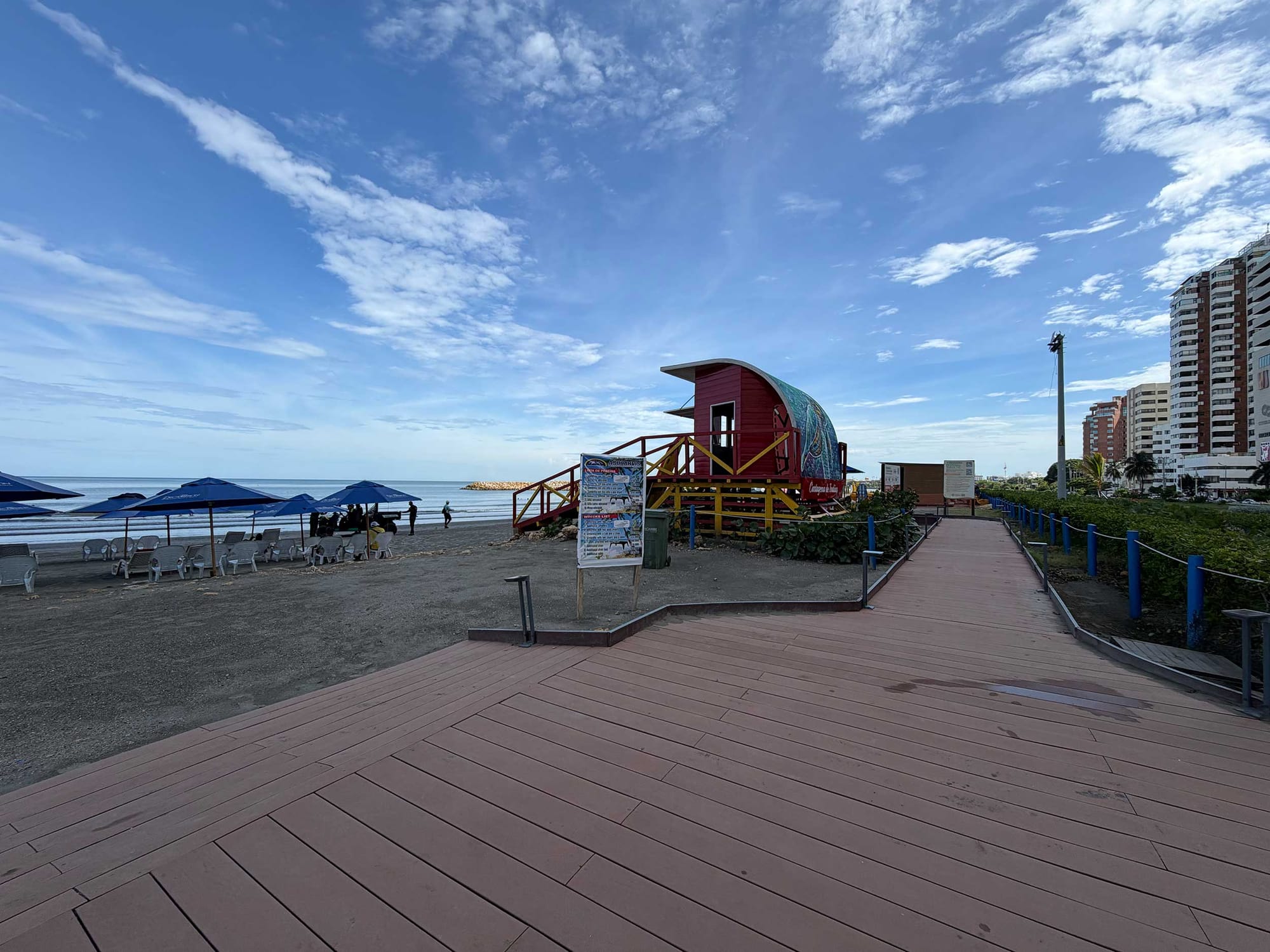
Free WaterWheels Beach Wheelchair
To bridge the gap between the end of the wooden boardwalk and the ocean waves, the Bocagrande initiative provides specialized mobility equipment for public use. Beach access is facilitated primarily through the WaterWheels Floating Beach Wheelchair, a specialty device that is made available to the public entirely free of charge.
Securing the equipment is designed to be a straightforward process. Visitors can simply approach the lifeguards on duty at the Playa 5 lifeguard station to request the wheelchair. Observers and visitors note that the local lifeguard staff are approachable, welcoming, and eager to assist travelers with their needs.
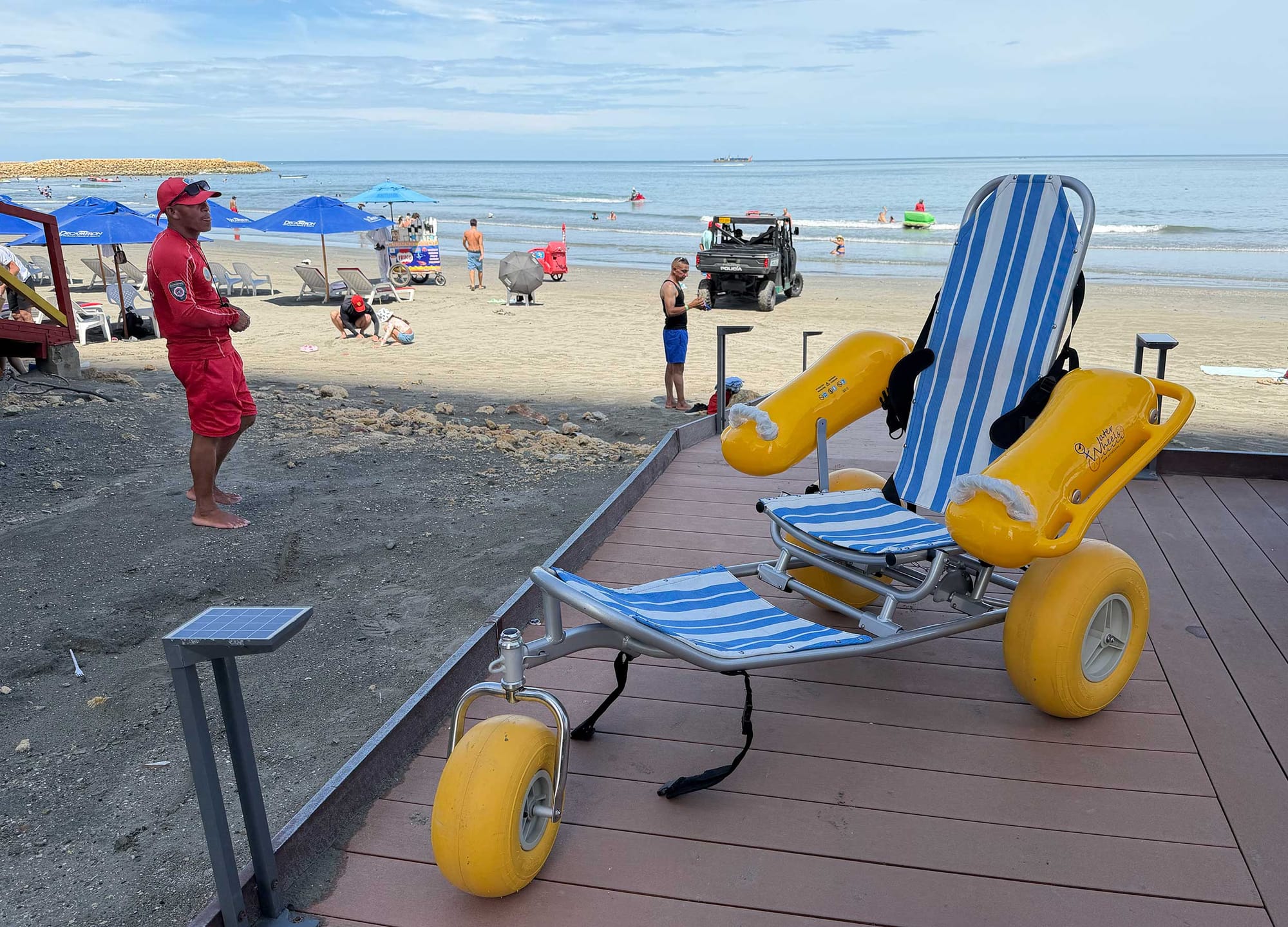
The WaterWheels chair is specifically engineered for coastal environments, featuring oversized, buoyant balloon tires designed to glide smoothly over soft, shifting sand without sinking. Additionally, the chair is equipped with distinctive flotation armrests that provide stability and allow users to safely enter the water with a companion. Because the design is a manual beach wheelchair, its utility relies on travelers being accompanied by a family member, friend, or caregiver who can push the chair across the sand and into the surf. For those traveling with a companion, the free service offers a transformative way to experience the Caribbean Sea firsthand.
Wheelchair Accessible Seating, Shade, and Facilities
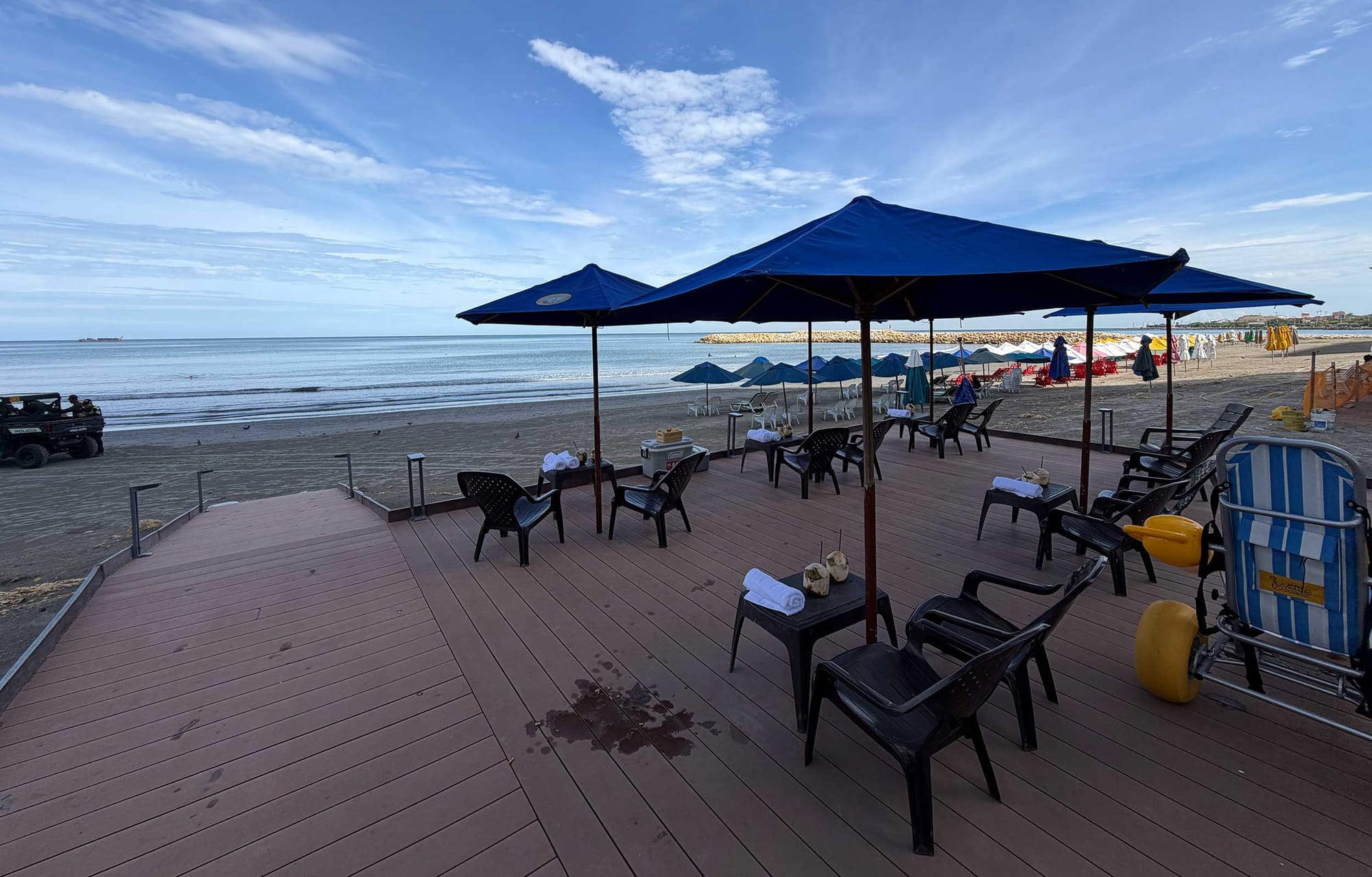
Accessibility at Playa 5 extends beyond the shoreline transit equipment, incorporating functional amenities designed to ensure a comfortable stay on the coast. Positioned immediately adjacent to the Playa 5 lifeguard station, visitors can utilize a designated accessible seating area built onto the boardwalk. This zone features comfortable chairs and protective umbrellas arranged to offer shade from the tropical sun, operating on a convenient first-come, first-served basis.
Down on the sand itself, traditional beach culture remains active, with additional chairs and umbrellas available for daily rental through local beach vendors. Safety and security are also prioritized along this stretch of the Bocagrande coastline; constant supervision by on-duty lifeguards, combined with regular patrols by local police forces, makes Playa 5 one of the most secure and well-monitored stretches of public sand in the city.
Infrastructure upgrades also include dedicated restroom and shower facilities situated directly on-site, which remain open to the public daily from 8:00 a.m. to 6:00 p.m. Within this facility, a small but functional wheelchair-accessible bathroom stall has been installed, complete with a structural grab bar mounted next to the toilet. While the compact layout provides essential accommodations for visitors with varying mobility needs, the limited square footage may present spatial challenges for users of larger power wheelchairs attempting a full 360-degree turn.
Final Thoughts
The transformation of Playa 5 in Bocagrande represents a notable advancement for urban inclusivity in Colombia’s most famous coastal metropolis. Barrier-free public beaches remain an uncommon sight across much of South America, making Cartagena’s investment in accessible pathways, specialized floating wheelchairs, shaded seating zones, and adapted restrooms an encouraging precedent. As these inclusive adaptations take root in Bocagrande, travelers and local advocates alike look toward a future where similar barrier-free design principles might be embraced by coastal destinations throughout Colombia and the wider region.