
Families and caregivers navigating Tuberous Sclerosis Complex (TSC) frequently encounter complex behavioral challenges that can profoundly impact daily life. From sudden tantrums to severe actions involving self-harm or aggression, these incidents demand deep understanding, patience, and structured management strategies. Gaining insight into the root causes and specific triggers behind these actions remains one of the most effective ways for families, support networks, and healthcare professionals to foster safer environments and improve overall well-being for individuals affected by the condition.
What are behaviours that can be challenging?
In clinical and care settings, a behaviour is categorized as challenging when it places the individual or those around them at a heightened risk of physical or emotional harm. These complex actions can manifest in various ways, including outward acts of physical aggression directed at others, self-injurious episodes, or destructive behaviors such as breaking, throwing, or damaging surrounding objects.
While individuals living with learning difficulties or developmental disabilities tend to display these challenging behaviors with greater frequency, it is essential to emphasize that anyone can exhibit them under the right combination of pressure and circumstance. Within the specific medical and psychological context of Tuberous Sclerosis Complex, these difficult actions form a recognized component of TSC-Associated Neuropsychiatric Disorders, commonly referred to as TAND. TAND encompasses a wide spectrum of behavioral, psychiatric, intellectual, and psychosocial difficulties that can affect individuals with TSC across their lifespan, making comprehensive awareness and targeted support vital components of ongoing medical management.
Why do people exhibit behaviours that can be challenging?
The underlying reasons for challenging behaviors are rarely singular; rather, they stem from a complex web of triggers that remain entirely unique to each individual. A frequently observed catalyst for such actions is an overwhelming or stressful environment, such as a crowded, brightly lit, or excessively noisy room that sensory-sensitive individuals find difficult to process. In many instances, the behavior serves as an instinctive, non-verbal attempt to communicate an urgent basic need, such as hunger, thirst, physical discomfort, or pain.
For individuals who face severe communication barriers or cannot speak verbally, challenging behaviors often act as an immediate, desperate outlet for pent-up frustrations, anxiety, or intense emotional overload. When society considers the profound daily frustrations faced by someone who cannot verbally express their deepest needs, desires, or physical discomforts, these challenging behaviors become significantly easier to understand as a form of distress rather than mere defiance. Recognizing this distinction shifts the focus of care from punishment or control to empathy, active observation, and proactive environmental adaptation.
How can I predict behaviours that can be challenging?
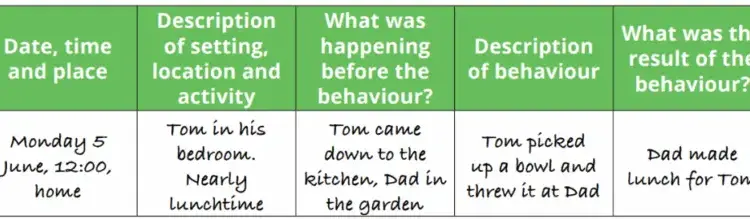
Anticipating challenging episodes before they fully materialize requires systematic observation and careful record-keeping. To effectively predict these occurrences, caregivers and support staff are encouraged to maintain a detailed running log of every incident. Essential details to document include the exact physical location of the incident, the specific events or environmental factors leading up to the behavior, the subsequent reactions of others, and a clear, objective description of the behavior itself.

A widely recommended and highly useful clinical tool for this purpose is the ABC chart, which stands for Antecedent, Behaviour, and Consequences. By breaking down incidents into what happened immediately before the event, the nature of the behaviour itself, and the immediate aftermath, caregivers can begin to identify recurring patterns, hidden environmental stressors, and predictable cycles that precede an outburst. This methodical approach transforms chaotic situations into understandable sequences, giving families a structured way to look ahead rather than constantly reacting in the moment.
How can I reduce behaviours that can be challenging?
Most individuals exhibit a distinct personal early warning system that signals the physiological and emotional onset of a challenging behavior before it fully erupts. Initially, these early indicators can be remarkably subtle and exceptionally difficult to recognize without practice. However, utilizing tools like the ABC chart over time can train caregivers to detect these micro-signals with greater accuracy.
These early warning signs might include repetitive physical actions, the frequent repetition of specific noises, or noticeable physical tension such as muscle tensing and clenched fists. Successfully recognizing these early indicators empowers caregivers to intervene pre-emptively, allowing them to modify the environment, offer reassurance, or redirect attention to defuse a potentially volatile situation before it escalates into crisis.
How can I support someone during the behaviour?
When a challenging behavior escalates to its peak, the demeanor and reaction of the caregiver play a critical, stabilizing role in the unfolding situation. Support networks are advised to strive to remain composed and steady, even when the behavior triggers personal frustration, anxiety, or emotional distress. Exhibiting a gentle, reassuring smile paired with a calm, clear, and measured voice can create a grounding presence that encourages the individual to subconsciously mirror that composed energy.
Caregivers should deliberately refrain from bombarding the individual with a flurry of questions, commands, or demands, as cognitive processing during high-stress moments is severely impaired. Instead, remaining present while being fully prepared to offer physical and emotional space if it appears beneficial can significantly de-escalate tension. If a situation unfortunately escalates to a level that presents an immediate, dangerous threat to physical safety, caregivers should never hesitate to contact emergency services for professional assistance. Above all, managing these complex behaviors day after day takes an immense emotional toll, making self-compassion and patience vital for caregivers themselves.
How can I support the person after the behaviour?
The moments immediately following a challenging incident are often characterized by a lingering atmosphere that remains tense and emotionally charged for every person involved. Facilitating a gentle transition to a different environment or engaging the individual in a distinct, calming activity—such as taking a quiet walk outdoors—can prove highly therapeutic and assist in resetting the emotional mood of the room.
Once complete calmness and equilibrium have been successfully restored across the environment, families often find value in quietly reflecting on the incident. Reviewing what transpired helps build preparedness for future occurrences, allowing caregivers to update their observations and refine strategies such as the ABC chart. Because managing these behaviors remains an ongoing, difficult journey for everyone involved, specialized guidance, information, and a listening ear are available through the TSA Support Line by calling 0808 801 0700, emailing [email protected], or utilizing the available webchat service.



