
For caregivers who have spent sleepless nights worrying about a parent’s memory or their own family history, the rising global numbers of cognitive decline can feel like an approaching storm. The fear that our cognitive destiny is entirely out of our hands remains a heavy burden for families navigating the complexities of aging. However, a monumental body of research has just offered a powerful and empowering strategy for dementia prevention, fundamentally shifting how medical professionals view cognitive health.
The updated Lancet Dementia Report marks a major turning point in neurology and geriatric care. According to the comprehensive data revealed in the report, nearly half of all dementia cases—specifically 45%—could theoretically be prevented or delayed by addressing a series of modifiable risk factors across an individual’s lifespan. Rather than viewing cognitive decline as an inevitable consequence of aging, the scientific community is now emphasizing that proactive health measures can significantly alter the trajectory of brain health.
The Hidden Connection: High LDL Cholesterol and Dementia
In this latest update from the international commission, the official list of modifiable dementia risk factors has expanded from 12 to 14. The inclusion of two new variables has surprised many patients and families: untreated vision loss and high LDL cholesterol.
Managing cholesterol levels is widely recognized as a cardiovascular necessity, but the new findings demonstrate that it is equally a proactive, brain-saving move. Evidence indicates that high LDL cholesterol, typically taking root in midlife, significantly increases the biological burden on the brain over time. The data highlights that high LDL cholesterol carries a weighted Population Attributable Fraction of 7%, meaning that addressing this single factor could have a massive, measurable impact on global dementia rates if targeted effectively across populations.
Hearing Loss Dementia Risk: Why Hearing Aids Matter
If there is one immediate, actionable step that caregivers and older adults can take to reduce risk, it is addressing hearing loss. Auditory decline also carries a weighted Population Attributable Fraction of 7%, placing it among the most impactful modifiable risks identified by the commission.
The report draws special attention to the landmark ACHIEVE study, which investigated the relationship between hearing interventions and cognitive function. The study discovered that in high-risk groups, the use of hearing aids successfully reduced three-year global cognitive decline by an astonishing 48%. Treating hearing loss does much more than simply clarify sounds in the environment; it acts as a vital safeguard for the cognitive stimulation that comes from regular social contact.

When older adults hear better, they remain more actively engaged in conversations, family gatherings, and community events. This sustained engagement maintains a lower risk of depression and psychological isolation. By keeping lines of communication open, individuals effectively stave off the loneliness and isolation that are known to accelerate cognitive decline.
Your DNA is Not Your Destiny
One of the most profound and reassuring sections of the report forcefully debunks the long-held belief that genetics—specifically the APOE gene status—acts as a fixed and unalterable sentence. For anyone who has watched a beloved family member fade away from Alzheimer’s disease and subsequently feared they are next in line, this data changes the entire narrative.
The commission explicitly found that dementia risk remains modifiable irrespective of an individual’s APOE genetic status. Whether it involves managing blood pressure to specific clinical targets, maintaining physical activity, or staying socially connected, these lifestyle interventions benefit people with both high and low genetic risk profiles. As medical experts frequently summarize, genetics may load the gun, but lifestyle pulls the trigger. The new findings provide clear instructions on how individuals can keep the safety mechanism engaged.

It is Never Too Early and Never Too Late to Practice Healthy Aging
Public health experts emphasize that prevention is a lifelong journey rather than a single intervention in old age. The ultimate goal is to delay the onset of symptoms so that even if cognitive decline eventually develops, patients spend the vast majority of their lives healthy, vibrant, and independent.
The medical community is witnessing a profound paradigm shift away from the fatalistic belief that dementia is an unpreventable part of growing old. By taking systematic control of these 14 modifiable risk factors, individuals and their caregivers can actively reshape their cognitive future.
Why Focusing on Modifiable Risk Factors Might Be Your Best Course of Action
Recent news cycles have focused heavily on novel amyloid-targeting antibody medications as breakthrough therapies for individuals suffering from cognitive impairment. While these emerging pharmaceutical treatments certainly represent scientific progress, the Lancet Commission offers a sobering reality check for patients and families. These advanced treatments show only modest clinical efficacy, carry notable risks and side effects, and are exceptionally expensive and logistically burdensome for healthcare systems and families alike.
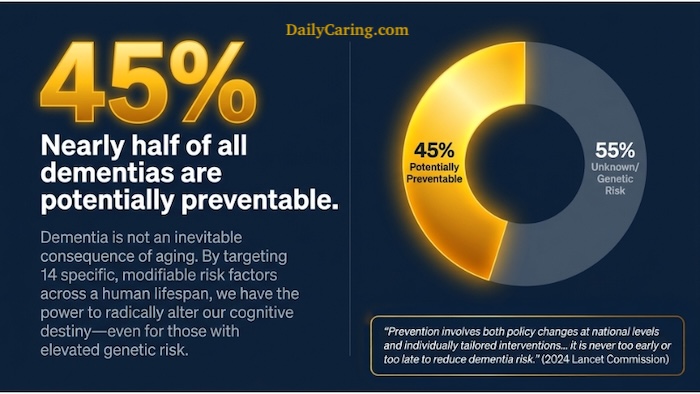
Meanwhile, standard and traditional treatments—such as cholinesterase inhibitors and memantine—remain vital pillars of care. They are generally affordable, present few side effects, and help manage symptoms effectively for many patients. Most importantly, no pharmaceutical drug currently available can match the 45% prevention potential demonstrated through comprehensive lifestyle modifications.
The ongoing shift in medical research underscores that empowering individuals with knowledge about modifiable risk factors offers a practical, highly effective avenue for reducing the global burden of dementia. Through early awareness, proactive management of conditions like cholesterol, blood pressure, and hearing loss, and sustained social and physical engagement, patients and caregivers can approach the future with renewed confidence and agency.



