
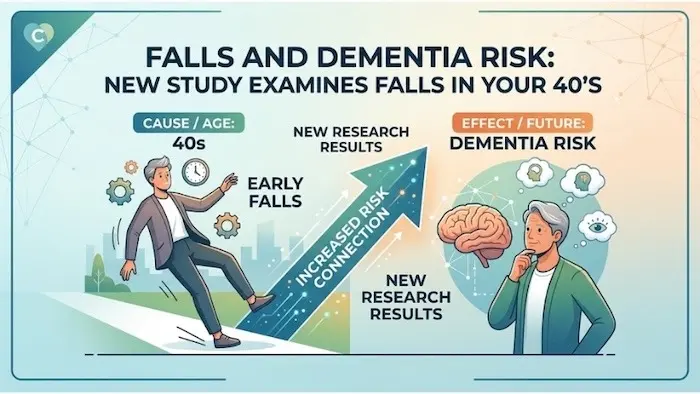
Getting older requires facing a series of uncomfortable medical realities, yet few are as frequently overlooked as the established link between physical instability and cognitive decline. For generations, a simple fall was categorized as an isolated incident—a momentary loss of balance, a misstep on a rug, or a simple consequence of physical fatigue. However, groundbreaking medical research indicates that for middle-aged adults, a sudden fall is rarely just a clumsy moment. Instead, it serves as a blinking red warning light, often functioning as an early indicator of underlying dementia that demands immediate clinical attention before further cognitive deterioration takes hold.
For decades, the traditional medical establishment viewed physical injuries and neurological decline as completely separate issues belonging to entirely different branches of medicine. Orthopedics handled bones and joints, while neurology monitored cognitive functions and memory. Recent data, however, proves this long-held assumption to be entirely incorrect. Medical experts now emphasize that if individuals in their 40s or 50s begin experiencing unexplained falls, their brains may already be broadcasting a critical message regarding neurological health, spatial awareness, and brain atrophy well before traditional memory loss symptoms manifest.
New Review Exposes the Hard Truth About Falls and Dementia Risk in Middle-Aged Adults
The paradigm shift regarding physical stability and cognitive health is anchored by a comprehensive systematic review recently published in the Journal of Post-Acute and Long-Term Care Medicine. Conducted by researchers at Changchun University, this extensive review analyzed data pooled from nearly 3 million participants across various demographics. The statistical results of the analysis are undeniable, revealing a stark correlation between unexpected physical instability in middle age and long-term neurological health.
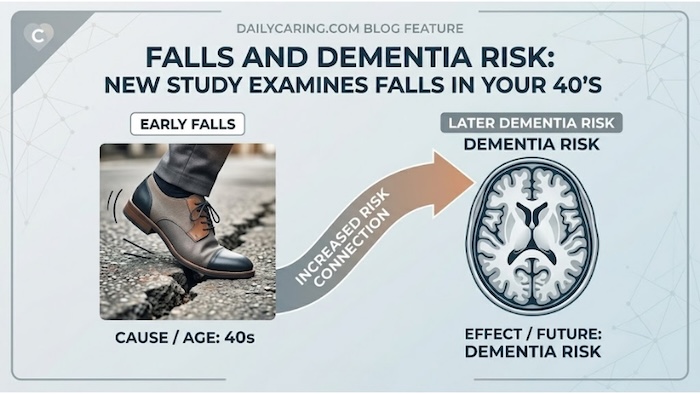
According to the findings, a single fall occurring after the age of 40 increases a person’s future dementia risk by 20 percent. Even more alarmingly, if a patient experiences multiple unexplained falls, that risk skyrockets by a staggering 74 percent. These numbers highlight a grim reality for middle-aged adults experiencing physical instability, signaling that these incidents are not random accidents. Researchers concluded that such falls act as robust clinical markers of accelerating neurodegenerative decline, pulling back the curtain on underlying neurological decay long before cognitive impairments become obvious to family members or primary care physicians.
Early Signs of Dementia: What Recent Studies Confirm
The Changchun University review does not stand alone in the medical community; rather, it is supported by a growing body of independent research reinforcing this disturbing trend. Researchers from the Washington University School of Public Health recently investigated the physical precursors of cognitive decline and discovered that sudden falls are tightly linked to the onset of Alzheimer’s disease. Their data indicates that physical instability signals a faster rate of cognitive decline, placing it as a risk factor on par with the presence of established Alzheimer’s brain proteins, such as amyloid plaques and tau tangles.
Further reinforcing these conclusions, a massive epidemiological study out of Brigham and Women’s Hospital analyzed health records from two million Medicare patients. The researchers found that 10.6 percent of older adults who suffered a traumatic fall were subsequently diagnosed with Alzheimer’s disease or a related form of dementia within just one year of the incident. The growing body of evidence confirms that the connection between falls and dementia risk is an established medical reality, rendering the traditional dismissal of midlife falls as mere clumsiness increasingly reckless.

Recognizing Early Signs of Dementia Through Physical Trauma
The physical trauma of a fall is deeply intertwined with the progressive nature of Alzheimer’s disease and other forms of cognitive impairment. Leading medical professionals confirm that neurodegeneration often begins years, or even decades, before a formal clinical diagnosis is ever made. During this silent preclinical phase, the disease quietly erodes balance, executive judgment, coordination, and spatial awareness—functions that require complex neural networks operating seamlessly across various regions of the brain.
When underlying brain atrophy ultimately compromises physical stability and results in a fall, the resulting trauma to both the brain and the body can aggressively accelerate the progression of the underlying disease. Adults who experience severe falls frequently develop a profound psychological fear of walking or moving independently. This fear leads to immediate social isolation and a drastically reduced level of physical activity, creating a vicious cycle of sedentary behavior and loneliness that further accelerates cognitive decay.
Taking Action: Preventing Falls to Protect Cognitive Health
Given the gravity of these findings, medical experts emphasize that passive observation is no longer an adequate strategy when dealing with midlife physical instability. Proactive clinical intervention and environmental modification are required. Preventing falls must become a primary focus for anyone looking to safeguard their long-term cognitive health as they age.

Addressing this risk effectively involves a multi-layered approach, beginning with home safety audits. Because a significant portion of falls occur within the familiar confines of a living room or bathroom, removing trip hazards, installing secure grab bars, and dramatically improving indoor lighting are essential initial steps. At the same time, individuals experiencing unexplained falls after the age of 40 are strongly advised to seek a comprehensive clinical assessment. A thorough neurological evaluation can help establish a baseline for cognitive function and catch potential neurodegenerative changes early.
Furthermore, medication management plays a critical role in physical stability. Many common prescription drugs cause severe side effects, such as dizziness, drowsiness, and orthostatic hypotension—a sudden drop in blood pressure when standing up. Experts urge patients to consult their primary care physicians to review current drug regimens and eliminate or adjust prescriptions that compromise balance and coordination.
The Bottom Line: Do Not Ignore the Warning Signs
The overarching medical consensus emerging from recent large-scale studies is clear: a fall in middle age is neither a normal, benign part of aging nor a simple moment of personal clumsiness. Instead, it serves as a potential early warning system orchestrated by the brain. Data from leading research institutions confirms that these physical incidents act as robust clinical markers for cognitive decline, sharing a risk profile that aligns with established Alzheimer’s biomarkers.
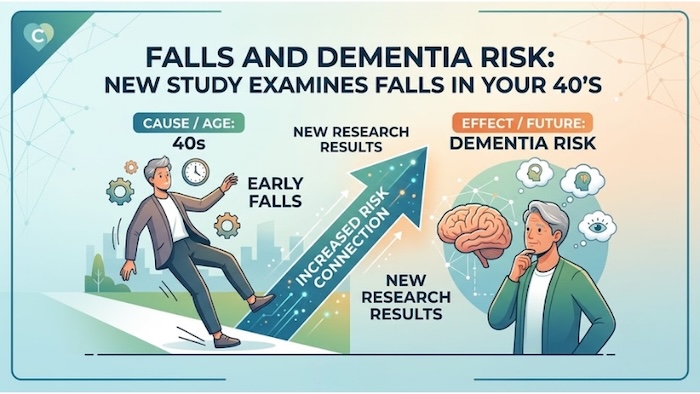
For individuals or families noticing unexplained falls, acknowledging the possibility of underlying physical and neurological risks is paramount. Scheduling proactive clinical assessments, auditing living spaces for environmental hazards, and prioritizing overall physical stability are crucial steps in breaking the cycle of neurodegenerative decay. Waiting for another fall to occur is a direct gamble with long-term cognitive health, making early awareness and decisive action more critical than ever.



