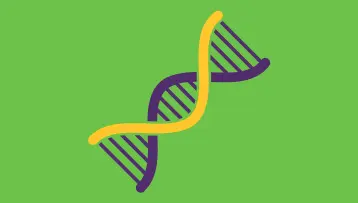
For patients and families navigating Tuberous Sclerosis Complex, the conversation almost invariably begins with two specific biological actors: the TSC1 and TSC2 genes. These genetic instructions are frequently introduced as the master blueprints of the condition, dictating how the body handles cell growth and proliferation. Yet, as clinicians, researchers, and families alike have long understood, the reality of living with TSC is far more intricate than the presence of a single gene mutation. The way the condition manifests across different individuals remains remarkably complex, proving that while genetics provide a foundational explanation, they do not tell the whole story.
To understand why TSC produces such diverse outcomes, it helps to examine how these genes function at a cellular level. In a healthy biological system, genes act as microscopic instruction manuals, guiding cells on how to grow, divide, and maintain normal tissue architecture. Within this framework, the TSC1 and TSC2 genes play a critical regulatory role by overseeing the mechanistic target of rapamycin, or mTOR, pathway. This pathway acts as a vital growth switch within the body, carefully balancing cellular expansion and metabolic activity.
In individuals diagnosed with TSC, however, this delicate system breaks down. The specific genes responsible for acting as a biological brake on the mTOR pathway fail to function properly, losing their ability to regulate cell division. Consequently, cells begin to grow larger and multiply uncontrollably, ultimately leading to the hallmark growths and benign tumours associated with the condition.
Despite this shared underlying mechanism, TSC famously defies a one-size-fits-all description. Clinicians have long observed that even among people who share the exact same genetic mutation, the lived experience of the condition can vary drastically. One individual might experience severe neurological symptoms, such as intractable seizures or developmental differences during early childhood, while another person with the exact same genetic change may remain entirely asymptomatic until they are diagnosed as an adult.
This wide variation in clinical presentation is known scientifically as variable expression. It is considered a normal, albeit challenging, characteristic of Tuberous Sclerosis Complex, helping to explain why no two patient experiences are ever entirely identical.
The spectrum of how TSC presents is further broadened by the ways in which the condition is acquired. While TSC can be inherited directly from a parent in an autosomal dominant pattern, approximately two-thirds of all cases arise spontaneously. These instances occur due to a de novo, or brand-new, genetic change that happens for the first time in the affected individual, with no prior family history of the condition.
Adding to this complexity is a phenomenon known as mosaicism. In cases of mosaicism, the genetic change is not present in every single cell of the body, but rather is confined to a specific subset of cells. This occurrence can result in significantly milder symptoms, which in turn can make clinical identification and diagnosis considerably more challenging. For instance, standard genetic tests performed on routine blood samples may sometimes fail to detect mosaic mutations simply because the altered cells are located elsewhere in the body’s tissues.
For families seeking clarity, determining whether a mutation lies within the TSC1 or TSC2 gene can sometimes offer helpful guidance. Historically, mutations in the TSC2 gene are frequently associated with a more pronounced or noticeable set of symptoms compared to those linked to TSC1. Nevertheless, clinicians emphasize that this is merely a general trend rather than an absolute rule. Each patient’s medical journey remains entirely unique, requiring individualized assessment regardless of which specific gene is implicated.
Current biomedical research is actively exploring these intricate genetic interactions in much greater detail. Investigators are closely examining how different variations within the TSC1 and TSC2 sequences specifically impact the mTOR pathway and subsequent organ development. At the same time, scientists are working to uncover the exact role that mosaicism plays in driving milder or highly variable symptoms across different organ systems.
To accelerate these discoveries, researchers are employing a range of advanced laboratory models, including cell cultures, sophisticated organoids—which are essentially miniature, lab-grown versions of human organs—and animal studies. These models allow scientists to test potential therapeutic interventions and observe cellular responses long before any formal clinical trials begin. By successfully combining granular genetic data with comprehensive patient registries, the research community hopes to build predictive models that can forecast symptom patterns more accurately. Ultimately, this translational work aims to personalize medical care, refine continuous monitoring strategies, and meaningfully improve the quality of life for everyone living with TSC.
On a practical level, formal genetic testing offers tangible benefits for families navigating the healthcare system. Beyond providing a clearer medical diagnosis, identifying the specific genetic underpinning can directly connect patients and their families with ongoing clinical trials, specialized research opportunities, and emerging therapies as they become available. Furthermore, precise genetic information equips treating physicians with the data needed to tailor long-term care plans and monitoring schedules, ensuring that individuals receive targeted support tailored precisely to their specific medical requirements.
While the underlying genetics of Tuberous Sclerosis Complex remain undeniably complex, every new scientific discovery brings the medical community a step closer to refined care and expanded treatment options. Gaining a deeper appreciation for the roles played by the TSC1 and TSC2 genes—alongside the broader biological and environmental factors that shape the condition—empowers families to navigate their healthcare journey with confidence. Armed with this knowledge, patients can make informed medical decisions, plug into vital support networks, and actively participate in the ongoing research that continues to define the future of TSC care.