For decades, the phrase "I’ve fallen and I can’t get up" stood as a cultural touchstone representing the vulnerability of aging alone. Tied to a basic wearable pendant and tethered to a localized base unit requiring a traditional landline telephone, early medical alert systems offered a vital lifeline, yet carried severe operational limits. They demanded that an older adult remember to wear the device, stay within a short radius of the home base, and remain conscious enough to manually press a button following an emergency.
Today, that landscape is changing rapidly. Modern personal emergency response systems have evolved far beyond the classic panic button, turning into sophisticated health hubs and comprehensive safety ecosystems. Driven by a widespread desire among older adults to maintain their independence, the global market for medical alert systems is projected to reach $11.8 billion. This surge in market value highlights a broader societal shift toward proactive safety monitoring, allowing millions of aging citizens to remain in their own homes rather than transition prematurely to institutional care facilities.
According to data compiled by AARP, nearly 90 percent of individuals aged 65 and older express a clear preference for aging in place rather than moving to assisted living or nursing environments. As independent living remains the preferred standard for older demographics, the technology supporting home safety has matured at an unprecedented pace. Traditional landline-dependent devices are steadily being replaced by advanced cellular networks, wearable artificial intelligence, and ambient home monitoring systems designed to protect seniors while preserving their dignity and privacy.
The Limitations of the Old Standard
To understand the scope of contemporary technological advancements, industry experts point to the constraints of the legacy format. The traditional medical alert system relied on a simple wearable transmitter paired with a stationary base unit. While effective for basic indoor emergencies when the user was nearby, this setup created several blind spots in daily caregiving.
Range limitations were a primary concern, as older devices typically lost signal if the wearer stepped more than a few hundred feet away to garden, check the mail, or visit a neighbor. Furthermore, the system was entirely reactive and depended entirely on human capacity. If an aging adult suffered a sudden medical emergency, lost consciousness before pressing the button, or simply forgot to put on the pendant in the morning, the device remained silent, rendering it useless during critical moments when timely intervention mattered most.
The Rise of Wearable AI and Cellular Connectivity
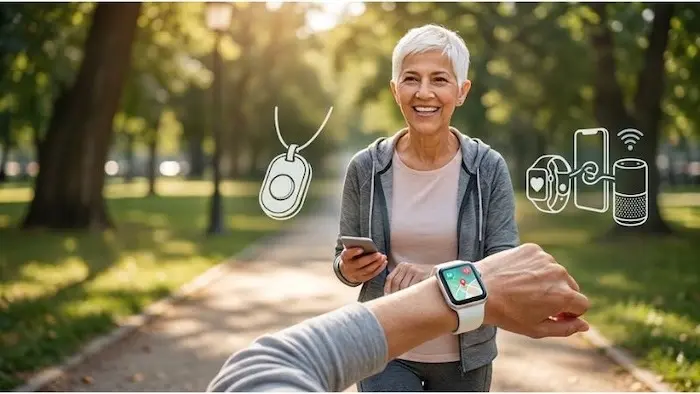
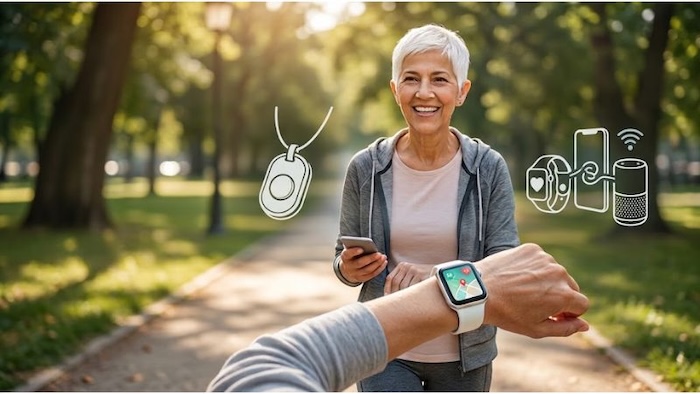
Modern medical alert systems harness the power of wearable artificial intelligence and nationwide cellular coverage to eliminate traditional geographical boundaries. Contemporary devices no longer require a landline, allowing older adults to travel, run errands, and enjoy outdoor activities with the reassurance that emergency assistance is always accessible via cellular networks and integrated GPS tracking.
The integration of artificial intelligence into wearable technology has fundamentally altered how emergencies are detected and managed. Advanced smartwatches and modern pendants utilize sophisticated internal accelerometers and gyroscopes to monitor motion patterns, orientation changes, and impact velocity. When a device identifies physical data consistent with a hard fall, it can automatically initiate contact with a monitoring center. This automated response ensures that help is dispatched even if the user is unconscious, disoriented, or physically unable to press a panic button.
Beyond wearable gadgets, ambient home monitoring has emerged as an alternative for seniors who refuse to wear traditional devices, such as individuals experiencing cognitive decline or sensory sensitivities. These systems often employ passive radar and wall-mounted sensors connected via Wi-Fi to track household routines and detect sudden changes in mobility or unexpected falls without requiring the user to wear anything on their body. Caregivers can monitor activity levels and receive routine deviation alerts through dedicated mobile applications, offering an added layer of oversight without intrusive cameras.

Matching Technology to Individual Needs
Despite these technological strides, industry professionals emphasize that selecting the right medical alert system requires careful evaluation of a user’s specific physical and cognitive capabilities. For instance, an advanced smartwatch featuring a complex touchscreen interface may prove confusing or frustrating for a senior dealing with severe dementia or advanced macular degeneration, whereas a simple, single-button waterproof pendant might be far more appropriate.
Caregivers must also recognize that medical alert systems function as risk-mitigation tools rather than complete substitutes for direct supervision or structured in-home care. While these devices can buy precious minutes during a medical crisis, experts recommend reviewing established fall prevention guidelines, such as those provided by the National Institute on Aging, to address environmental hazards within the home environment.
Ultimately, finding the proper balance between safety and autonomy remains a central challenge for families navigating the complexities of eldercare. The evolution of medical alert systems has successfully replaced the stigma of the bulky, outdated panic button with sleek, proactive health solutions designed to support dignity, protect independence, and grant caregivers enduring peace of mind.