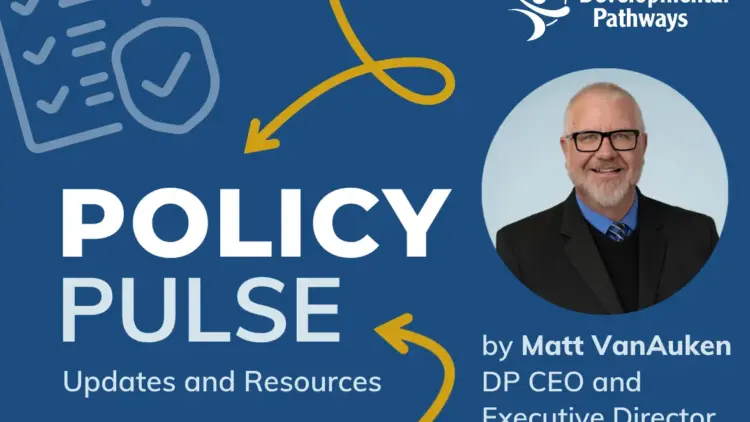
By Matt VanAuken, DP Chief Executive Officer & Executive Director
Earlier this year, the Colorado General Assembly took a significant legislative step by passing Senate Bill 26-187, a measure designed to tackle the long-term financial and operational challenges facing the state’s public health insurance infrastructure. The legislation officially created the Commission on Medicaid, a dedicated bipartisan body tasked with evaluating how the state can make its Medicaid program work better and remain financially sustainable for the hundreds of thousands of residents who rely on it for their healthcare and daily support needs. As this newly formed commission begins its intensive work schedule between the 2026 and 2027 legislative sessions, advocacy organizations and community leaders are stepping up to ensure that program participants, families, and service providers remain informed and closely connected to the unfolding policy discussions.
The creation of the Commission on Medicaid represents a concerted effort by state lawmakers from both sides of the aisle to address complex systemic questions. While Medicaid is a cornerstone of Colorado’s health and human services safety net, lawmakers have frequently faced the challenge of balancing comprehensive coverage with fiscal responsibility. By establishing an interim legislative commission, the state has created a dedicated forum for lawmakers to dive deeply into the structural mechanics of the program without the time constraints and legislative distractions typical of a standard, fast-paced general session.
What is this Commission?
The Commission on Medicaid is structured as a bipartisan group of state legislators, bringing together both Republican and Democratic lawmakers to collaborate on a single overarching mandate: determining how Colorado can make Medicaid function more efficiently, effectively, and sustainably for the future. The complexity of the state’s healthcare landscape requires lawmakers to look beyond short-term budget fixes and examine the fundamental drivers of program utilization and expenditure.
Under the statutory guidelines established by Senate Bill 26-187, the Commission is legally required to convene a minimum of six times, and no more than twelve times, during the interim period between May and December. These interim meetings serve as working sessions where legislators hear expert testimony, review fiscal data, and evaluate various operational models. Once the designated meeting schedule concludes, the Commission is mandated to compile its findings and submit a comprehensive report to the full Legislature and the Governor. This report will feature formal recommendations for legislative and administrative changes, laying the groundwork for potential policy overhauls and statutory reforms in upcoming legislative sessions.
Why does this matter?
The work being conducted by the Commission on Medicaid carries profound implications for participants, families, and healthcare providers across the state because Medicaid underwrites a vast array of essential services. Among these is a critical component known as Long-Term Services and Supports, commonly referred to as LTSS. This specialized category of care is designed to assist individuals with intellectual and developmental disabilities, physical disabilities, and age-related needs so they can live safely, independently, and with dignity in their own homes and local communities rather than in institutional settings.
While individuals who utilize LTSS represent a relatively small percentage of the total population enrolled in Colorado’s broader Medicaid program, the specialized nature and round-the-clock requirements of their care account for a disproportionately large share of total program expenditures. Because of this financial dynamic, policy analysts and advocates widely anticipate that the Commission will dedicate a substantial portion of its deliberations to examining overall program costs, the breadth of available services, and the adequacy of provider reimbursement rates. The sustainability of LTSS depends heavily on maintaining a stable and well-compensated workforce of direct support professionals, making provider rates a central focus of any serious discussion regarding long-term program viability.
The recommendations produced by the Commission are not merely academic exercises; they are expected to serve as the direct blueprint for future bills and statutory reforms introduced during subsequent legislative sessions. During a standard regular legislative session, lawmakers are inundated with hundreds of competing bills, leaving them with very little time to thoroughly investigate the intricate operational details, federal matching formulas, funding mechanisms, and service delivery models that define Medicaid. The interim Commission provides lawmakers with the rare opportunity to conduct exhaustive reviews, question stakeholders, and craft well-considered legislative solutions between the 2026 and 2027 sessions.
To better understand the scope of these discussions, it is also important to recognize a vital distinction regarding public healthcare coverage in Colorado. Health First Colorado, which serves as the state’s official Medicaid State Plan and public health insurance program, primarily covers standard medical necessities such as physician visits, hospital care, prescriptions, and preventative screenings. Long-Term Services and Supports operate under a different framework, providing non-medical and supportive assistance that goes far beyond traditional clinical care. LTSS provides the daily human assistance, environmental modifications, and specialized equipment that empower individuals to maintain their independence, secure meaningful employment, and participate fully in community life, preventing the costly necessity of moving into institutional nursing or residential care facilities.
What is DP doing?
As these high-stakes discussions unfold at the state Capitol, Developmental Pathways (DP) is actively monitoring the work of the Commission on Medicaid on behalf of the individuals and families we serve. We recognize that any legislative changes or budgetary shifts recommended by the Commission could directly affect the availability and quality of essential support services throughout our community.
To ensure that policy decisions are grounded in the realities of daily life for people with disabilities, DP plans to proactively provide relevant information, real-world data, and community perspectives directly to lawmakers. By keeping lines of communication open with members of the Commission, our goal is to ensure that the individuals we support are not just discussed in the abstract, but remain an active, visible part of the ongoing legislative conversation.
How can you follow along?
Transparency is a cornerstone of the legislative interim process, and every official meeting of the Commission on Medicaid is fully open to the public. Interested community members, families, and advocates have the opportunity to stay informed by listening to the proceedings live as they happen or by accessing recorded video archives to review discussions at a later time. The complete calendar, meeting agendas, and connection links are maintained and regularly updated on the official Colorado General Assembly website through the designated Commission on Medicaid legislative page.
How can you share your story?
Policy decisions are always more impactful when they are informed by the lived experiences of those who rely on public programs every day. The Commission on Medicaid provides a direct opportunity for public participation, offering community members a genuine chance to make their voices heard, share personal stories, and offer practical ideas to state lawmakers. Following the incorporation of public input surveys shared by the Commission earlier this year, various engagement channels remain vital for individuals, families, and direct support professionals who wish to submit written comments or provide testimony regarding how Medicaid and LTSS impact their daily lives.
We’ll keep you posted
Navigating large-scale policy shifts and legislative reviews can naturally raise many questions and concerns for individuals and families who depend on public support systems. Developmental Pathways remains firmly committed to monitoring this legislative process closely, analyzing the developments as they occur, and sharing clear, timely information with our community.
If you need help finding supports, accessing local resources, or understanding the various service options available to you and your family, please do not hesitate to reach out to our team through the Contact Us page on our website or by sending an email directly to our support staff. You can also stay connected by signing up for our regular community newsletter and following Developmental Pathways on Facebook, Instagram, and LinkedIn to ensure you never miss an important update regarding the future of Medicaid and Long-Term Services and Supports in Colorado.