
In modern middle and high school classrooms, bringing together a diverse group of adolescents inevitably sparks a dynamic range of disagreements, misunderstandings, and daily friction. Whether it is students in a science lab clashing over the correct methodology for a collaborative project, an individual feeling isolated because their social group opted not to include them, or a learner experiencing frustration after being repeatedly interrupted during a discussion, interpersonal friction is an ordinary feature of the educational environment.
Rather than attempting to eliminate disagreements altogether—an impossible goal in any vibrant learning community—educators are increasingly shifting their focus toward teaching students the tools needed to manage these conflicts independently and healthily. The overarching objective of modern classroom management is not to police every minor dispute, but rather to empower adolescents with the cognitive and emotional frameworks required to talk through a disagreement with a group member, communicate effectively with friends, and navigate complex social landscapes with resilience.
Why Focus on Conflict Resolution Strategies?
Integrating conflict resolution strategies into the middle and high school curriculum serves as a foundational pillar for academic and social success. Implementing these supports does more than simply help students de-escalate arguments when they arise. Proactive conflict resolution paves the way for broader developmental benefits, fostering emotional maturity, strengthening interpersonal connections, and establishing an environment where learning can thrive without the constant disruption of unresolved social tension.
When educators address these skills proactively rather than reacting purely to disciplinary infractions, they transform everyday classroom challenges into valuable learning moments. Students begin to understand that conflict, when managed properly, is a natural and even productive part of human interaction. Working through disagreements allows young adults to communicate their needs more clearly, understand the perspectives of others, and find collaborative solutions that respect everyone involved.
Fostering Stronger Classroom Relationships
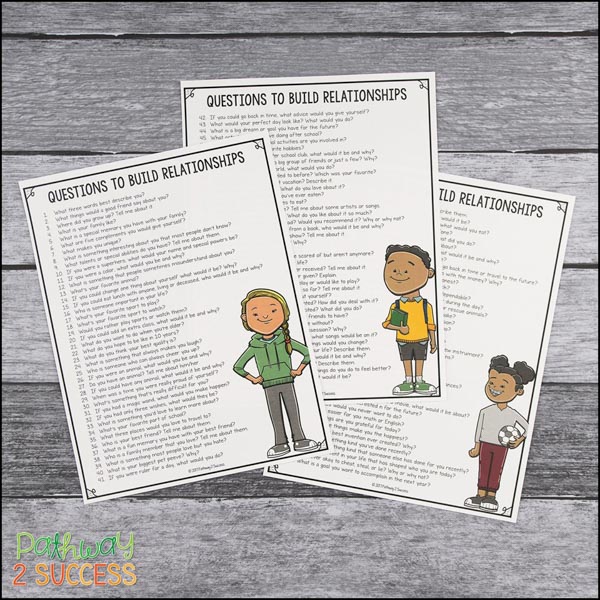
The essential starting point for building effective conflict resolution skills lies in cultivating robust relationships within the classroom. Navigating interpersonal problems is inherently challenging, requiring continuous effort even from adults. Consequently, it is critical for young adults to feel genuinely connected to their peers and teachers. When individuals feel a sense of belonging and connection within a community, the collaborative process of working through problems becomes significantly more manageable.
Educators often utilize intentional group conversations to build this foundational rapport. By introducing relationship-building questions into daily routines, teachers can open the door to meaningful discussions that help students see the humanity and value in one another. This foundational trust sets the stage for success when more complex disagreements inevitably arise.
Explicitly Teaching Conflict Resolution Techniques
Teaching conflict resolution skills from the beginning of the school year requires a proactive approach that equips kids and teens with problem-solving tools well before a crisis occurs. A core component of this instruction involves reframing how students perceive friction. Students must learn that conflict is not inherently negative; rather, it is a mechanism through which people communicate differing needs and find common ground.
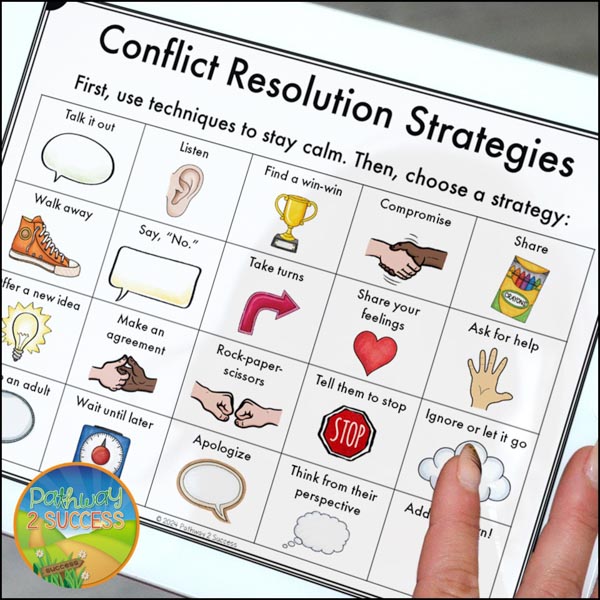
Furthermore, educators emphasize that different situations call for entirely different strategies. For instance, if two students find themselves at odds over how to solve a math problem, the appropriate approach involves open dialogue, active listening, and sharing ideas. Conversely, if a student feels pressured by a classmate to share answers on an independent assignment, the required strategy shifts toward assertive self-advocacy, such as firmly declining the request. Navigating these nuances requires explicit instruction and ample practice.
The Importance of Active Listening and Calming Strategies
At the heart of effective conflict resolution is active listening—the deliberate process of truly hearing, processing, and seeking to understand another person’s perspective rather than simply waiting for one’s turn to speak. Because active listening is a sophisticated cognitive skill, adolescents require structured opportunities to practice it across various academic subjects and classroom activities.
Alongside communication skills, managing conflict effectively requires physiological regulation. There is a strong neurological basis for this requirement: when a student becomes overwhelmed or upset, the amygdala—the brain’s threat-response center responsible for the fight, flight, or freeze reaction—takes over, driving impulsive and reactive behavior. Conversely, when an individual is calm and relaxed, the prefrontal cortex regains control, enabling rational planning, clear thinking, and sound decision-making.
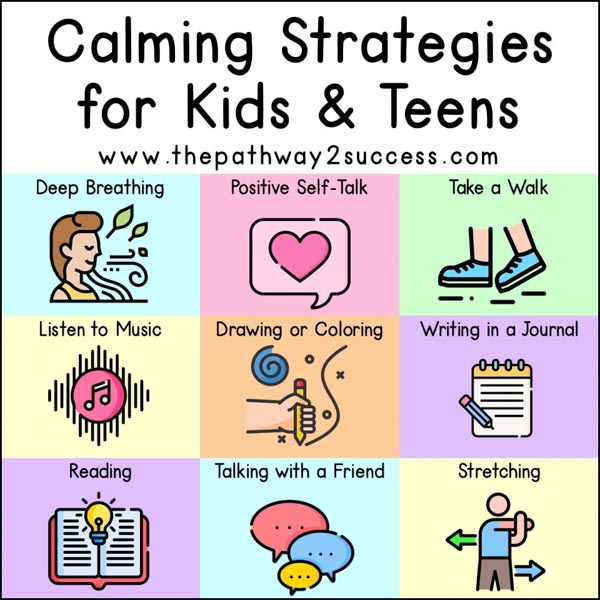
Because adolescents have developing brains, they frequently need external support and explicit practice to activate their internal calm during moments of stress. Educators help build this capacity by integrating calming techniques, such as deep breathing exercises, positive self-talk, peer discussions, and reflective journal writing, directly into the daily routine. Utilizing these techniques as intentional brain breaks between demanding tasks ensures that students are familiar enough with the practices to deploy them when tensions run high.
Exploring Conflict Scenarios and Holding Class Meetings
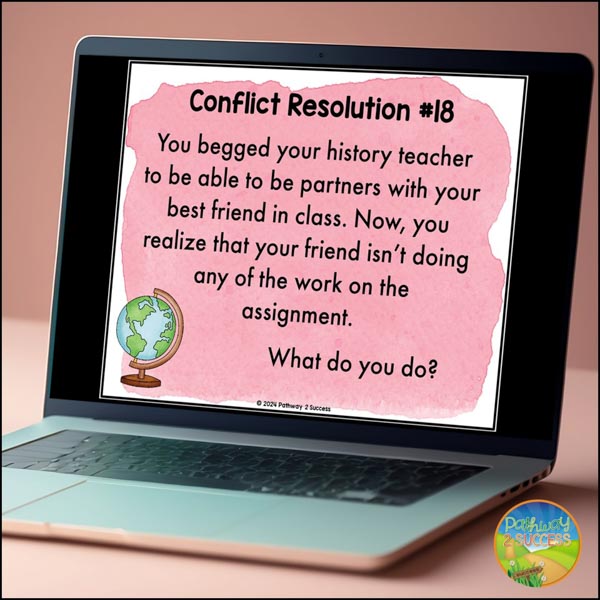
To bridge the gap between theoretical knowledge and real-world application, educators frequently utilize structured conflict scenarios. These exercises provide kids and teens with a safe, supportive environment to analyze realistic interpersonal dilemmas, discuss the underlying problems, and brainstorm healthy resolution strategies. Because many real-world disputes feature multiple valid pathways to a resolution, these discussions encourage students to evaluate various courses of action critically.
Complementing scenario-based discussions, regular class meetings offer a semi-structured forum for the entire classroom community to address shared challenges, deliberate on collective strategies, and participate in choosing collaborative solutions. These meetings reinforce the principle that the classroom is a shared space governed by mutual respect and collective problem-solving.
Encouraging Self-Advocacy and Respectful Disagreements
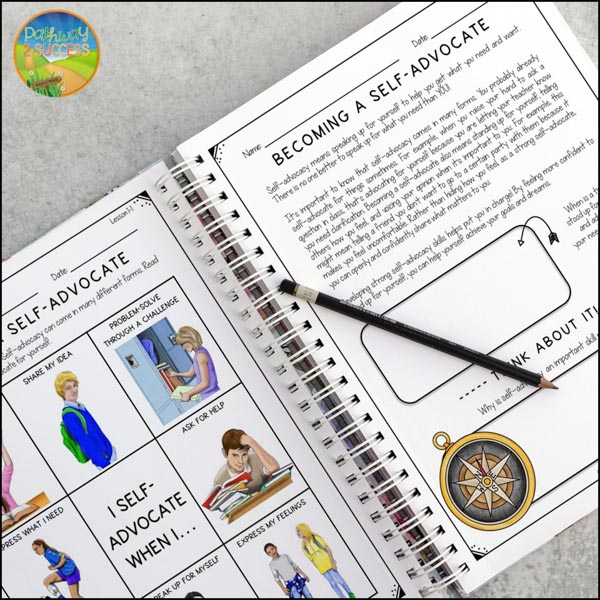
Self-advocacy and conflict resolution are deeply intertwined competencies. As adolescents navigate disputes with their peers, they must possess reliable methods for articulating their own boundaries and requirements. This might manifest as asking an instructor for clarification when a concept is unclear, or asserting oneself by saying "no" in situations that cause discomfort.
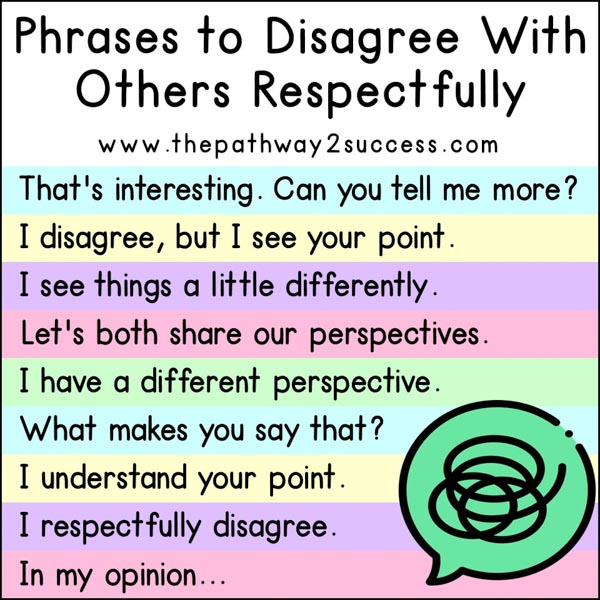
Disagreements over preferences, opinions, or methodologies are a normal part of daily life. To prevent these ordinary differences from escalating into personal animosity, students are taught specific phrasing to help them disagree respectfully. Engaging with high-interest topics—such as debates over music genres, historical figures, or everyday preferences—allows students to practice these respectful disagreement techniques in a low-stakes environment.
Visual Reminders and Daily Reflection
To sustain these practices over the long term, classrooms often incorporate visual reminders, such as dedicated posters and bulletin boards that outline conflict resolution frameworks. These constant visual cues serve as gentle prompts for students to seek peaceful, constructive solutions during active disputes.
Finally, the daily routine frequently concludes with a brief reflection period. Dedicating the final moments of the school day to reflective questions encourages students to evaluate what strategies worked well, where challenges arose, and how they might adjust their approach moving forward. This consistent habit of self-reflection fosters personal accountability and ensures that conflict resolution remains an active, evolving part of the student’s educational experience.



