Every year on February 25, advocates for hearing health use International Cochlear Implant Day to celebrate the medical advances and technology that make cochlear implants highly effective for individuals living with severe or profound hearing loss. Across the globe, the annual observance serves as a platform to raise awareness about auditory technology, share personal triumphs, and demystify a medical intervention that has quietly revolutionized modern audiology.
For many recipients, the path to a cochlear implant is rarely a straight line. It involves navigating decades of progressive hearing loss, confronting social stigmas, overcoming personal hesitations, and eventually finding a community of peers who understand the emotional and physical weight of living in a muffled world. The deeply personal story of Teri Breier exemplifies this complex journey—illustrating how patience, advocacy, and advancements in medical technology converge to restore not just hearing, but a deep sense of human connection.
Teri’s Story: A Lifelong Progression of Hearing Loss
Teri received her cochlear implant in March 2025, marking a monumental milestone four decades after she acquired her very first pair of traditional hearing aids. Remarkably, it took her eight full years after officially qualifying medically for a cochlear implant to finally take that definitive leap at the age of 60. Today, following nearly a year of dramatically improved hearing, effortless communication, and renewed human connection made possible by this life-changing technology, she often reflects on a single question: why didn’t she do it sooner?
The simple answer, she explains, is that she simply was not ready until the moment arrived. After navigating a lifetime of using increasingly powerful hearing aids to keep pace with the slow, relentless creep of progressive sensorineural hearing loss, she had long operated under the assumption that there would always be a newer, more advanced external option just around the corner to help her manage.
Early Signs of Hearing Loss in School
Teri’s journey with hearing impairment began in 1971 during a routine school health screening in first grade, where she was diagnosed with mild sensorineural hearing loss. That era predated widespread newborn hearing exams and the landmark Education for All Handicapped Children Act of 1975, legislation that later evolved into the Individuals with Disabilities Education Act in 1990. Aside from medical monitoring, doctors prescribed no specific intervention, and no educators ever mentioned or offered classroom accommodations for students with hearing difficulties.
Throughout her elementary, junior high, and high school years, Teri instinctively adopted coping mechanisms, making a habit of sitting near the front of the classroom to ensure she wouldn’t miss vital instructions. Although she maintained strong academic performance, she found herself increasingly struggling to understand her teachers and follow spontaneous conversations with classmates. By the time she reached the age of 16, her hearing loss had transitioned from mild to moderate. At that vulnerable developmental stage, however, she harbored an intense reluctance to be identified as "the girl with the hearing aids," choosing instead to conceal her struggles.
Navigating College and Career with Hearing Aids
As a college freshman, despite the notoriously challenging acoustics of large university lecture halls, Teri managed to follow along well enough to secure her grades. However, upon returning to Los Angeles for the summer break, her grandmother insisted that she finally obtain hearing aids. Looking back, Teri views that intervention as a turning point, noting that wearing the devices made an immediate and profound difference in her ability to learn, understand, communicate, and connect meaningfully with her peers.
Nevertheless, she continued to hide her invisible disability from colleagues and acquaintances alike, driven by internalized shame and the pervasive social stigma associated with hearing loss. She spent the first three decades of a demanding career spanning journalism, advertising, and marketing trying desperately to blend in. Eventually, she stepped away from the corporate environment to establish her own independent venture as a freelance copywriting consultant.
As the years passed and her hearing loss continued its natural progression, bluffing her way through professional environments, daily life, and her beloved personal hobby of choral singing became increasingly difficult. Deeply embarrassed whenever she misunderstood a colleague or inadvertently sang out of tune, she eventually stopped participating in the choir, pulled back from social interactions, and drifted into greater isolation.
Finding Community and Support Through the HLAA
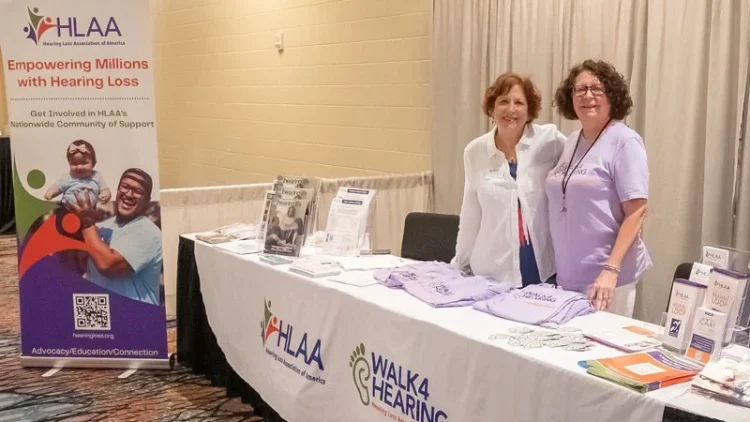
A major turning point occurred when Teri discovered the Hearing Loss Association of America in 2015. By that time, she had invested significant effort into inner healing, cultivated greater self-confidence, and reached a point where she was ready to openly embrace her hearing loss. She quickly immersed herself in the organization, taking on leadership roles within two consecutive HLAA chapters and forming close friendships with fellow members who had already received cochlear implants. Almost without exception, these peers shared that undergoing the procedure was the single best decision they had ever made.
Although she began the medical qualification process for a cochlear implant in 2017, she ultimately chose not to proceed at that time. She was still managing to "get by," and she harbored deep-seated fears about potentially losing her remaining residual hearing and her ability to enjoy music. She also worried whether she could successfully maintain her freelance business through the extended downtime required for surgical recovery and rigorous aural rehabilitation. Despite delaying the surgery, she remained deeply active within the HLAA community, attending annual national conventions and volunteering enthusiastically for the Long Beach Walk4Hearing.
In 2023, Teri took another significant step by joining the staff of the HLAA. This professional transition allowed her to make a tangible, daily difference for other individuals navigating hearing loss across the country. Collaborating on a regular basis with colleagues who successfully wore cochlear implants provided the final push she needed, motivating her to take definitive action and stop missing out on the vibrant world around her.
The First Year with a Cochlear Implant and a New Chapter
Fortunately, Teri was able to comprehend speech from the very first moment of her cochlear implant activation day in April 2025. This immediate recognition occurred even though every incoming sound and syllable was initially overlaid with frustrating robotic whistles and echoing artifacts as her brain struggled to interpret the novel digital signals. Through consistent, dedicated aural rehabilitation practices, those disruptive artificial noises completely faded away within three months.
Since that milestone, Teri has successfully regained access to high-frequency sounds that she had not experienced since her twenties. She now finds joy—and occasional, humorous annoyance—in hearing the daily chirping of birds outside her window once again. She can effortlessly understand songs and commercials playing on her car radio and conduct phone conversations without relying on captions.
Her active engagement in the hearing health community continues to expand. She was recently elected to serve as president of the HLAA Los Angeles Chapter, marking the latest chapter in her personal and advocacy journey. To Teri, it feels as though an entirely new world has opened up. Most importantly, she finally feels like her old self, actively participating in rich conversations, deepening relationships, and engaging fully in everyday life.
For the present, Teri remains bimodal, utilizing a traditional hearing aid in one ear and her cochlear implant in the other, while thoughtfully considering when the right time might be to pursue a second implant. Every day, she remains profoundly grateful for her cochlear implant and, above all, for the role models within the HLAA who illuminated the path toward what is truly possible.