As the political landscape prepares for the upcoming 2026 election cycle, advocacy and community organizations across the country are zeroing in on a persistent and significant gap in voter participation: the disparity in turnout between voters with disabilities and those without. National data highlights the profound impact that closing this gap could have on the democratic process. According to research from Rutgers University highlighted in a U.S. Election Assistance Commission report supplement, if eligible voters with disabilities were to cast their ballots at the exact same rate as voters without disabilities, roughly two million additional voices would actively participate in shaping the future of the nation’s democracy.
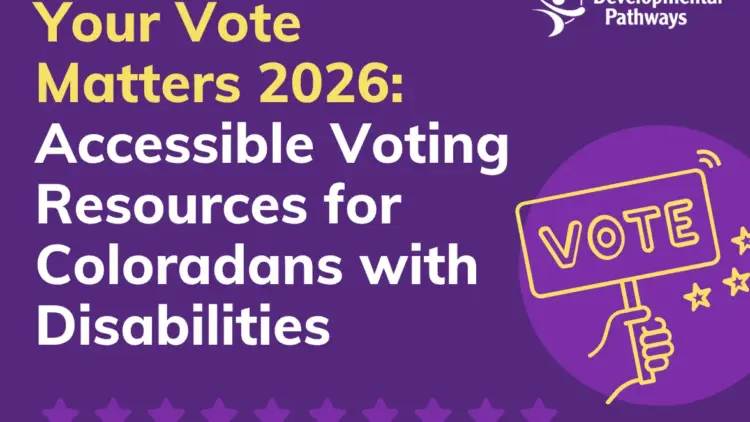
Locally, organizations are stepping up to ensure that these crucial voices are neither sidelined nor ignored. Developmental Pathways, a prominent community organization dedicated to supporting individuals with intellectual and developmental disabilities, has reaffirmed its comprehensive commitment to helping individuals fully participate in all aspects of community life—with voting standing as a cornerstone of civic engagement. In alignment with this mission, the organization has released a dedicated suite of information, tools, and resources tailored specifically to support Colorado voters with disabilities as they prepare for the 2026 election cycle.
The initiative comes at a critical time when accessibility, voter confidence, and legal protections remain at the forefront of election administration discussions. By breaking down barriers to information and demystifying the voting process, Developmental Pathways aims to foster an environment where every eligible citizen feels empowered to exercise their constitutional right.
Your Right to Vote
A foundational element of the newly released resources focuses on clarifying and defending voting rights under Colorado law. Misconceptions surrounding legal guardianship often deter individuals with disabilities or their families from participating in elections. To combat this, Developmental Pathways emphasizes a vital legal reality in the state: having a guardian or another designated legal decision-maker does not strip an individual of their fundamental right to vote.
Provided a resident is 18 years of age or older and meets Colorado’s standard, basic eligibility requirements, they maintain the legal authority to cast a ballot and make their own independent choices in the voting booth. To reinforce this message, the organization points to official state documents, directing community members to the Colorado Secretary of State’s comprehensive eligibility guidelines as well as the specialized Voters with Disabilities Frequently Asked Questions page. These resources offer clear, unambiguous guidance on who can register and vote in the state.
Furthermore, ensuring that these rights are actively protected requires robust advocacy infrastructure. Developmental Pathways highlights the essential role of Disability Justice Colorado, which serves as the state’s designated Protection and Advocacy System. This organization is uniquely positioned to assist voters who may encounter hurdles or discrimination. Whether an individual needs help understanding their specific voting rights, wants to explore accessible voting technology options, or requires assistance filing a formal complaint in the event that their rights are violated during the election cycle, Disability Justice Colorado acts as a critical safety net.
Make a Plan to Vote
Beyond understanding legal rights, the practical logistics of casting a ballot can sometimes present logistical hurdles. To help voters navigate the mechanics of the election, Developmental Pathways has developed and distributed a practical planning tool known as the "My Voting Plan" sheet. This printable resource is designed to help voters systematically think through every stage of the voting process, from registration confirmation to the final submission of their ballot.
Colorado’s election model offers multiple pathways for participation, combining robust mail-in voting systems with accessible in-person voting locations. Under state mandates, every Voter Service and Polling Center is legally required to be fully accessible to individuals with varying physical, sensory, and cognitive needs. Voters can choose the method that best suits their circumstances, whether that involves voting privately and independently using accessible marking devices at a polling center, or completing a mail-in ballot at home with whatever personal assistance or accommodations they may require.
To ensure transparency and peace of mind once a ballot has been cast, voters are encouraged to utilize state-of-the-art tracking technology. The Colorado Secretary of State provides the BallotTrax tool, an online service that allows citizens to monitor the exact status of their mail-in ballot in real time. From the moment the ballot is printed and mailed out by election officials to the moment it is received and officially counted by county clerks, voters can follow its journey to ensure their vote has been successfully processed.
Understanding Your Ballot
Casting an informed ballot requires just as much preparation as the physical act of voting itself. Developmental Pathways emphasizes that knowing what propositions, measures, and candidates are on the ballot is just as critical as showing up to the polls. Because modern ballots can be complex and laden with dense legislative language, voters often look to external organizations for guidance and analysis.
A wide variety of civic, community, and advocacy organizations routinely publish voter guides ahead of major elections. However, the organization advises voters to exercise discernment, noting that while some guides are strictly nonpartisan and objective, others may carry specific political viewpoints or advocacy agendas. Voters are encouraged to select trusted, transparent sources that align with their personal values and community interests.
To assist with this process, Developmental Pathways has compiled an initial collection of ballot guides and informational resources specifically curated to help individuals make well-informed decisions in the 2026 election. Recognizing that the information landscape evolves rapidly as the election draws closer, the organization intends to continually update its repository with new materials as they are released by trusted community partners and civic institutions, encouraging voters to check back frequently for the latest additions.