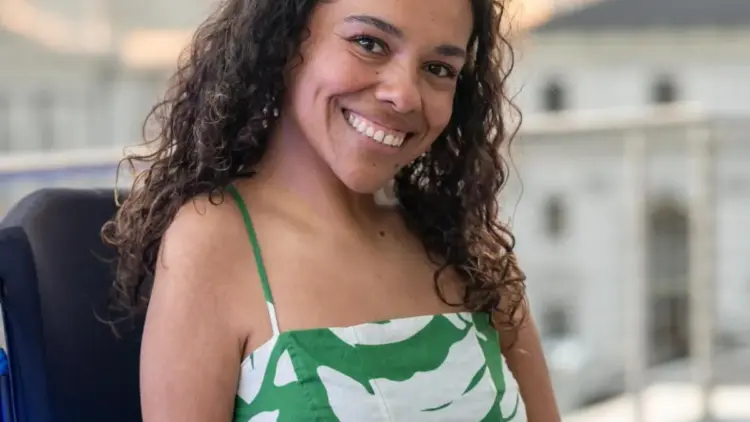
When Brittanie Hernandez-Wilson looks out at the community she has spent years organizing, she doesn’t just see individuals navigating the complexities of the healthcare and legislative systems; she sees changemakers in the making. As one of the distinguished recipients of the American Association of People with Disabilities (AAPD) 2026 Paul G. Hearne Emerging Leader Award, Hernandez-Wilson knows firsthand what it means to witness transformative change in action. Rather than viewing the prestigious fellowship as a personal milestone or a capstone to her career, she treats it as a vital fuel source for a much larger movement—one rooted in collective power, grassroots mobilization, and the profound impact of authentic storytelling.
Hernandez-Wilson utilized the funding from her Paul G. Hearne Emerging Leader Award to launch and expand "Our Stories, Our Care," an innovative initiative designed to support disabled Californians in sharing their personal narratives to advocate for their rights. The project addresses a critical gap in the state’s advocacy landscape by creating an accessible, welcoming environment where individuals with varying levels of experience—from complete newcomers to seasoned activists—can learn how to harness their lived experiences as tools for political and social change.
Describing the impact of the initiative, Hernandez-Wilson recalls the visible transformation in participants who, perhaps for the very first time, realize the weight and value of their own stories. Her face lights up when she recounts watching participants address legislators directly, discovering a newfound sense of personal power. For her, witnessing that shift in perspective is the most exciting aspect of the work, and she considers it a deep honor to support others along that journey.
Building an Accessible Space for Community Advocacy
As a longtime disability justice advocate and the California Lead Homecare Organizer at Hand in Hand: The Domestic Employers Network, Hernandez-Wilson recognized early on that California’s vast and diverse disability community lacked a centralized, highly accessible space dedicated to narrative-driven advocacy. While the state boasts a rich history of activism, she felt compelled to build an environment where everyone could feel welcome, where logistical and physical accessibility were guaranteed, and where community members could gather to understand how their individual lives intersect with broader public policy.
This vision became particularly urgent as California lawmakers deliberated a series of proposed policy changes that threatened to enact deep cuts to Medi-Cal and In-Home Supportive Services (IHSS). These programs are lifelines for countless disabled residents, enabling them to live independently within their communities and receive essential care in their own homes. Recognizing the severity of the threat, Hernandez-Wilson and the programs she champions mobilized rapidly.
Through "Our Stories, Our Care" and the LTSS4All Grassroots Coalition—whose storytellers Hernandez-Wilson actively helped train and organize—advocates made their presence felt across the state capitol. Over the course of the year, the initiatives organized 11 virtual action hours, drove nearly 1,000 phone calls to legislative offices, and successfully mobilized more than 70 people to attend six high-profile rallies and press conferences. Furthermore, Hernandez-Wilson personally hosted three intensive storytelling trainings that drew over 95 attendees, a number that continues to grow as the network expands its reach.
Defending Essential Services and Shaping Policy
The relentless grassroots mobilization led by Hernandez-Wilson, alongside numerous other disability advocates and coalition partners throughout California, ultimately yielded tangible results. Facing a united front of storytellers and constituents who articulated the life-or-death implications of the proposed budget cuts, the California legislature ultimately rejected all of the major reductions to In-Home Supportive Services.
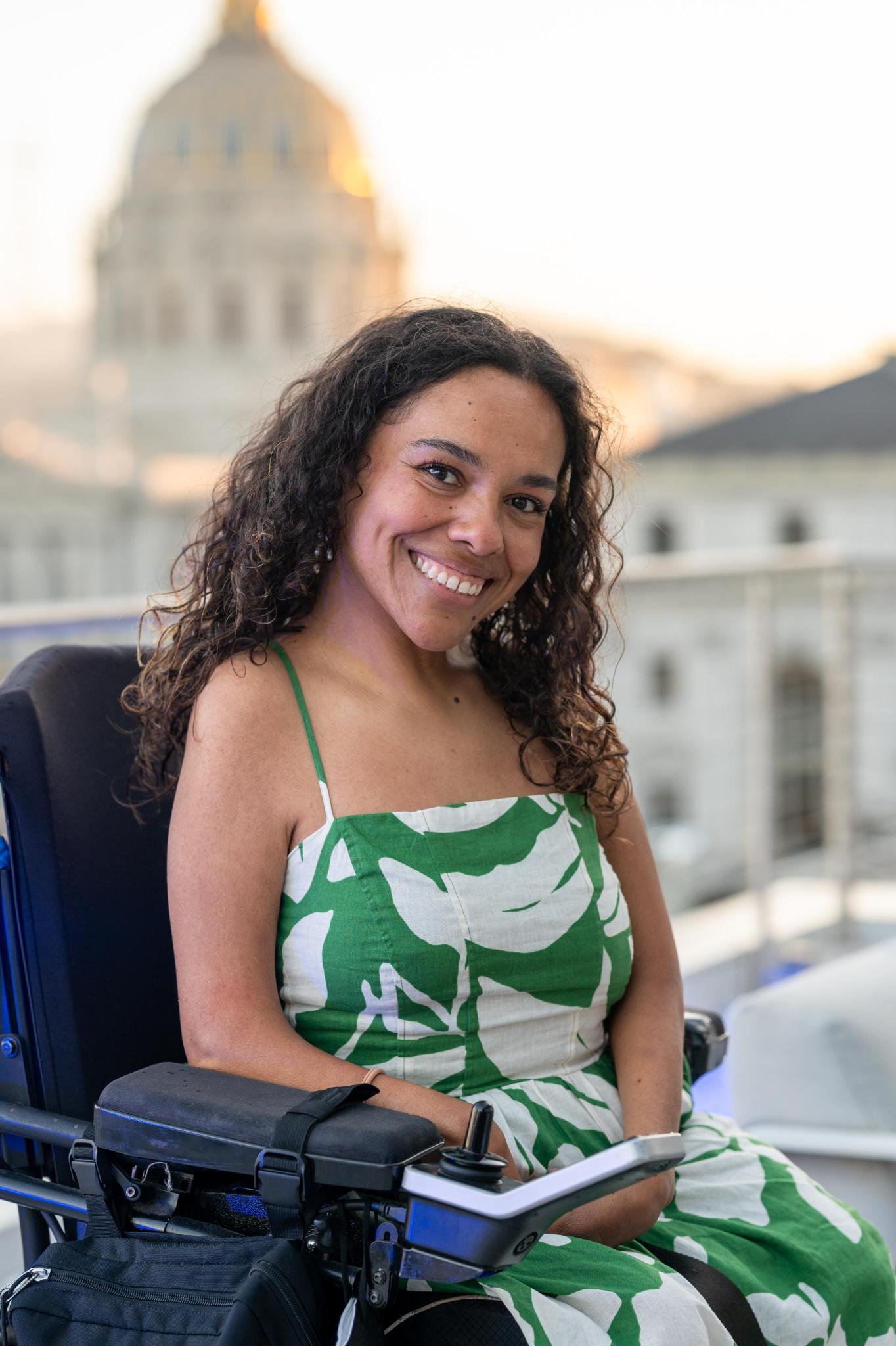
Reflecting on these victories, Hernandez-Wilson points to the concrete outcomes as undeniable proof of the community’s collective efficacy. Yet, she remains pragmatic about the cyclical nature of legislative advocacy. She acknowledges that the victory, while significant, represents only a momentary reprieve from ongoing fiscal and political battles. She knows her community will likely return to the capitol next year to fight once again for the fundamental right to live and receive care within their communities.
Beyond the immediate legislative wins, Hernandez-Wilson emphasizes that the advocacy trainings offer profound personal benefits to the individuals who participate. By helping participants articulate their experiences, the program contributes to the positive development of their self-concept, reinforcing their identities and deepening their understanding of their own worth and agency within society.
Participants like Maya Morya Selkie Scott have experienced these transformative effects firsthand. After working closely with Hernandez-Wilson to refine their storytelling skills, Scott praised her mentor’s exceptional ability to draw out authentic words and experiences in a way that resonates deeply with listeners on an emotional level. Scott noted that Hernandez-Wilson possesses a rare gift and a deeply passionate commitment to accessibility, consistently striving to amplify the voices and experiences of people and communities that are frequently marginalized or rendered invisible, even within broader disability circles.
Expanding the Movement for Intersectional Justice
Looking toward the future, Hernandez-Wilson has ambitious plans to scale "Our Stories, Our Care" to maximize its inclusivity and impact. She envisions a continuous ripple effect, where participants from this year’s cohorts return next year to bring members of their wider communities into the fold. At the same time, she stresses the ongoing need to deepen the initiative’s intersectionality, ensuring that it remains genuinely grassroots and actively engages individuals whose perspectives are rarely heard or seen in mainstream policy discussions.
Hernandez-Wilson remains steadfast in her belief that there is nothing more powerful than utilizing real, lived experiences to demonstrate how a politician’s pen can alter the course of a human life. She argues that policy decisions directly dictate the opportunities, safety, and well-being of disabled individuals, making direct constituent testimony an indispensable tool for accountability.
Despite her central role in driving these victories, Hernandez-Wilson maintains a profound sense of humility and sincerity. She is quick to emphasize that this work cannot be accomplished in isolation and belongs to a broader collective movement. While her name is recognized among this year’s AAPD award recipients, she views the honor as a reflection of her entire community—a testament to the power of stewarding everyday people into the legislative process and teaching them how to share the most impactful parts of their stories to effect real change.
As she looks ahead, Hernandez-Wilson views the Paul G. Hearne Emerging Leader Award not as a destination, but as a renewed commitment to the road ahead. With national policy debates shifting and ongoing challenges facing foundational legislation such as Section 504 and the landmark Olmstead decision, she believes that solidarity is more critical than ever. In her view, protecting the rights and dignity of disabled people will continue to require the dedication, courage, and collective voice of everyone in the community, standing side by side.