In a sweeping legal development that has sent shockwaves through the disability rights community, a federal judge has entered an order throwing out the vital community integration provisions of the Section 504 rule issued in 2024 by the U.S. Department of Health and Human Services (HHS). The ruling, handed down in the case of Texas v. Kennedy, applies nationwide, stripping away crucial federal regulatory backing that had explicitly directed state health and social service agencies to support disabled individuals in community settings rather than forcing them into segregated institutional care.
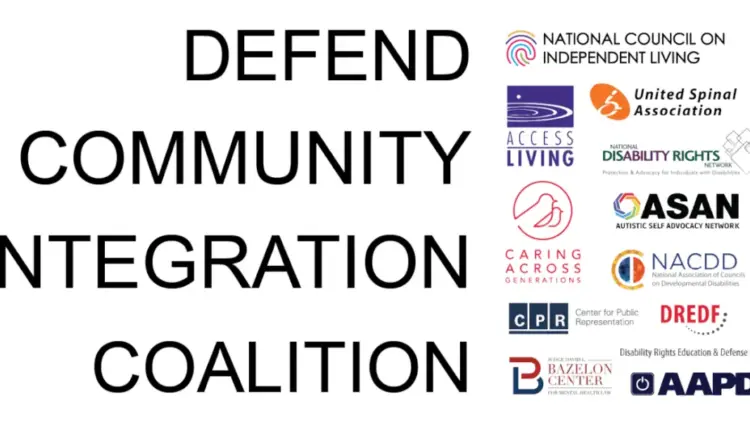
The Defend Community Integration Coalition (DCIC), a leading national coalition of organizations led by and for people with disabilities, has issued a swift and resolute condemnation of the federal government’s actions that culminated in this judicial order. Advocates are now sounding the alarm, urging a massive mobilization and renewed grassroots advocacy to protect the fundamental right of disabled Americans to live, work, and thrive in their communities.
The controversial order stems from an agreement proposed jointly by the U.S. Department of Justice (DOJ)—acting on behalf of HHS—and a coalition of challenging states, specifically Texas, Florida, Alaska, Louisiana, and Montana. The agreement, which was swiftly approved by the federal judge, specifically targets and nullifies certain central parts of the landmark 2024 HHS Section 504 rule. With the approval of this joint proposal, the underlying case has now been officially closed, leaving advocacy groups to grapple with the sudden regulatory vacuum left in its wake.
While the joint agreement between the DOJ, HHS, and the plaintiff states represents a concerted effort to turn back the clock on decades of progress, legal experts and disability advocates emphasize that the agreement itself does not change existing federal statutes or constitutional protections. Despite the court’s order striking down the specific administrative provisions of the 2024 rule, foundational laws such as Section 504 of the Rehabilitation Act, the Americans with Disabilities Act (ADA), and the historic Supreme Court ruling in Olmstead v. L.C. remain fully intact and in effect.
Under these foundational legal pillars, disabled individuals continue to maintain the legally protected right not to be subjected to unjustified institutionalization or forced segregation. Disability rights leaders stress that it is now more important than ever for governors, state attorneys general, and policy makers in every state across the nation to understand that this judicial order runs contrary to decades of established jurisprudence. The message from the advocacy community is unequivocal: disabled individuals and their allies will not permit the clock to be turned back on their hard-won liberties.
Nevertheless, the removal of the specific community integration provisions from the HHS Section 504 rule represents a severe and tangible blow to federal enforcement and oversight. By discarding these provisions, the federal government has stripped away clear, enforceable direction that previously instructed states to ensure health and social services actively support disabled people within integrated community settings whenever appropriate. Crucially, because this removal applies nationwide rather than being limited merely to the states that brought the lawsuit, the loss of this regulatory guidance impacts every corner of the country. For advocates working tirelessly on the ground to ensure that individuals are not forced into nursing facilities, intermediate care institutions, or other segregated environments simply to access necessary medical and support services, this federal retreat is viewed as a profound and dangerous setback.
Disability rights leaders argue that the current landscape represents a profound crisis for the disability community, threatening the basic autonomy and self-determination of millions of Americans. While a handful of state governments have actively demonstrated a steadfast commitment to ensuring that individuals with disabilities can successfully live and participate in community life, many other states have historically lagged behind or demonstrated outright hostility toward community integration mandates. In light of this judicial ruling, the DCIC and allied organizations are urgently calling upon state legislatures across the nation to view this misguided and harmful development as a vital wakeup call. Advocates are pressing states to take proactive legislative action by enshrining the fundamental right of disabled people to live in their communities directly into state law, thereby creating an additional layer of protection against federal rollbacks.
The rights that disabled Americans enjoy today were not granted freely; they were forged through decades of relentless, courageous, and often costly activism by disability rights pioneers over the past fifty years. From historic protests and civil disobedience to landmark legislative battles and courtroom victories, advocates have continuously fought to establish the principle that disability rights are, fundamentally, human rights. The core rallying cry of the movement remains as urgent and resonant today as it has ever been: the disability community will not go back.
As a national coalition dedicated to defending the right to community integration, the DCIC is actively monitoring the fallout from the Texas v. Kennedy decision and preparing coordinated responses. Organizations and individuals invested in the protection of civil rights for people with disabilities are encouraged to stay tuned for upcoming updates from the coalition, which will outline concrete action opportunities and mobilization efforts designed to defend the right to community living against ongoing legal and political threats.