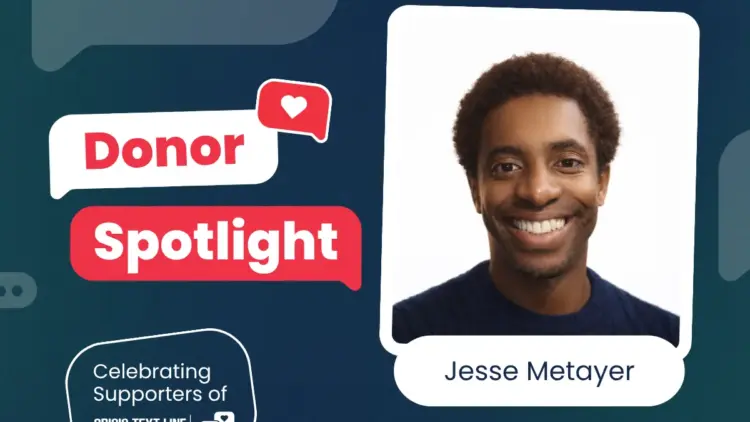
Every text message received by a crisis intervention hotline is answered because someone believed the interaction mattered enough to make it possible. For individuals facing their darkest hours, that connection can be a literal lifeline. This month, Crisis Text Line is shining its donor spotlight on Jesse Meyer, a dedicated donor, volunteer, and mental health advocate whose enduring generosity helps train the compassionate Crisis Counselors who show up for texters when they need it most.
Through his multifaceted involvement—ranging from financial contributions to active crisis counseling—Meyer has transformed personal adversity into a powerful vehicle for community healing. His journey illustrates the profound impact of accessible mental health resources, the critical importance of de-stigmatizing therapy, and how the simple act of listening can turn high-stakes emotional distress into moments of clarity and empowerment.
Breaking Down the Stigma of Mental Health Support
Meyer’s commitment to mental health advocacy is deeply rooted in his own lived experience. Reflecting on his formative years, he recalls spending a significant portion of his childhood feeling fundamentally different from his peers. Placed in learning disability classes throughout school, he worked tirelessly to hide how difficult everyday academic and social environments were for him.
The pressure culminated when he dropped out of college at age eighteen, subsequently plunging into a period of intense isolation. In what he describes as his darkest moment, Meyer felt as though all hope had vanished. Faced with overwhelming despair, he made the pivotal decision to reach out for professional help.
That single outreach fundamentally altered the trajectory of his life. His therapist listened with deep empathy, providing essential emotional support and practical resources that Meyer utilized to rebuild his mental health. The experience demonstrated the irreplaceable value of seeking professional intervention during moments of absolute hopelessness.
Looking back, Meyer recognizes that his initial reluctance was fueled by a common misconception: the belief that therapy was exclusively reserved for individuals suffering from severe mental illnesses. He now understands that this pervasive stigma is entirely untrue. Anyone, at any given moment, can experience profound difficulties in life, and seeking support is a universal human right rather than a mark of weakness.
From Vulnerability to Empowerment: The Power of Training
Driven by the transformative impact of his own therapy, Meyer sought out ways to extend that same lifeline to others. He eventually found his way to Crisis Text Line, completing a rigorous free six-week training program designed to equip volunteers with evidence-based emotional de-escalation and listening techniques.
Those acquired skills were soon put into practice with real texters reaching out for immediate help. By applying the emotional techniques learned during his training, Meyer discovered an ability to effectively navigate high-stress interactions. He frequently manages to transform initial "hot moments"—characterized by acute panic, distress, or crisis—into "cool moments," steadily guiding texters to a place of emotional stabilization and empowerment by the end of their conversations.
For Meyer, the satisfaction derived from knowing he can tangibly alter the course of someone’s day is profound. It validates his belief that compassion, paired with structured communication training, can alter the outcome of a crisis.
The Art of Listening and Crisis Intervention
Supporting mental health initiatives, particularly crisis intervention, is more than a charitable endeavor for Meyer; it is a vital community necessity. Individuals suffering from acute emotional distress are often silently navigating their daily lives, interacting with colleagues, family members, and strangers while carrying immense psychological burdens.
Through his training as a Crisis Counselor, Meyer learned that true listening is a cultivated skill. It requires immense patience and critical thinking, enabling an individual to look beyond surface words to genuinely understand a person’s underlying emotions and immediate needs. This sharpened perception has reshaped how he approaches human interaction altogether.
By learning to slow down and refrain from premature judgment, Meyer has strengthened his ability to comprehend the full picture in stressful situations, preventing unfair misunderstandings both in his volunteer work and in his personal relationships with friends and family. He has internalized the principle that emotional regulation is paramount; he consciously avoids making major decisions when his emotions are running high, utilizing his refined critical thinking skills to clear his mind.
The Sustained Impact of Free, 24/7 Support
Meyer’s philanthropic giving is anchored in a desire to generate measurable impact for those in acute need. Crisis Text Line provides free, confidential, 24/7 mental health support to anyone who requests assistance, eliminating financial barriers that often prevent vulnerable populations from seeking help.
By funding the organization, donors directly support the infrastructure that keeps the platform active around the clock. Meyer emphasizes that donors act as the essential backbone of the service, ensuring that individuals dealing with disasters, systemic poverty, war, or other severe hardships have access to immediate emotional support that they could otherwise never afford.
The reciprocal nature of this volunteer work has also profoundly enriched Meyer’s own life. Knowing that his presence offers reassurance to someone in distress brings him a deep sense of validation, gratitude, and self-worth. When a texter expresses gratitude at the conclusion of a conversation, it serves as a powerful reminder of why continued participation matters. Throughout his tenure, Meyer has also benefited immensely from the guidance of his coaches and supervisors, who remain readily available to answer questions and provide ongoing support.
Maintaining Personal Well-Being and Looking Forward
To sustain his advocacy and volunteer work, Meyer places a high priority on maintaining his own mental health and emotional equilibrium. He tends to his well-being through active engagement in his faith community, continued volunteering with Crisis Text Line, and working on personal creative projects, such as the StarTalk app, which brings him joy and tranquility. Additionally, he maintains a balanced routine that includes regular visits to the gym and long, restorative walks in local parks.
For anyone contemplating financial support for Crisis Text Line or considering stepping forward to volunteer, Meyer offers a clear and compassionate message. Beyond helping individuals navigate specific hardships, contributors are directly preserving a vital public safety net that ensures no one has to face their darkest moments alone. Reaching out for help, whether as a texter seeking guidance or as an advocate offering an empathetic ear, remains the foundational first step toward reclaiming hope.