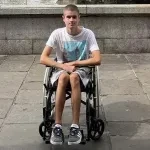
When 13-year-old Liam Virgo experienced a sudden health crisis in 2016, his entire world collapsed in a matter of days. A healthy teenager one moment, Virgo was abruptly incapacitated by a severe form of Functional Neurological Disorder (FND)—a complex neurological condition often described as a catastrophic disruption in how the brain sends and receives signals. The onset was as swift as it was devastating: Virgo was left entirely paralyzed, unable to speak, and confined to a hospital bed, feeling like an involuntary captive inside his own body.
Today, Virgo’s story has transformed from a harrowing tale of sudden illness into a powerful narrative of resilience, independence, and disability advocacy. Now an active wheelchair traveler and accessibility advocate, Virgo has documented his journey across more than 120 towns and cities throughout the United Kingdom. His story, recently shared through the accessibility platform WheelchairTraveling.com, highlights not only the personal determination required to overcome severe physical impairment but also the ongoing structural challenges faced by wheelchair users navigating historic and modern urban spaces.
A Sudden Onset: Living with Functional Neurological Disorder
The turn of events in 2016 left Virgo and his family facing a completely altered reality. Describing the sudden onset of his condition, Virgo compares the diagnostic moment to the fundamental software of his brain suddenly crashing without warning. FND affects the functioning of the nervous system, interrupting the brain’s ability to communicate properly with the rest of the body despite the lack of structural damage to the physical pathways.
For Virgo, the physical toll was immediate and extreme. Within days of his diagnosis, he lost both his ability to walk and his capacity for speech. The initial stage of his illness was marked by intense cognitive fog and deep disorientation. For the first six months following the onset, Virgo’s mind felt entirely switched off, leaving him with little to no memory of his early period in the hospital or the life he had led prior to becoming ill.
The condition rendered him completely bedbound. Extended confinement became unavoidable because even attempting to sit up triggered excruciating physical pain. Standard medical equipment and standard wheelchairs proved unusable; his body could not tolerate sitting upright, leaving his hospital bed as the sole environment where he could manage his pain. Stripped of his speech, mobility, and basic physical autonomy, Virgo faced a lengthy and uncertain medical path.
Motivation as Medicine: The ‘London Dream’
During the long months spent confined to a hospital room, Virgo clung to a single mental anchor: a determination to visit London. What began as a simple personal aspiration quickly evolved into a core strategy for his recovery, a focal point that he came to refer to as his "London Dream."
Rather than viewing the idea of visiting the nation’s capital merely as a potential post-recovery vacation, Virgo integrated the goal directly into his rehabilitation process. In the face of intense pain and physical exhaustion, having a concrete destination provided a tangible purpose. The emotional toll of daily physical therapy and neurological adjustment was countered by the clear, self-imposed objective of making it to London under his own power.
The breakthrough required immense patience and three long years of gradual rehabilitation. By 2019, Virgo reached a monumental milestone: he was finally healthy enough and physically stable enough to sit upright in a custom wheelchair. Transitioning from a bedbound existence to sitting in a mobility device marked the beginning of a new chapter. The experience opened up possibilities that had felt completely unreachable during the darkest phases of his illness, proving that goal-driven rehabilitation could play a vital role in regaining physical function.
Practical London Tips: Navigating the Capital and Hotel Accommodations
Fulfilling his promise to himself, Virgo eventually traveled to London, using his firsthand experience to evaluate the capital’s overall accessibility for travelers with severe physical disabilities. Although London is one of the world’s oldest and most historically complex metropolitan areas, Virgo notes that significant progress has been made toward making the city one of the most accessible destinations in the United Kingdom.
During his visit to the capital, Virgo stayed at the Park Plaza County Hall, located near London’s South Bank and Waterloo station. For wheelchair travelers, lodging selection is often the most critical element of a trip, and Virgo highlighted the property as an exemplary option for guests requiring specialized facilities.
According to Virgo, the hotel provided spacious accessible rooms specifically engineered to accommodate wheelchair maneuverability. Crucially, the accommodations featured roll-in wet rooms equipped with sturdy grab rails, removing traditional bathroom barriers that often complicate travel for disabled individuals. Furthermore, step-free access throughout the main entrance, lobby, and elevators allowed for seamless navigation within the hotel, reducing the physical strain associated with daily travel logistics.
Dining, Accessibility, and Urban Barriers
Navigating London’s public spaces and culinary scene revealed a clear divide between modern architectural developments and historic urban structures. Virgo observed that finding step-free dining options is relatively straightforward in recently constructed or modernized districts. Areas such as the South Bank, Central London, Canary Wharf, and Stratford feature modern infrastructure where step-free entry, wide doorways, and accessible restroom facilities are standard features in chain establishments and newer developments.
In contrast, older neighborhoods and independent commercial venues present persistent physical obstacles. A single small step at an entrance—a frequent architectural detail in London’s historic buildings—remains one of the most common barriers preventing wheelchair users from accessing independent restaurants and shops. To navigate these challenges, Virgo advises disabled travelers to conduct pre-trip research by calling venues directly or utilizing digital mapping tools like Google Street View to inspect physical entrances before visiting.
Beyond commercial venues, public accessibility infrastructure across major cities presents a mixed picture. While modern facilities frequently offer accessible restrooms and smooth pathways, unexpected obstacles such as out-of-service elevators, steep inclines, and missing ramps continue to require advance planning and adaptability from travelers who rely on wheeled mobility.
120 Cities and Counting: Re-framing Mobility and Advocacy
Reaching London was not the conclusion of Virgo’s journey, but rather the launching pad for a much broader exploration of the United Kingdom. Since regaining his voice and adapting to life in a wheelchair, Virgo has expanded his travel horizons far beyond his initial expectations, visiting more than 120 towns and cities across the country.
His travels have taken him to major urban centers and regional destinations, including Manchester, Leicester, Birmingham, Leeds, Liverpool, Edinburgh, Cardiff, and Brighton. Having spent years entirely bedridden, Virgo developed an unyielding desire to see the world, viewing each new destination as a personal triumph over the physical limitations imposed by FND. Looking ahead, Virgo plans to expand his travel footprint internationally, with his next major goal being a trip to Cyprus to explore his family heritage.
Through his travel platform and social media presence, where he shares updates under the handle @liamloveslondon, Virgo actively advocates for better public understanding of Functional Neurological Disorder and wider implementation of inclusive design principles. He strongly rejects the notion that living with a disability inherently restricts a person’s capability or potential.
For Virgo, a wheelchair is not a symbol of confinement, but a vital instrument of personal liberation—a tool that restored his independence and reopened the world after his life was curtailed at age 13. He emphasizes that the primary obstacles faced by disabled people stem not from their diagnoses or mobility equipment, but from preventable environmental design failures such as broken infrastructure, steep steps, and a persistent lack of accessibility planning in urban environments. By documenting his experiences and promoting awareness, Virgo aims to demonstrate that with adequate accessibility, personal resolve, and clear goals, individuals facing severe health disruptions can rebuild their lives and achieve their long-term ambitions.