A major study published in JAMA Neurology has delivered a stark projection regarding global health, warning that the number of new dementia cases is expected to double worldwide by the middle of the century. The findings have brought renewed attention to the massive societal, economic, and emotional ramifications of cognitive decline, highlighting an urgent need for widespread systemic preparation, preventative health measures, and stronger global health advocacy.
For family caregivers who are currently taking care of a loved one with dementia, as well as for individuals looking ahead at their own cognitive health, projections of this magnitude can feel overwhelming. Understanding the driving forces behind these numbers is a critical first step toward effective prevention and better long-term care planning. However, healthcare experts emphasize that getting this emerging health crisis under control will require coordinated leadership, targeted public health campaigns, and a deeper understanding of the underlying risk factors that fuel cognitive deterioration across different populations.

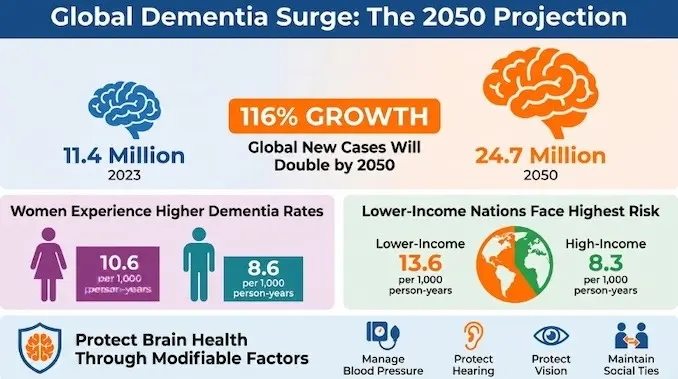
The latest epidemiological data presents a sobering trajectory for the decades ahead. In 2023, there were an estimated 11.4 million new dementia cases globally. By 2050, that annual figure is projected to surge to 24.7 million new cases, representing a staggering 116% increase. Researchers emphasize that this massive spike is not primarily driven by the disease itself becoming biologically more aggressive, but rather by the rapid aging of the global population. Because age remains the single biggest risk factor for dementia, and people worldwide are living longer lives than ever before, the sheer volume of individuals entering the high-risk age brackets will naturally expand.
Medical professionals view these projections not as an inevitable consequence of aging, but as an urgent call to action. Dr. Emer MacSweeney, a consultant neuroradiologist, noted that the data should serve as a vital wake-up call to accelerate prevention, improve early diagnosis methods, and expand treatment options before the demographic shift overwhelms healthcare infrastructure.
A closer examination of the data reveals significant disparities in who develops dementia, most notably a pronounced gender gap. According to the study, the incidence rate for women stood at 10.6 new cases per 1,000 person-years, compared to 8.6 for men. While women generally enjoy longer lifespans than men, researchers point out that longevity alone does not fully explain the discrepancy. Sex-specific biological factors, including hormonal shifts during menopause and the cumulative lifelong exposure to estrogen, are believed to play a substantial role in brain health maintenance. This underlying physiological difference underscores the critical need for women to prioritize cognitive and cardiovascular health well before their senior years.

The research also highlights a stark geographical divide, pointing directly to the critical heart-brain connection. Low- and middle-income countries face a notably higher incidence of dementia, recording 13.6 cases per 1,000 person-years, compared to just 8.3 cases in high-income countries. Public health experts explain that high-income nations have experienced steady, long-term declines in smoking rates, untreated high blood pressure, and elevated cholesterol over recent decades. Conversely, many low- and middle-income regions are currently experiencing rising rates of obesity, stroke, and cardiovascular disease. The clear takeaway from these geographic trends is that maintaining cardiovascular health is fundamentally intertwined with protecting long-term brain health.
While individuals cannot stop the passage of time, medical experts point out that a significant portion of a person’s cognitive trajectory is influenced by modifiable risk factors. Healthcare providers recommend focusing on foundational wellness habits to support long-term brain function, particularly managing blood pressure, addressing metabolic health, and protecting cardiovascular systems.
Despite the sobering nature of the 2050 projections, researchers stress that the future is not entirely predetermined. While the aging global population guarantees an increase in the raw number of individuals affected, the overall trajectory can be altered. Aggressive management of modifiable risk factors—such as hypertension, diabetes, and heart disease—combined with continuous advancements in medical treatments, could significantly improve these long-term outcomes. Furthermore, addressing lifestyle factors such as maintaining social engagement, protecting sensory health, and staying physically active remains a powerful defense against the rising tide of cognitive decline.

As the international community grapples with these findings, healthcare advocates maintain that mitigating the impact of dementia will require a multi-layered approach. Individual lifestyle modifications must be supported by broader public health initiatives, international cooperation, and dedicated leadership to tackle the looming epidemic before its societal costs outpace global resources.