As the smoke cleared from the 2026 midterm elections, a comprehensive new polling analysis released by KFF shed light on the profound influence that health care costs, policy debates, and political party trust had on voters at the ballot box. The findings, drawn from supplemental questions added to comprehensive national and state-level voter surveys conducted by SSRS and the NORC Civic Health and Elections Project, offer a detailed look at how rising economic pressures and shifting voter sentiments reshaped political dynamics across the country, particularly in pivotal Senate races and key battleground states.
The comprehensive dashboard highlights how health care affordability intersected with broader cost-of-living anxieties, serving as a defining metric for voters casting their ballots for Congress. While economic concerns remained the undisputed top priority for the American electorate, the specific contours of health policy—ranging from federal oversight to progressive reform proposals and the burgeoning influence of the Make America Healthy Again (MAHA) movement—played a decisive role in shifting political momentum away from historical trends and toward the Democratic Party on health-related issues.
The Role of Health Care Costs as a Voting Issue
Throughout the 2026 midterm cycle, the cost of living remained a central preoccupation for voters navigating economic uncertainties. Health care costs, in particular, occupied a prominent space within these financial anxieties, standing alongside other essential expenses such as gasoline, diesel, food, and groceries.
When asked about the factors influencing their congressional votes, roughly half of all voters identified the cost of living as a "crucial" consideration. This sentiment was especially pronounced among those who supported Democratic House candidates, with about six in ten pointing to the cost of living as vital to their decision. In contrast, fewer than four in ten voters backing Republican House candidates said the same.
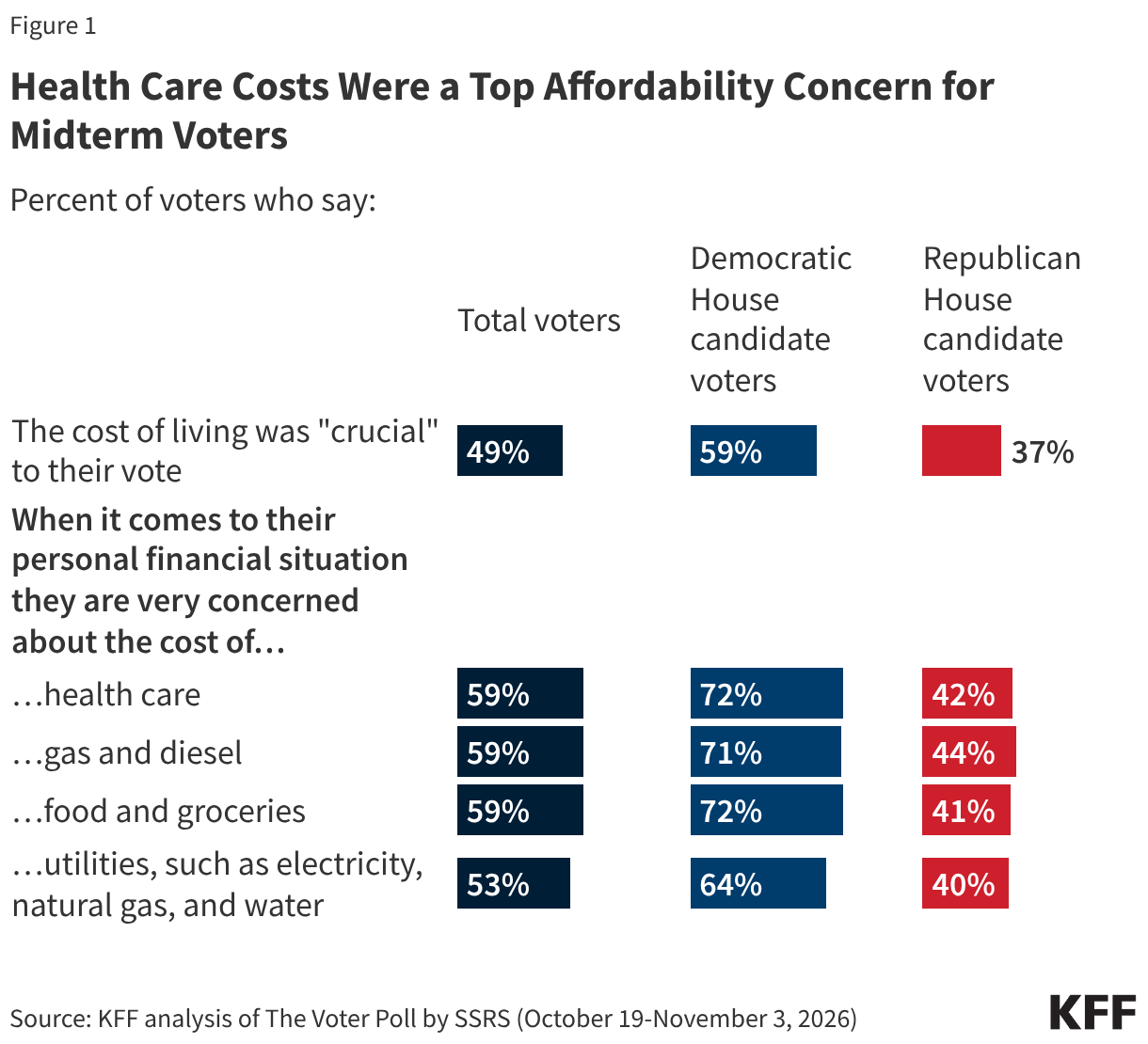
When evaluating their personal financial situations, about six in ten voters overall reported being "very concerned" about the costs of gas and diesel, health care, and food and groceries, while slightly fewer expressed the same level of concern regarding utilities. A partisan divide was clearly visible here as well: about two-thirds or more of voters supporting Democratic House candidates reported deep concern across these essential categories, whereas only about four in ten Republican House voters shared that level of apprehension.
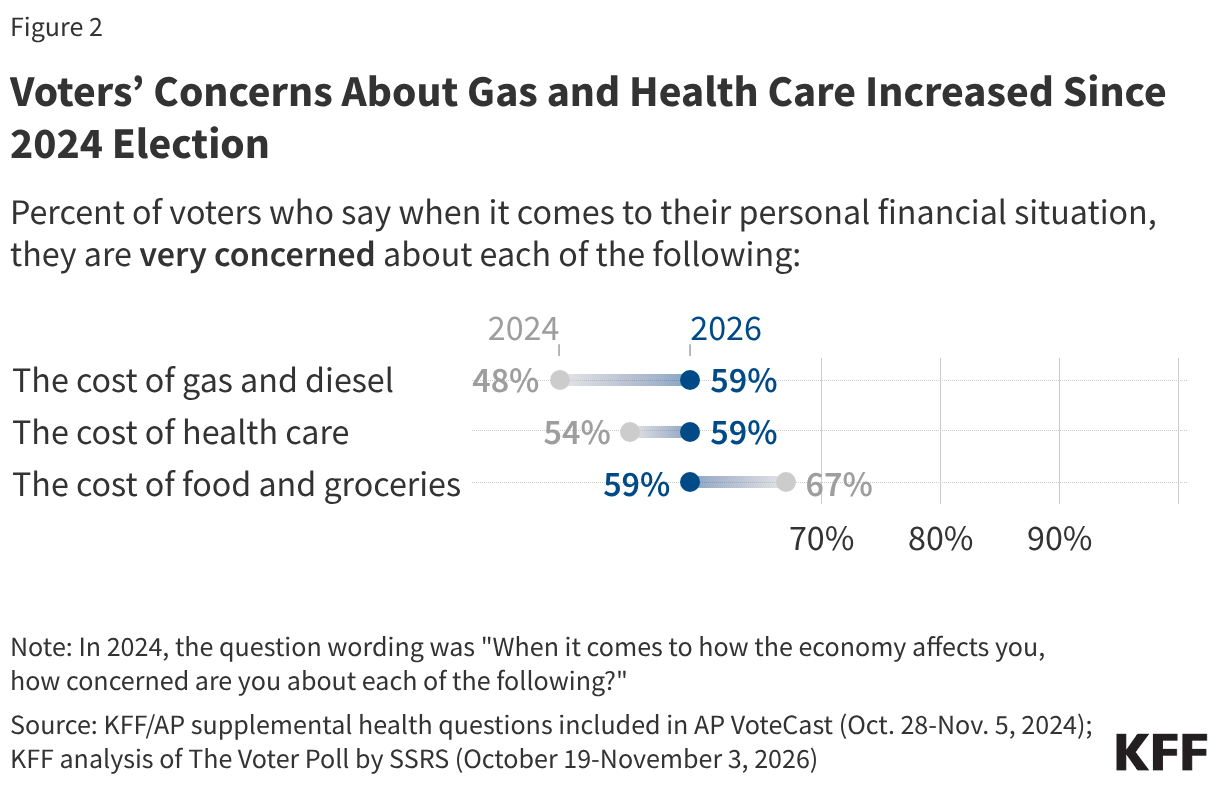
Longitudinal comparisons with the 2024 presidential election reveal shifting priorities among the electorate. Concerns regarding the cost of gas and diesel surged by eleven percentage points in the 2026 midterms, while worries over health care costs ticked upward by five percentage points. Conversely, the share of voters reporting severe concern over food and grocery costs declined by eight percentage points compared to the previous national election cycle.
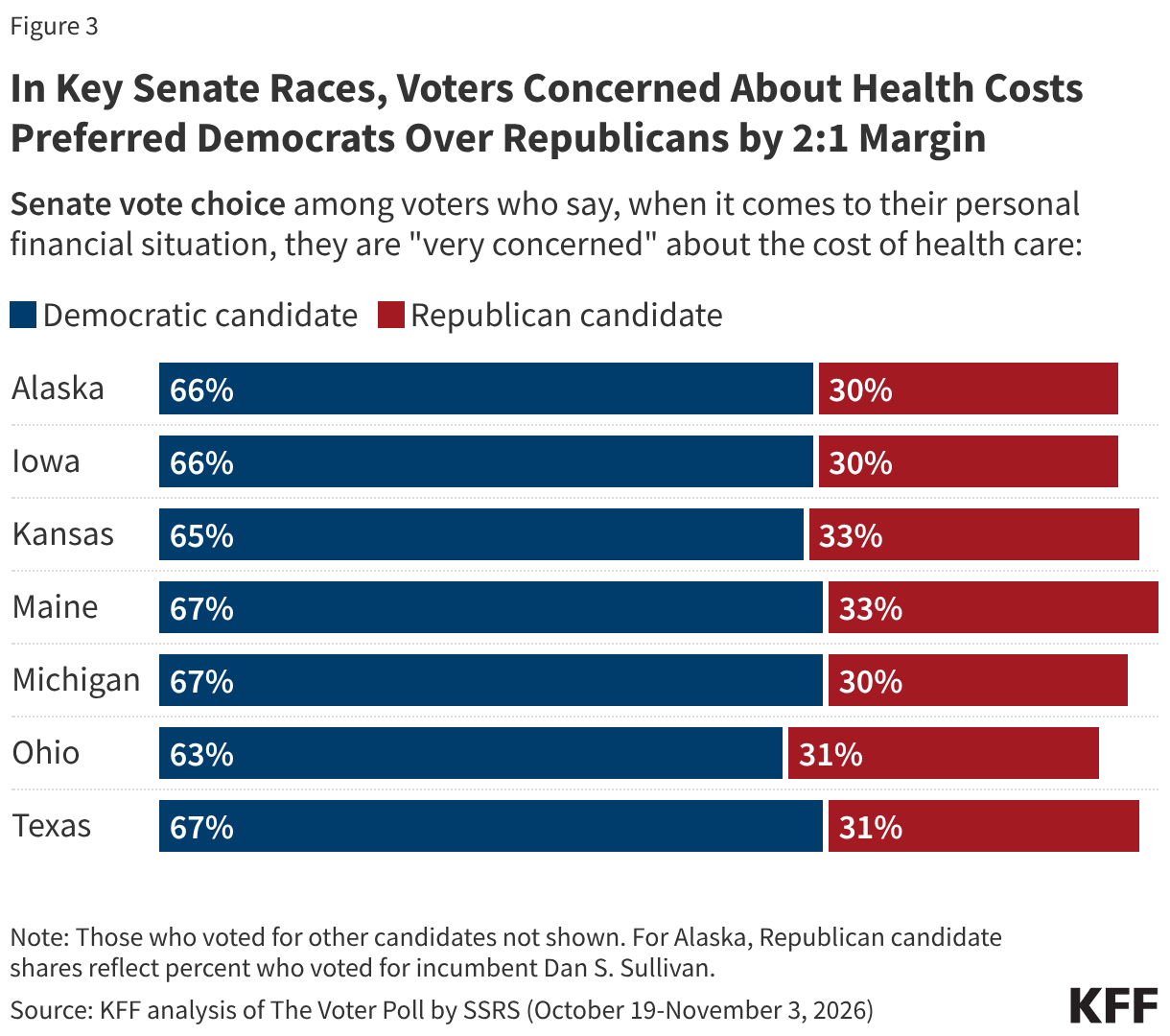
These financial worries translated directly into political outcomes, most notably in competitive Senate races. Democratic Senate candidates secured a commanding advantage among voters who expressed deep concern over health care costs in key battleground states. Across seven monitored battleground states, about two-thirds of voters who described themselves as "very concerned" about health care costs cast their ballots for the Democratic Senate candidate, while only about three in ten supported the Republican contender. This dynamic represented a sharp reversal from the 2024 presidential election, where voters voicing similar health care cost anxieties favored then-candidate Donald Trump over Kamala Harris by a margin of ten percentage points.
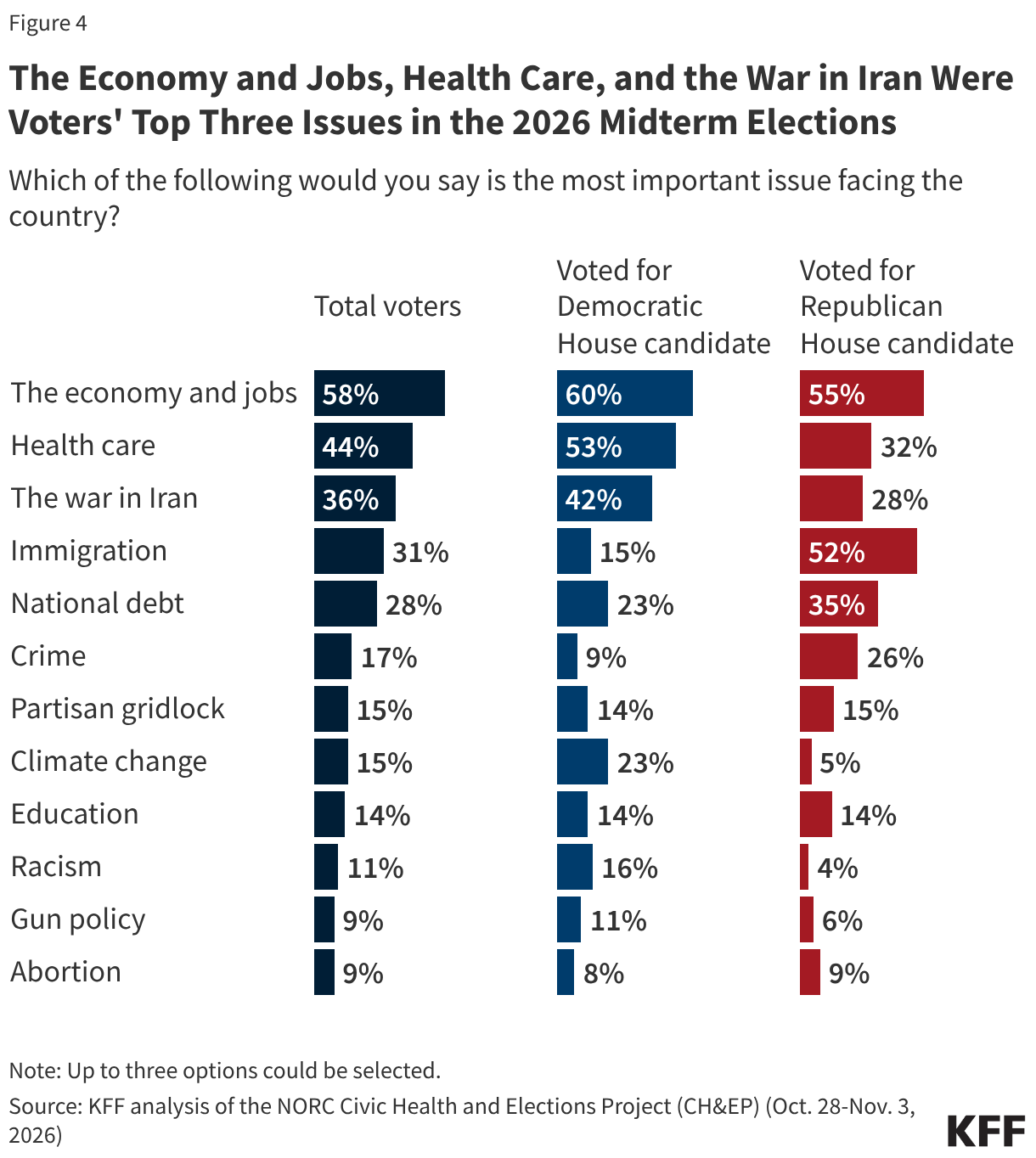
Although the economy and jobs remained the single most important national issue for roughly six in ten voters overall, alternate polling methodologies revealed the deep underlying footprint of health care. While traditional surveys often force respondents to select a single top issue, the NORC Civic Health and Elections Project allowed voters to choose up to three priorities from a broader list. Under this framework, health care emerged as the second most selected issue among voters overall, with approximately four in ten identifying it as an important factor. Health care ranked as the second highest priority among voters backing Democratic House candidates, whereas voters favoring Republican House candidates more frequently cited immigration as a top concern.
Party Preferences on Health Care
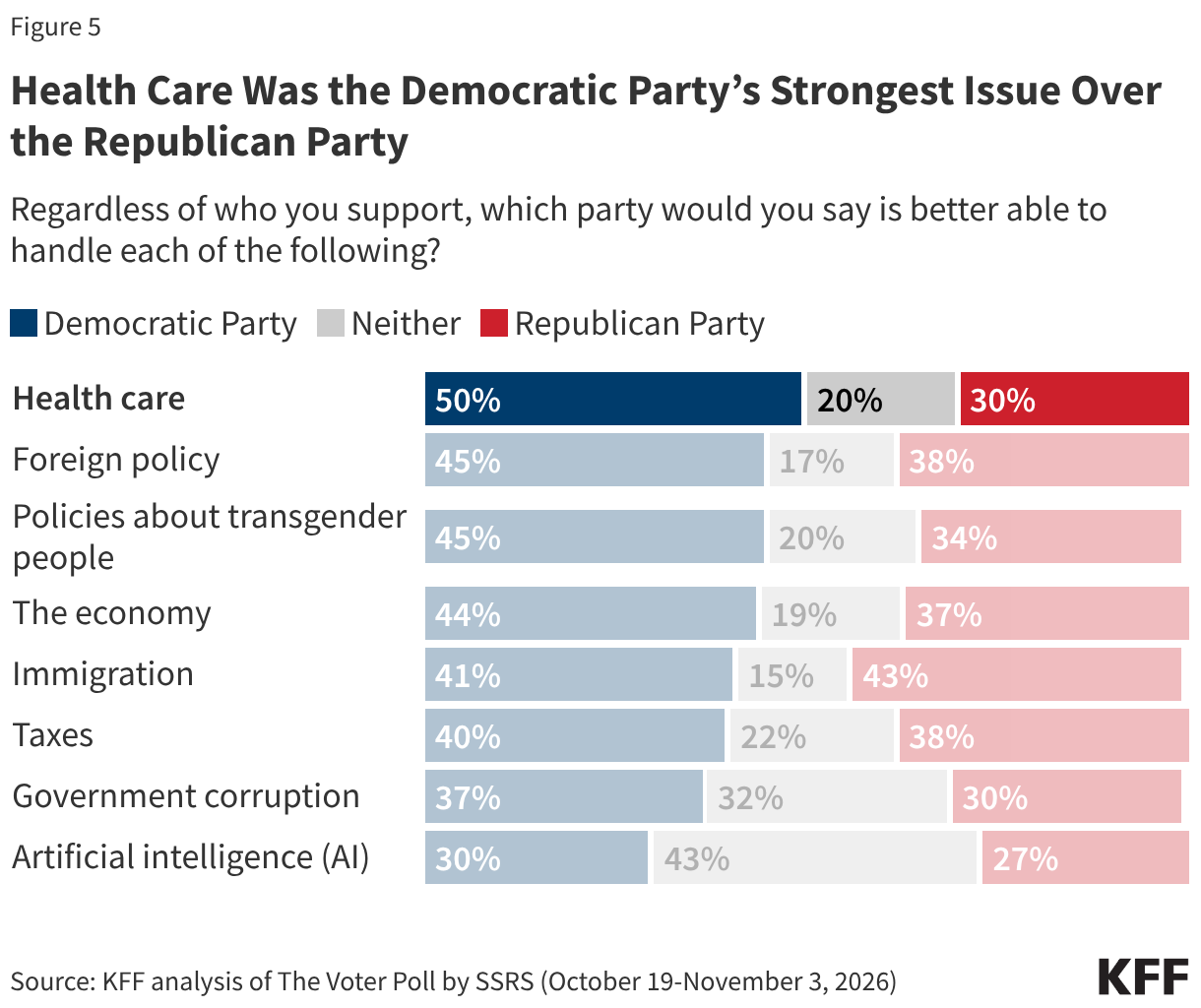
When evaluating which political party was better equipped to handle various national issues, midterm voters gave the Democratic Party a narrow edge over the Republican Party on the economy, with 44 percent favoring Democrats and 37 percent favoring Republicans. This occurred despite the historical advantage Republicans have traditionally held on economic matters.
Health care, however, represented the Democratic Party’s single largest area of strength. Half of all voters stated that the Democratic Party could better handle health care, compared to just three in ten who selected the Republican Party. An additional one in five voters expressed disillusionment, stating that "neither" party could effectively manage the issue. The only domain where voters granted the Republican Party a slim advantage over Democrats was immigration, which stood as the second most critical issue for Republican-leaning voters.
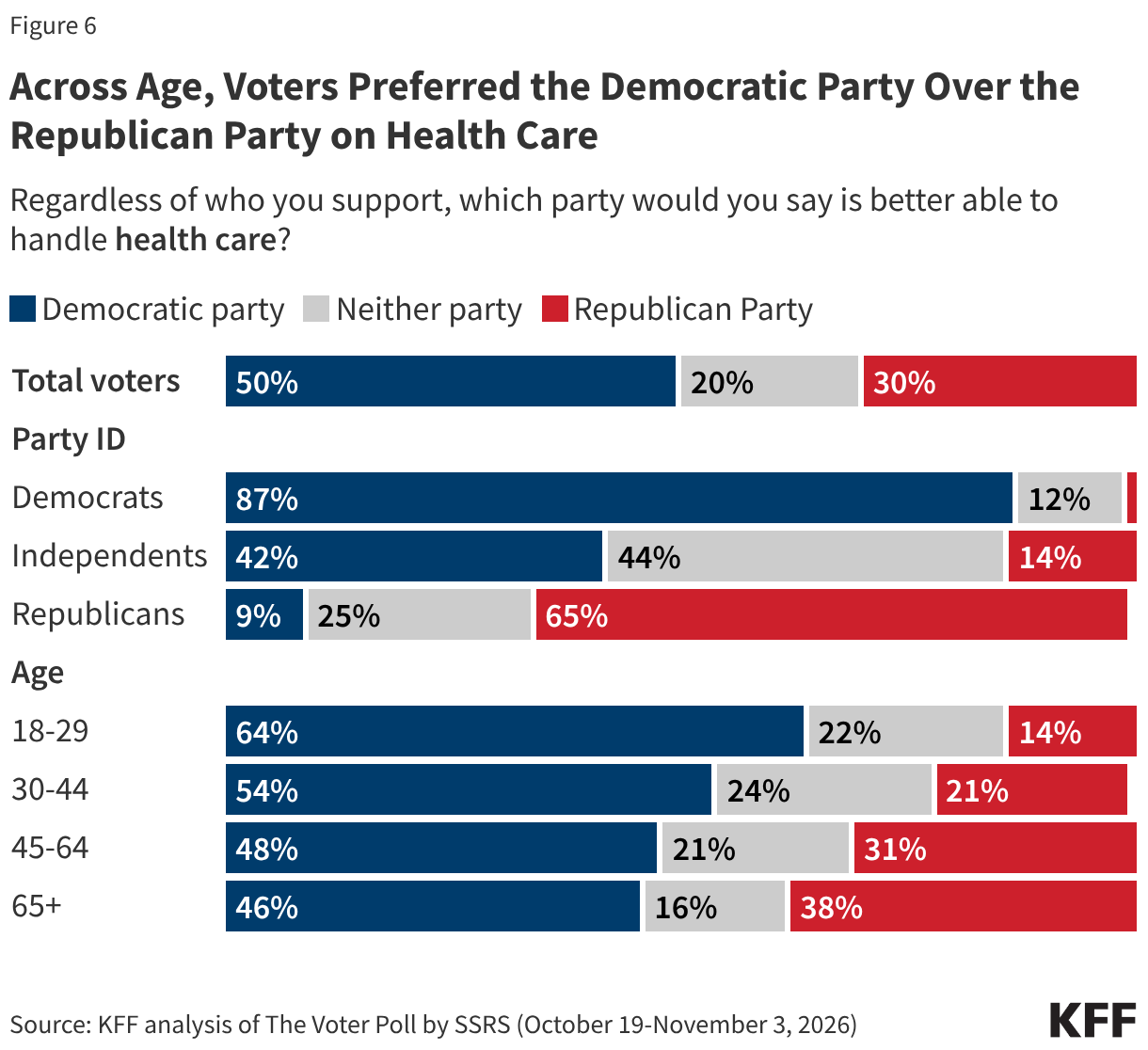
Independent voters broke decisively for the Democrats on health care, favoring them over Republicans by a roughly three-to-one margin. Even so, more than four in ten independent voters indicated that they felt neither party was capable of handling the issue well. The Democratic Party maintained its reputation for being more capable on health care across nearly all age demographics, though the margin of preference narrowed considerably among voters aged 65 and older.
This Democratic advantage on health care extended across all key battleground Senate states, most notably in Michigan and Maine. In both of those states, Democratic Senate candidates campaigned prominently on Medicare-for-All, placing health policy at the center of their electoral bids. Approximately half of the voters in Michigan and Maine stated that the Democratic Party was better suited to handle health care, compared to roughly three in ten who favored the Republicans. Double-digit Democratic margins of trust on health care were also recorded in Ohio, Texas, and Iowa, while smaller advantages materialized in Kansas and Alaska.
Views on the Trump Administration’s Health Care Policies
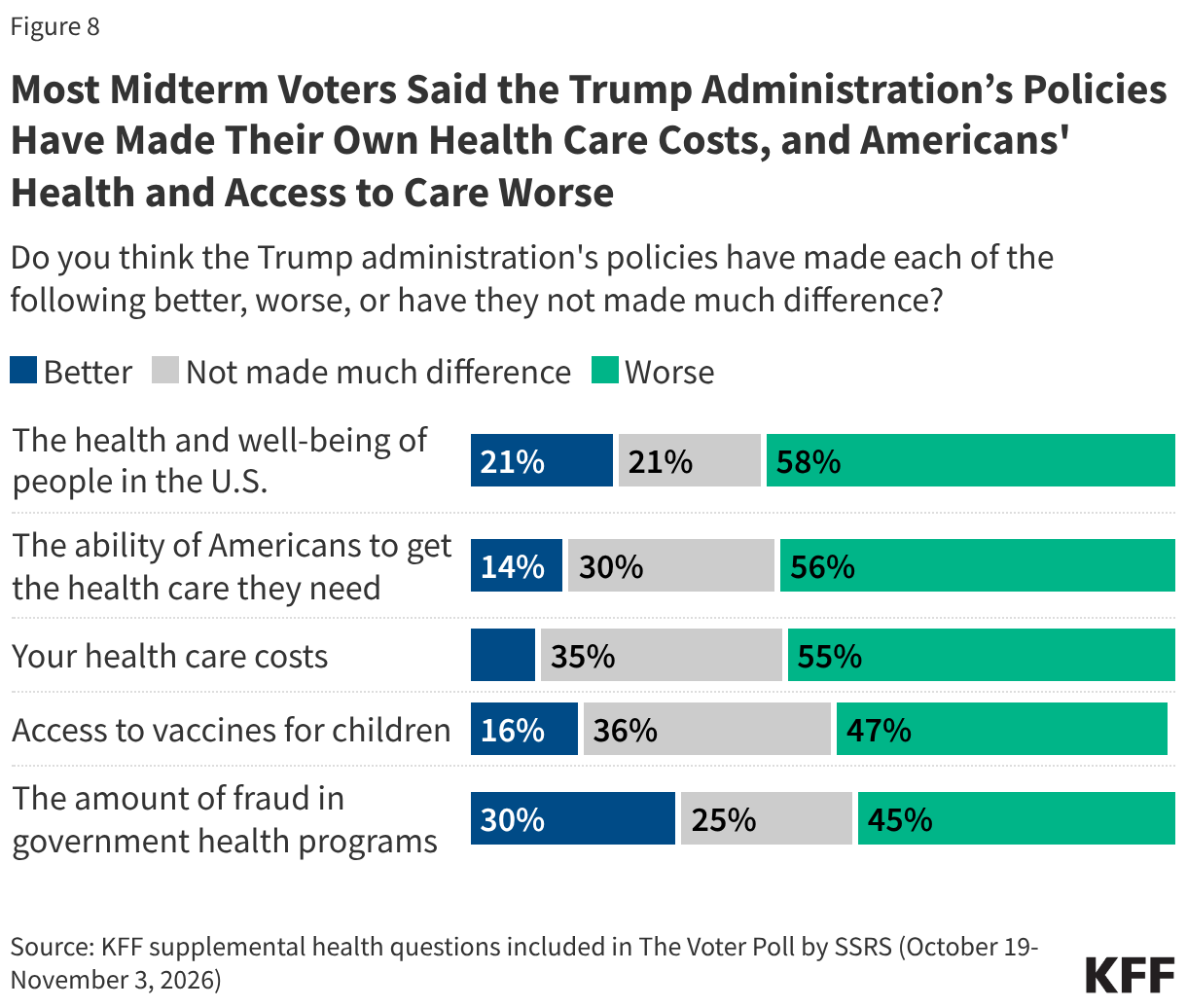
Midterm voters generally held critical views regarding the health care policies enacted by the Trump administration. Majorities reported that these policies had a detrimental impact across multiple fronts, including personal health care costs, overall access to care, the general health of the American population, fraud within government health programs, and vaccine access.
When considering personal finances and systemic access, majorities of voters asserted that the Trump administration’s policies had made their own health care costs and the broader public’s ability to obtain needed care "worse." The proportion of voters holding this view was at least four times larger than the share who believed the administration’s policies had improved those areas. Similar negative assessments applied to government health program fraud and the general health and well-being of people in the United States—both of which had been highlighted as key priorities for the administration’s health agenda.
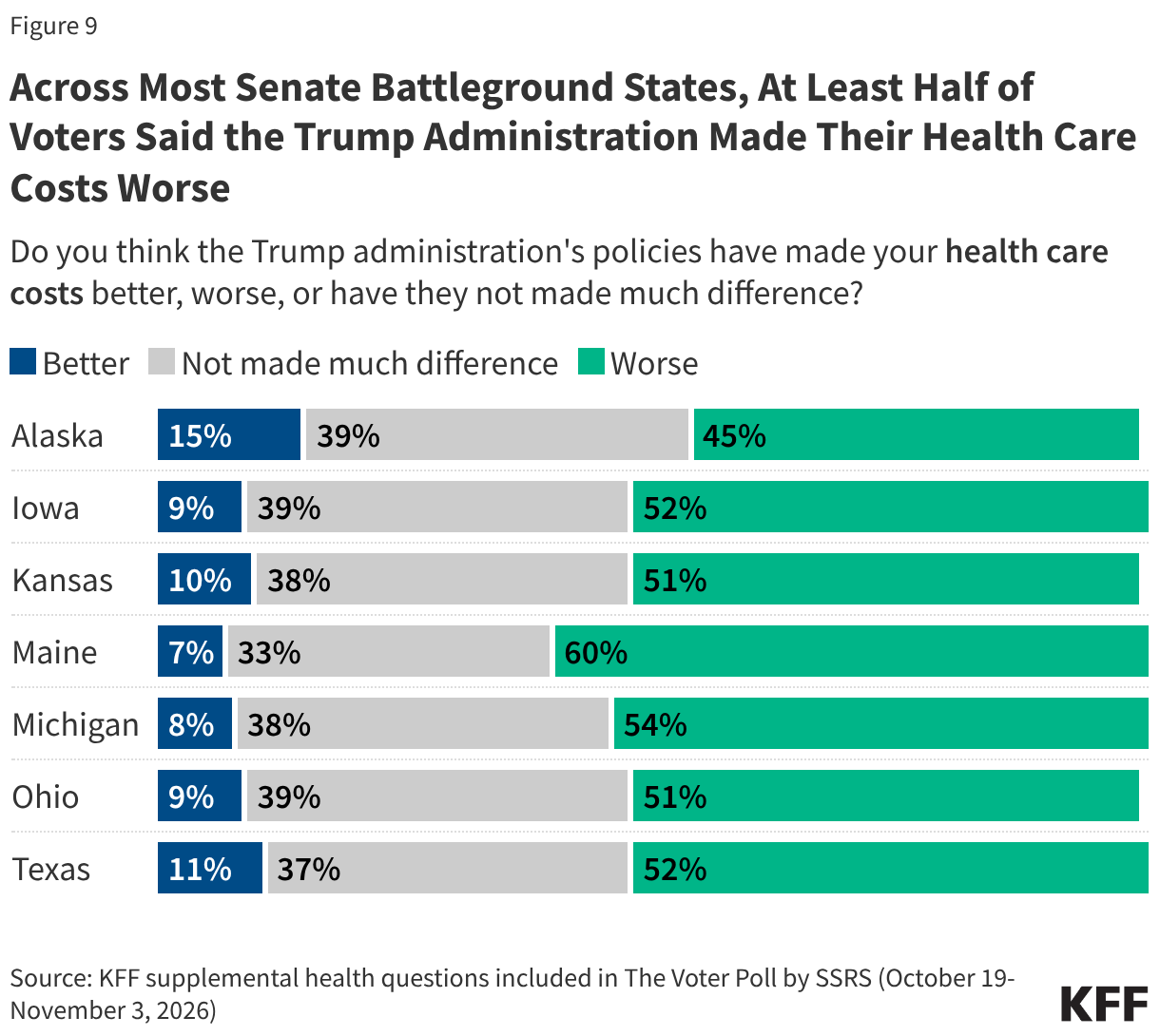
Across key Senate battleground states, voters indicated that administration policies had worsened their personal health care costs rather than improved them by a margin of at least five to one. Meanwhile, roughly four in ten voters in each of those states reported that the administration had exerted no measurable impact on their costs, and one in six or fewer stated that the administration had made their health care expenses better.
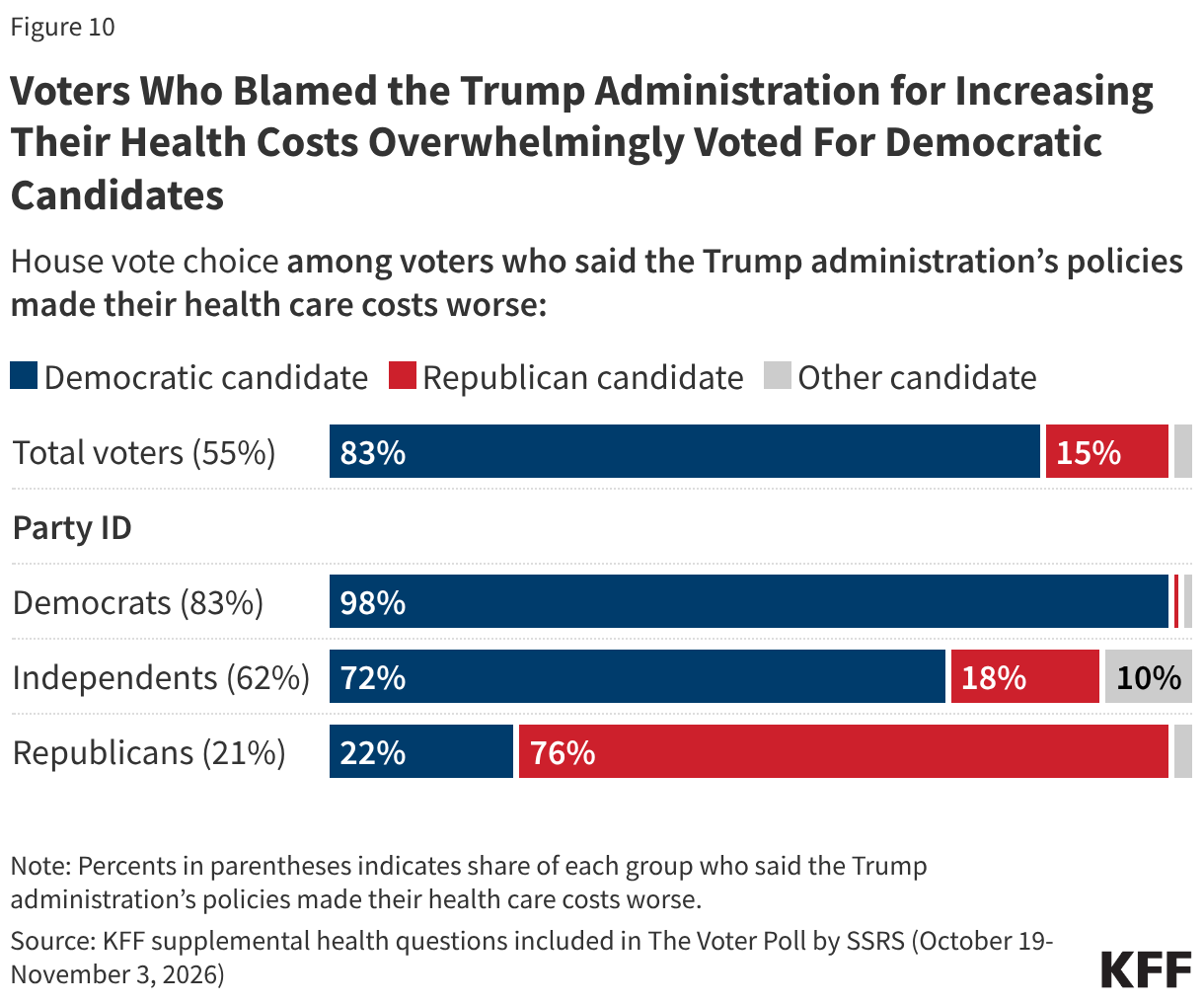
Discontent over rising health care costs under the administration correlated closely with support for Democratic House candidates. This trend was evident not only among Democratic and independent voters but also among a notable segment of Republicans: about one in five Republicans who felt the administration’s policies had worsened their personal health costs ultimately crossed party lines to vote for the Democratic House candidate in their district.
Views on the Government’s Role in Health Care
Driven by widespread anxiety over mounting medical expenses, a majority of 2026 midterm voters expressed a desire for the federal government to play a "bigger role" in helping Americans secure health care. This sentiment was exceptionally strong among supporters of Democratic House candidates. Conversely, voters backing Republican candidates were more divided, though the largest contingent among them favored a reduced government footprint.
In Michigan, where Democratic Senate candidate Abdul El-Sayed campaigned on a Medicare-for-All platform, the majority of the electorate expressed a desire for deeper government involvement in health care provision. El-Sayed’s core coalition was built largely around these voters. Meanwhile, a plurality of voters who supported Republican Senate candidate Mike Rogers favored a smaller government role, with smaller factions preferring no change or an expanded governmental presence.
A parallel dynamic unfolded in Maine, where Democratic Senate candidate Troy Jackson similarly centered his campaign on Medicare-for-All. Most Maine voters indicated they wanted the government to assume a larger role in health care, forming the backbone of Jackson’s electoral support. While a plurality of voters backing Republican Senator Susan Collins favored a smaller governmental role, a substantial share of Collins voters nevertheless expressed a desire for a larger government presence.
The Role of MAHA
The Make America Healthy Again (MAHA) movement also registered a notable presence in the 2026 midtimes, with roughly three in ten midterm voters expressing support for the movement, including 21 percent who identified as "strongly support[ing]" it. Polling data revealed a substantial overlap between MAHA supporters and the Make America Great Again (MAGA) movement, with three-quarters of MAGA Republicans identifying as MAHA supporters as well. Despite this partisan convergence, previous KFF research indicated that core MAHA concerns—such as food safety and corporate influence over public health—resonated far beyond the movement’s self-identified base.
Views on the administration’s impact on national health diverged sharply along MAHA alignment lines. While about six in ten midterm voters overall asserted that the Trump administration’s policies had worsened the health and well-being of people in the U.S., MAHA supporters viewed the record much more favorably. About half of all MAHA supporters—and nearly six in ten of its strongest adherents—maintained that the administration’s policies had improved American health. At the same time, notable segments of MAHA’s strongest backers reported that the policies had either left public health unchanged or made conditions worse.
Reflecting their deep overlap with MAGA Republicans, MAHA-supporting voters predominantly cast ballots for Republican House candidates nationwide. Partisanship nonetheless exerted a powerful gravitational pull: the small contingent of Democratic voters who supported MAHA overwhelmingly voted for Democratic candidates, while independent voters sympathetic to MAHA favored Republican candidates over Democrats by a roughly two-to-one margin.