The encounter began with a familiar, lingering stare—lips caught between a downturned pout and a sympathetic smile—which usually signals the delivery of an all-too-familiar inspirational platitude, such as “you’re an angel.” Having previously navigated the disability experience alongside Robert, the assumption was that the situation was entirely predictable. However, what followed next caught everyone completely off-guard, offering a sharp reminder of the casual, often absurd ignorance disabled individuals and their families face daily.
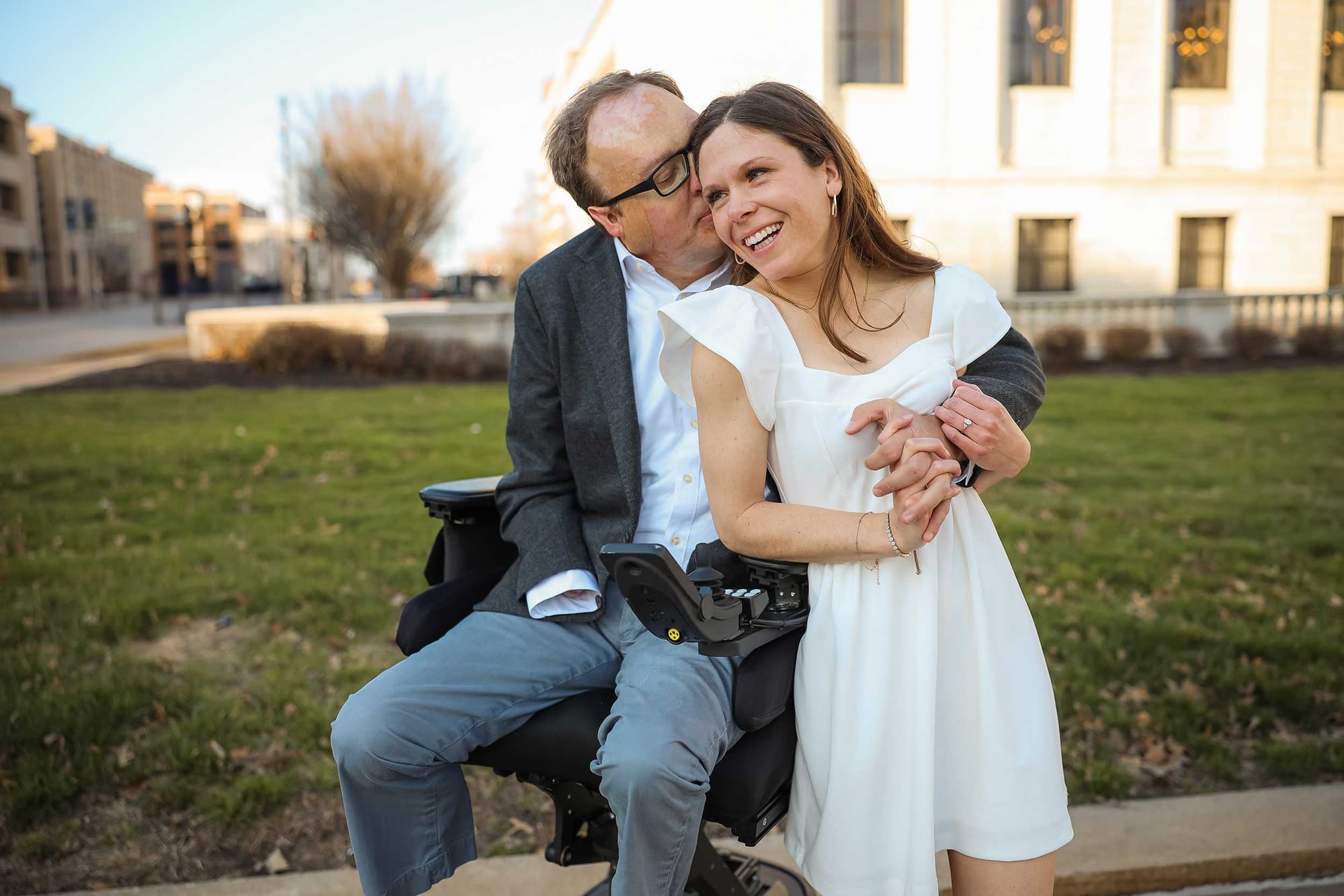
The scene unfolded during a breakfast date in Knoxville, Tennessee. John and his partner were enjoying a relaxed morning meal before heading to the Knoxville Museum of Art. Their in-person romance had officially begun just the night before, but thanks to a pre-existing deep friendship and an ongoing long-distance relationship, they were already well past the preliminary stages of dating. The atmosphere was light and filled with the excitement of sharing quality time together.
That atmosphere shifted abruptly when a restaurant staff member interrupted them to express open amazement that John was capable of managing his own meal and securing his own juice from the serving station. The disbelief culminated in a startling declaration: “He doesn’t even have a whole body!”
The remark was so remarkably pointed and specific that it rendered the table momentarily speechless. Swallowing a spreading grin, a curt head nod was offered before briskly exiting the restaurant. Barely making it outside the front door, the first of many shared giggle-fits erupted—a coping mechanism and a testament to the humor John and his partner frequently rely on to process the absurdity of public ignorance.
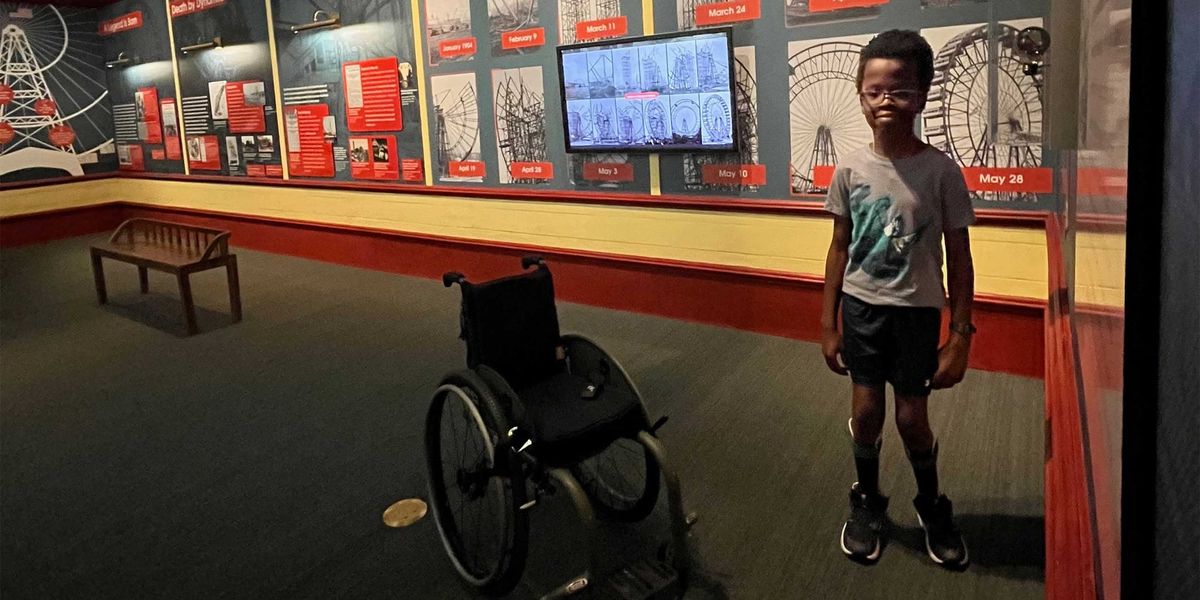
While this shared laughter occasionally elicits an eye-roll from Robert, the family attributes this to normal teenage angst, recognizing that he ultimately benefits from the humor they share in everyday moments. Yet, the interaction prompted deeper reflections on how to prepare Robert to confront ableism in public spaces. Teaching a child to recognize, process, and respond to systemic and interpersonal ableism is a delicate, complex mental task that constantly challenges conventional social norms. It often requires dismantling the unspoken rules people unconsciously adopt to function smoothly in society.

For instance, societal etiquette dictates that ignoring people is rude, yet Robert has been explicitly taught that walking away in the face of intrusive, infantilizing, or invasive comments is an acceptable and protective boundary. Similarly, children are routinely conditioned to automatically submit to authority. However, John actively models and helps Robert practice prioritizing his own needs while critically questioning which claims to authority are legitimate.
A prime example of this dynamic occurs during air travel. Airline wheelchair assistants frequently demand that John and Robert exit aircraft before their personal wheelchairs have been successfully returned to the jetbridge. Recognizing the physical vulnerability and the violation of accessibility standards, they routinely and rightly decline these directives. Such encounters highlight the broader friction disabled passengers face when dealing with institutional compliance versus basic human dignity.
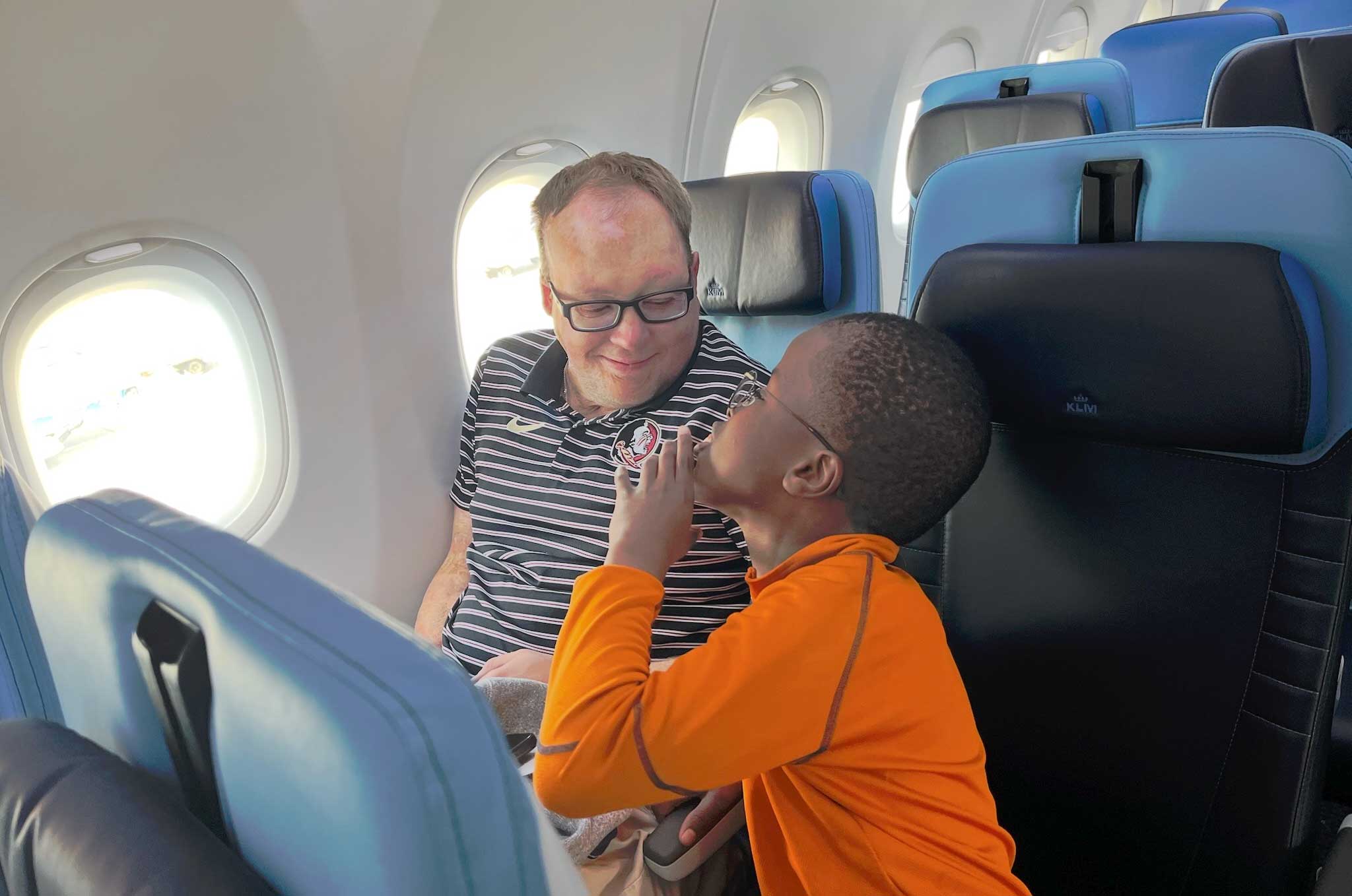
Public expectations also demand exhaustive explanations for mobility aids and accommodations, treating disabled bodies as public property or educational tools. To counter this, the family maintains a set repertoire of pre-practiced responses, including polite yet firm boundaries like “we don’t share personal medical information,” ready to deploy at a moment’s notice.
Another deeply ingrained societal expectation is the automatic reflex of offering gratitude for basic accessibility. While standard social conditioning teaches that “thank you” is the mandatory response when given help, Robert has been explicitly told he can pull away without a glance if an unfamiliar person attempts to grab his wheelchair without permission. The broader cultural conditioning that pressures disabled individuals and children to express excessive gratitude for mere equal access remains a persistent issue in modern accessibility discussions.

Honesty is prized as a fundamental value within the household, with one notable, lighthearted exception: fabricating utterly absurd, laughable backstories to shut down intrusive “What happened to you?” inquiries. On occasion, John has even attributed his leg amputations to a dramatic shark attack, successfully deflecting invasive personal questions with humor and imagination.
Critics might argue that maintaining a single, uniform response strategy or stripping Robert of his agency might simplify his public perception. Yet, that approach carries a heavy, unacceptable human cost. Decisions made in the present must be weighed against future outcomes. Forcing a young teen to blindly follow social rules to fit a palatable mold inevitably requires sacrificing a piece of his dignity. Opting instead to foster a young teen who occasionally ruffles feathers while remaining fiercely true to himself and capable of self-advocacy is, to the family, the only viable choice for the greater good.
Tackling a widespread social justice issue through daily, personal interactions is undeniably heavy and often overwhelming. To maintain focus without burning out, the family has adopted specific mental shifts and practical strategies to navigate the ongoing challenge of ableism.
Viewing the work not as a finite checklist, but rather as an ongoing household chore—much like doing the laundry—has provided a more balanced perspective. Laundry is never permanently finished; clothes pile up, wash, dry, fold, and are put away, only for the cycle to begin anew the next day. Sometimes the chore is avoided for an embarrassing amount of time, while other days involve powering through multiple loads. Even when caught up, the clothes currently being worn will eventually need cleaning. Recognizing this cyclical nature removes the pressure of achieving complete, permanent eradication of societal bias, allowing for breaks when energy and bandwidth run low.

Communication remains central to this ongoing education. Rather than searching for a single magic fix, the family approaches incidents collaboratively, constantly asking questions and examining responses together. Post-incident discussions often involve questions such as what can be learned from an interaction, what strategies worked, and how specific comments felt in the moment. Because a child’s emotional landscape and maturity evolve with time, these collaborative problem-solving sessions frequently yield surprising insights.
Preparation also extends to active rehearsal. When recurring obstacles are identified—such as the inherent stress of boarding commercial flights where assistance staff frequently make unilateral decisions regarding mobility equipment—the family stages role-playing exercises at home. By simulating scenarios where unfamiliar staff members attempt to grab a wheelchair without consent, Robert practices delivering clear, respectful, and firm boundaries in a low-stress environment. This repetition builds the muscle memory necessary to respond effectively when high-stress situations arise in the real world.
Even with extensive preparation and a wide array of acquired skills, the family still experiences moments of hesitation, occasionally second-guessing their chosen approaches in the heat of the moment. The pressure to constantly evaluate interpersonal dynamics is substantial. Furthermore, the boundaries of acceptable responses shift depending on intersecting factors such as age, race, gender, and the specific nature of a disability, all of which influence the pre-existing assumptions held by the general public.
By combining proactive planning, continuous open dialogue, and a willingness to test diverse approaches, the family continues to cultivate confidence and resilience. Their journey serves as an ongoing exploration of how to navigate a world that is still learning to accommodate and respect disability on equal terms.