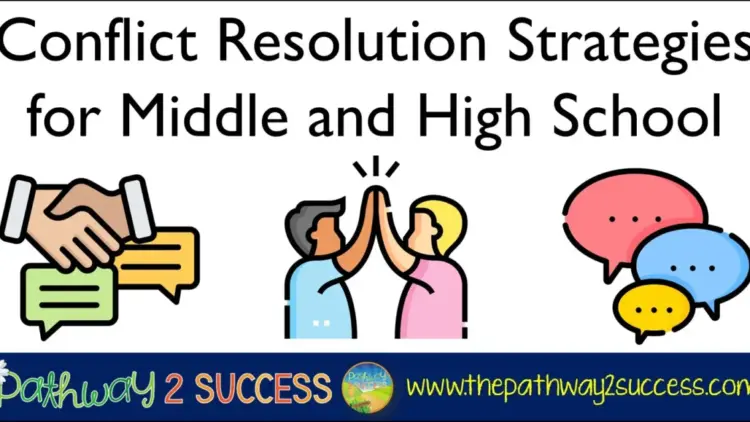
As diverse groups of adolescents and teenagers converge in middle and high school classrooms across the country, interpersonal friction is an inevitable reality of daily academic and social life. Whether students are clashing over the technical approach for a collaborative science project, feeling socially excluded when peers prefer not to work with them, or experiencing frustration due to being repeatedly interrupted during discussions, classroom friction presents both a challenge and an opportunity for educators. Rather than attempting to eliminate disagreements entirely, educational experts and classroom teachers are increasingly focusing on teaching students how to manage these conflicts independently and constructively.
The fundamental objective of modern conflict resolution initiatives in secondary education is not to create a utopian environment devoid of friction, but rather to equip young adults with the practical tools they need to navigate disputes in healthy ways. When students develop these competencies, they are better prepared to talk through complicated disagreements with group members, communicate effectively within peer groups, and resolve interpersonal hurdles with the people around them. Implementing these strategies proactively transforms everyday classroom tension into a valuable developmental exercise, fostering long-term social and emotional growth during critical developmental years.
Why Focus on Conflict Resolution Strategies?
Integrating conflict resolution strategies into the middle and high school curriculum serves as a foundational pillar for academic and personal success. Proponents of these programs emphasize that structured support for problem-solving yields a wide array of secondary benefits for kids and teens. By addressing conflict before it escalates into behavioral disruptions, educators can fundamentally shift classroom culture toward mutual respect and collaborative learning.
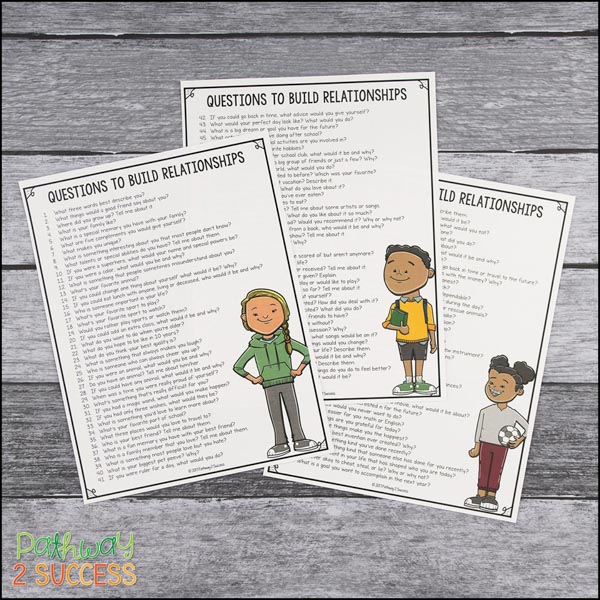
The primary starting point for building these vital competencies involves an intentional focus on relationship-building within the classroom environment. Navigating interpersonal problems is widely recognized as a complex, lifelong challenge that requires continuous refinement. Consequently, young adults must feel a genuine sense of connection to their peers and teachers to successfully work through grievances. When students share a foundation of trust and rapport, the emotional barrier to resolving conflicts is significantly lowered. Educators frequently utilize structured group conversations and targeted relationship-building questions to open the door to meaningful dialogue, establishing a secure baseline for future collaboration.
Explicitly Teaching Conflict Resolution Strategies
A proactive approach to classroom management requires educators to explicitly teach conflict resolution tools before volatile situations arise. This instructional mindset reframes conflict not as a purely negative disruption, but as a natural part of human interaction that can yield positive outcomes when handled correctly. Through guided instruction, students learn that working through disagreements helps them articulate their personal needs, understand alternative perspectives, and collaborate more effectively.
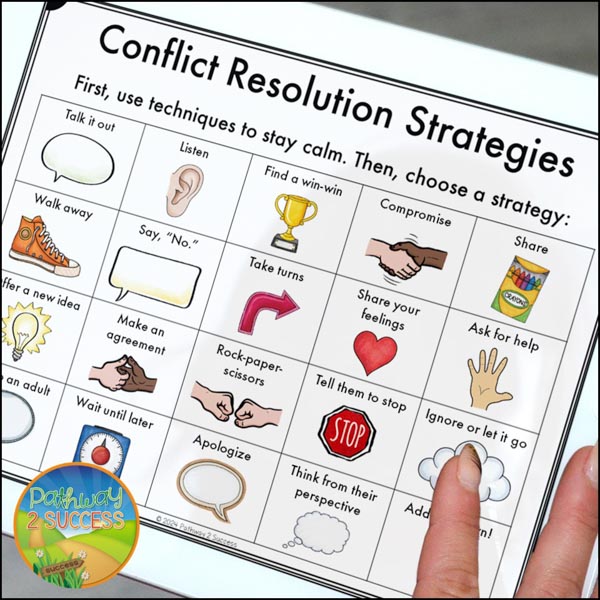
Moreover, educators stress that different situations demand varied approaches. For instance, a disagreement regarding how to solve an academic problem typically requires active listening and compromise, whereas a situation involving peer pressure to share answers calls for assertive self-advocacy and the ability to firmly decline. Helping students recognize which strategy applies to a given scenario requires ongoing practice, contextual discussion, and real-world modeling within a safe environment.
Practicing Active Listening and Calming Techniques
A critical component of effective conflict resolution is active listening—the deliberate process of truly hearing, processing, and attempting to understand another person’s perspective. Because students need structured opportunities to develop this skill, educators are increasingly embedding listening exercises directly into daily academic content.
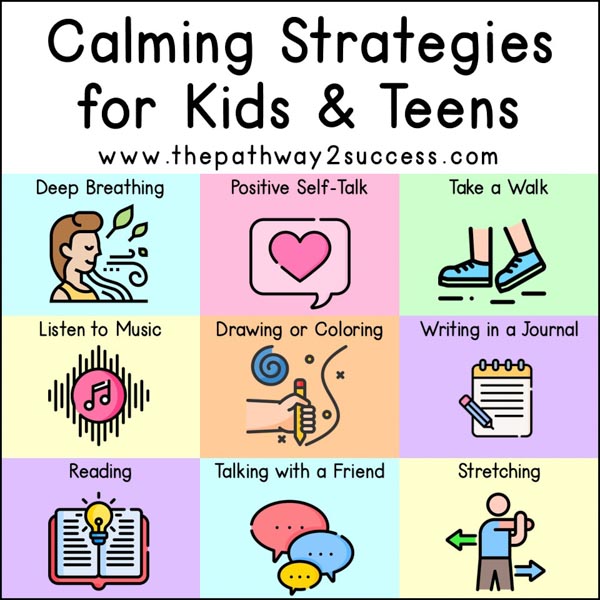
However, cognitive science indicates that emotional regulation must precede effective communication. When adolescents experience intense stress, frustration, or overwhelm, the amygdala—the brain’s threat-response center—takes control, triggering a fight-or-flight response that encourages impulsive and reactive behavior. Conversely, a calm and relaxed state allows the prefrontal cortex, which is responsible for planning, reasoning, and decision-making, to take charge. Because teenagers possess developing brains, they often require explicit support to achieve emotional equilibrium during stressful moments. Schools are incorporating calming strategies such as controlled deep breathing, positive self-talk, reflective writing, and brief transitional brain breaks to help students regain composure before attempting to resolve conflicts.
Utilizing Scenario Discussions and Class Meetings
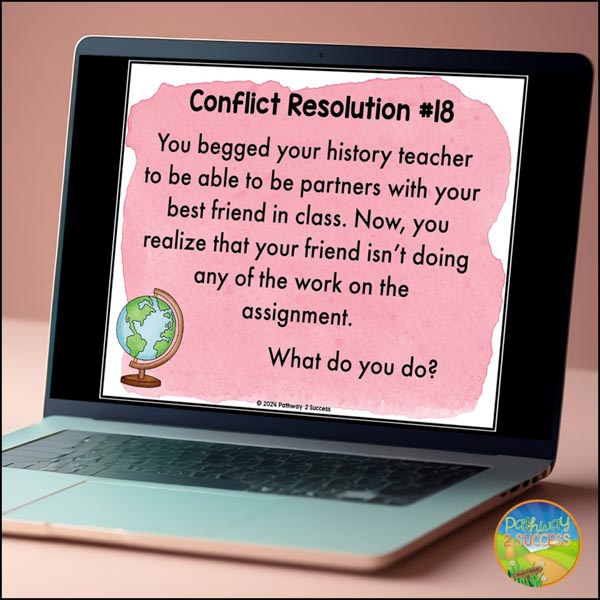
To bridge the gap between abstract concepts and real-world application, classrooms frequently utilize conflict scenarios and structured class meetings. Conflict scenarios offer students a secure environment to read about realistic interpersonal dilemmas, analyze the root causes of the problem, and brainstorm peaceful resolutions. Because complex disputes often have multiple viable solutions, these discussions encourage critical thinking and open dialogue about appropriate courses of action.
Similarly, regular class meetings provide a semi-structured forum for students to address collective challenges, evaluate ongoing classroom dynamics, and collaboratively establish norms. These meetings reinforce the connection between conflict resolution and self-advocacy, empowering students to articulate their boundaries respectfully. Whether a student needs to ask an instructor for academic clarification or assertively decline an uncomfortable request from a peer, self-advocacy remains inextricably linked to healthy problem-solving.
Integrating Group Work and Respectful Disagreement
Group projects and collaborative assignments offer an organic setting for students to put conflict resolution strategies into practice in real time. By intentionally embedding collaborative tasks into the weekly schedule, educators give students the chance to test their communication skills under normal classroom conditions.
Central to these group dynamics is the practice of disagreeing respectfully. Because differing opinions on topics ranging from aesthetic preferences to academic methodologies are bound to surface, students are encouraged to utilize constructive conversational frameworks. Educators often use high-interest discussion prompts—such as debates over popular culture, historical inventions, or artistic genres—to let students practice voicing opposing viewpoints without resorting to hostility or disrespect.
Visual Reminders and Daily Reflection
To reinforce these behaviors over the long term, many classrooms incorporate visual reminders, such as dedicated bulletin boards and poster sets, which serve as constant prompts for peaceful problem-solving. Additionally, dedicating the final minutes of the school day to daily reflection allows students to evaluate their interpersonal interactions, assess what strategies worked well, and identify areas for personal growth. Through consistent reinforcement, daily practice, and a commitment to emotional and social development, middle and high schools are successfully transforming potential conflicts into teachable moments for the next generation.