

Purchasing a medical alert system is widely recognized as a practical investment in personal safety and aging in place, yet many seniors and their families discover that securing financial assistance for these devices is a surprisingly complex process. While a common assumption among older adults and caregivers is that federal healthcare programs will automatically cover the cost of personal emergency response systems, the reality remains heavily fragmented across different insurance types, state regulations, and veteran programs.
For families researching how to pay for medical alert systems, coverage depends almost entirely on an individual’s specific health insurance plan, state of residence, and military service background. Understanding how government entities and private insurance providers handle personal emergency response systems is critical for preventing unexpected out-of-pocket expenses during a medical emergency.
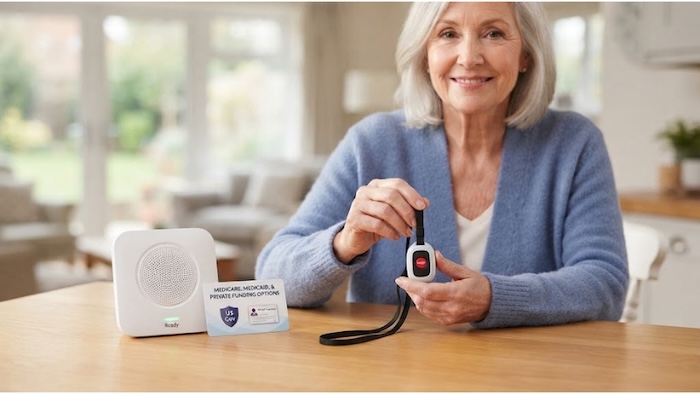
Original Medicare, which includes Parts A and B, offers no financial coverage for medical alert systems. The Centers for Medicare and Medicaid Services explicitly refrain from classifying these communication and monitoring devices as durable medical equipment. Because regulators do not deem personal emergency response systems medically necessary under standard federal guidelines, beneficiaries relying solely on Original Medicare are responsible for 100 percent of the equipment and monitoring costs out of pocket.
The financial landscape shifts somewhat when examining Medicare Advantage, or Part C, plans. Because private insurance companies administer Medicare Advantage policies, these organizations maintain the flexibility to offer supplemental health benefits that are absent from traditional government coverage. A number of private insurers include partial or full coverage for medical alert systems within their policy benefits, often viewing the technology as an effective preventative measure to mitigate the financial impact of costly hospital readmissions resulting from unassisted falls. Policyholders must review their specific summary of benefits documents or contact their insurance provider directly to determine if a particular device qualifies for coverage.
State-administered Medicaid programs provide a more robust avenue for financial assistance, though this support remains highly conditional. Through Medicaid’s Home and Community-Based Services waivers, numerous states cover the acquisition and ongoing monitoring fees associated with medical alert systems. These waiver programs are specifically designed to help seniors age safely within their own homes rather than transitioning prematurely into costly nursing facilities.

Because Medicaid is governed at the state level, eligibility rules and equipment approvals vary significantly from one jurisdiction to another. Applicants must navigate the specific waiver programs available in their state of residence. When approved, state Medicaid offices typically disburse funds directly to approved technology vendors for the monthly monitoring subscription, though beneficiaries may find their choice of equipment brands restricted by state contracts.
Veterans encounter the most straightforward pathway toward obtaining fully covered personal emergency response systems. The Department of Veterans Affairs provides medical alert systems at zero cost to qualifying veterans who receive care through the VA health network. Rather than purchasing a system independently and seeking reimbursement, eligible veterans must request a formal clinical consultation with their primary care provider within the VA system.
If the primary care physician determines that a personal emergency response system is medically necessary to ensure the veteran’s safety at home, the department orders the equipment directly from a pre-approved commercial vendor. The VA assumes full financial responsibility for both the hardware installation and the ongoing monthly monitoring fees, eliminating out-of-pocket expenses for the veteran and their caregiving family.

For individuals who do not qualify for government-backed health insurance assistance or veteran benefits, alternative funding avenues can help alleviate out-of-pocket costs. Many families utilize flexible spending accounts or health savings accounts to pay for medical alert hardware and monitoring services. Additionally, local community resources, such as regional area agencies on aging, frequently maintain grant programs or regional subsidy funds dedicated to senior safety technology.
Caregiving can be an exhausting endeavor, and untangling the labyrinth of insurance policies often compounds the stress placed on families. Relying solely on Original Medicare leaves caregivers to navigate a complicated maze of private Advantage plans, conditional Medicaid waivers, and federal bureaucratic procedures. Industry advocates strongly recommend that families investigate their coverage options well in advance of a medical crisis rather than waiting for an emergency fall to occur.
Contacting health insurance providers ahead of time to inquire about personal emergency response system benefits under specific Part C policies or Medicaid waivers allows households to plan financially. When private insurance or government programs deny coverage, exploring flexible spending accounts, local aging agencies, or direct out-of-pocket arrangements remains essential for maintaining safety at home. For many older adults, a reliable medical alert system serves as a fundamental requirement for independent living, where the modest monthly subscription fee pales in comparison to the devastating physical and financial consequences of an undetected medical emergency.



