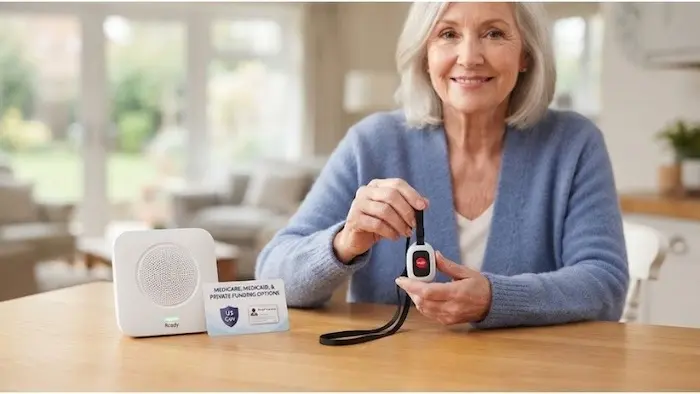
Purchasing a medical alert system is widely recognized as a straightforward investment in personal safety, yet navigating the maze of payment options requires precise, up-to-date information. Many seniors and their family caregivers frequently assume that federal healthcare programs will automatically foot the bill for these personal emergency response systems. However, the operational reality of healthcare funding proves to be far more fragmented and complex than many anticipate.
For families researching how to finance medical alert technology, coverage depends entirely on specific insurance plans, individual states of residence, and veteran status. Understanding the landscape of government and private assistance requires a close examination of how different entities classify and cover personal emergency response systems, commonly known as PERS.
Does Medicare Cover Medical Alert Systems?
For millions of older adults relying on Original Medicare, encompassing Parts A and B, the short answer regarding coverage is a definitive no. The Centers for Medicare & Medicaid Services do not currently classify medical alert systems as durable medical equipment. Because federal guidelines do not deem these emergency communication devices to be medically necessary under Original Medicare rules, policyholders must pay 100% of the cost out of pocket if this represents their sole health coverage.
The financial equation shifts somewhat when examining Medicare Advantage, also known as Part C. Because private insurance companies administer these alternative plans, they possess the flexibility to offer supplemental health benefits that extend beyond standard federal coverage. A number of Medicare Advantage plans choose to cover partial or full costs for medical alert systems as a preventive measure designed to avoid costly hospital readmissions following a fall or sudden medical emergency. Beneficiaries must carefully examine their specific Summary of Benefits document or contact their insurance provider directly to confirm whether a chosen device qualifies for these supplemental provisions.
Medicaid and Home and Community-Based Services Waivers
Medicaid offers a more robust framework for coverage, though access remains highly conditional and subject to strict geographic limitations. Under Medicaid’s Home and Community-Based Services waivers, numerous states elect to cover the cost of medical alert systems. These waiver programs are specifically designed to help aging individuals remain safely in their homes and communities rather than being forced into institutional settings like nursing facilities.
Because Medicaid is administered at the state level rather than uniformly across the nation, coverage rules fluctuate significantly from one state to the next. Individuals seeking assistance must apply through the specific waiver program authorized in their home state. If an application is approved, Medicaid typically arranges to pay the monthly monitoring fee directly to the approved equipment vendor. At the same time, these programs may restrict beneficiaries to a curated list of approved equipment brands and service providers.
Department of Veterans Affairs Benefits for Medical Alert Systems
Veterans often encounter the most straightforward path toward obtaining full coverage for personal emergency response technology. The Department of Veterans Affairs provides medical alert systems to eligible veterans at absolutely no cost. Instead of purchasing a system independently and later seeking reimbursement, veterans must request a formal consultation with their assigned VA primary care provider.
If the medical provider determines that an emergency alert system is necessary for the veteran’s safety and well-being, the department orders the equipment directly from an approved vendor. Through this administrative pathway, the VA covers both the initial equipment hardware and the ongoing monthly monitoring fees associated with the service.

Alternative Financial Avenues
When families find themselves ineligible for government-funded assistance programs, alternative financial avenues can help lower out-of-pocket expenses. Flexible Spending Accounts and Health Savings Accounts may sometimes be utilized to purchase health-related technology, depending on specific plan rules and the presence of a letter of medical necessity from a physician. Additionally, local community organizations and regional agencies on aging often provide resource guidance or localized grants to help vulnerable older adults secure necessary safety devices.
Understanding the Broader Caregiving Landscape
Caregiving is inherently exhausting, and battling with insurance companies only adds to the immense psychological and physical burden carried by family members. Original Medicare leaves caregivers largely unsupported on this front, forcing families to navigate a frustrating labyrinth of private Advantage plans, conditional Medicaid waivers, and VA bureaucracy. Industry advocates consistently advise families not to wait for a catastrophic fall or medical crisis to figure out their coverage options.
Proactive planning involves calling health insurance providers well in advance to inquire whether modern medical alert systems are covered under a specific Part C policy or state Medicaid waiver. When insurance companies ultimately deny coverage, families frequently turn to flexible spending accounts, local aging resources, or direct out-of-pocket spending. For many households, a medical alert system functions as an absolute requirement for aging safely at home, where the monthly cost of monitoring remains negligible compared to the devastating physical and financial toll of an undetected emergency.
The regulatory environment surrounding health coverage continues to evolve as technology adapts to the needs of an aging population. Experts emphasize that transparency and early inquiry remain the best defense against unexpected healthcare expenses. Licensed insurance brokers, financial planners, and elder law attorneys can provide additional clarity for families attempting to decipher complex insurance contracts and state-specific waiver requirements.