Choosing the right medical alert system, commonly referred to as a personal emergency response system, can prove to be a genuinely lifesaving decision for seniors and their families. With a sprawling array of options currently available on the market, finding a solution that balances reliable connectivity, ease of use, and overall peace of mind requires careful evaluation. Whether families are searching for a traditional in-home unit to safeguard daily routines or a modern mobile device equipped with global positioning system tracking to support an active lifestyle, understanding the fundamental features of these technologies remains crucial.
Industry experts emphasize that selecting the proper emergency response mechanism involves asking the right foundational questions. These inquiries span from evaluating fall detection capabilities and monitoring service response times to understanding total costs, contract terms, and daily wearability. By carefully reviewing these core aspects, caregivers and older adults can make informed decisions that prioritize safety without compromising personal comfort or straining household budgets.
Evaluating System Types: In-Home Versus Mobile Solutions
The foundational step in the selection process involves determining whether an in-home system or a mobile GPS device best suits the daily routines of the user. Standard in-home medical alert systems typically rely on a base unit connected either to a traditional landline or a cellular network. These setups are ideally suited for seniors who spend the vast majority of their time inside the residence. Users of these traditional configurations can generally wander between 800 and 1,400 feet away from the base station before experiencing signal loss. For many individuals, this range provides ample coverage, often extending far enough into the yard to tend to garden plants or retrieve the mail.

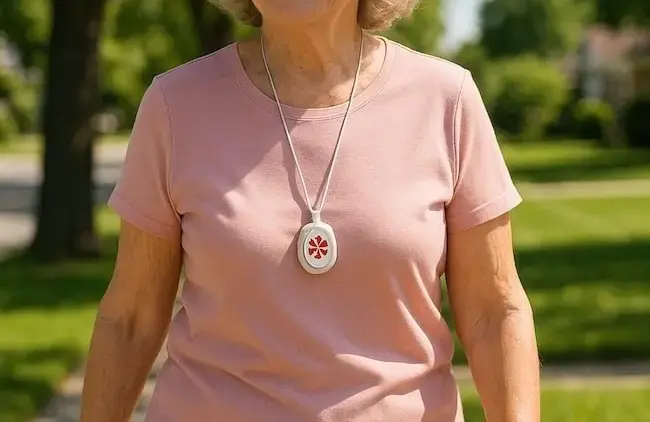
Conversely, mobile and GPS-enabled systems cater to individuals who maintain active lifestyles. While in-home systems excel indoors, cellular-based pendants and smartwatches allow users to drive to the pharmacy, run neighborhood errands, or visit community centers without losing service or compromising their safety net. These wearable devices incorporate location tracking, making them particularly beneficial for seniors who may experience cognitive wandering or require outdoor safety assurance.
Hybrid options have also emerged to bridge the gap between stationary and mobile needs. Recent installations in locations like Spokane, Washington, demonstrate the utility of pendants that connect to larger base stations linked through cellular networks rather than older landline connections. This setup proves especially valuable in modern apartment complexes lacking traditional telephone jacks. Furthermore, these base stations frequently feature internal battery backups designed to maintain operation during residential power outages, ensuring continuous protection even when the electrical grid fails.
The Role of Automatic Fall Detection Technology
Another critical consideration when evaluating personal emergency response systems is the inclusion of automatic fall detection. This advanced technology utilizes built-in motion sensors, such as accelerometers and gyroscopes, to recognize the distinct physical trajectory of a sudden fall. When a potential fall is identified, the system automatically initiates an alert to emergency services, providing a vital safety layer even if the user is incapacitated and unable to manually press their emergency button.

While standard medical alert buttons remain a reliable industry norm, they strictly require the user to manually activate the device during an emergency. Fall detection technology adds an extra layer of security, particularly for high-risk individuals prone to balance issues or sudden fainting spells. Families should note that fall detection features typically incur an additional monthly fee from service providers, yet many healthcare advocates view the nominal cost as essential for vulnerable seniors living independently.
Professional Monitoring Services and Response Times
The effectiveness of any personal emergency response system ultimately relies on the quality of its remote monitoring infrastructure. Prospective buyers are advised to look for providers that offer round-the-clock professional monitoring to ensure that assistance remains accessible at any hour of the day or night. Furthermore, response times serve as a critical performance metric, with industry standards favoring monitoring centers that achieve average connection times under thirty seconds.
The underlying connection method also dictates overall reliability. Cellular-based monitoring systems generally outperform traditional landline configurations because they remain operational during severe weather events or local power failures that might otherwise disable home telephone connections.

Financial Considerations, Costs, and Contract Terms
Navigating the financial aspects of medical alert systems requires a careful review of upfront equipment costs, ongoing monthly fees, and contractual obligations. Depending on the chosen tier of features, monthly subscriptions typically range from $20 to $50. Some providers require customers to purchase the hardware upfront, while others supply the equipment at no initial cost provided the user maintains an active subscription.
Industry consumer advocates consistently recommend avoiding long-term binding contracts whenever possible. Flexible, month-to-month service agreements allow families to adapt or cancel services if the senior’s living situation changes or if the chosen equipment proves unsatisfactory. Additionally, buyers should remain vigilant regarding hidden charges, such as activation fees, equipment return penalties, or extra monthly costs associated with premium add-ons like fall detection.
Usability, Wearability, and Everyday Comfort
A medical alert system can only provide protection if the user actually wears and operates it consistently. Consequently, equipment design plays a vital role in long-term adoption. Ideal wearable pendants or wristbands must feature lightweight, waterproof construction that can withstand daily routines, including showering and bathing. Device form factors must also be balanced carefully; wrist-worn smartwatches that are overly bulky can cause discomfort, while excessively small buttons may prove difficult for individuals with arthritis or impaired dexterity to manipulate.

Battery longevity represents another practical benchmark. Mobile GPS devices generally require regular recharging intervals, typically lasting between one and two days depending on the specific model and cellular signal strength, whereas traditional in-home wearable buttons utilize long-lasting internal batteries that function for years without requiring a charge. Simple installation procedures, clear instruction manuals, and reliable wireless ranges round out the essential criteria for ensuring seamless daily integration.
As families continue to weigh the diverse array of personal emergency response solutions available, careful planning remains the most effective tool for balancing safety, independence, and peace of mind.