Military service routinely exposes personnel to high-decibel environments, from the thunderous roar of heavy machinery and jet engines to the concussive blasts of artillery and routine gunfire. These hazards regularly exceed safe listening thresholds, leaving a lasting physical impact long after uniforms are packed away. According to data from the U.S. Department of Veterans Affairs (VA), hearing loss—including chronic conditions like tinnitus—affects approximately 3.6 million military veterans, establishing it as the single most common service-connected disability across the nation.
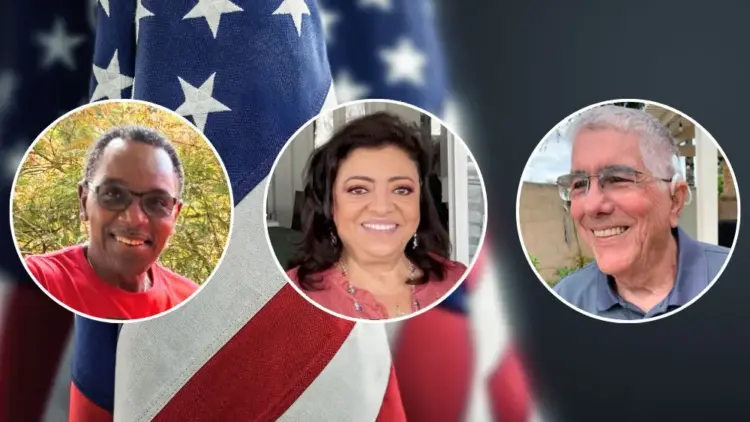
For these individuals, the transition from active duty to civilian life often involves adapting to a world where communication is clouded by damaged hearing. To address these challenges, organizations like the Hearing Loss Association of America (HLAA) play a critical role. The nationwide advocacy community provides veterans with essential educational resources, objective information regarding assistive technologies, and vital peer support networks, such as the Veterans Across America Virtual Chapter (VAAVC). In honor of Veterans Day, the HLAA highlighted the personal journeys of three veteran chapter members who shared their experiences confronting hearing loss, embracing modern medical solutions, and finding strength through community advocacy.
Miryam Fernandez: Breaking Barriers in the Military and Beyond
For 69-year-old Miryam Fernandez, hearing loss is the physical legacy of early firearm practice during her time in uniform. Serving in the U.S. Air Force from 1975 to 1979 as an Airman First Class assigned to the Air Force Academy Security Police Squadron, Fernandez experienced the rigorous demands of military life firsthand. Now wearing bilateral hearing aids, she serves as the treasurer of the HLAA Long Beach/Lakewood Chapter in Southern California, dedicating much of her post-military life to community advocacy and education.
Fernandez’s path to the military began long before her enlistment. Her family emigrated from Peru to Southern California in 1962 when she was just five years old, pursuing what many define as the American Dream. Growing up as a fiercely independent young Latina within a strict, traditional household, she was inspired to enlist after listening to a military recruiter speak at her high school. Although her initial training focused on clerical work, her assignment shifted dramatically once she arrived at the Air Force Academy in Colorado Springs, where she cross-trained to become a security police officer.
After completing four years of active service, Fernandez earned her college degree and embarked on a rewarding career as an elementary school teacher in Long Beach and Los Angeles. Several years following her discharge, however, doctors diagnosed her with severe sensorineural hearing loss. At the time, medical professionals informed her that hearing aids were not a viable option for the 75 percent hearing loss in her left ear, explaining that auditory nerves do not regenerate. Decades later, the VA officially determined that her condition was directly linked to noise exposure during firearm training.
The initial treatment solutions offered limited relief. The VA provided hearing aids, but the devices failed to address her primary difficulty: understanding speech clearly amidst background noise. Consequently, she frequently left the aids in her drawer. As her hearing gradually declined with age, she began to notice incremental benefits, prompting her to wear them more consistently, particularly in loud environments. She remains hopeful that ongoing technological advancements will eventually yield hearing aids capable of delivering true speech clarity in complex acoustic settings.
Before her retirement, Fernandez crossed paths with a new school principal who noticed her struggles and asked whether she had ever received professional accommodations. When she responded with confusion, the principal introduced her to the Americans with Disabilities Act (ADA) and provided informative materials. That conversation sparked research that led her directly to the HLAA Long Beach/Lakewood Chapter. Over the years, she has served as secretary and treasurer, finding immense value in an organization that connects her with peers facing similar daily obstacles while keeping her engaged with evolving assistive technology. In recognition of her extensive community involvement, Fernandez received the Jerry Stein Memorial Independent Living Award from the Long Beach Disabled Resources Center in 2023.
Bobby Graves: From Denial to HLAA Chapter President
For Bobby Graves, a 70-year-old U.S. Army veteran, hearing loss developed slowly through years of exposure to heavy office machinery and computer mainframes. Graves served on active duty from 1974 to 1982 and continued his military career in the Reserves from 1982 to 1997, eventually achieving the rank of Chief Warrant Officer (CW3) after starting as an E-6 Staff Sergeant. Today, he serves as the co-founder and president of the board of directors for the HLAA Virginia Peninsula Chapter.
Graves’s military occupational specialty as a Data Communications Center Specialist placed him in environments where he operated large mainframe computers and regularly destroyed classified documents using loud, industrial equipment. After leaving active duty, he began noticing conversational difficulties with his spouse and others. Like many veterans accustomed to self-reliance, he initially slipped into denial regarding the severity of his condition. Even after transitioning to the Reserves—where his daily work environment improved somewhat—noise levels remained hazardous. It was not until civilian colleagues repeatedly questioned his ability to follow conversations, combined with persistent urging from his wife, that he finally filed a claim with the VA for service-connected hearing loss.
Graves wore bilateral hearing aids for more than three decades before undergoing surgery for a cochlear implant in his right ear in 2024, transitioning to a bimodal hearing configuration. Throughout his medical treatments, he received vital personal encouragement from the HLAA Virginia Beach Chapter and the Virginia Hearing Loss Support Network. Building on that foundation, he partnered with fellow veteran Thomas Blackman in 2025 to establish the brand-new HLAA Virginia Peninsula Chapter, with guidance from local membership coordinators.
Reflecting on his journey, Graves encourages fellow veterans to abandon hesitation and seek help early. Likening a hearing device to a spare tire needed to finish a long journey, he emphasizes the importance of self-advocacy. Whether informing phone interlocutors about communication challenges, utilizing mobile captioning technology, or requesting that speakers avoid covering their mouths, he champions proactive engagement. Most importantly, he urges veterans to connect with supportive communities like the HLAA to reclaim a joyful and active life.
Ron Tallman: Combat Veteran Thrives with Cochlear Implants
Lieutenant Commander Ron Tallman, USN (Ret.), spent 23 years in the United States Navy between 1969 and 1992, serving aboard ships like the USS Savannah and the USS San Bernardino in support of operations in the Mediterranean and the Vietnam War. Today, the 75-year-old combat veteran serves as president of the HLAA East Valley Chapter in Phoenix, Arizona, navigating life successfully with bilateral cochlear implants.
Tallman’s military service exposed him to extreme noise without adequate protection. While stationed aboard the USS San Bernardino, he served as the sound-powered phone talker standing directly beside the captain to relay orders to gun control. Stationed just 12 feet away was a three-inch, 50-caliber gun turret, operated entirely without hearing protection. Although he came from a family of six brothers who all served in the military and experienced varying degrees of hearing loss, Tallman is the only one to undergo cochlear implantation.
Doctors first identified significant hearing loss during his official Navy retirement physical in January 1992 at the Naval Air Station at Barbers Point in Hawaii. When the examining physician warned him that his hearing would progressively deteriorate with age, Tallman initially brushed off the concern, insisting he could hear just fine. Four years later, he acquired his first set of hearing aids, initiating a decades-long adaptation process.
That routine changed abruptly 15 years later when he woke up, walked out to make coffee, and realized he could no longer hear his dogs greeting him. Even with his hearing aids inserted, conversational speech remained unintelligible. Subsequent evaluations by an ear, nose, and throat specialist revealed that his speech understanding had plummeted to just seven percent in a clinical setting. Following comprehensive diagnostic testing, medical professionals cleared him for cochlear implants. He received his first implant in December 2013, followed by the second in July 2014.
The transition restored his independence, allowing him to converse freely with his wife and children, manage phone calls independently, and participate fully in HLAA activities. Tallman attended his first HLAA convention in St. Louis in 2015, where the presence of assistive technologies like hearing loops and Realtime Translation captioning demonstrated the power of accessible environments. For Tallman and millions of other veterans, bridging the gap between service-connected injury and modern accessibility remains an ongoing journey, made manageable through shared experiences and community support.