Military service routinely places individuals in environments characterized by high-decibel sounds, from live-fire training exercises and artillery explosions to the constant hum of heavy machinery. For millions of service members, these occupational hazards extend far beyond active duty. According to data from the U.S. Department of Veterans Affairs (VA), hearing loss, including chronic conditions such as tinnitus, affects 3.6 million military veterans, making it the single most common service-connected disability across the nation.
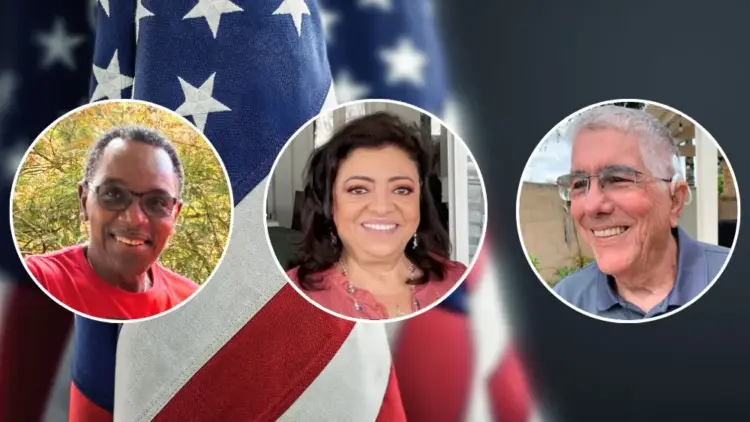
In recognition of Veterans Day, the Hearing Loss Association of America (HLAA) is shining a light on the profound impact of hearing loss through the personal journeys of three veterans within its community. The HLAA works extensively to bridge the gap for veterans grappling with auditory damage by providing educational resources, objective information regarding assistive technologies, and peer-to-peer support through initiatives like the Veterans Across America Virtual Chapter (VAAVC). To better understand the reality of living with service-related auditory injuries, three HLAA chapter members recently shared their personal stories of diagnosis, adaptation, and community leadership.
Miryam Fernandez: Breaking Barriers in the Military and Beyond
For Miryam Fernandez, now 69, a path of independence and breaking barriers began long before she realized the toll her service would take on her hearing. Born in Peru, Miryam and her family emigrated to Southern California in 1962 when she was five years old. Growing up as a young Latina girl in a strict, traditional household, she harbored a fierce sense of independence. When an Air Force recruiter visited her high school, she decided to enlist, serving from 1975 to 1979 and achieving the rank of Airman First Class within the Air Force Academy Security Police Squadron in Colorado Springs.
Although her initial recruitment training was focused on clerical work, her assignment shifted once she arrived at the Academy, where she trained and served as a security police officer. Following her four-year enlistment, Miryam completed her college education and embarked on a career as an elementary school teacher in Long Beach and Los Angeles.
Years after receiving her discharge, Miryam began experiencing severe hearing difficulties. Medical professionals initially diagnosed her with severe sensorineural hearing loss but informed her that intervention was not a viable option for the 75% hearing loss in her left ear, operating under the long-held medical assumption that auditory nerves cannot regenerate. Decades later, however, the VA formally determined that her condition was directly linked to noise exposure during firing practice while in the military.
The primary treatment offered through the VA consisted of standard hearing aids. Yet, these devices failed to solve her most pressing challenge: distinguishing speech clearly amid background noise. Consequently, she rarely wore them. As she has aged, however, her natural hearing has gradually declined further, leading her to rely on the aids more frequently in loud environments. She remains hopeful that ongoing technological advancements will eventually produce devices capable of delivering significantly higher speech clarity for users facing similar hurdles.
Miryam’s connection to the broader hearing loss community came serendipitously near the end of her teaching career. When a newly appointed school principal noticed her struggling to hear, he asked if she had ever received professional accommodations. Confused, she asked, "For what?" The principal explained her rights under the Americans with Disabilities Act (ADA) and supplied her with educational materials. This research ultimately led her to the HLAA Long Beach/Lakewood Chapter. Over the years, she has dedicated herself to the organization, serving four years as secretary before stepping into her current role as treasurer.
Reflecting on her journey, Miryam notes that discovering the HLAA opened up a vital network of resources and information. As a lifelong learner fascinated by technology, she finds deep satisfaction in exploring how modern tools can improve the daily lives of individuals with auditory impairments. In recognition of her extensive community service, she was honored in 2023 with the Jerry Stein Memorial Independent Living Award from the Disabled Resources Center in Long Beach, California. For fellow veterans navigating similar challenges, Miryam offers straightforward advice: "HLAA offers valuable support to veterans, so I highly recommend that you check it out."
Bobby Graves: From Denial to HLAA Chapter President
Bobby Graves, 70, experienced a similarly gradual path toward recognizing and addressing his service-connected hearing damage. A veteran of the United States Army who served on active duty from 1974 to 1982 and continued in the Reserves from 1982 to 1997, Bobby attained the ranks of E-6 Staff Sergeant and CW3 Chief Warrant Officer.
His auditory damage stems directly from his Military Occupational Specialty as a Data Communications Center Specialist. In this role, his daily working environment required him to destroy classified documents using large, noisy machinery while operating powerful mainframe computers on a continuous basis.
Upon leaving active duty, Bobby began experiencing difficulty understanding conversations with his spouse and others. Like many veterans proud of their service, he initially fell into deep denial regarding the extent of the problem. Even after transitioning into the Reserves—where his working conditions improved somewhat, though ambient noise remained at hazardous levels—he delayed seeking professional help. It was only after transitioning to civilian employment, where coworkers frequently pointed out his misunderstandings during conversations, and following persistent urging from his wife, that he finally filed a claim with the VA.
Bobby wore bilateral hearing aids for more than three decades before undergoing surgery in 2024 to receive a cochlear implant in his right ear. Throughout his evaluation and recovery process, he leaned heavily on the personal support provided by the HLAA Virginia Beach Chapter and the Virginia Hearing Loss Support Network. Recognizing the need for localized peer networks, Bobby and fellow veteran Thomas Blackman teamed up in 2025 to establish the new HLAA Virginia Peninsula Chapter, drawing guidance from Kenneth Reichert, membership coordinator for HLAA Virginia Beach.
For veterans hesitant to seek help, Bobby uses a practical analogy. If a car has a flat tire, a driver needs a spare to complete the journey; similarly, an individual with hearing loss needs assistive devices to navigate life fully. He encourages veterans to practice self-advocacy by informing conversation partners when they speak too softly, too quickly, or with unfamiliar accents. He also emphasizes the importance of utilizing modern technology, such as closed captioning on mobile devices, and connecting with dedicated support groups like the HLAA.
Ron Tallman: Combat Veteran Thrives with Cochlear Implants
For Ron Tallman, 75, a 23-year career in the United States Navy culminated in profound hearing loss that ultimately reshaped his retirement years. Retiring as a Lieutenant Commander, Ron served extensively on the USS Savannah in Virginia, across the Mediterranean Sea region, and alongside the U.S. Pacific Fleet in support of the Vietnam War, concluding his naval career stationed at the Naval Air Station at Barbers Point in Hawaii.
Ron comes from a family of six brothers, all of whom served in the military in some capacity and currently experience varying degrees of hearing loss, despite neither of their parents having a history of the condition. Ron’s specific auditory trauma traces back to his time aboard the USS San Bernardino, where he served as a sound-powered phone talker stationed just feet away from the Captain. Positioned roughly 12 feet from the ship’s 3-inch 50-caliber gun turrets without adequate hearing protection, he absorbed years of concussive sound waves.
His diagnosis arrived during his routine naval retirement physical in January 1992. When a medical officer informed him of significant hearing loss in his left ear, Ron initially dismissed the finding, asserting that his hearing was fine. The doctor correctly warned him that the impairment would worsen with age. Four years later, Ron acquired his first set of hearing aids, marking the beginning of a 15-year period of managing his condition with traditional bilateral devices.
The turning point came unexpectedly one morning when he woke up, walked into his kitchen to make coffee, and found he could no longer hear his dogs greeting him. Even after inserting his hearing aids, the ambient sounds remained indecipherable. An evaluation by an ear, nose, and throat specialist revealed that his speech understanding had plummeted to just 7% in a clinical setting. Following comprehensive diagnostic testing, he was cleared as a candidate for cochlear implants, receiving his right-side implant in December 2013 and his left-side implant in July 2014.
The transition back to functional hearing transformed Ron’s daily existence, enabling him to reconnect with his wife’s voice, converse fluently with his children, regain his independence, and engage deeply with the HLAA. Shortly before receiving his first implant, Ron joined the organization and attended his first national convention in St. Louis in 2015, where he experienced firsthand the impact of barrier-free communication through hearing loops and Communication Access Realtime Translation captioning.
Now serving as president of the HLAA East Valley Chapter in Phoenix, Arizona, Ron remains a vocal advocate for technological innovation. He notes that modern advancements allow individuals with hearing loss to talk on the phone, enjoy music, participate effortlessly in video conferencing, and engage with media without restriction, proving that today’s technology is constrained only by a lack of awareness.