TUZLA — In an era where healthcare paradigms are shifting from purely clinical treatments toward comprehensive wellness models, academic institutions across Europe are taking a leading role in redefining the boundaries of medicine and social welfare. Recently, the University of Tuzla served as the virtual host for a significant international symposium titled "Holistic approach to health — a trend in the 21st century." Held online via Zoom, the event brought together academics, researchers, partner organizations, and students from across the continent to examine innovative methodologies aimed at improving the quality of life and overall well-being of individuals with diverse support needs, with a distinct and necessary emphasis on persons with disabilities.
The symposium was organized and spearheaded by Professor Vesna Bratovčić, Vice-Rector of the University of Tuzla, whose ongoing academic and administrative leadership has consistently championed inclusive practices in higher education and public health. The digital gathering transcended geographical boundaries by welcoming a special delegation of guest students hailing from Munich, Germany. For these visiting students, the symposium offered a unique and immersive introduction to cutting-edge tools, therapeutic methods, and modern frameworks developed within various transnational projects dedicated to holistic health. Rather than viewing health merely through the traditional lens of the absence of disease, the participants explored how physical, mental, emotional, and social dimensions interconnect, creating a multi-faceted approach particularly vital for empowering marginalized populations.
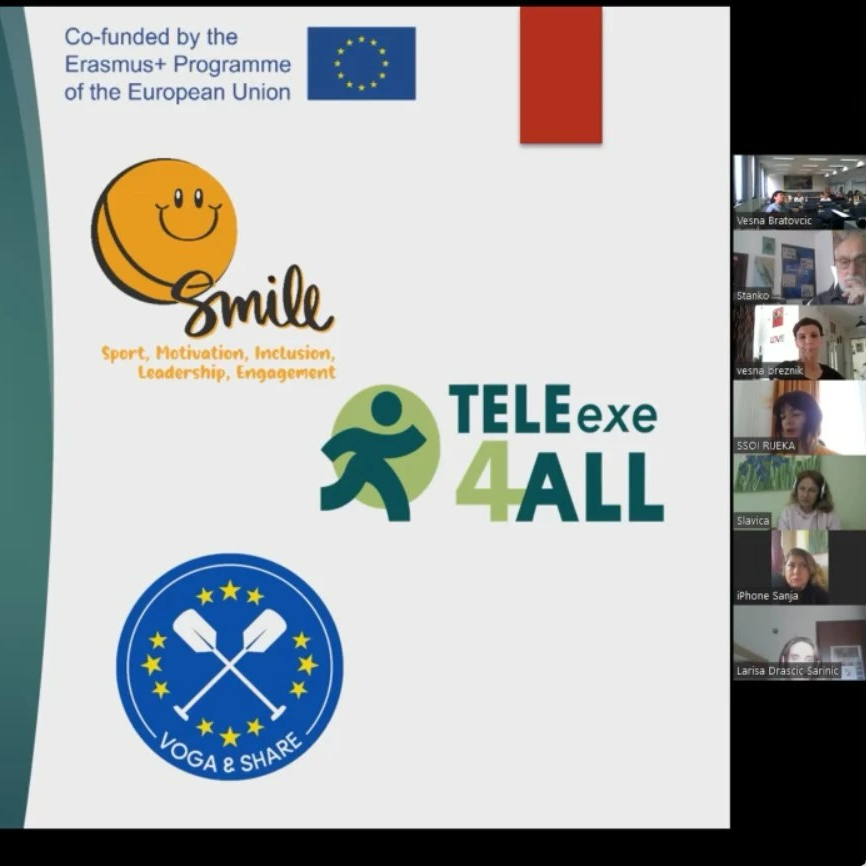
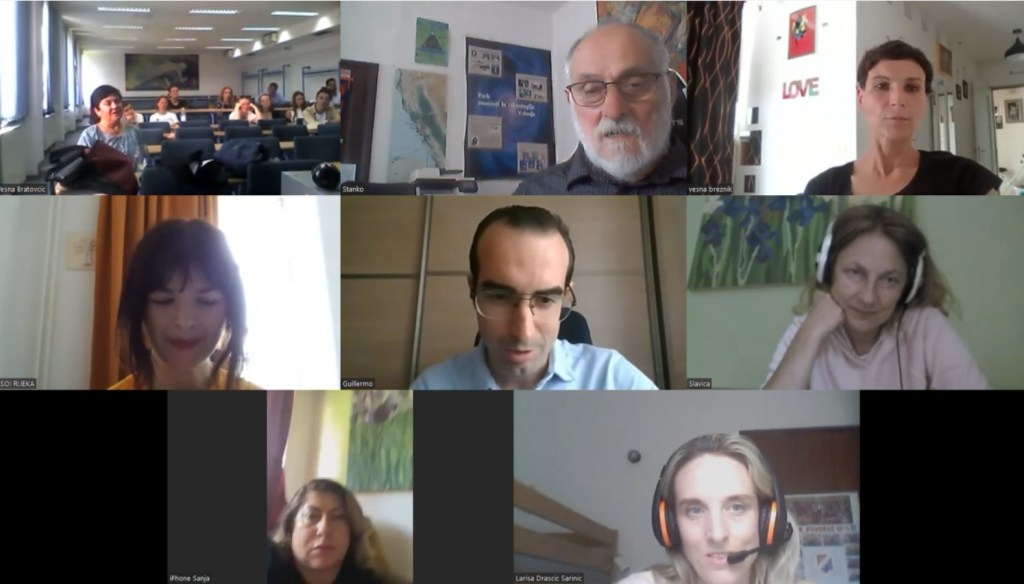
The academic breadth of the symposium was further enriched by the active participation of international representatives from partner organizations spanning Croatia, Spain, and Slovenia. These delegates took the virtual stage to present their latest empirical research findings, practical insights, and institutional strategies cultivated through years of collaborative work. The diverse perspectives shared by the delegations highlighted the pressing need for cross-border cooperation in tackling systemic barriers that individuals with disabilities frequently face within standard healthcare, educational, and social frameworks.
A central highlight of the symposium was the formal presentation of the #SMILE project, an ongoing initiative co-funded by the European Union’s #ErasmusPlus program. The project was introduced to the broader audience as a benchmark of good practice by its Croatian partner organization, the Rijeka sports association for persons with disabilities. The inclusion of the SMILE project on the symposium’s agenda underscored the critical bridge connecting academic theory, international policy, and grassroots community action, demonstrating how sports and physical engagement can serve as powerful catalysts for social inclusion and holistic health.
The #SMILE initiative—an acronym standing for Sport, Motivation, Inclusion, Leadership, and Engagement—represents an ambitious European effort designed to analyze and reshape the fundamental link between athletic participation and social inclusion. Operating on the premise that traditional sporting structures often fail to accommodate diverse abilities, the project approaches inclusion from an innovative and non-traditional angle. Specifically, it focuses on ensuring meaningful international participation in sporting activities for individuals living with intellectual disabilities and/or mental health challenges, populations that have historically been underserved or excluded from mainstream athletic and recreational programs.
Beyond the immediate physical and psychological benefits of physical activity, the SMILE project actively contributes to deepening the societal integration of people with intellectual disabilities. By facilitating their involvement in structured, international sporting contexts, the initiative works to shift public perceptions, empowering participants to recognize and claim their fundamental rights as European citizens. Among these foundational entitlements is the right to freedom of movement and residence within the European Union—a principle enshrined in European law that guarantees citizens the ability to move freely across member states.
The philosophy underpinning the SMILE project asserts that European rights must be universally applicable, including the commitment by the European Union and its member states to ensure that persons with disabilities possess a genuine, enforceable right to freedom of movement on an equal basis with others. This high-level policy objective was not merely discussed in abstract theoretical terms during the symposium; rather, it was grounded in tangible, real-world execution. Organizers highlighted a landmark international sporting event held under the SMILE banner in April 2023, which was meticulously designed and executed to provide participants with intellectual disabilities a direct, lived experience of free movement, independent travel, and cross-border community integration.
Through the synergy of academic insights shared by the University of Tuzla, the international contributions from experts in Croatia, Spain, and Slovenia, and the practical implementation demonstrated by initiatives like the SMILE project, the symposium successfully painted a forward-looking picture of 21st-century healthcare. By placing individuals with disabilities at the center of the dialogue on holistic wellness, the event reinforced the reality that true health equity requires a commitment not only to medical innovation, but to social justice, full citizenship, and inclusive mobility across Europe.