In classrooms and homes around the world, mindfulness has long been championed as a reliable tool for inducing calm, reducing stress, and fostering relaxation. However, a growing body of educational and developmental insights suggests that the practice of turning one’s attention inward to anchor in the present moment offers a far more profound cognitive benefit. Experts note that mindfulness plays a critical and catalytic role in sharpening executive functioning skills, providing a promising pathway to support children and teenagers who require an extra developmental boost in areas such as sustained attention, self-control, and working memory.
As educators, parents, and adolescent specialists continually seek evidence-based strategies to foster student success, understanding the intricate link between mindfulness and brain-based cognitive abilities has become increasingly vital. By integrating simple, intentional mindful practices into daily routines, adults can help young people activate their thinking brains, navigate complex challenges, and achieve their long-term goals.
The Link Between Mindfulness and Executive Functioning
Executive functioning skills serve as the foundational, brain-based command center that individuals rely upon to plan, initiate and complete tasks, manage time efficiently, and work through obstacles. People utilize these cognitive abilities every single day, frequently without conscious awareness. When executive functioning skills are robust, individuals deploy them seamlessly to reach personal and academic objectives. Conversely, when these capacities are under-developed or overwhelmed, everyday tasks can become monumental hurdles.
Practicing mindfulness has been consistently shown to strengthen several distinct executive functioning processes. At a neurological and behavioral level, this relationship is remarkably intuitive. When an individual achieves a state of calm, the "thinking brain"—primarily associated with the prefrontal cortex—is activated and brought online. This physiological shift empowers learners to make more deliberate choices, concentrate with greater efficacy, and apply rational problem-solving techniques to stressful or demanding situations.
Because mindfulness functions as a simple, meaningful, and engaging activity suitable for children and young adults across a wide developmental spectrum, educators and caregivers are increasingly viewing it as a worthwhile, evidence-based addition to the daily schedule. Examining how mindfulness transforms these cognitive mechanisms reveals clear pathways for implementation.
Focus and Attention
Attention is fundamentally defined as the capacity to concentrate mental energy on a specific person, task, or abstract idea for a designated period. Children and teenagers draw upon attention skills in virtually every aspect of daily life, ranging from engaging in a thoughtful, reciprocal conversation with a peer to maintaining deep focus while completing a complex mathematics assignment.
Mindfulness exercises serve as direct training regimens for focus and attention. By dedicating time to concentrate exclusively on the rhythm and sensation of breathing, an individual actively trains the mind to anchor itself firmly in the present moment. Throughout this process, it is entirely natural for the attention to drift toward extraneous thoughts or external stimuli. The core mechanism of growth occurs not in the absence of distraction, but in the deliberate act of recognizing that drift and gently returning the focus to the breath. Over time, this repetitive cycle strengthens both foundational attention skills and the overall mindfulness practice.
Self-Control
Self-control represents the critical cognitive ability to pause and think critically before executing a decision. It heavily relies on inhibitory control, which allows an individual to halt an automatic impulse rather than acting purely on immediate instinct.
Mindfulness fundamentally supports the development of self-control by providing structured, low-stakes practice in pausing before reacting. As individuals engage in regular mindfulness, this pause response becomes stronger and more accessible during high-pressure scenarios. Consider a teenager walking down a school hallway who notices a decorative balloon taped to a locker for a classmate’s birthday. An immediate, unfiltered impulse might prompt the teen to pop the balloon. However, through consistent mindfulness practice, that same young person possesses a heightened capacity to pause, take an intentional breath, acknowledge the impulse, and let it pass without reacting destructively. The implications of this capacity are vast, as robust self-control enables optimal decision-making for both immediate contexts and long-term outcomes.
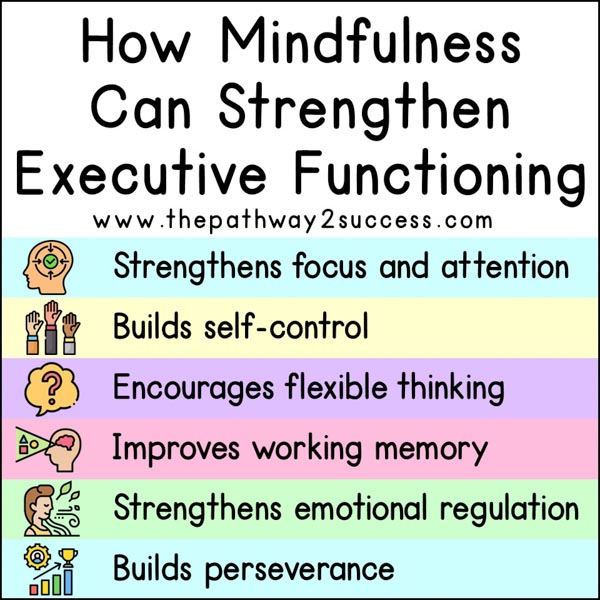
Emotional Regulation
Emotional regulation is the dynamic ability to comprehend and manage one’s daily emotional landscape. This capacity forms the bedrock for how individuals feel, think, and act throughout the day, dictating their resilience in the face of interpersonal and academic friction.
Engaging in mindfulness practices equips individuals to cultivate a heightened awareness of their emotional states without becoming overwhelmed or consumed by them. This enhanced self-awareness creates a stable foundation for processing feelings constructively. For instance, if a teenager experiences intense disappointment upon discovering that a preferred peer was not assigned to their collaborative group, the immediate reaction might involve visible frustration, crying, or emotional withdrawal. By utilizing a few mindful deep breaths, the teen can recenter to a calmer physiological baseline. From that grounded state, the student is far better equipped to engage in rational problem-solving and determine a healthy, productive path forward.
Working Memory
Working memory functions as the cognitive workspace that allows individuals to hold, manipulate, and utilize complex information simultaneously while actively engaged in a task. People deploy working memory across diverse academic and social scenarios, such as comprehending multi-step verbal instructions, retaining narrative details within a complex text, and solving multi-phase mathematical equations.
Regular mindfulness practice contributes to the reduction of mental clutter and cognitive overload. By intentionally clearing out extraneous thoughts and background mental noise, individuals create mental space for the critical information required in the immediate present. A practical illustration of this dynamic involves a student attempting to follow intricate morning instructions provided by an instructor. Instead of experiencing paralysis from a racing mind, a student who has engaged in a brief morning mindfulness exercise approaches the task with a clearer cognitive slate, positioning them for an organized and successful start to the school day.
Flexible Thinking
Flexible thinking represents the cognitive capacity to evaluate a single situation from multiple perspectives, consider alternative viewpoints, and gracefully adapt one’s mindset when confronted with novel or changing circumstances.
Mindfulness naturally fosters flexible thinking by encouraging a stance of non-judgmental acceptance toward thoughts, feelings, and experiences. Through consistent practice, individuals learn to acknowledge and accept reality as it is, even when current conditions are challenging, unfavorable, or misaligned with personal expectations. For example, when a young adult receives rigorous, critical feedback on an essay that required significant time and effort, the initial emotional response might be defensive. Flexible thinking, supported by mindfulness, allows the writer to process the feedback objectively without personalizing the critique, thereby opening clear pathways for academic growth and intellectual development.

Perseverance
Perseverance is the steadfast ability to maintain effort and stick with a challenging task despite encountering obstacles, fatigue, or frustration. It is an indispensable skill required to work through difficulties and ultimately achieve meaningful long-term goals.
During any mindful practice session, maintaining focus can present a genuine challenge. The mind naturally attempts to wander, prompting distractions and urges to abandon the exercise in favor of more immediately stimulating activities. This experience is universal and normal. The profound developmental value lies in the reality that by sustaining mindfulness practice over time, individuals are actively training their capacity to endure discomfort, resist the urge to quit, and stay the course. This process is perseverance translated into a direct, actionable cognitive exercise.
Mindfulness Strategies for Kids and Teens
Before introducing mindfulness initiatives to children and adolescents, educators and caregivers benefit from spending intentional time discussing the underlying rationale and practical benefits. Communicating clearly with learners that mindfulness is a practical tool designed to help them feel and perform at their absolute best establishes immediate buy-in. It can be framed as a reliable technique to

cultivate composure and steady nerves before delivering a public speech in front of a classroom, or as an effective method to center focus and alertness prior to participating in an important athletic competition. Emphasizing that these techniques apply universally across all areas of life helps normalize the practice.
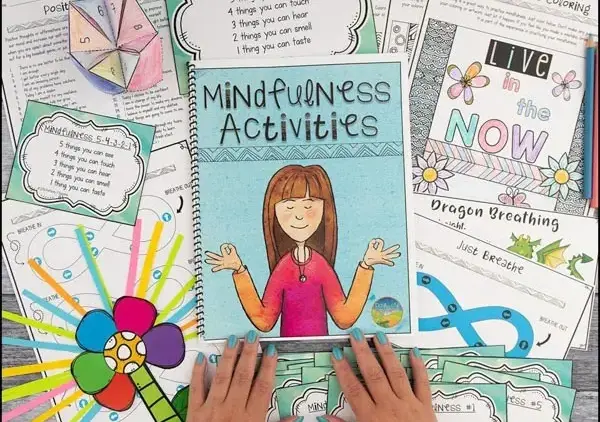
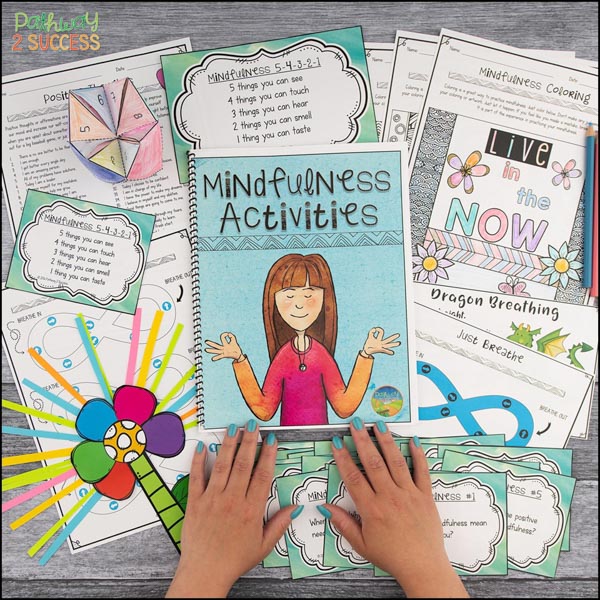
To implement these concepts, adults often utilize structured mindfulness lessons and hands-on activities specifically tailored for children and young adults. Comprehensive resource sets frequently incorporate guided lessons, interactive craft projects, discussion prompts, visual posters, and activity sheets designed to be integrated seamlessly into daily routines and repeated throughout the academic year.
Literature also serves as an invaluable medium for exploring mindfulness. Picture books and narrative texts provide accessible entry points for discussions among older children and teenagers, allowing them to examine emotional regulation and self-awareness through relatable characters and scenarios.
At the core of these methodologies is mindful breathing. Learning to direct focused attention exclusively onto the physical sensation of breathing serves as the foundational cornerstone of all mindfulness work. This portable strategy can be utilized by learners independently in any environment to anchor themselves firmly in the present moment. Practitioners begin by assuming a comfortable seated posture, taking slow, deliberate breaths in and out, and closely observing the physical sensations of air moving through the body. When the mind inevitably wanders, the practice simply involves gently escorting the attention back to the breath.
Once foundational breathing is established, educators frequently expand into more engaging variations, such as structured shape breathing exercises or creative visualization prompts. These techniques function simultaneously as mindfulness interventions and effective cognitive reset breaks between demanding academic tasks.
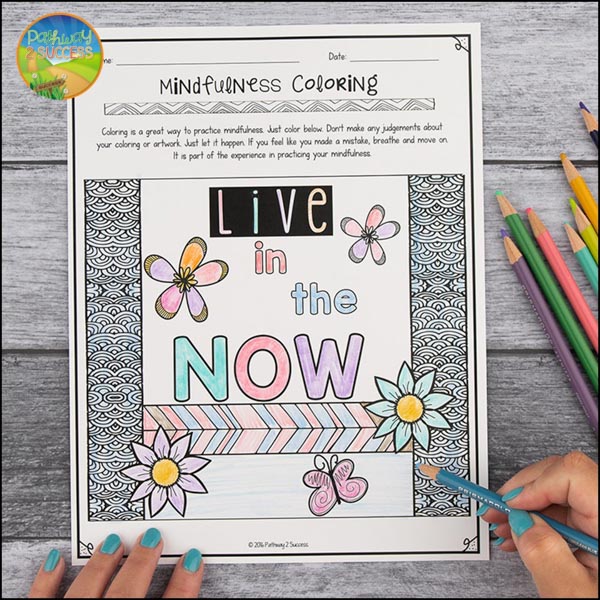
Additional modalities include mindful coloring, which allows individuals to channel all of their attention into the immediate sensory experience of applying color without the pressure of artistic perfection. Similarly, integrating gentle stretching and foundational yoga movements pairs physical awareness with controlled breathing to ground learners in their bodies.
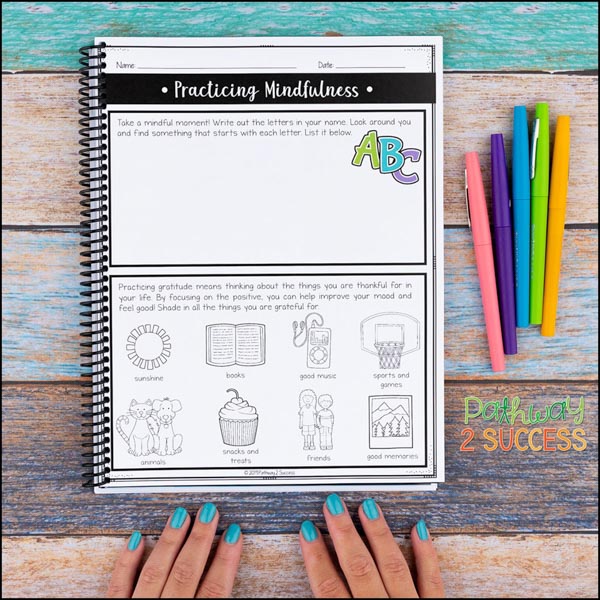
Mindful journal writing offers another productive avenue, inviting students to respond to reflective prompts, engage in guided self-reflection, or participate in free writing to process internal thoughts at the start of the day. Extending these practices to the outdoors leverages natural environments, where walking, observing wildlife, or noticing weather patterns provides boundless sensory anchors for attention.
Mindful affirmations—positive phrases recited slowly in tandem with deep breathing—provide an empowering routine to establish early in the morning, with students keeping portable reminder lists accessible in binders or lockers. Finally, mindful observance exercises invite learners to select a simple everyday object, such as a pen or a water bottle, and dedicate complete sensory attention to analyzing its colors, textures, and forms. Through these diverse, evidence-based approaches, youth systematically strengthen the cognitive muscles underlying executive functioning, setting the stage for lifelong self-regulation and success.