In classrooms and homes around the world, adults are increasingly turning to a simple, time-tested practice to help children and teenagers navigate the complexities of daily life. While mindfulness has long been celebrated for its ability to foster calm and relaxation, emerging educational and developmental insights reveal a deeper connection: mindfulness plays a critical role in sharpening executive functioning skills. By helping kids and teens turn their attention inward to focus on the present moment, educators and caregivers can provide an extra boost in essential cognitive areas such as attention, self-control, and working memory.
Executive functioning skills serve as the foundational, brain-based command center that individuals rely on to plan, initiate tasks, manage time, and work through challenges. People use these abilities every single day, often without conscious thought. When executive functioning skills are strong, individuals utilize them seamlessly to reach personal and academic goals. However, when young people struggle in these areas, everyday tasks—ranging from organizing schoolwork to regulating emotions during a disagreement—can become overwhelming hurdles.
Recent educational frameworks emphasize that mindfulness acts as a powerful catalyst for strengthening these cognitive pathways. When an individual is calm, the "thinking brain" is fully activated, enabling more deliberate choices, heightened focus, and effective problem-solving. Because mindfulness is an evidence-based, adaptable strategy, educators and parents are exploring ways to weave mindful practices into the daily routines of youth across all age groups.
The Core Pillars of Executive Functioning and Mindfulness
To understand why mindfulness is so effective, experts break down its impact across several distinct cognitive domains.
Focus and attention represent the ability to sustain concentration on a person, task, or concept for a given period. Children and teens rely on attention skills for everything from engaging in thoughtful conversations to completing complex assignments. Mindfulness exercises directly train this muscle. By spending time focusing solely on breathing, individuals train their minds to anchor themselves in the present. When the mind inevitably wanders, the act of recognizing that drift and gently bringing focus back to the breath builds both attention span and mindfulness over time.
Self-control involves the capacity to pause and reflect before making a decision, utilizing mental inhibition to curb impulsive actions. Mindfulness provides a structured way to practice this vital pause. For example, a teenager walking past a decorated birthday locker might experience an immediate impulse to cause mischief, but regular mindfulness practice helps cultivate the internal space needed to acknowledge the impulse, take a breath, and let it go before reacting. This restraint carries profound implications for both short-term decision-making and long-term personal development.
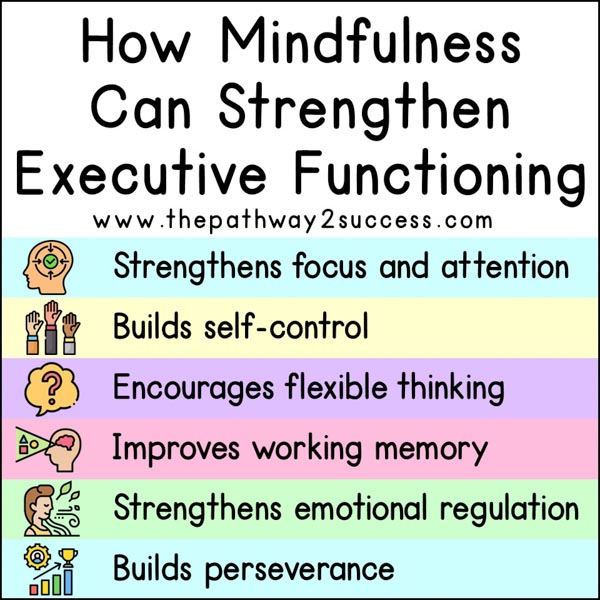
Emotional regulation, closely tied to self-control, is the ability to understand and manage daily emotions, laying the groundwork for how young people feel, think, and act throughout the day. Mindfulness encourages individuals to observe their feelings without becoming overwhelmed by them. Increased self-awareness helps defuse intense emotional reactions, allowing a student who is upset about being excluded from a group project to recenter, calm down, and pursue a constructive, healthy path forward rather than melting down or shutting down.
Working memory—the mental workspace used to hold and manipulate information simultaneously—is equally vital. People use working memory to follow multi-step instructions, retain story details, and solve math problems. Regular mindfulness practice reduces mental clutter, clearing away extraneous thoughts to create a cognitive "clean slate" for incoming information. A student who begins the morning with mindfulness is better equipped to process and retain a teacher’s complex instructions without feeling cognitively overloaded.
Flexible thinking and perseverance round out this cognitive toolkit. Flexible thinking allows individuals to view situations from multiple perspectives, consider alternative ideas, and adapt to changing circumstances with non-judgmental acceptance. When a young person receives critical feedback on an essay, flexible thinking prevents them from taking the critique personally, turning a potential conflict into an avenue for growth. Perseverance, meanwhile, is the capacity to stick with challenging tasks. Because maintaining mindfulness requires pushing through mental wandering and the temptation to quit, the practice itself serves as a daily exercise in resilience.
Implementing Mindfulness Strategies in Daily Routines
Before introducing mindfulness to children and teens, educators and parents often begin by discussing its practical benefits. Young learners respond well to explanations that frame mindfulness not as an abstract chore, but as a practical tool to help them feel and perform their best—whether they are finding calm before giving a public speech or centering themselves before an athletic competition.

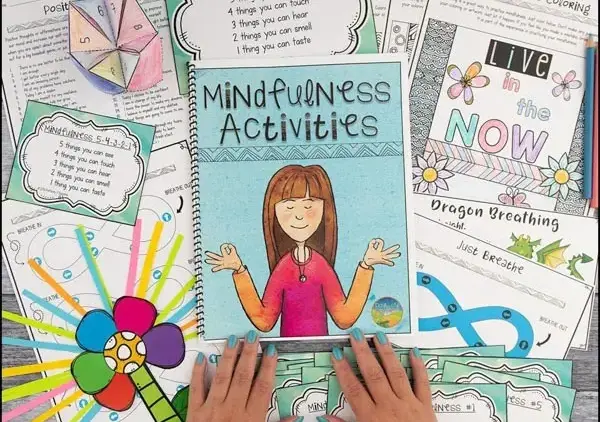
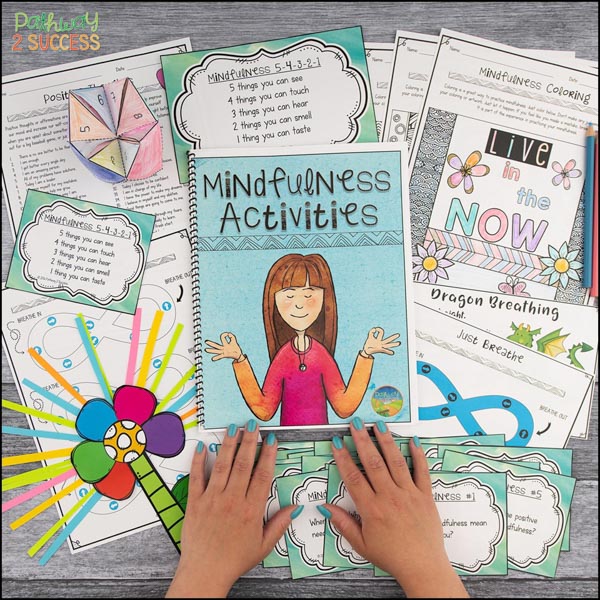
A wide variety of activities can be integrated into the day to support this development. Structured mindfulness lessons and social-emotional learning activities offer comprehensive approaches that include hands-on tasks, discussion cards, and creative projects. Similarly, integrating literature through picture books provides a springboard for meaningful conversations about focus and emotional awareness, proving effective for older students as well as younger children.
Foundational techniques such as mindful breathing remain central to the practice. By sitting comfortably and focusing on the physical sensations of inhalation and exhalation, learners build an accessible anchor they can use anywhere. Once basic breathing is established, educators often introduce engaging variations like shape breathing or imaginative exercises, which double as effective brain breaks between demanding academic tasks.

Other creative outlets, such as mindful coloring, allow students to channel their complete attention into a single artistic process without the pressure of perfection. Gentle movement through yoga and stretching combines physical awareness with controlled breathing, while journal writing encourages students to reflect on prompts and express their internal thoughts. Outdoor mindfulness takes advantage of natural environments—whether through a quiet walk, gardening, or observing wildlife—to give wandering minds a tangible focus.
Additionally, introducing mindful affirmations gives youth positive phrases to repeat during quiet moments or keep in their desks and binders as daily reminders. Mindful observance, which involves focusing intently on the physical properties of a common object like a pen or a water bottle, further sharpens the ability to direct full attention to the present moment. Through these diverse, evidence-based approaches, mindfulness continues to prove itself as an invaluable asset in strengthening the executive functioning skills that empower the next generation.