For millions of moviegoers, the simple weekend question, "Want to go see a movie today?" is met with immediate enthusiasm. But for individuals with hearing loss, that same question often triggers a complicated mental calculus. Going to the movies should be an immersive, relaxing experience for everyone, yet for a significant portion of the population, a trip to the local theater is historically fraught with uncertainty.
The primary barrier has rarely been a lack of desire to participate in popular culture, but rather the unreliable infrastructure meant to accommodate hard-of-hearing patrons. Historically, moviegoers relying on assistive technology had to ask whether personal captioning devices would be available at the box office. Even if devices were in stock, patrons faced further anxiety over whether the equipment was fully charged, properly synchronized, or mechanically functioning. All too often, the answer was no, turning a recreational night out into a frustrating ordeal.
That persistent barrier prompted a dedicated coalition of accessibility advocates across Virginia, including members of the Hearing Loss Association of America (HLAA), to push for a systemic and reliable solution. Their efforts culminated in the passage of House Bill 602, a legislative measure that mandates open-captioned movie screenings across the Commonwealth. Since taking effect on July 1, 2026, the law requires movie theaters operating five or more locations within the state to offer open-captioned showings for widely released films, opening the door for more residents to share the cinematic experience seamlessly with family and friends.
The impact of the legislation is deeply personal for families navigating hearing loss. Claire Fornsel, co-vice president of the HLAA Virginia Beach Chapter, understands the emotional toll of inaccessible entertainment venues firsthand.
"My husband Ken has hearing loss," Fornsel explains. "In the past, he would go along to movies he couldn’t hear, just because he loves me. Now, with the passage of the Virginia movie theater open captioning legislation, we can enjoy the entertainment together."
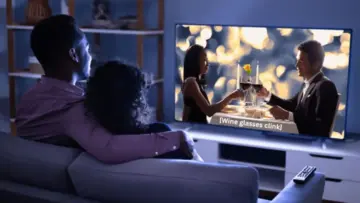
Unlike closed-captioning devices issued to individual patrons, which require specialized hardware that can easily be lost, broken, or feel awkward to use, open captions display dialogue, character names, and vital sound cues directly on the main movie screen. This design ensures that every member of the audience has access to the complete auditory landscape of a film without requiring extra gear.
In addition to expanding physical access, HB 602 addresses the logistical hurdle of public awareness. Under the new regulations, theaters must clearly label open-captioned viewings with an "OC" designation in their schedules and ticketing platforms. Furthermore, facilities are required to provide clear information regarding how patrons can request open-captioned screenings later in a film’s theatrical run.
Together, these changes empower individuals with hearing loss—as well as anyone else who simply prefers or benefits from open captioning—to make entertainment plans with the same baseline confidence as any other moviegoer. The legislation replaces historical uncertainty with a standard of inclusion, dignity, and equal access that proponents say is long overdue.
The path from a localized advocacy goal to state law involved a dedicated coalition of community leaders and lawmakers. The measure was championed by Delegate Phil Hernandez of the 94th District, who was approached in August 2025 by an accessibility advocate inspired by successful open-caption policies implemented in other jurisdictions. Hernandez, whose sister is deaf, readily embraced the legislative effort as a vital component of his broader commitment to making Virginia more accessible and equitable for all residents.
To craft an effective bill, Hernandez sought guidance and strategic support from Neil Snyder, the director of public policy for the HLAA, alongside specialized accessibility organizations including Access Virginia and the Virginia Department for the Deaf and Hard of Hearing (VDDHH). Armed with broad stakeholder input, the bill was officially introduced in January 2026. It moved swiftly through both legislative chambers, reflecting strong bipartisan agreement, and was signed into law on April 6, 2026, by Governor Abigail Spanberger.
The legislative success relied heavily on sustained grassroots mobilization by members of local HLAA chapters, including the Virginia Beach, Virginia Peninsula, and Greater Richmond branches. Among them was Kenneth Reichert, president of the HLAA Virginia Beach Chapter and a 30-year U.S. Navy veteran with service-connected hearing loss. Reichert spoke publicly about the urgent need for accessible moviegoing experiences during a community town hall event hosted by Delegate Hernandez.
Other HLAA members across the Commonwealth—including chapter leaders Angela Hill, Kathy Richter, Keith McAllister, Claire Fornsel, Richard Wiltse, Bobby Graves, and Larry Herbert—similarly engaged with state lawmakers, writing letters, making phone calls, and sharing personal stories to underscore the importance of the initiative. The resulting law stands as a testament to the influence of local advocates collaborating directly with lawmakers and community organizations to drive meaningful societal change.
The positive ripple effects of the new law extend far beyond individuals with clinical hearing loss. As Claire Fornsel’s experiences illustrate, spouses, friends, and family members who do not require captions themselves now reap the reward of sharing a cohesive, uninterrupted moviegoing experience with their loved ones.
"Imagine grandparents taking their grandchildren to see the latest Disney or Pixar film," Ken Reichert notes. "In the past, hearing loss might have made the outing frustrating or even impossible. With open-captioned screenings, the whole family can enjoy the film together without the need for specialized equipment."
Furthermore, educators and accessibility advocates point out that viewing media with captions reinforces literacy skills in school-age children, regardless of hearing ability, by creating a real-time bridge between spoken words and written text. English-language learners frequently rely on captions to strengthen language comprehension and vocabulary acquisition. Additionally, cultural shifts among younger generations mean that a growing demographic of viewers simply prefers watching video content with captions enabled at all times, making open-captioned screenings a universally popular amenity.
With the enactment of HB 602, Virginia joins a rapidly expanding national movement that includes Hawaii, Maryland, Washington, D.C., New York City, and Washington State, all of which have established open-captioning regulations for commercial cinemas. Each regional victory helps pave the way for additional states to evaluate and adopt similar standards.
For advocacy networks across the country, these legislative wins serve as a powerful reminder that significant public progress often starts when community members raise their voices and work collaboratively toward a shared vision of accessibility.
The fight for expanded access continues beyond Virginia’s borders. The Hearing Loss Association of America is actively tracking two pending bills concerning open captions in the Michigan and New York state legislatures. Advocacy groups are encouraging residents of those states to contact their respective representatives through digital action campaigns to support equitable access in local theaters.