The autumn calendar of wheelchair-accessible group tours across Europe has officially drawn to a close, marking another successful season for Wheelchair Travel. Over the past few months, it has been a profound joy to accompany more than 30 readers through some of the continent’s most captivating destinations. From soaking in the breathtaking vistas of the Swiss Alps to learning the art of crafting authentic Italian pasta in the heart of Sicily, these journeys offered unforgettable experiences for everyone involved.
Even as these group adventures wrap up, preparations are already underway for the future. Looking ahead, a brand-new group excursion to Scotland is scheduled to open for booking next week, promising travelers another deeply immersive and accessible itinerary. However, the road leading to the end of this travel season was far from straightforward, punctuated by unexpected hurdles, family emergencies, transit hiccups, and broader industry challenges regarding accessibility.
Facing the Unexpected and a Family Emergency
Managing a packed schedule of back-to-back group tours alongside independent side trips typically requires being away from home for well over a month. Midway through the autumn deployment, however, normal routines came to an abrupt halt following an urgent phone call. Back home, a family medical emergency required an immediate and unexpected surgery for my son, Robert.
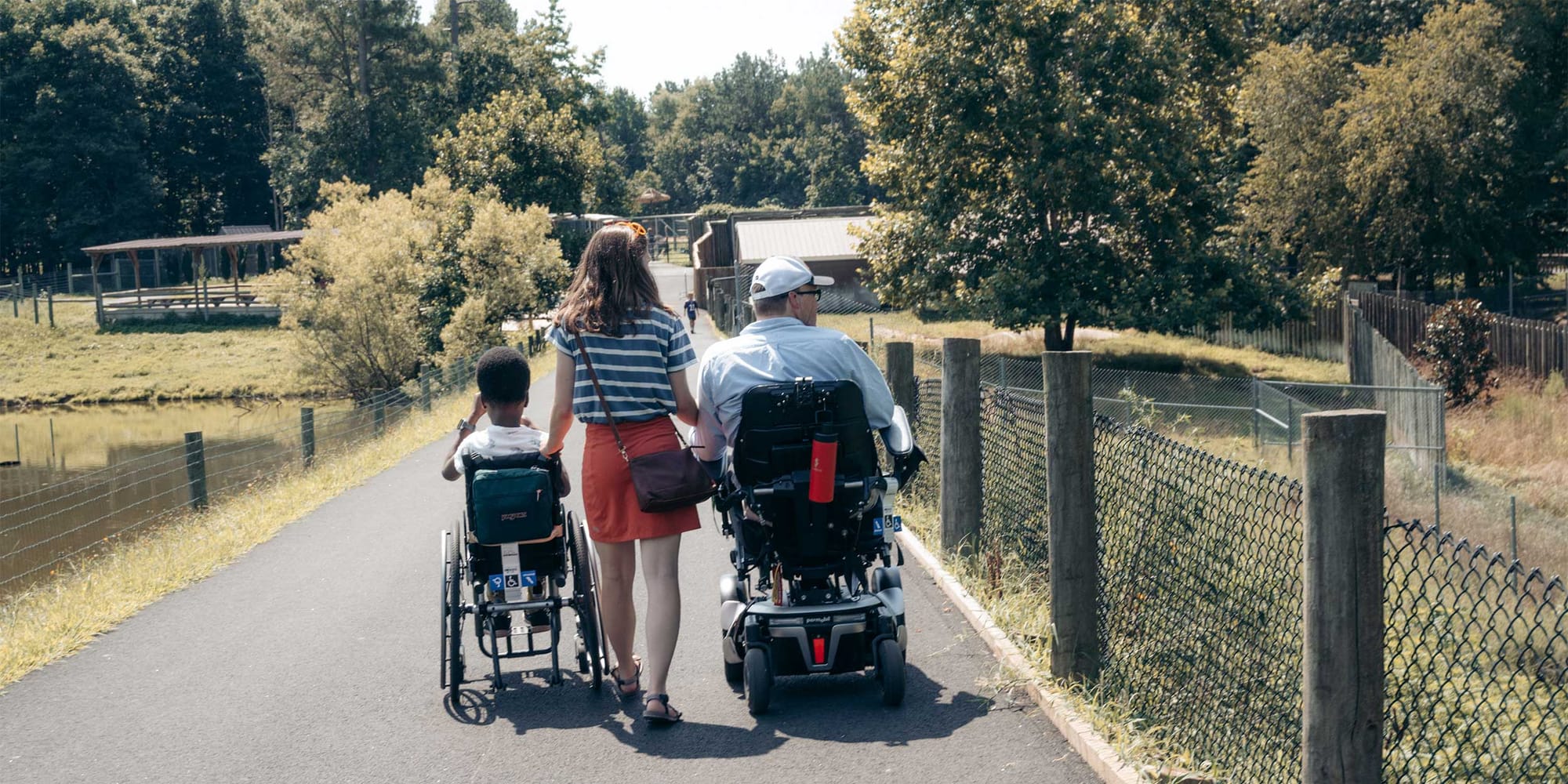
Within our family, a strong commitment to personal privacy—especially regarding health matters—remains paramount. Because any narrative belongs entirely to Robert to share or keep private, details of the medical situation will remain private. What can be said is that the procedure was a complete success. Robert displayed remarkable strength and resilience throughout the ordeal, emerging in a way that commands deep admiration. Stevie and I could not be prouder of him.
Naturally, upon receiving the news, travel plans were instantly rearranged to rush home and stand by my family. After spending roughly a week at home to ensure everything was stable, I returned to Europe to resume the scheduled itinerary. The journey picked up in London, England, where another form of emergency awaited. While this disruption has temporarily delayed regular work schedules, future newsletters will catch up on the backlog. There remains a wealth of stories to share from multiple European excursions, but immediate attention turns to experiences in London and an exploration of an unfamiliar German city.
Temporarily Trapped in London
To rejoin the European leg of the trip, I booked a flight from the United States to London with the intention of immediately boarding a Eurostar train bound for Cologne, Germany. Having never visited Cologne before, anticipation for the exploration was high. Unfortunately, those plans quickly unraveled.
Approaching the Eurostar check-in desk at London’s King’s Cross-St. Pancras Train Station, a routine check of my bag for my passport revealed a startling reality: it was missing. A frantic search ensued, covering every accessible inch of my bags, the crevices of my power wheelchair, the station restrooms, and the nearby café where I had recently purchased a coffee. With no passport found, the only logical option was to retrace my steps back to Heathrow Airport.
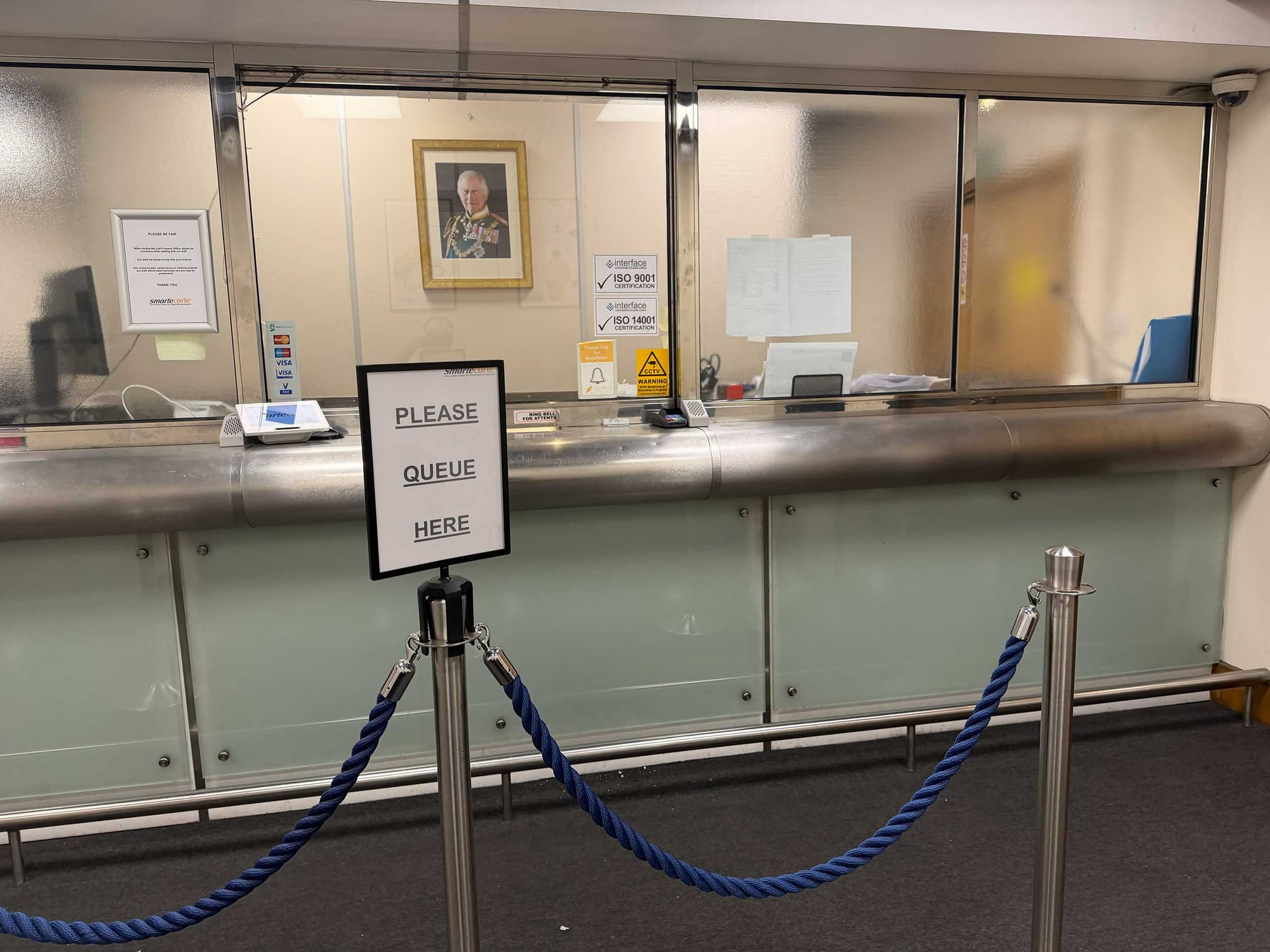
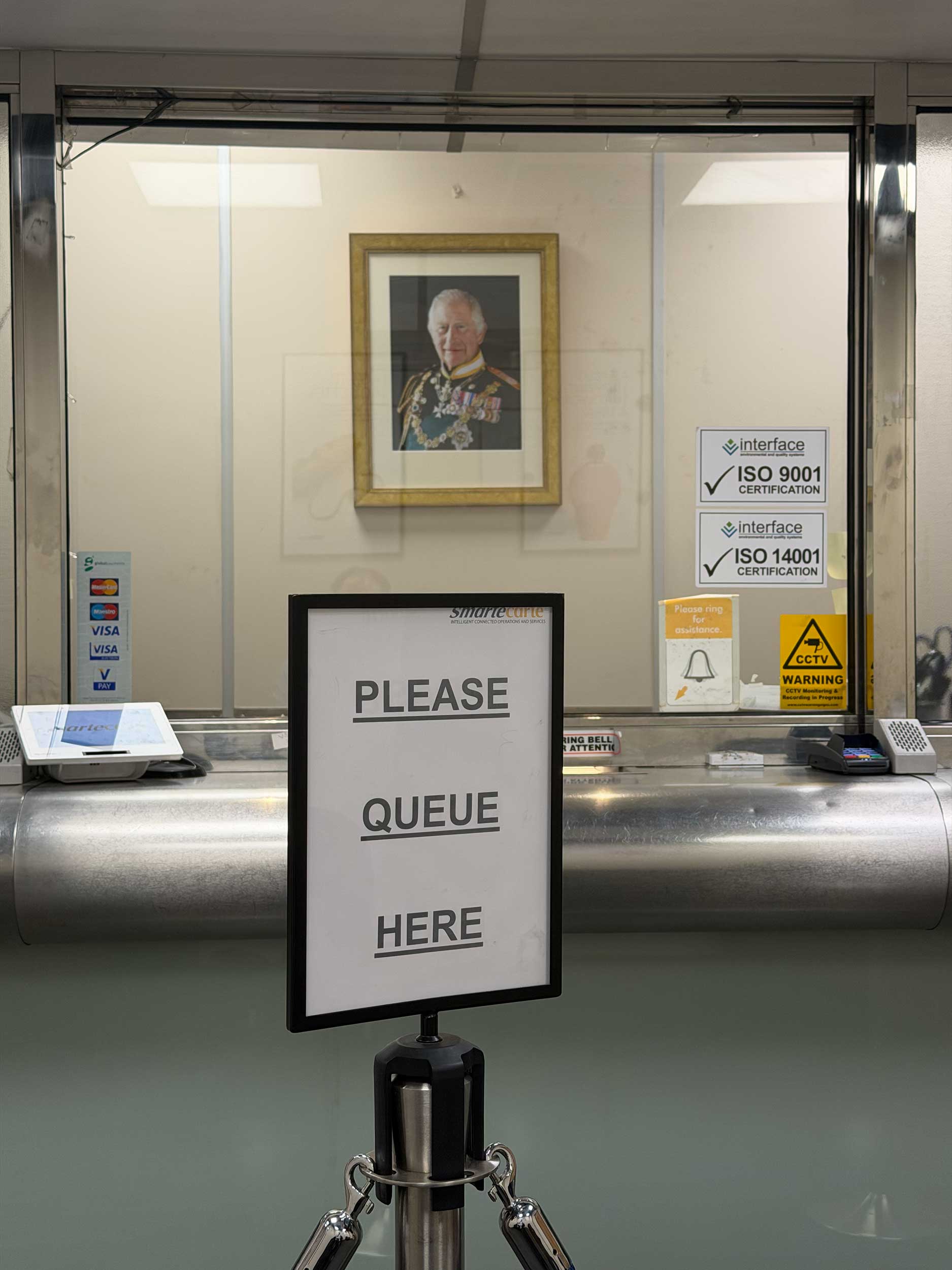
Lost item reports were immediately filed with both the airport authorities and Transport for London. Standing in the queue at Heathrow’s lost and found office, staring silently at a portrait of King Charles on the wall, the bleak news was finally delivered: no one had turned the document in. Humor can often be found in dark moments, leading to the fleeting thought that His Majesty was personally judging and quietly laughing at the unfolding misfortune.
Because it was a Saturday, timing could not have been worse. The United States Embassy remained closed until Monday, and even if open, they could only issue an emergency passport that would not clear French border controls—a critical hurdle since Eurostar passengers departing London undergo French immigration processing before boarding.
Fortunately, Eurostar maintains a remarkably customer-friendly ticket policy. Passengers are permitted free changes with zero exchange fees up to one hour prior to departure, remaining responsible only for any potential fare differences. Leveraging this policy allowed my departure time to be adjusted multiple times free of charge, ultimately shifting the travel date entirely. Bravo to Eurostar for such a flexible approach.
With the realization setting in that the journey to Cologne was missed and an unplanned multi-night stay in London loomed, a final desperate attempt was made. Approaching a manager at the American Airlines check-in desk seemed futile since the passport had clearly been used at UK immigration upon arrival, but killing time opened the door for a miracle. Roughly twenty minutes later, the manager returned with a familiar document in hand, asking if I was Mr. Morris.
The passport had been dropped near the baggage carousel. Someone noticing the boarding passes tucked inside had handed it directly to an American Airlines agent, who had not yet routed it through official lost-and-found channels. While recounting the tale is embarrassing, it serves as a stark reminder that even seasoned travelers can make amateur mistakes. Securing vital documents in a designated, safe location is a non-negotiable rule. Becoming temporarily stateless, homeless, and unidentifiable is an exceptionally uncomfortable experience to endure.
Door Ajar on the Eurostar and a Bad Merger
Following a restful night in London and clutching the recovered passport tightly, the journey resumed the following day via Eurostar to Cologne’s Central Station, with a seamless connection through Brussels, Belgium.
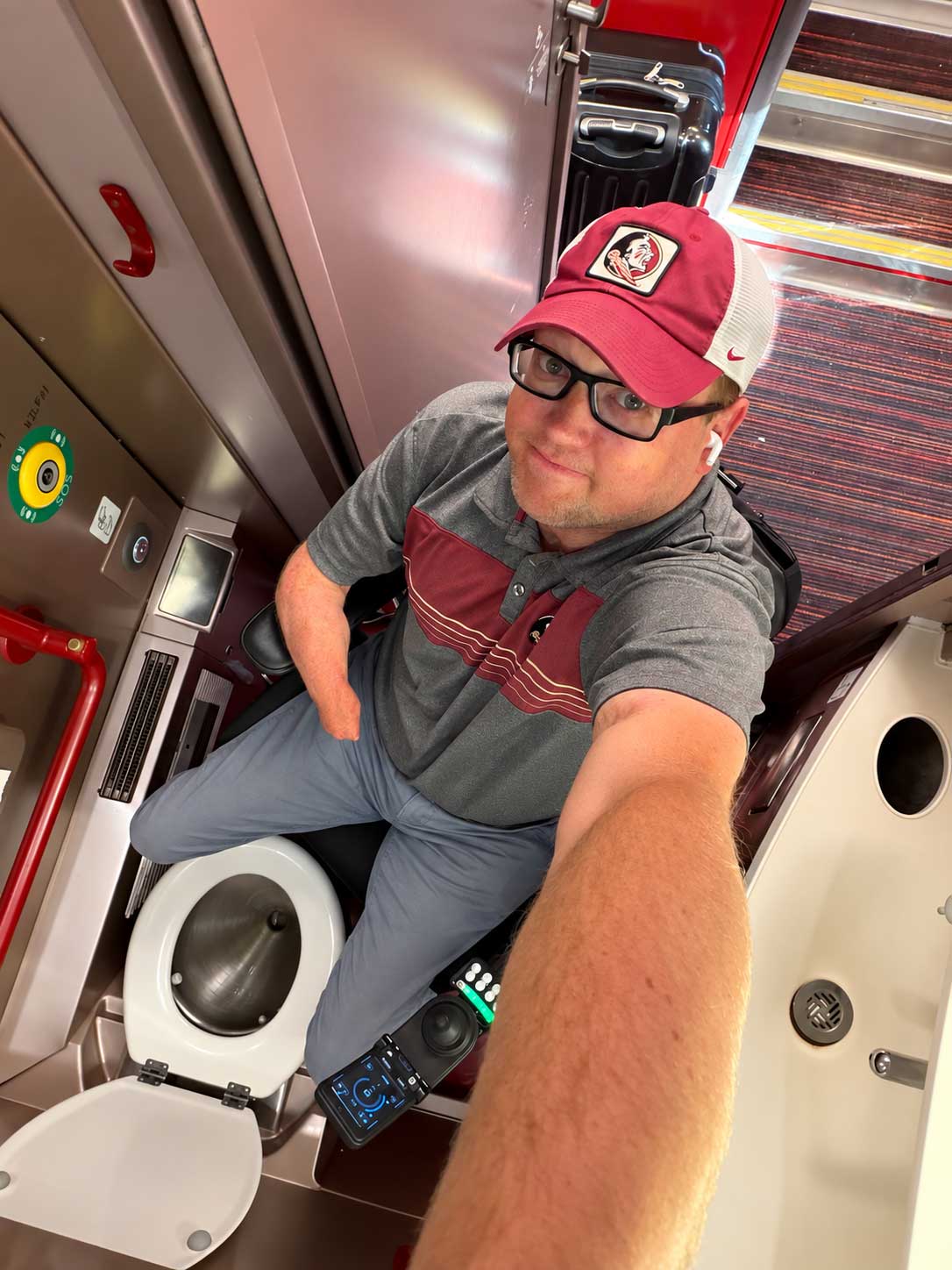
The first leg of the trip proceeded smoothly. The Eurostar train operating between London and Brussels offered exemplary accessibility features, including a spacious onboard bathroom capable of comfortably accommodating a large power wheelchair. Sadly, that high standard of accessibility failed to carry over to the connecting train from Brussels to Cologne.
In 2023, Eurostar and Thalys finalized a major high-speed rail merger, combining two of Europe’s largest operators. While European high-speed trains generally excel in accessibility, the specific TGV trainsets inherited from former Thalys routes—such as the Brussels-to-Cologne corridor—fall woefully short. The corridors are exceptionally cramped, the designated accessible cars feature only a single wheelchair space, and the bathrooms are physically too small for a wheelchair to enter.
For travelers accustomed to the highly accessible Eurostar services running between London, Amsterdam, Brussels, and Paris, encountering these inaccessible trainsets comes as a jarring shock. The failure to maintain a consistent standard of accessibility across all unified routes remains a regrettable blemish on the Eurostar brand.
Trainspotting and Railbuffing in Wuppertal, Germany
The initial delay in London compressed the schedule, making an extended stay in Cologne impossible upon arrival. Instead, a swift transfer to a Deutsche Bahn train initiated a 45-minute transit to a small German city that had long occupied a prominent spot on my personal travel bucket list.
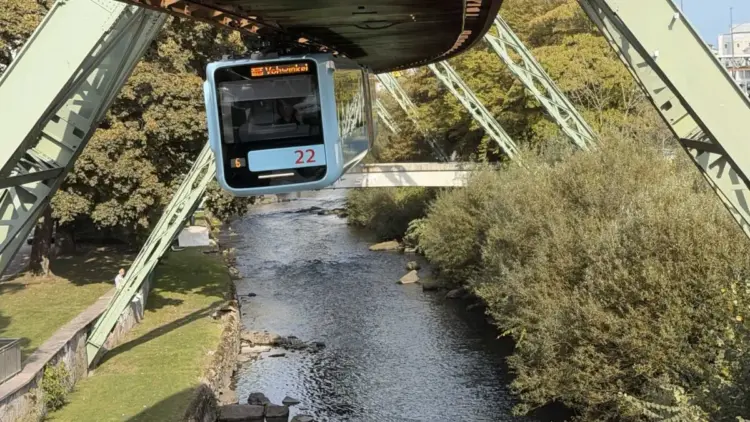
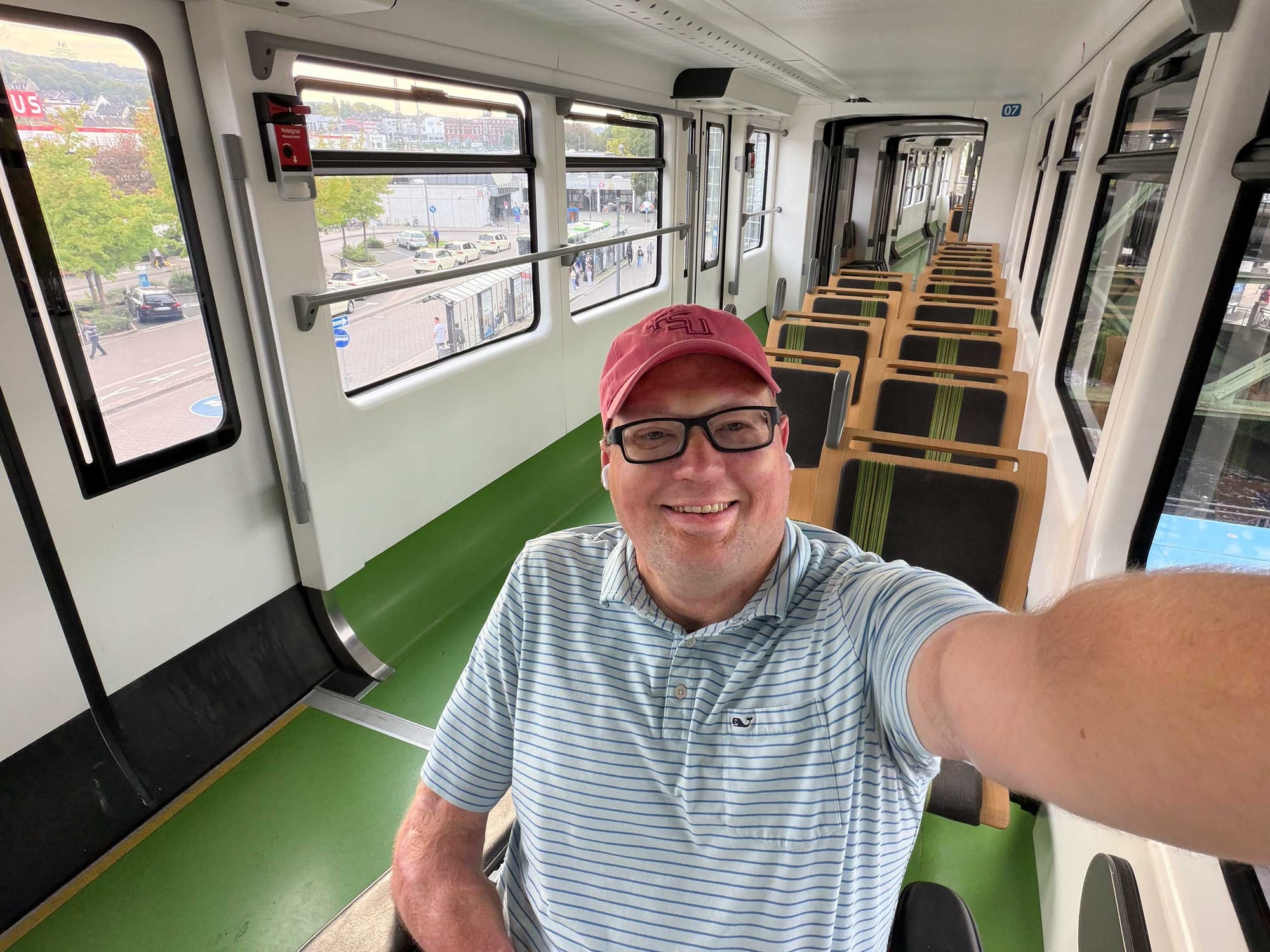
Wuppertal has experienced an increase in tourism lately, yet it remains relatively unknown to international travelers. Its crown jewel is the historic Schwebebahn, an iconic suspended monorail system that celebrated its 125th year of continuous operation earlier this year. Historically, the municipality served as an industrial powerhouse and holds the distinction of being the birthplace of Friedrich Engels, the philosopher who co-authored The Communist Manifesto alongside Karl Marx.
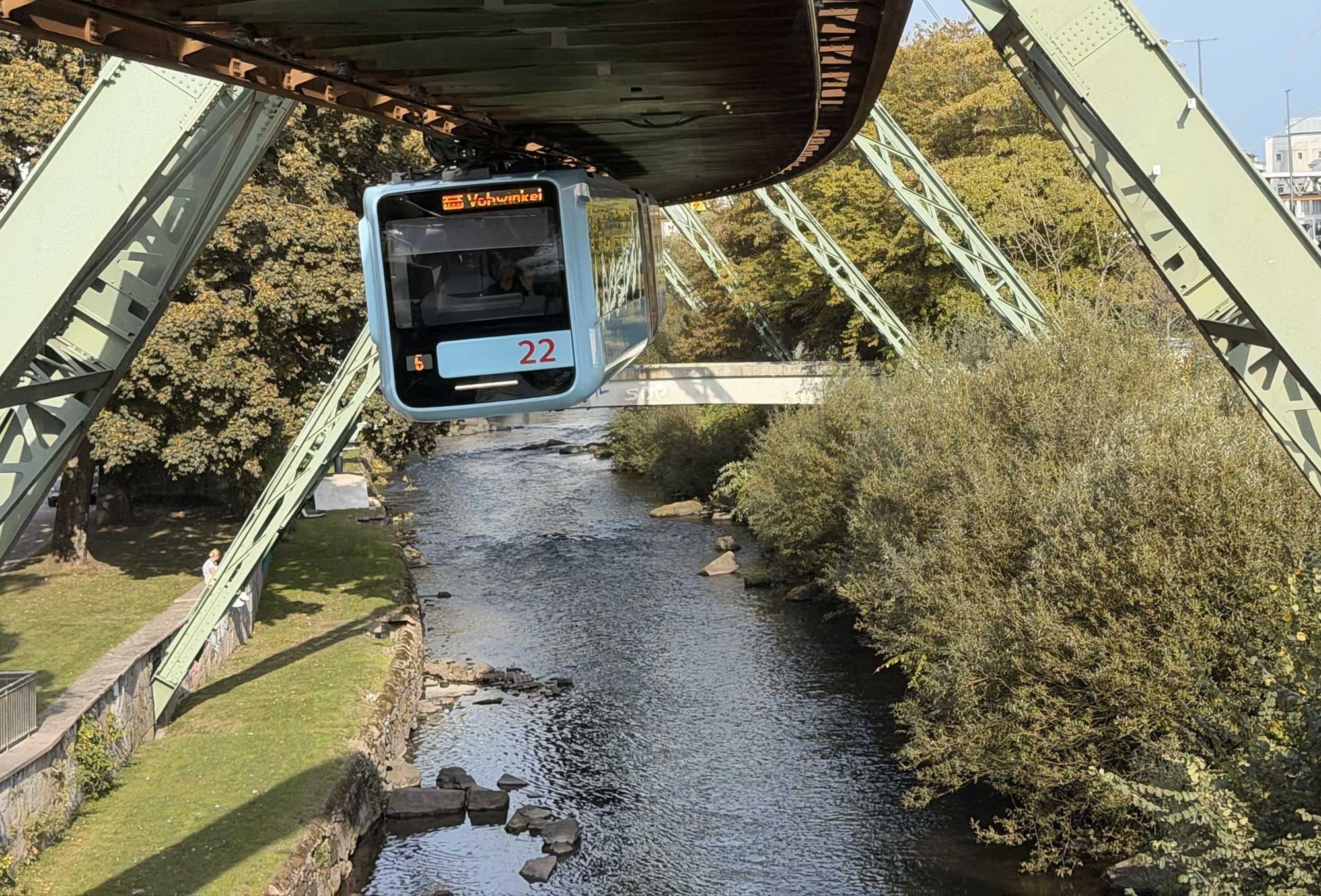
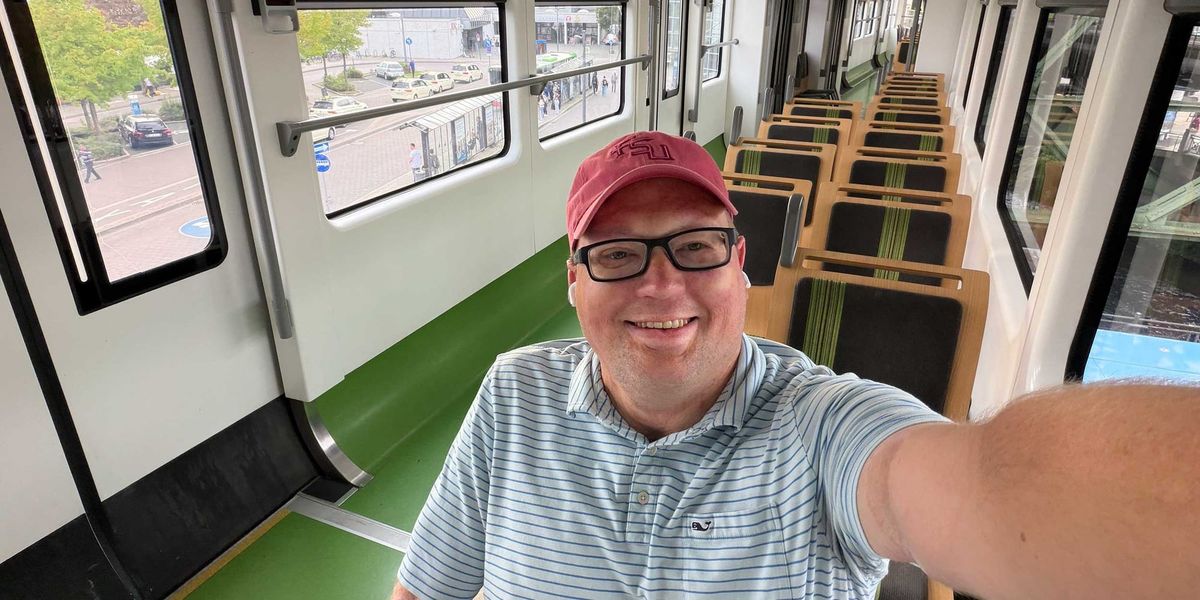
As a dedicated transportation enthusiast, the opportunity for railbuffing and trainspotting in Wuppertal was a dream come true. Riding the Schwebebahn from end to end in both directions yielded hundreds of photographs, video recordings, and even a commemorative 125th-anniversary t-shirt—even if the sizing turned out slightly incorrect. Travelers seeking a unique destination featuring an extraordinary transit system and a world-class green zoo will find plenty to explore in the local area.
Coming Soon: Wheelchair Travel Group Trip to Scotland!
Building on the success of past itineraries, Wheelchair Travel Tours is officially expanding its offerings to include Scotland next summer. Readers will have the opportunity to join a guided exploration of Scotland’s most iconic cultural hubs, including Edinburgh, Glasgow, and Inverness.
Scheduled to run from June 6 to June 16, 2027, the 11-day itinerary is designed to highlight the nation’s rich history, art, culture, and culinary traditions through a fully wheelchair-friendly lens. Complete details and the full tour itinerary will be unveiled on Monday, October 26, at 10:00 a.m. Eastern Time, released exclusively to paid members of this publication. Paid subscribers will receive a private three-day booking window, after which remaining spaces will open to free subscribers on Thursday, October 29.
Itzhak Perlman and ADA Hotel Room Reservations
The challenges of accessible travel extend far beyond transportation, frequently manifesting in the hospitality sector. Itzhak Perlman, one of the world’s most preeminent violinists, recently utilized social media to highlight a frustrating scenario that many travelers with disabilities know all too well.
Upon arriving at a prominent hotel in North Bethesda following a concert, Perlman presented his identification and credit card to collect his room keys. When he casually inquired whether the assignment was an ADA-accessible room, a ten-minute wait at the front desk revealed that the accessible accommodation confirmed six months prior had been given away to another guest, with staff offering no explanation or proactive assistance. Ultimately, the accompanying concert promoter had to step in and secure an alternate accessible hotel several miles away.
As Perlman noted, a confirmed accessible room represents a binding commitment that properties must respect, emphasizing that accessibility for individuals with disabilities is never a luxury or a preference—it is an absolute necessity.

United States regulations explicitly mandate that hotels guarantee guests receive the exact accessible room type reserved, covering bed configurations, quantities, and necessary bathroom fixtures. Unfortunately, these protections do not always prevent administrative failures. Similar frustrations occur globally; just weeks prior in Wuppertal, Germany, a Holiday Inn Express reassigned a reserved accessible room, necessitating an emergency relocation to a nearby Hilton. While American disability laws do not govern European stays, the systemic failure to honor reservations produces an identical brand of frustration.
Looking Ahead
Upcoming weeks will involve remaining at home to catch up on accumulated work and publication schedules, including an upcoming feature titled "Snapshots from Switzerland." Travel will resume shortly with a trip to Tallahassee, Florida, to attend a collegiate football game and speak with business students at Florida State University, my alma mater. Engaging with future business leaders provides a vital platform to share fundamental concepts regarding the economic and social value of accessibility.
From there, the Florida itinerary continues onward to Tampa for the annual TravelAbility Summit, an event where I have proudly served on the advisory board since its inception. Connecting with representatives from major airlines, hotel chains, cruise lines, and destination marketing organizations remains a cornerstone of ongoing advocacy efforts. Until next week, wishing everyone a wonderful weekend.