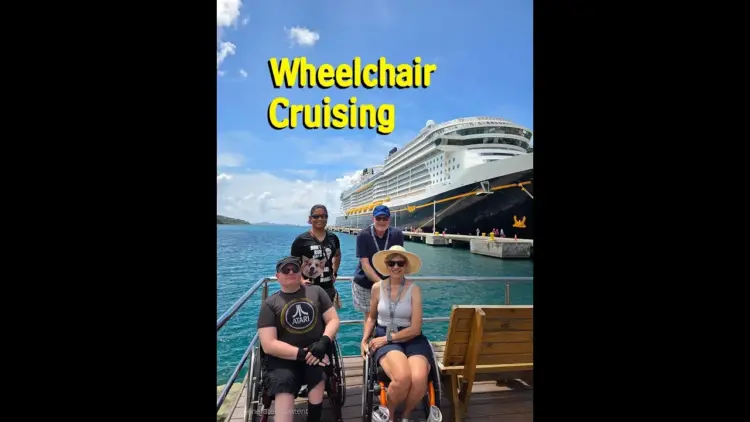
Cruising has long been recognized as one of the most comprehensive and convenient modes of leisure travel, consolidating accommodations, dining, entertainment, and inter-destination transit into a single, unified environment. For individuals who use wheelchairs or experience physical mobility limitations, the sea voyage format presents a unique alternative to land-based vacations, which frequently require navigating complex transportation networks, varying hotel accommodations, and unpredictable public infrastructure. However, while modern maritime travel offers considerable potential for seamless accessibility, achieving a smooth and stress-free journey depends heavily on meticulous pre-departure research, explicit communication with cruise operators, and a thorough understanding of onboard and onshore logistics.
To shed light on the practical realities of ocean travel with physical disabilities, Ashley Lyn Olson, founder of the accessible travel platform WheelchairTraveling.com, recently sat down with veteran disability advocate Mike Greer. In an in-depth conversational interview, the two discussed the nuances of navigating cruise ships, evaluating stateroom accessibility, preparing for shore excursions, and identifying the precise questions travelers must pose to cruise lines prior to booking. The dialogue provides a grounded, real-world perspective on how wheelchair users can effectively plan their voyages, minimize unexpected barriers, and maximize the inherent benefits of cruise travel.
What We Cover in This Interview
The conversation between Olson and Greer serves as an educational framework for prospective and experienced wheelchair travelers alike, addressing the primary touchpoints of a cruise vacation from initial research to port-of-call exploration. At the core of their discussion is a comprehensive examination of how accessibility functions within the maritime environment, emphasizing that while cruise ships are often designed as self-contained resorts, their operational and structural characteristics can present specific challenges for guests with mobility devices.
Throughout the interview, Olson and Greer focus on four foundational pillars of accessible sea travel: shipboard navigation, stateroom features and modifications, shore excursion planning, and pre-booking advocacy. Rather than treating cruise travel as a uniform experience, the discussion emphasizes that accessibility standards can vary dramatically depending on the vessel’s age, structural design, target demographic, and global itinerary. By breaking down these core operational areas, the dialogue equips travelers with a realistic framework for evaluating whether a specific vessel or itinerary aligns with their personal mobility needs.
Beyond immediate logistics, the interview addresses the practical methods travelers can use to verify ship features directly with cruise line access departments. Because general marketing materials and standardized booking portals may not fully capture the nuanced dimensions or physical layouts of accessible facilities, the conversation highlights the necessity of engaging in detailed, direct inquiries before finalizing any travel commitments.
Planning Ahead Makes the Difference
A central theme of the discussion is that proactive, detailed planning serves as the single most critical factor in determining the success of an accessible cruise. While cruising generally offers a far more controlled environment than independent land travel, accessibility is far from identical across the cruise industry. Variations exist not only between competing cruise lines, but also among different ship classes within the fleet of a single operator. Older vessels, constructed under different regulatory frameworks or architectural conventions, may feature narrower corridors, higher door thresholds, or fewer accessible public restrooms compared to recently constructed ships designed with modern universal access principles in mind.
To avoid unexpected logistical obstacles during a voyage, travelers must take an active role in verifying accessibility parameters long before stepping onboard. A crucial aspect of this pre-departure planning involves looking beyond generic cruise line assertions of accessibility and inquiring about specific layout details. For wheelchair users, confirming stateroom specifics is particularly vital. A room labeled as accessible may offer extra floor space, but travelers must still verify critical details such as clear door-opening widths, bed heights, the availability and placement of grab bars, roll-in shower layouts, and smooth, threshold-free transitions onto private balconies.
Pre-trip planning must also extend to the destination port experience. Shore excursions represent one of the primary attractions of cruise travel, yet they also present some of the most complex accessibility variables. In port, infrastructure varies widely across different regions of the world, with historical cities, island destinations, and developing ports presenting distinct physical environments. Furthermore, the method of disembarkation plays a pivotal role in port accessibility. While many modern ports offer roll-on gangways directly connected to dock facilities, certain destinations require ships to anchor offshore and utilize smaller transfer vessels, commonly known as tenders, to transport passengers ashore.
Navigating tender operations in a wheelchair can involve significant technical and safety constraints. Weather conditions, ocean swells, step-mediated transfer points, and weight restrictions on transfer equipment can determine whether a wheelchair user can safely board a tender boat. By investigating port configurations and cruise line tender policies in advance, travelers can select itineraries that primarily utilize docked piers or feature established accessible shore excursion options. Engaging with specialized shore tour providers, contacting local port authorities, and speaking with cruise line disability assistance desks prior to departure allows travelers to establish realistic expectations and arrange suitable ground transportation, ensuring that time spent in port is both safe and enjoyable.
Why Cruising Works Well for Many Travelers
Despite the necessary preparation, cruising remains one of the most compelling and manageable travel options for individuals with mobility challenges. The fundamental structural advantage of cruise travel lies in the concept of unpacking once while visiting multiple international destinations. On traditional land-based multi-city itineraries, travelers with physical disabilities often face repeated logistical friction, including securing accessible ground transport between cities, navigating unfamiliar airports or train stations, and checking in and out of multiple hotels whose accessibility features may prove inconsistent or unpredictable.
Cruising substantially reduces this repetitive logistical burden. Once onboard, a cruise ship functions as a mobile floating hotel and resort, allowing passengers to return to the same accessible stateroom every evening regardless of geographic location. This centralized environment eliminates the stress of managing luggage between stops and ensures that essential accommodations, specialized medical or mobility equipment, and comfortable living spaces remain readily accessible throughout the duration of the journey.
Furthermore, modern cruise ships are engineered to facilitate the efficient movement of thousands of passengers, resulting in onboard infrastructure that naturally aligns with mobility requirements. Ships are widely equipped with extensive elevator networks, wide main thoroughfares, smooth deck transitions, and step-free access points to major public spaces such as dining rooms, theaters, lounges, and sun decks. Integrated onboard services—including varied dining venues, high-grade entertainment, recreational amenities, and medical centers—are located within short distances of staterooms, drastically reducing the physical exhaustion often associated with navigating large urban environments on land.
However, as emphasized by Mike Greer during the conversation, the absolute utility of cruising depends entirely on matching an individual’s specific physical requirements with the right vessel and itinerary. Because mobility needs range along a broad spectrum—from manual wheelchair users capable of short transfers to power-wheelchair users requiring complex adaptive equipment—there is no single definition of an ideal cruise experience. Firsthand insights from experienced advocates provide an invaluable layer of guidance, translating general maritime accessibility policies into concrete, experiential advice that helps travelers select the ships, cabin configurations, and routes best suited to their independent lifestyle.
Final Thoughts
As interest in accessible travel continues to expand globally, first-person educational dialogues play a pivotal role in empowering travelers with physical disabilities to explore the world with confidence. The insights shared by Mike Greer and Ashley Lyn Olson provide a structured, practical roadmap for navigating the unique landscape of accessible cruise travel, demonstrating that while maritime travel presents distinct operational considerations, thorough preparation and clear communication can unlock rich, stress-free travel experiences.
By asking targeted questions regarding stateroom architecture, vessel layout, and port logistics well in advance, wheelchair users can effectively eliminate potential friction points and fully capitalize on the unique conveniences offered by cruise travel. The ongoing sharing of real-world travel experiences within the broader community remains a powerful tool for promoting self-advocacy, enhancing industry awareness, and encouraging cruise lines to continually improve their universal design practices.